
12/5 Tu – Left 6am and arrived at the Columbia Crossing River Trails Center on the Susquehanna River at 2pm. It is one of two Visitor Centers in the Susquehanna National Heritage Area (NHA). There is a 14-mile paved, multiuse trail along the Susquehanna River. This marker describes the 1913 Lincoln Highway from NYC to San Francisco, that passes over the Veterans Memorial Bridge/Old US-30 Bridge.
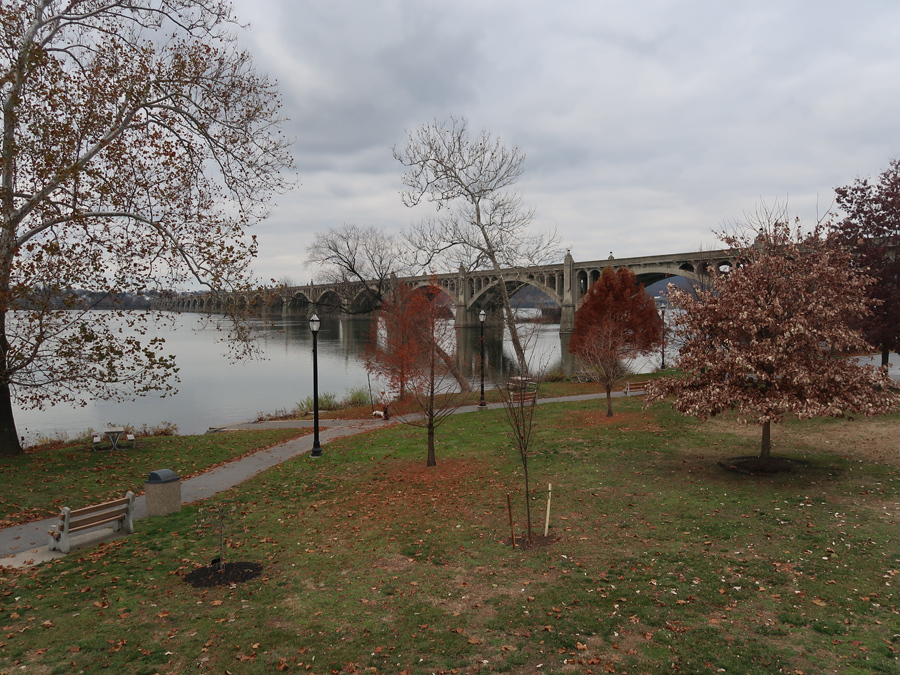

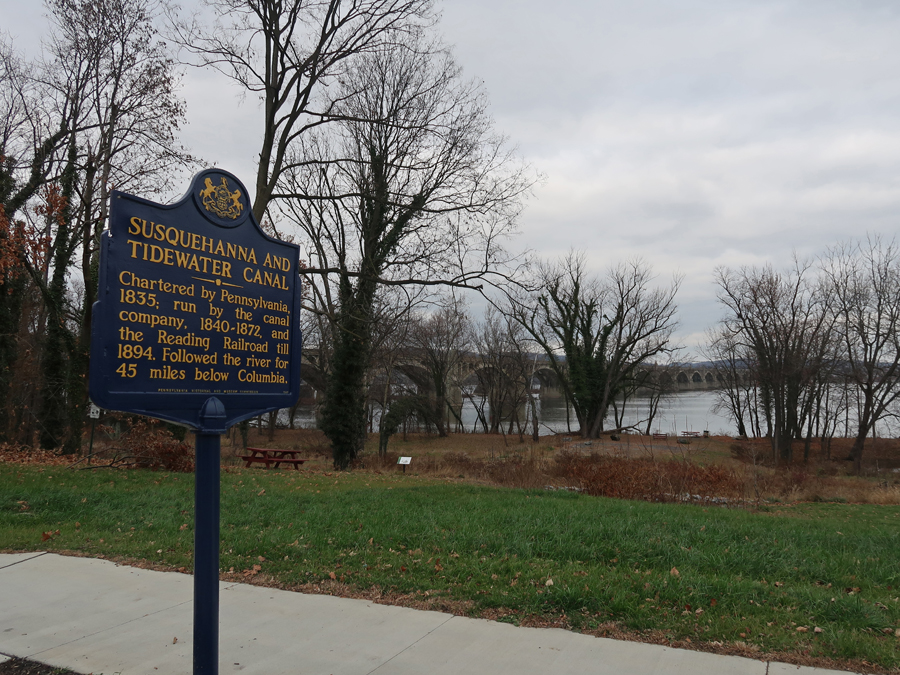
The remains of the Susquehanna and Tidewater Canal, which runs along the river.
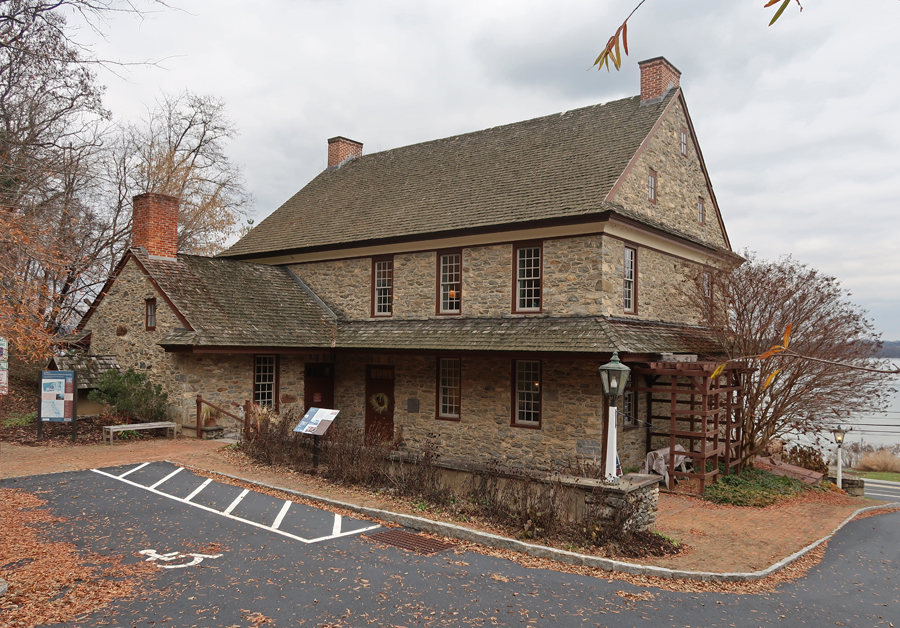
It took about 20-min to drive across the bridge to the Zimmerman Center for Heritage on the west side of the river. It is Pennsylvania’s official visitor contact and passport station for the Captain John Smith Chesapeake NHT.

It is a 1750s stone house built by Gen. Jacob Dritt, who fought in the Revolutionary War. It was renovated by the Zimmermans and donated to the NHA.
It tells the story of the area, beginning with the Susquehannock Indians who lived along the river.

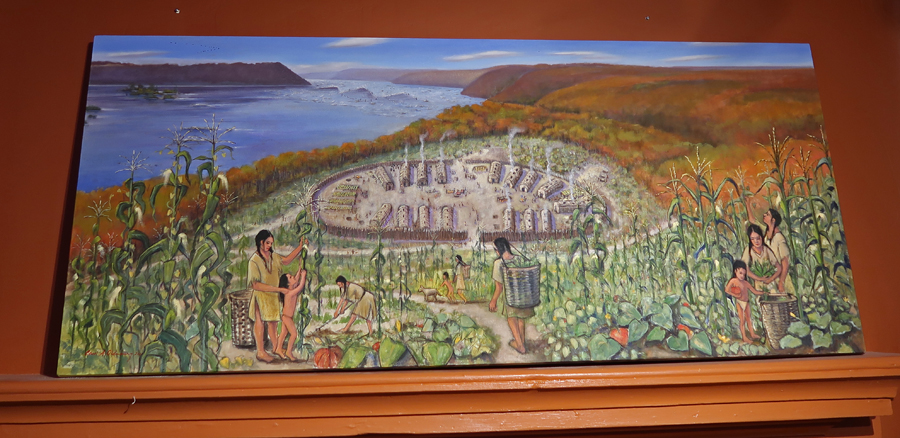
We hiked up a hill on the Native Lands Heritage Trail to the site of the Susquehannock peoples’ last community. Note the settler’s cemetery in the right middle of the photo.

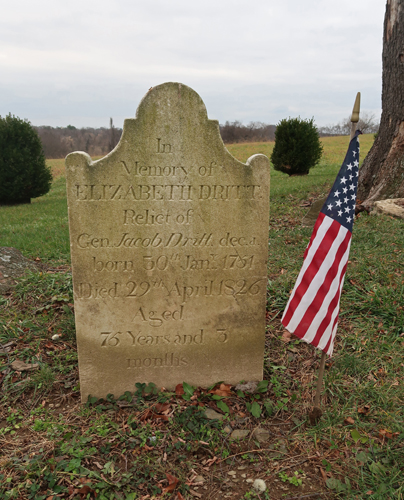
Grave marker for Elizabeth Dritt, Jacob’s wife. He drown in the Susquehanna River in 1817 when his boat capsized as he was trying to cross in winter.
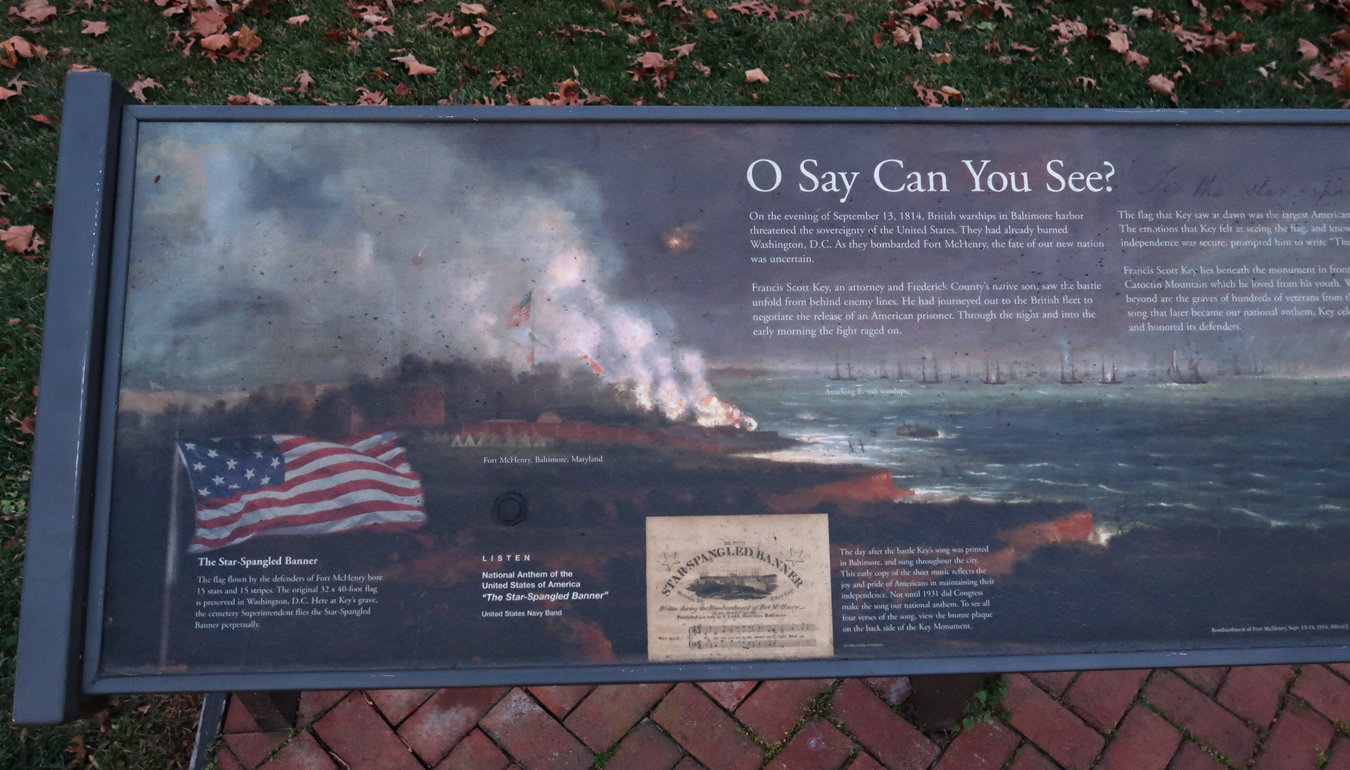
A 2-hr drive took us to Frederick MD and the grave/memorial for Francis Scott Key, the author of the Star-Spangled Banner – our National Anthem. We arrived at dusk, 15-min before it closed.


Arrived 8pm at Lillian’s home in Rockville MD. She had a surprise for us – dinner and a belated ice cream cake for my 80th birthday!

12/6 W –I left at 7:30am for the George Washington Memorial PKWY, which runs along the Potomac River in VA. The administrative center for sites along the PKWY is in Turkey Run Park. I found the door open when I arrived and was able to use the 32-stamps, related to sites along the PKWY, to stamp my sheet.

I then did the 1.5-mile Turkey Run Trail Loop, that includes a section of the Potomac Heritage National Historic Trail (NHT). The Claude Moore Colonial Farm, originally Turkey Run Farm, closed in 2018. The mission of Claude Moore Colonial Farm was to recreate the life of tenant farmers circa 1771. The majority of Virginians of that time period were tenant farmers who grew tobacco to pay their rent while growing food to eat. How this site will be used in the future is under review.


The GW PKWY was under construction and had lots of traffic. That made it difficult to access some of the sites along the Potomac River. My next stop was the Navy and Merchant Marine Memorial, which is located on Kendall Point near the LBJ Memorial Grove (see Blog for August 2021). I really like this “difficult to get to” memorial.
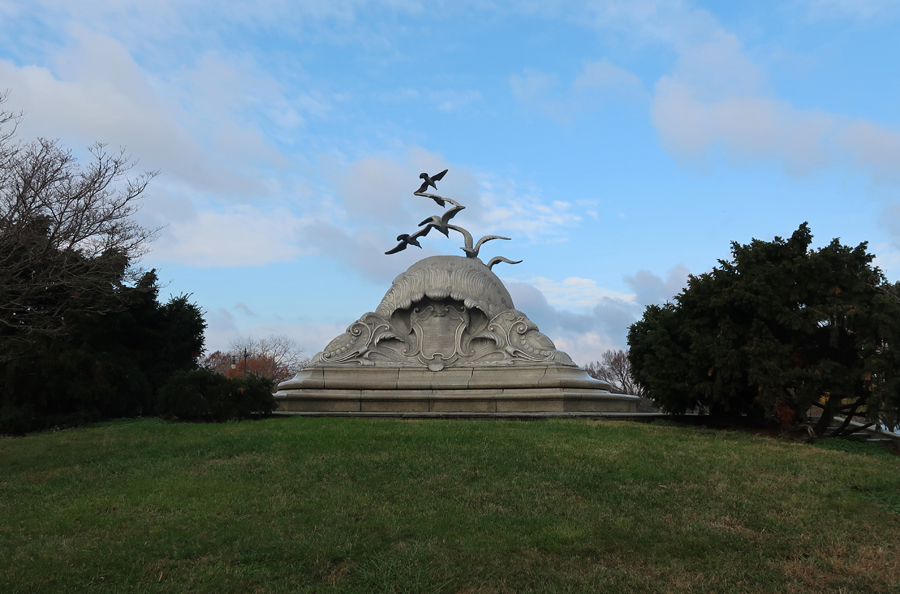
The 1922 cast aluminum memorial is dedicated to those Lost at Sea. “The seven seagulls sculpted on the monument represent the witnesses of sacrifice on all seven seas. Below the textured rocky surface of the water, the waves are swirling and crashing to portray the imminent dangers faced by seamen.”

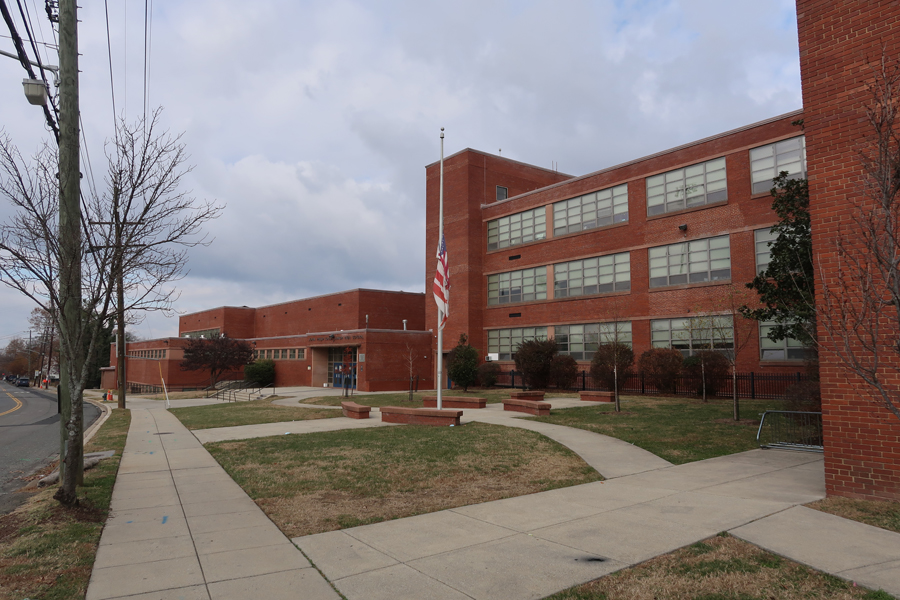
From there I proceeded to the John Philip Sousa Middle School in east DC (Affiliated with the Brown vs. Board of Education NHP in Topeka KS). It is a public school located in the city’s Fort Dupont neighborhood on the east side of the Anacostia River. In 1950, Sousa was one of several new DC schools for white children. Eleven African American junior high school students were taken on a field trip by Civil Rights activist Gardner Bishop, who requested admittance for the students to this school. They were denied and ordered to return to their grossly inadequate school. A suit was filed on their behalf in 1951, that suit became part of the Brown case in 1954. The U.S. Supreme Court ruled “segregation in the District of Columbia public schools…is a denial of the due process of law guaranteed by the Fifth Amendment…”
My next stop was the U.S. National Arboretum

It is the location of the National Capitol Columns that once supported the East Portico of the Capitol. They were the backdrop for Presidential inaugurations from 1826-1958.
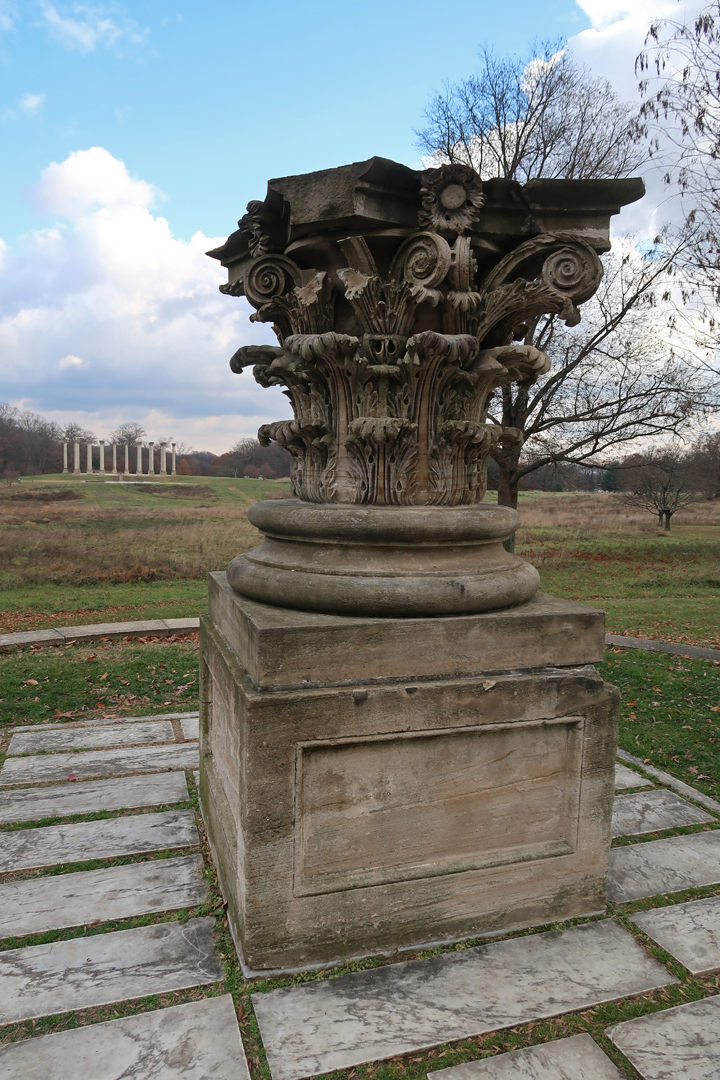
It is a striking display –
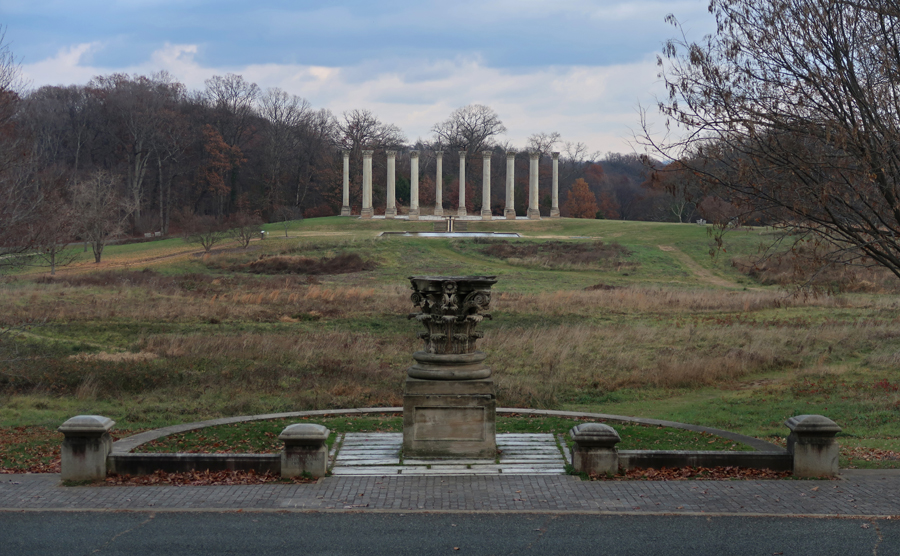
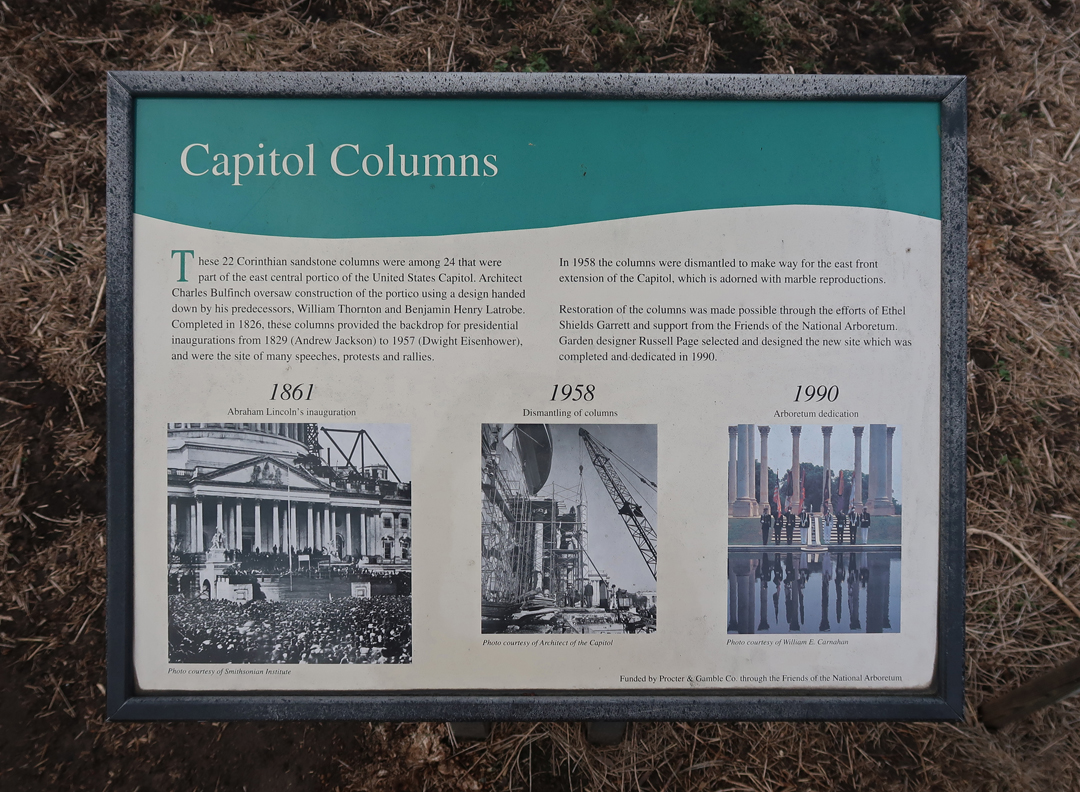
Onward and westward to central DC and the Smithsonian National Postal Museum, near the Capitol and across the street from Union Station.
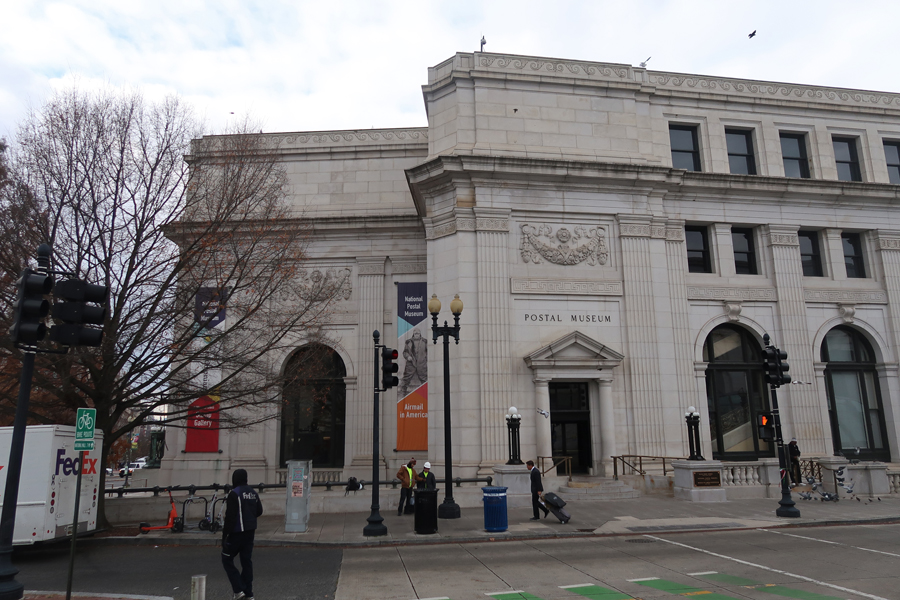
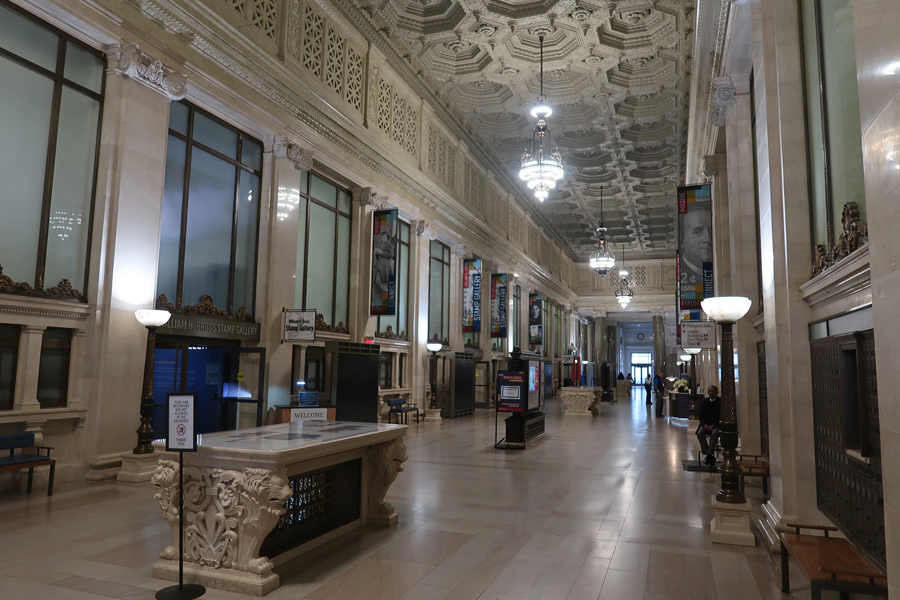
Though it opened in 1993, it was off my radar. I noticed it on a map when planning this trip and thought I would check it out. The National Stamp Salon of the museum houses hundreds of panels of U.S. stamps and is a philatelist’s dream.


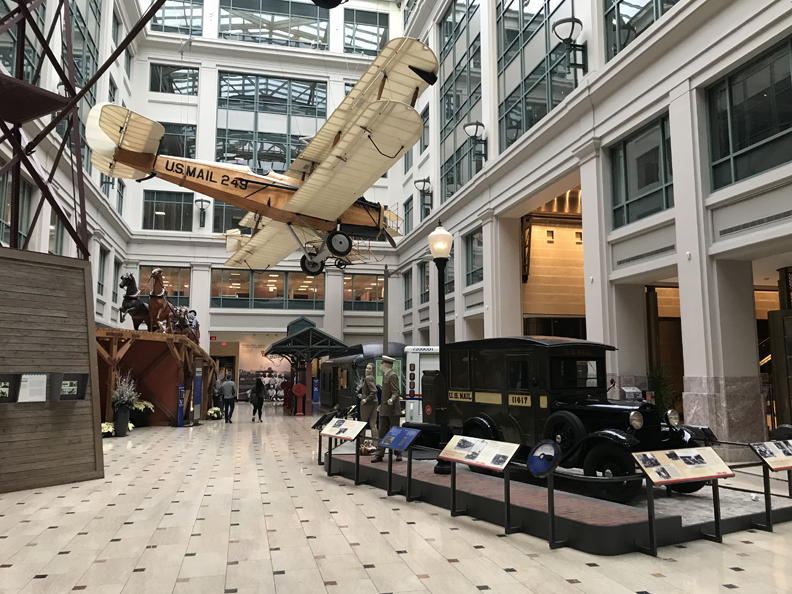
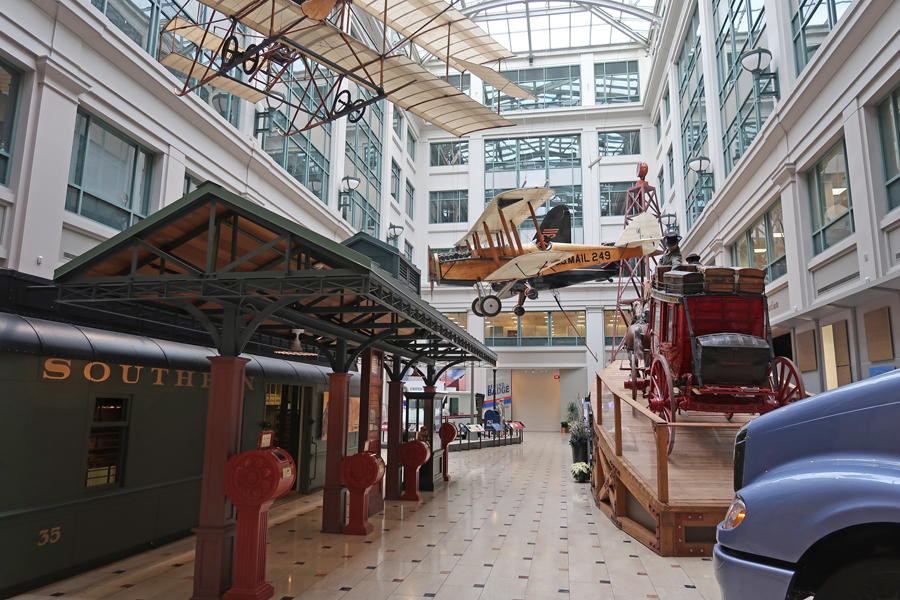
One task of government is to facilitate communication. One way the U.S. has done that is through our postal system. Therefore, in many ways, the history of the postal system is the history of our country. The atrium displays many vehicles that have been and are utilized for the transport of Mail.
Owney – the Mascot of the Railway Mail Service.
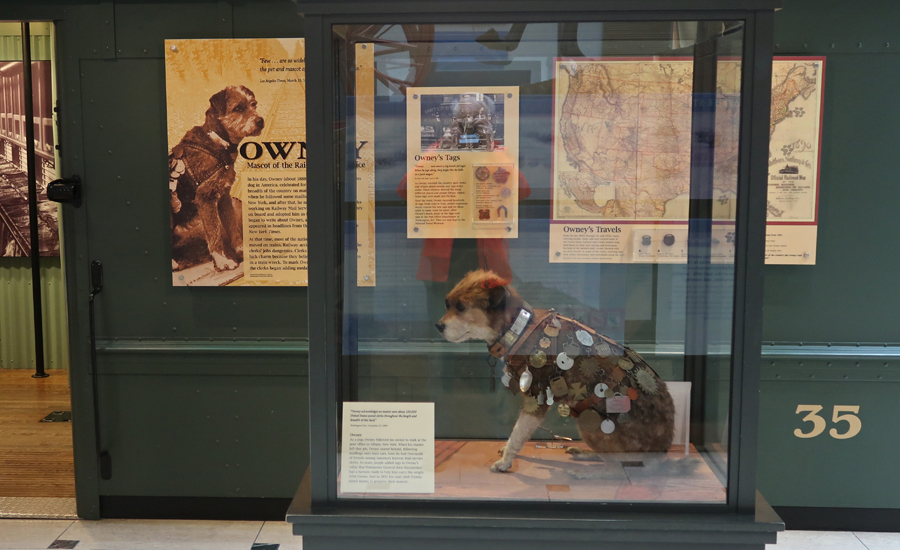
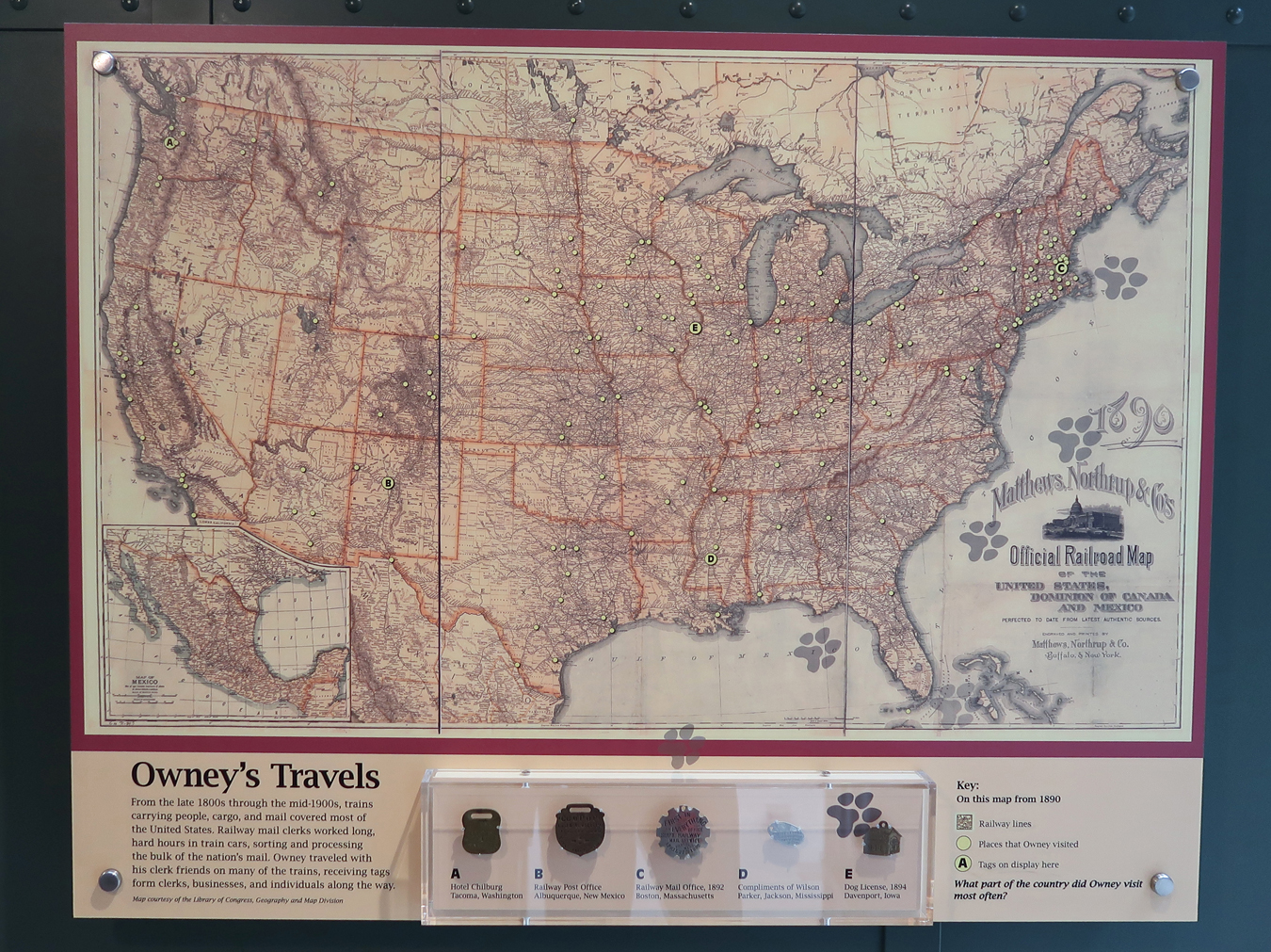
From 1888 to 1897, Owney was the most famous dog in America. Papers covered stories of his travels across the length and breadth of the country. At that time, most of our mail was sorted on trains. Railway Mail Clerks would give Owney a medal or tag to commemorate his trips. Magnify this map to see the locations where he received his medals.
It was a short drive to the National Museum of the American Indian where I wanted to get two photos of outdoor sculptures. The first was the National Native American Veterans Memorial.

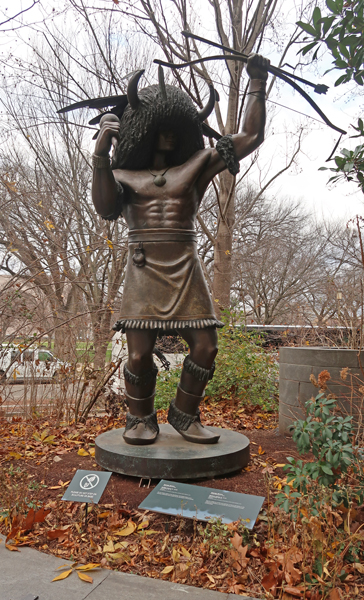
The second was the Buffalo Dancer Sculpture.
However, I could not resist the urge to go into the museum for another quick visit. Music & Song –

Indians are Everywhere in American Life

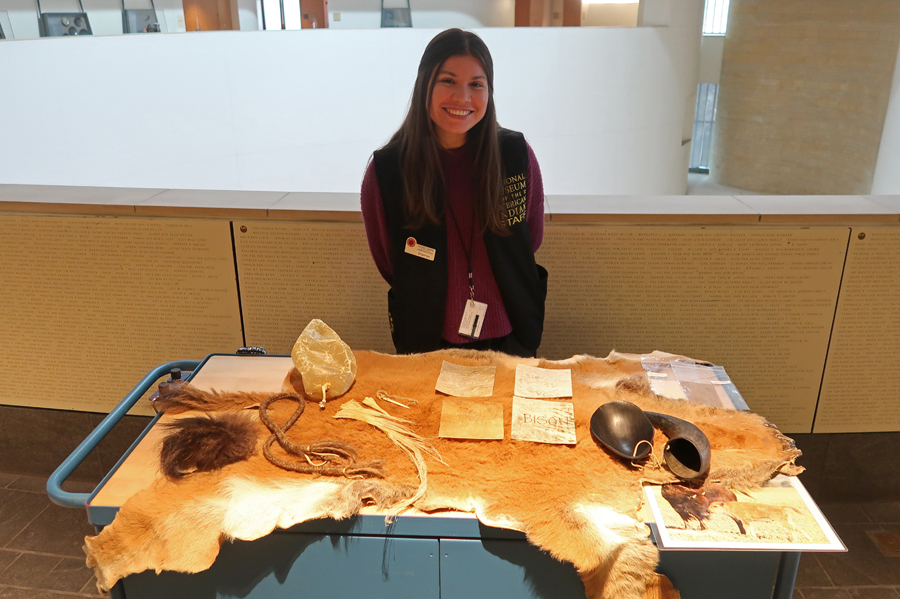
The Indians utilized every bit of the Buffalo –
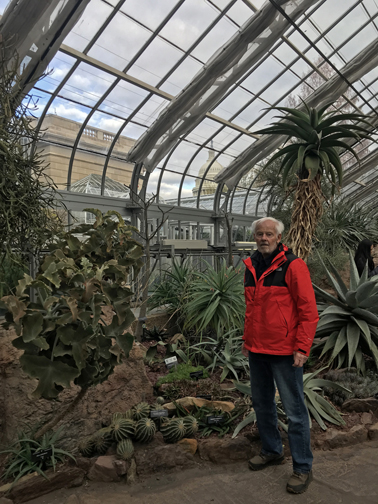
Also did a quick visit to the nearby U.S. Botanic Garden –
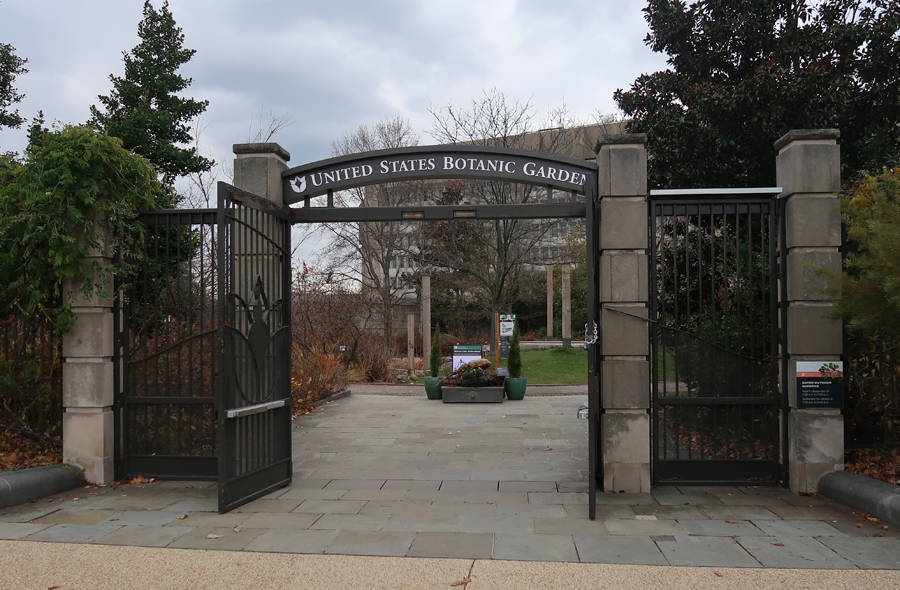
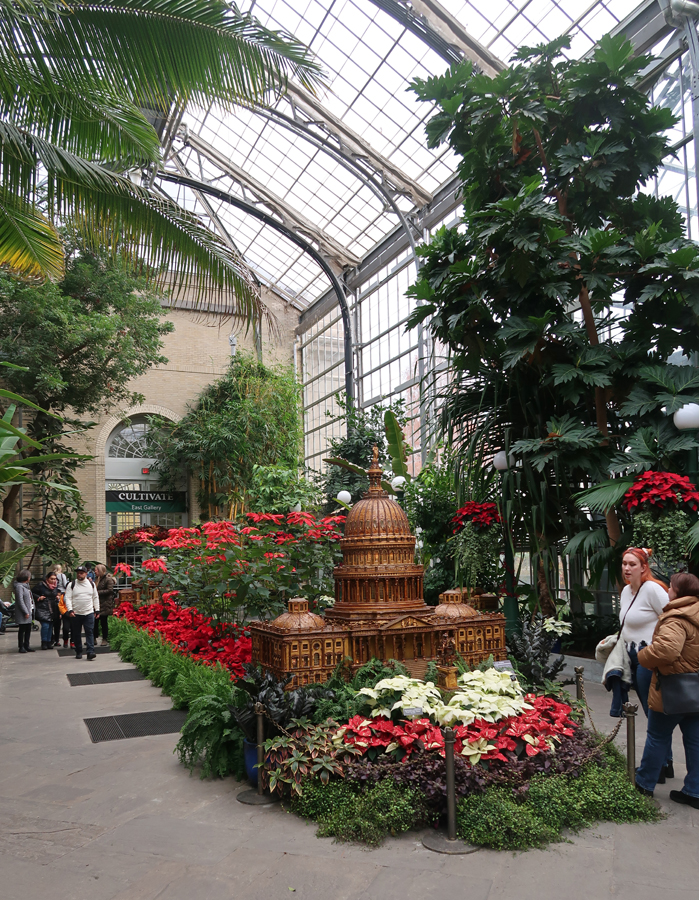
Note the Capitol Dome in the background –
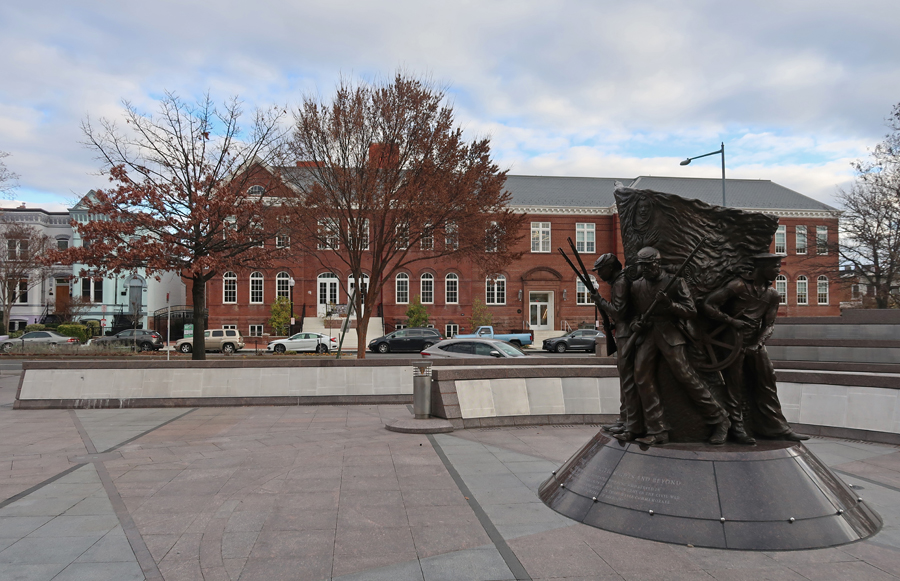
We visited the African American Civil War Memorial in 2018 (see Blog for October 2018). This year I planned to tour the African American Civil War Museum which is across the street. The museum honors the heroic roles of 209,145 U.S. Colored Troops (USCT) who helped end slavery and kept America united under one flag.
Unfortunately, it was in the process of a make-over. BUT, fortunately, I received information and a personal tour from Marquett Milton!


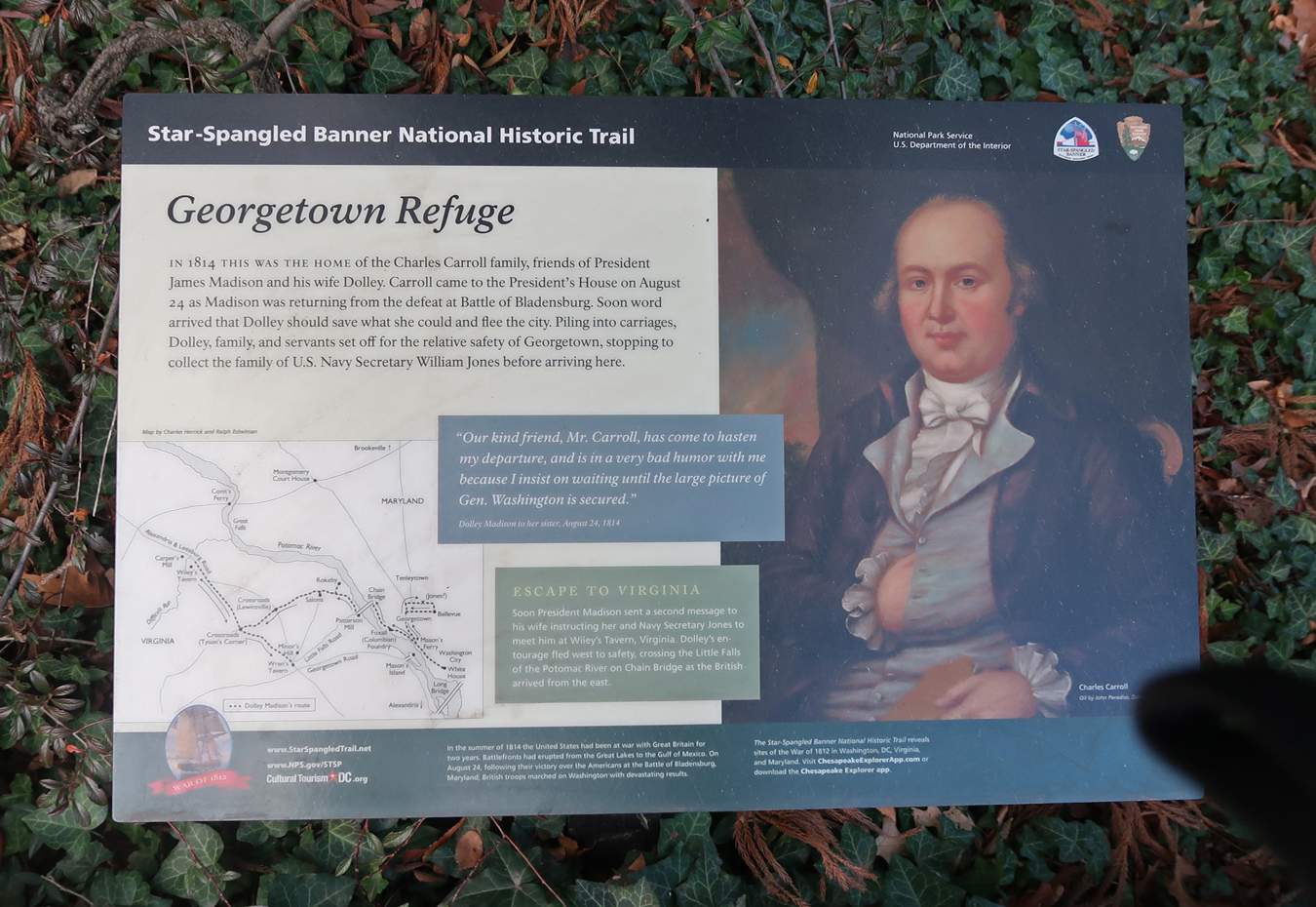
Next, on to the Dumbarton House (built in1799) in Georgetown. Dolley Madison stayed here briefly when (1814) she was evacuated from the White House during the “War of 1812.” It has been restored and is now the headquarters for the National Society of The Colonial Dames of America – women descended from Colonial era leaders.


This marker tells the story and shows her evacuation route to VA for safety. It is one of many sites on the Star-Spangled Banner NHT.
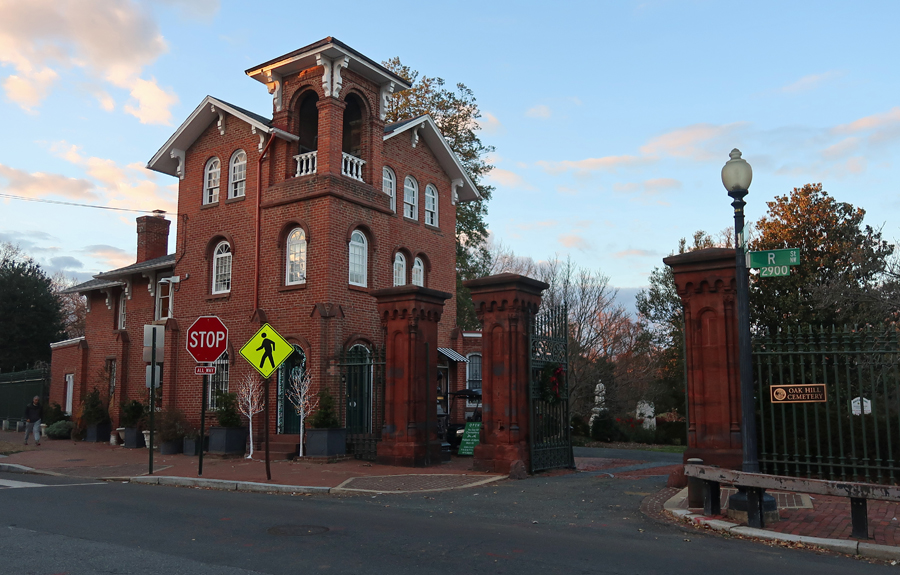
Right next door is Oak Hill Cemetery. It contains the remains of many early Washingtonians –
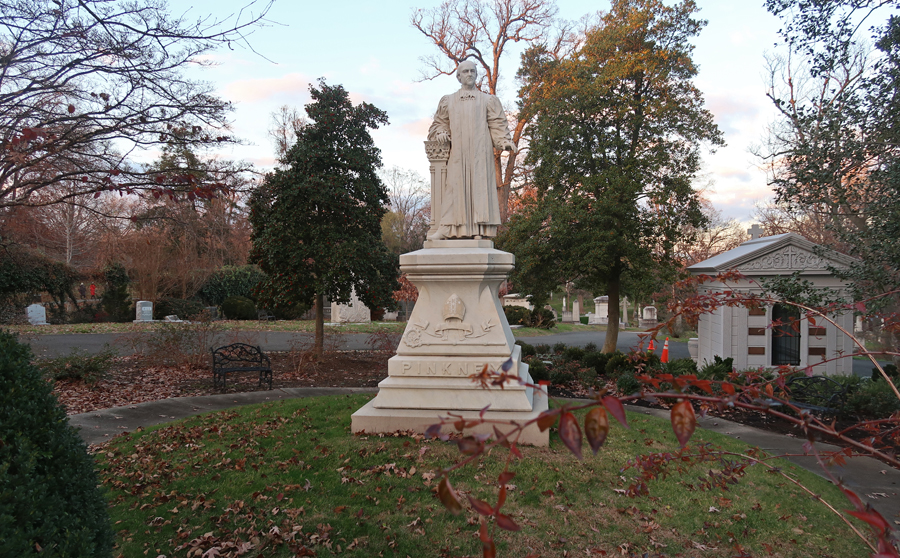
Reverend William Pinkney
Van Ness Mausoleum

John Joyce, poet

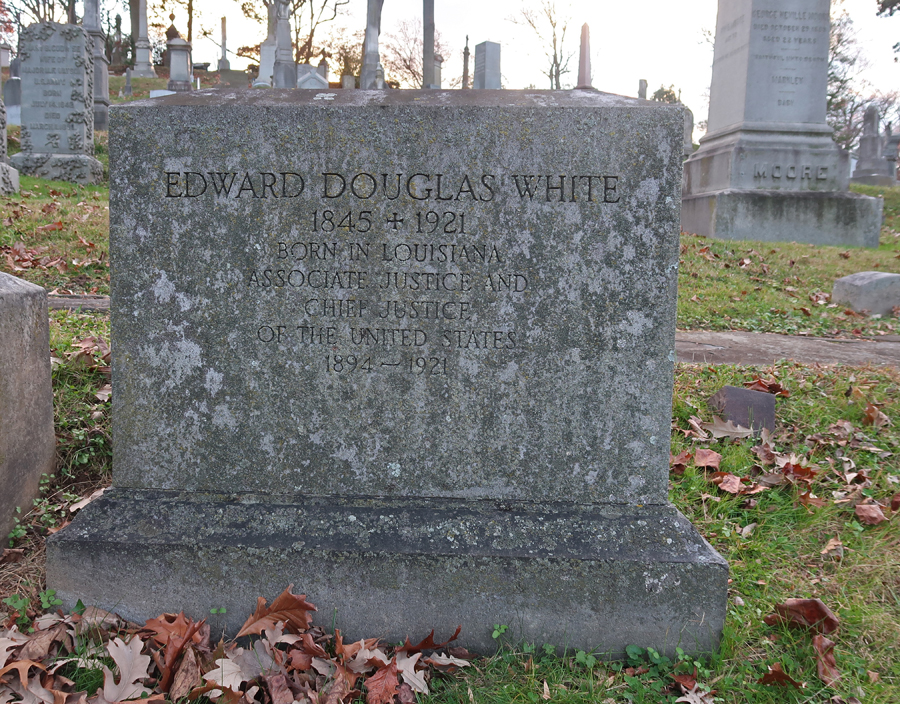
Supreme Court Chief Justice Edward Douglass White

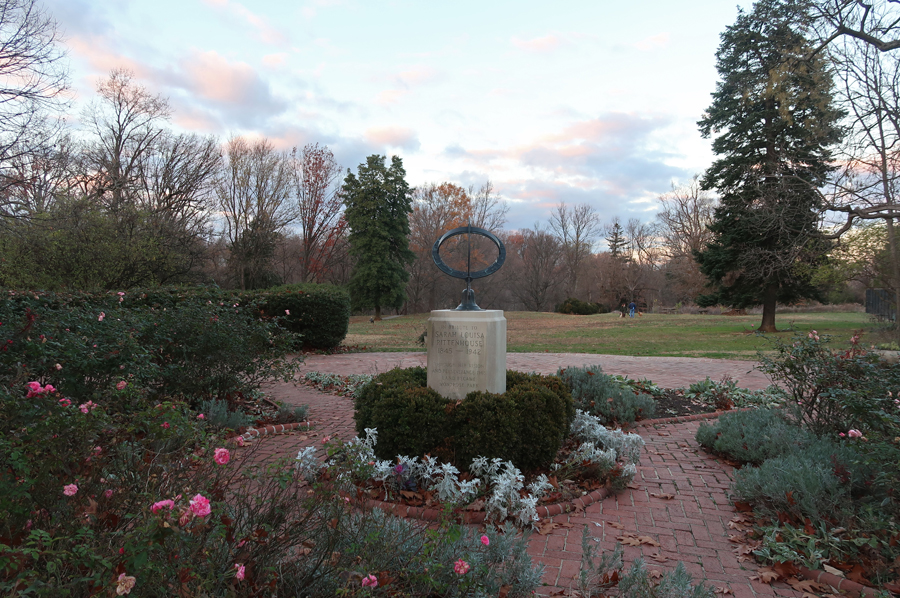
Montrose Park, which is an extension of Rock Creek Park, is just down the road –

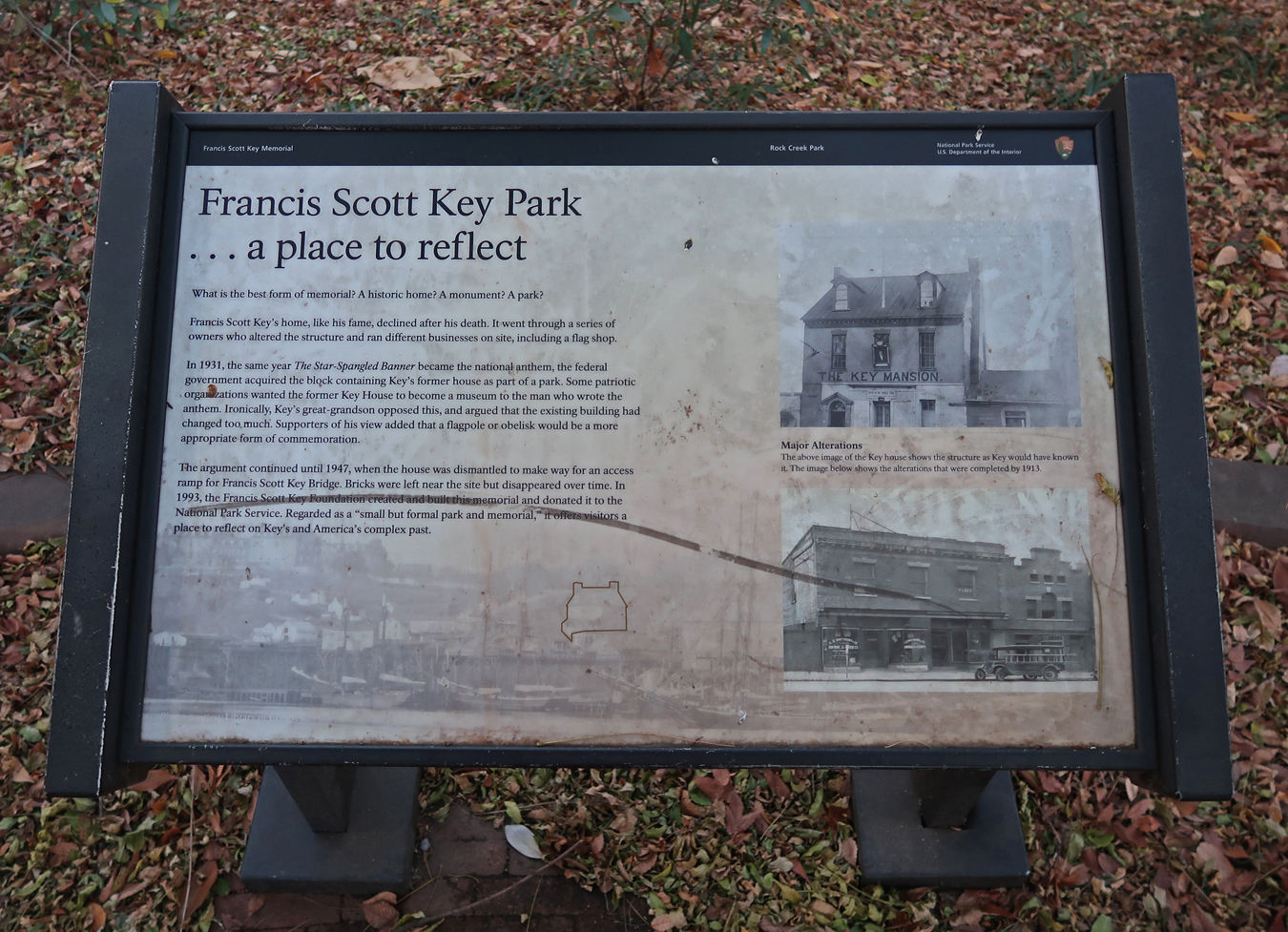
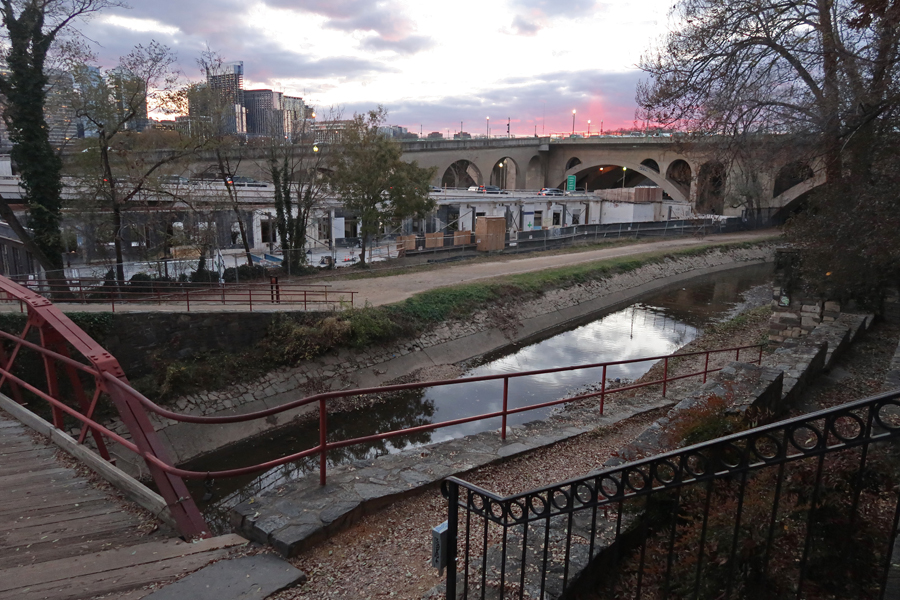
My next stop was the Francis Scott Key Memorial Park located on the N side of Key Bridge. The park overlooks the Bridge, the Potomac River, and the C & O Canal.

For 25-years, Key lived 200-ft away in a two-story house in Georgetown. He was a lawyer who defended leading politicians against charges of treason, scandal, and assault. He also defended African Americans in court to the extent that he was sometimes referred to as “the Black’s lawyer.”
Stairs lead down to the Chesapeake & Ohio Canal towpath
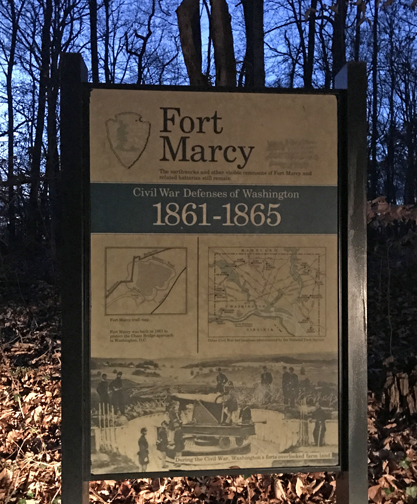
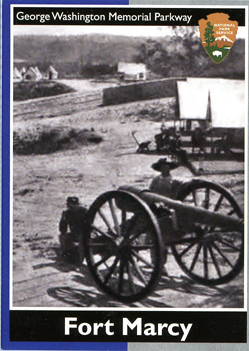
My last stop for the day was Fort Marcy (1862) located off the westbound lanes of the George Washington PKWY. It was one of the Circle Forts built to protect DC during the Civil War.
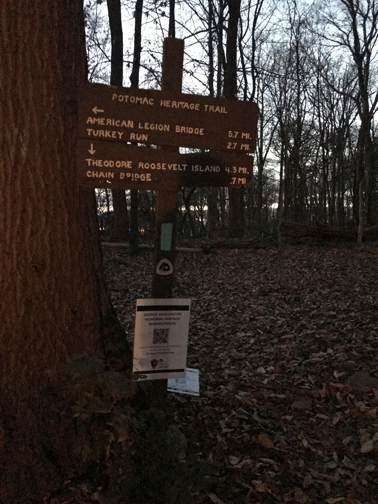
The Potomac Heritage NHT runs through the park – as you can see it was almost dark, the light on the trail sign came from my headlights.
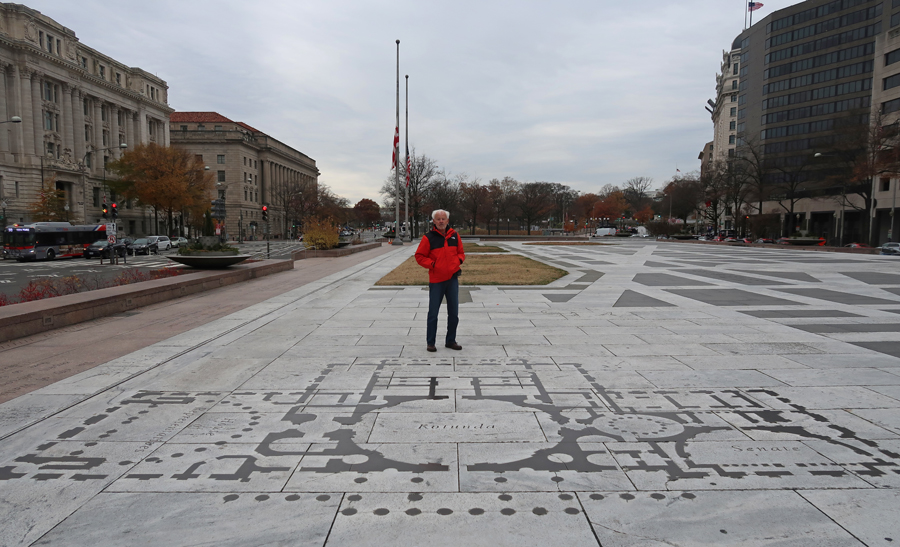
12/7 Th – Called to confirm our White House Tour– no handbags/backpacks permitted and no storage available. Took our photo IDs and caught the Red Line from Rockville to the Metro Central Stop in DC, walked through Freedom Plaza (diagram of Capitol)
Revisited the (now complete) World War I Memorial in Pershing Park, see Blog December 2020 for previous visit.

I did the White House Tour in the Fall of 1967 but do not have any photos from that visit. This year I was fortunate to be able to obtain three passes for a Christmas Tour of the White House through my congressperson’s office. Requests must be submitted a minimum of 21 days in advance and no more than 90 days in advance of the requested tour date(s). Nothing is guaranteed and you are vetted before you are issued your pass. As you will see in the following photos, the Christmas decorations were amazing. We felt privileged to be able to do our self-tour during this special season. The theme chosen by First Lady Jill Biden was “Magic, Wonder, & Joy.” East, Visitors Entrance to White House –

Gold Star Family Tree

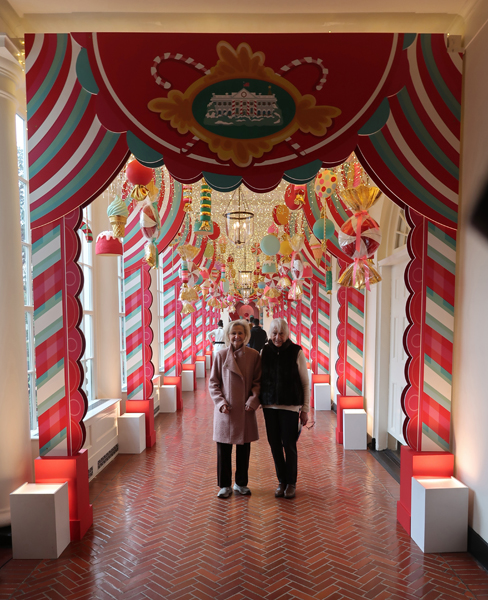
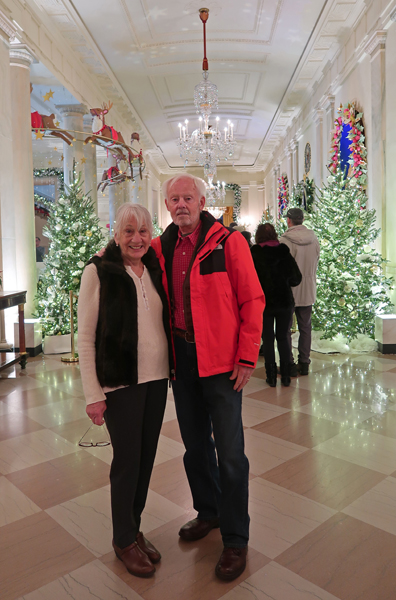
Lillian and Helen in the East Colonnade
Library decorated for Bedtime Stories

Vermeil Room – Music Theater and decorations for the Joy of Music

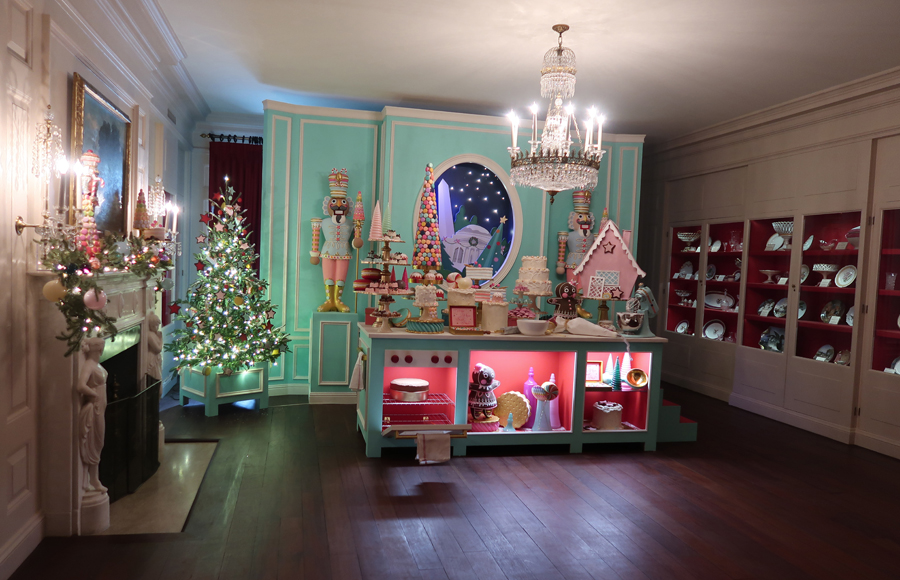
China Room – decorated as The Bakery
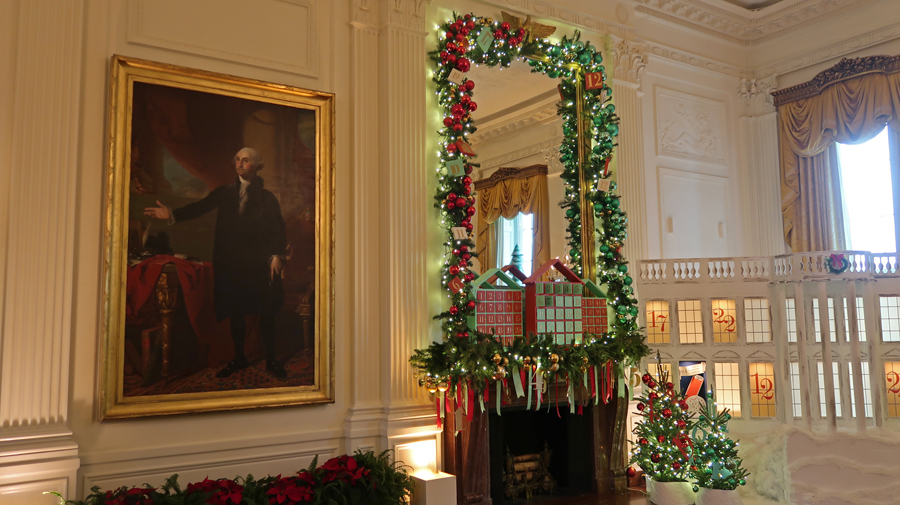
East Room, largest room in the White House – decorated with advent calendar theme –

Portrait of George Washington that First Lady Dolley Madison saved in 1814 when the British burned the White House.
Nativity display –

Front Cross Hall – taken through east door.
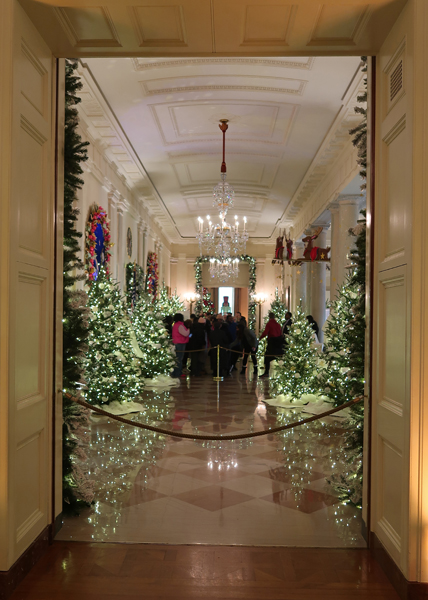
Front Cross Hall – taken from west door, Grand Foyer to left –
Green Room – top painting “Sand Dunes at Sunset, Atlantic City” by Ossawa Tanner; he mixed sand with his paint.

Official White House Menorah on right in Cross Hall, made in 2021 from wood removed from the White House during a Truman-era renovation –

Santa’s Reindeers Flying Through the Grand Foyer –
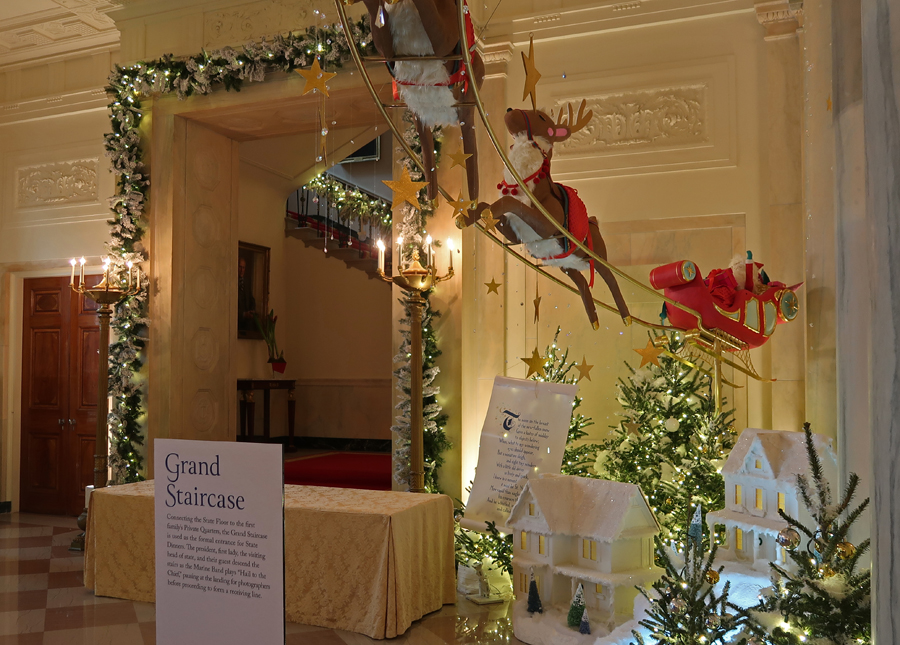
The theme for the Grand Foyer was – ‘Twas the Night Before Christmas

Blue Room with the Official White House Christmas Tree – decorated with names of states and territories.

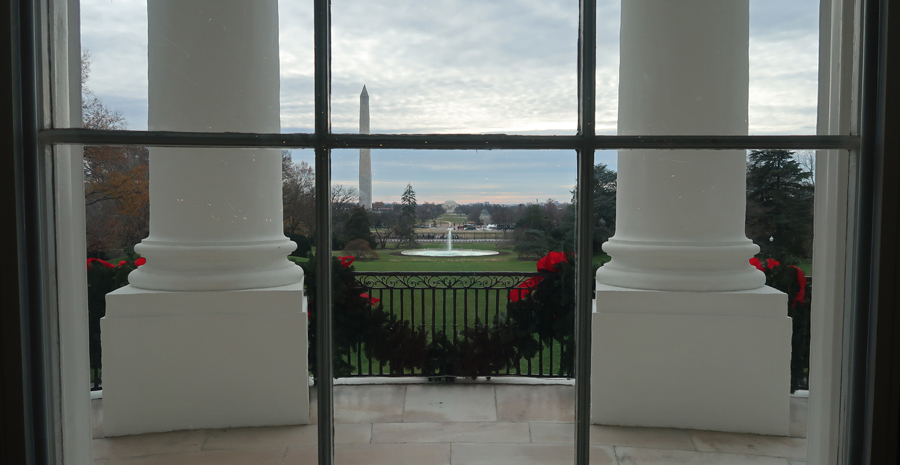
Blue Room windows looking out over the South Portico –
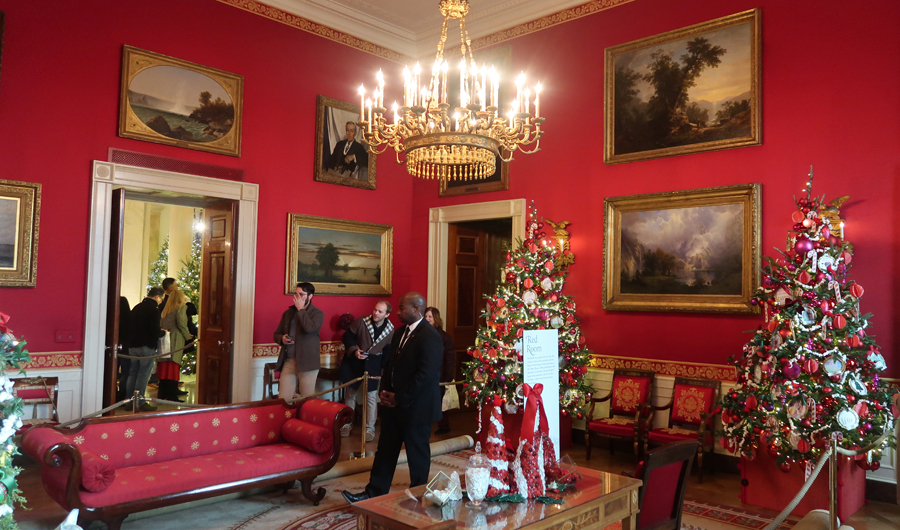
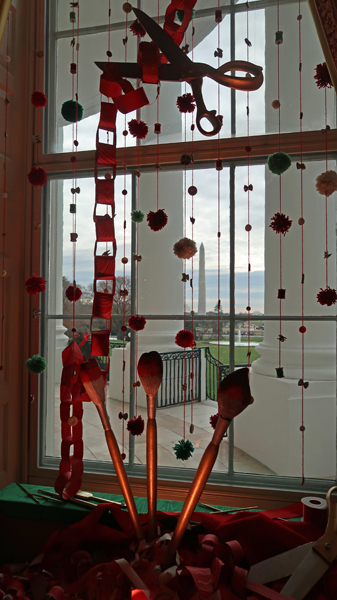
Red Room, Joy of Making Holiday Crafts –
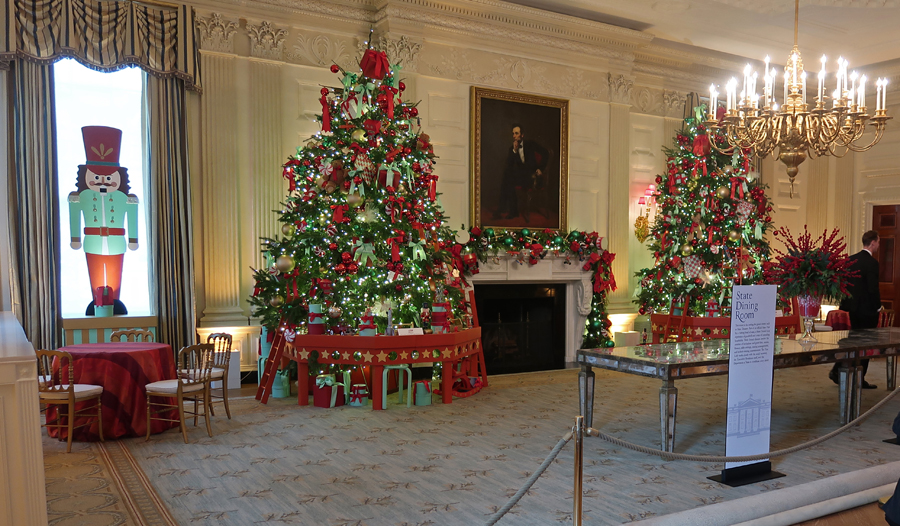
State Dining Room
Gingerbread White House with Candy Cane Pillars

Main Entrance to Blue Room –

Looking Out Front Door of White House –
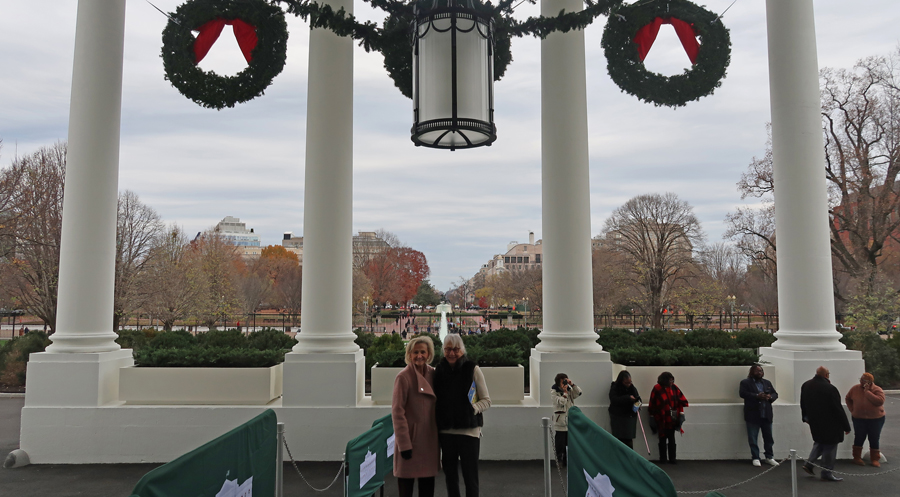
One Last Shot –
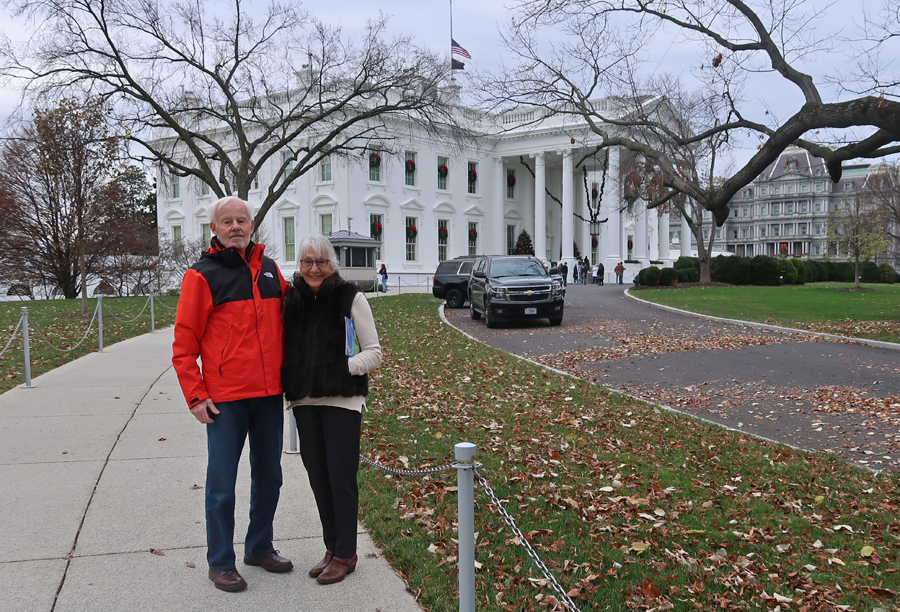
See our August 2021 Blog post for our visit to the White House Visitor Center
Walked back to the Metro and took it two stops to Judiciary Square and then continued walking to the Hart Senate Office Building. Visited Ohio Senator Sherrod Brown’s office to get Gallery passes for the House and Senate Chambers and then ate lunch in the Senate Cafeteria.
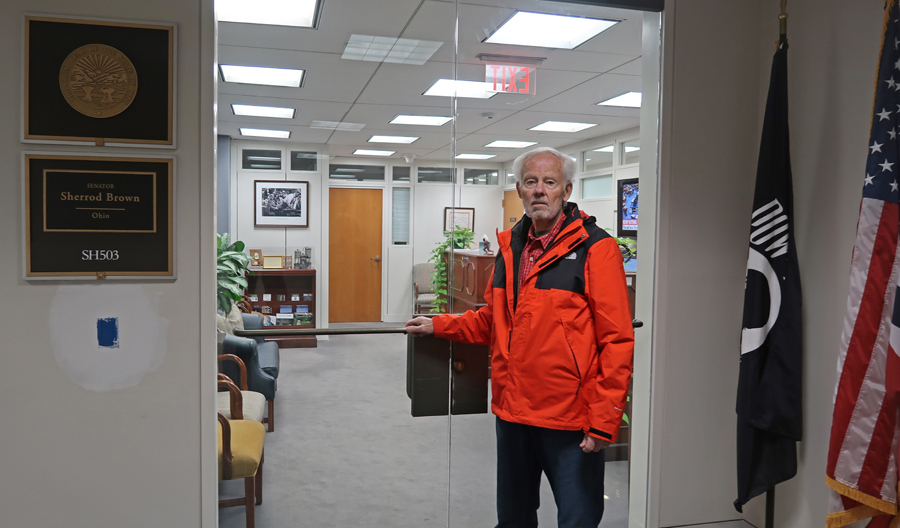
Photo of Senator Mark Kelly’s Office.

After lunch, one of Senator Brown’s aides accompanied us to the tunnel to the Capitol. We took the subway to the Capitol Visitors Center for our 2pm tour.


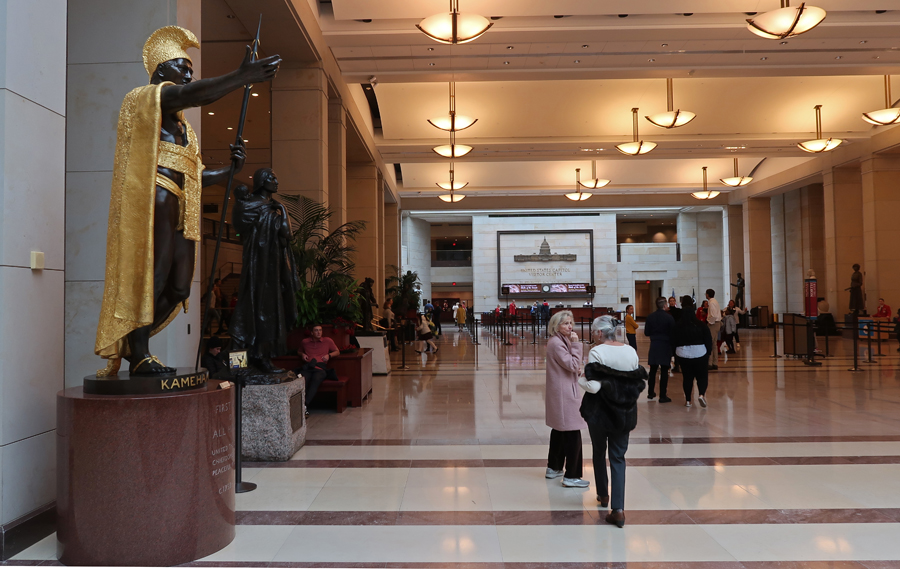
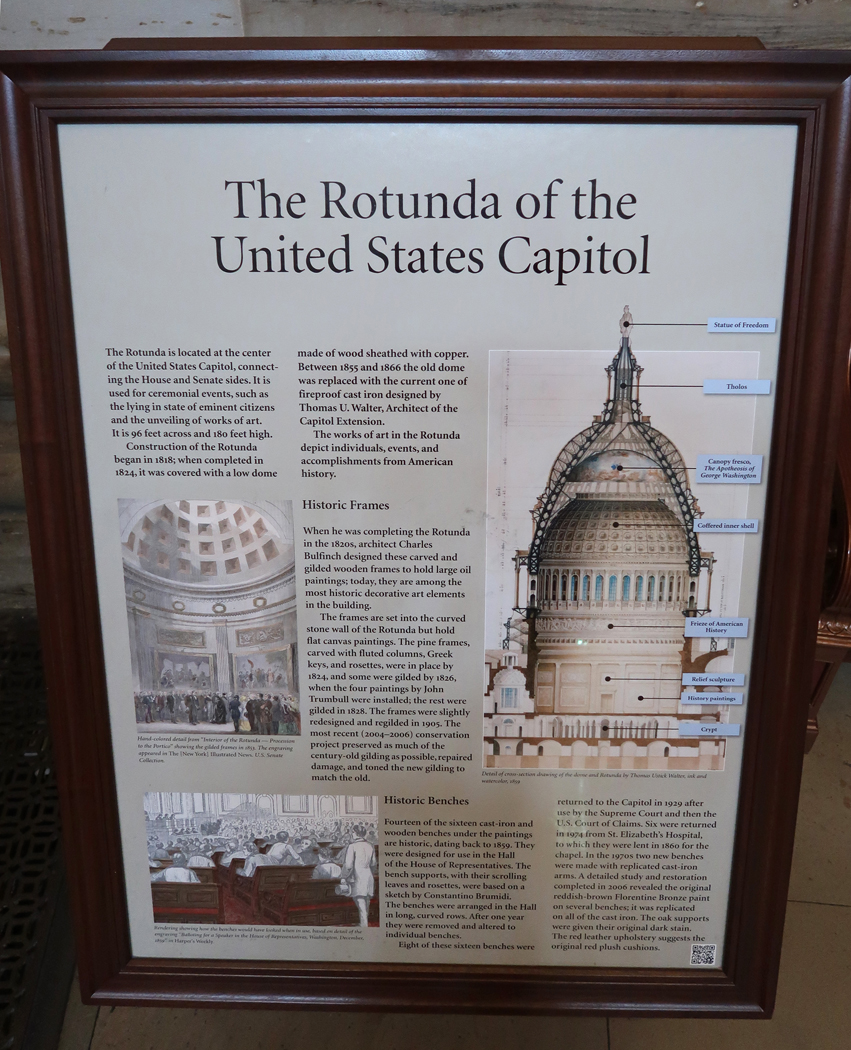
I have visited the Capitol several times, but this was the first time I did an Official Tour. I obtained our free tickets on the U.S. Capitol website six weeks before our visit. We started the tour by walking past a full-size plaster model (19.5ft tall) of the Statue of Freedom that sits on top of the Capitol. It was placed atop the Dome in 1863.

Our first stop was the Crypt, which is located directly under the Rotunda. The star on the floor is the center of Washington DC, dividing it into NE, NW, SE, and SW quadrants. It was to be the burial place of George Washington. However, he and Martha remain at Mount Vernon. Thirteen statues are located here, one representing each of the original thirteen colonies.

Samuel Adams (Massachusetts) statue and a copy of the Magna Carta (gift of England & Northern Ireland). The U.S. Constitution was formed on the basic principles of the Magna Carta.

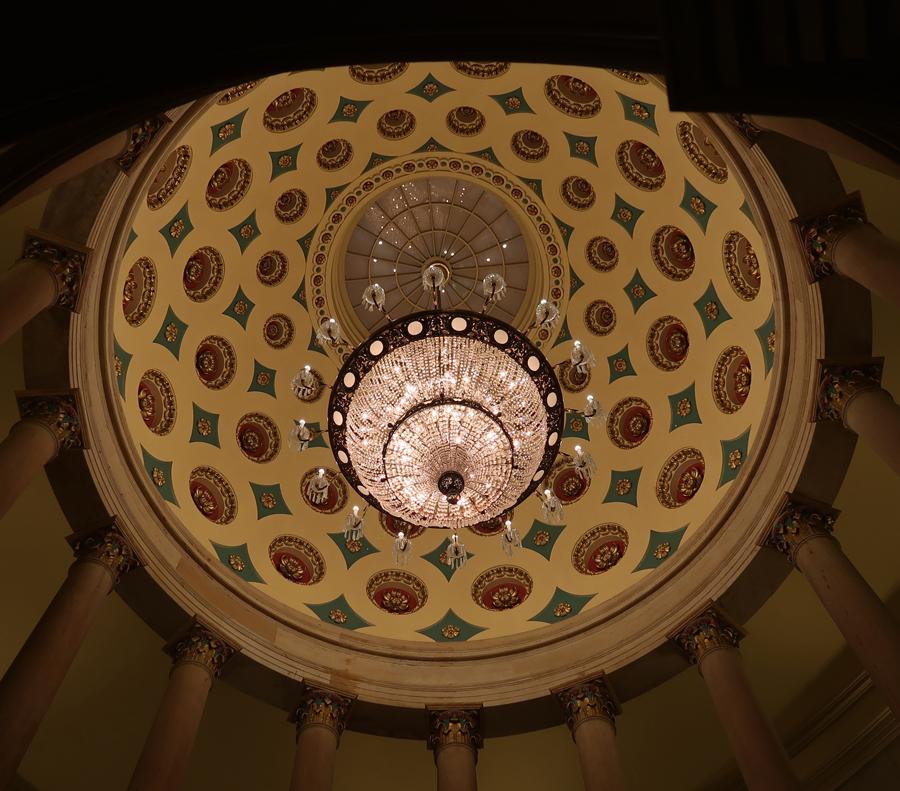
Dome of the Crypt
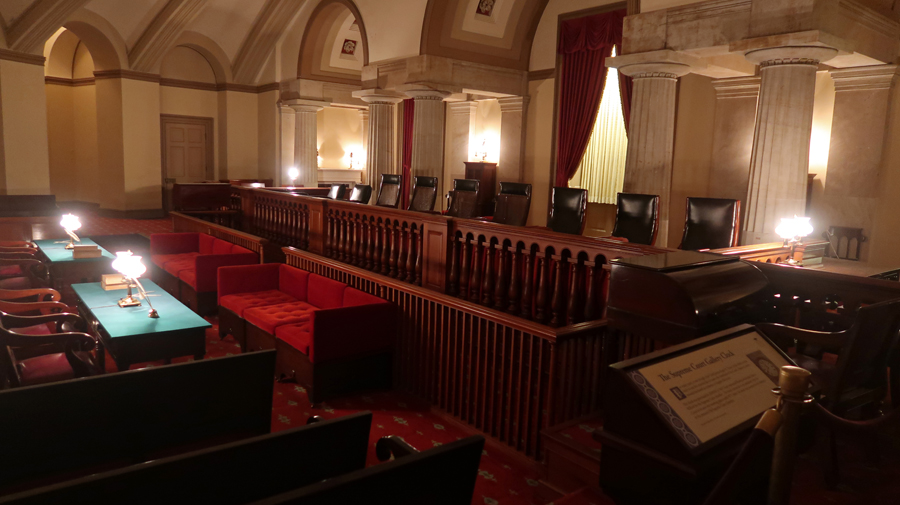
Old Supreme Court Chamber –
We then walked upstairs into the Rotunda – the Dome. The Apotheosis of Washington, is the fresco painted by Greek – Italian artist Constantino Brumidi in 1865 and visible through the oculus of the dome in the Rotunda. The fresco is suspended 180 feet above the rotunda floor.

Thomas Jefferson and George Washington statues are located at the main (east) entrance into the Rotunda.

Helen resting under painting representing the Landing of Columbus in the “New World.”

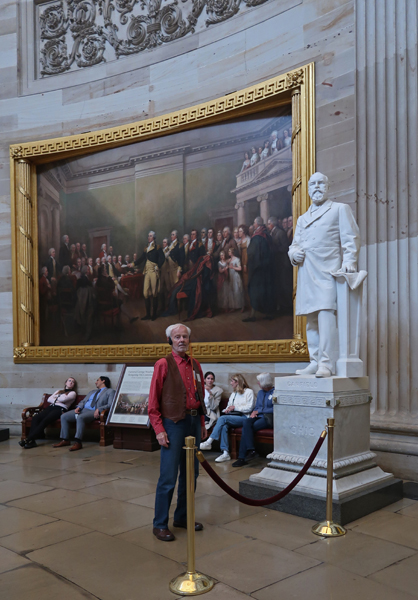
Statue of President Garfield one of two statues representing Ohio. The twelve historic paintings that surround the Rotunda present important events in the history of our country. The one behind me is General George Washington Resigning His Commission, by John Trumbull, 1826.
Statue of the women at the forefront of the Women’s Suffrage Movement

Lucretia Mott, Elizabeth Cady Stanton, and Susan B. Anthony launched the women’s movement, which resulted in women’s right to vote. It was granted 144 years after America declared itself a nation of liberty for all. Note that the statue looks incomplete. There is an uncarved block of marble. There is speculation that it will be carved for the first woman President.

Statuary Hall – Our guide was excellent and spoke to us through our groups’ own audio system. Her voice was clear, and our headphones blocked out other sounds in the area. Rosa Parks statue in center.
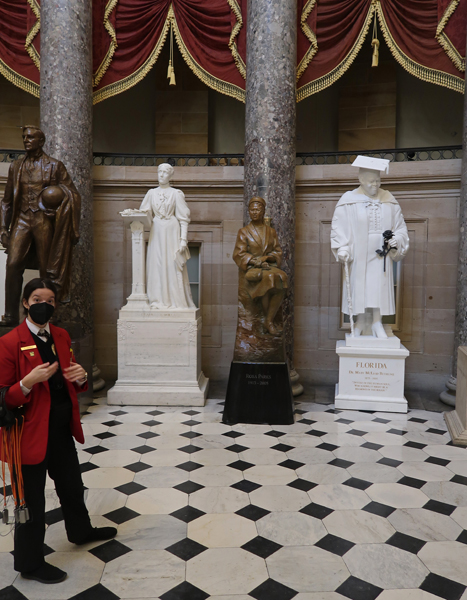
Thomas Edison (born in Ohio) statue. It is one of two statues representing Ohio in the Capitol.

After our tour, we were free to wander through the Exhibition Hall. I liked the five models representing the development on Capitol Hill. Here is the first, representing the New City of Washington DC 1790 – 1814.
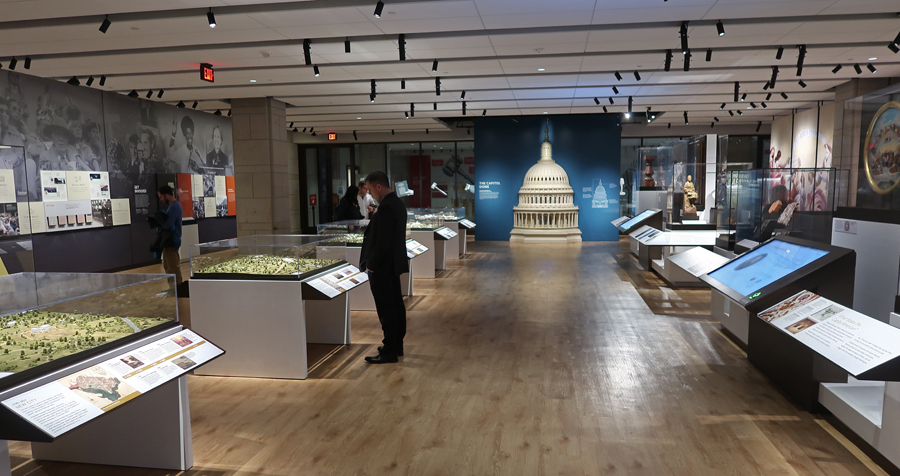

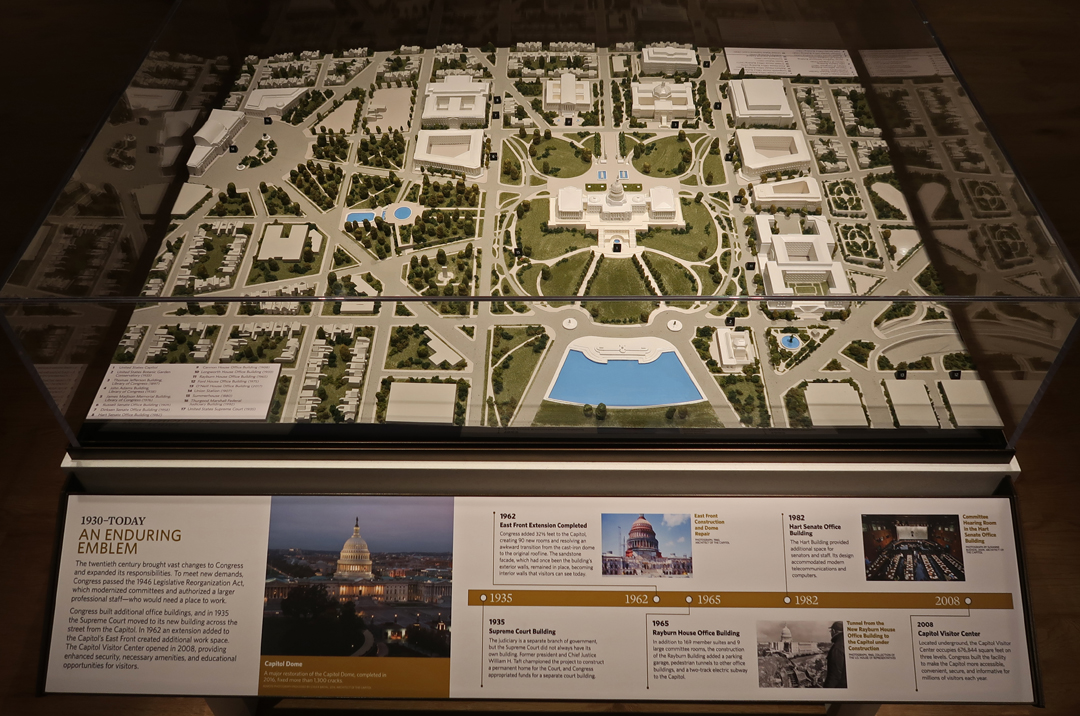
Here is the Fifth model representing 1930 – Today.
We then used our Gallery passes to enter the House of Representatives, which was not in session. And then the Senate Chamber, which was in session; no photos are permitted. Only one senator was present, and he was speaking during the debate on a funding bill. Cameras were rolling and his comments were being recorded and sent to congressional offices in real time. If a vote was required, the representatives would be alerted to come to the Senate Chamber. House and Senate Gavels

Gallery Passes

Exit

East side of Capitol at sunset –

Library of Congress – across the street from Capitol (there is a tunnel that connects them). I did research there when in graduate school at the University of Maryland.

Supreme Court Building – also across the street from Capitol

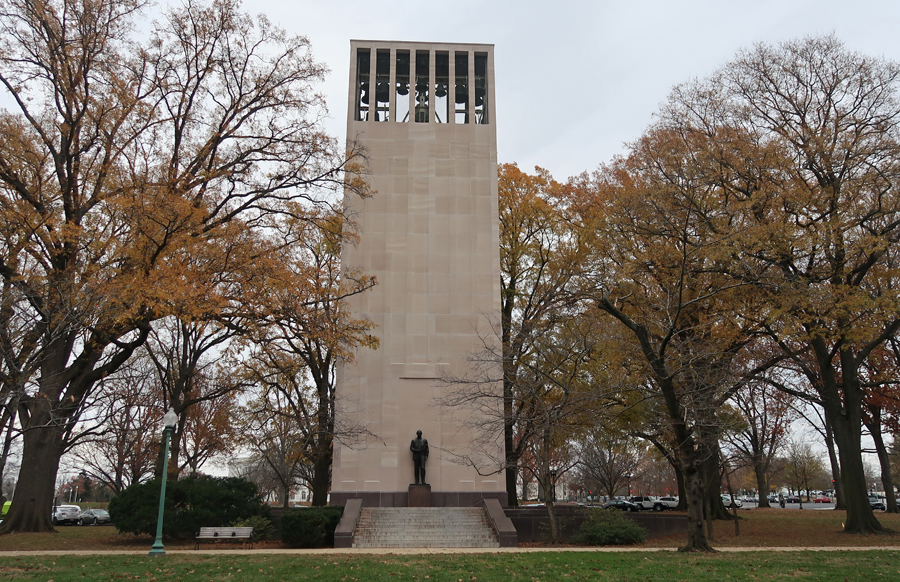
Senator Robert A Taft (Ohio) Memorial Carillon – just north of Capitol. Son of President William Howard Taft (1909-1913).
Returned to Rockville, had dinner at “Not Your Joe’s” Kitchen & Bar.
12/8 F – It was a 3-hr drive to the Robert Russa Moton Museum in Farmville VA, which is a National Park Unit affiliated with the Brown v. Board of Education NHP in Topeka KS.
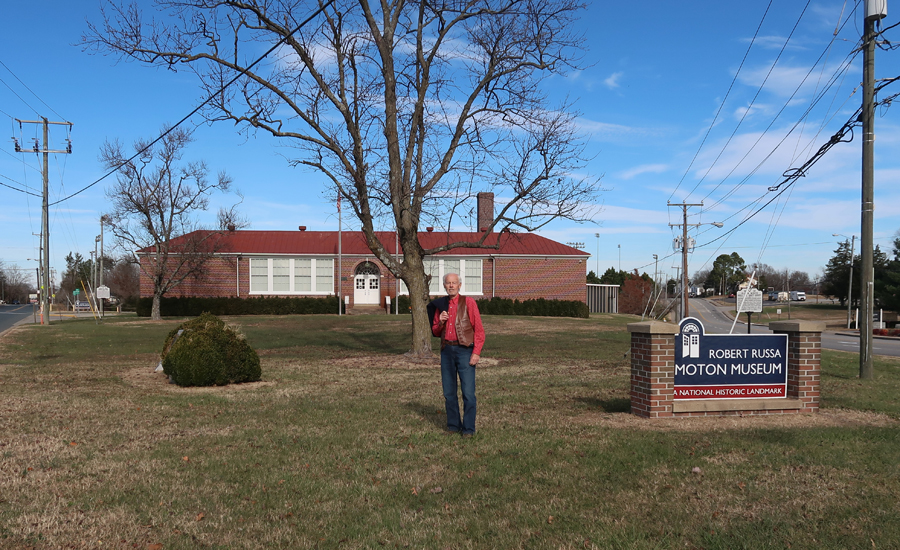
The 1939 High School was named after Robert Russa Moton who was the second principal of Tuskegee Institute in AL.

The Museum is dedicated to the black students who walked-out of school in 1951 to protest the unequal educational facilities that were provided for them compared to their white counterparts.
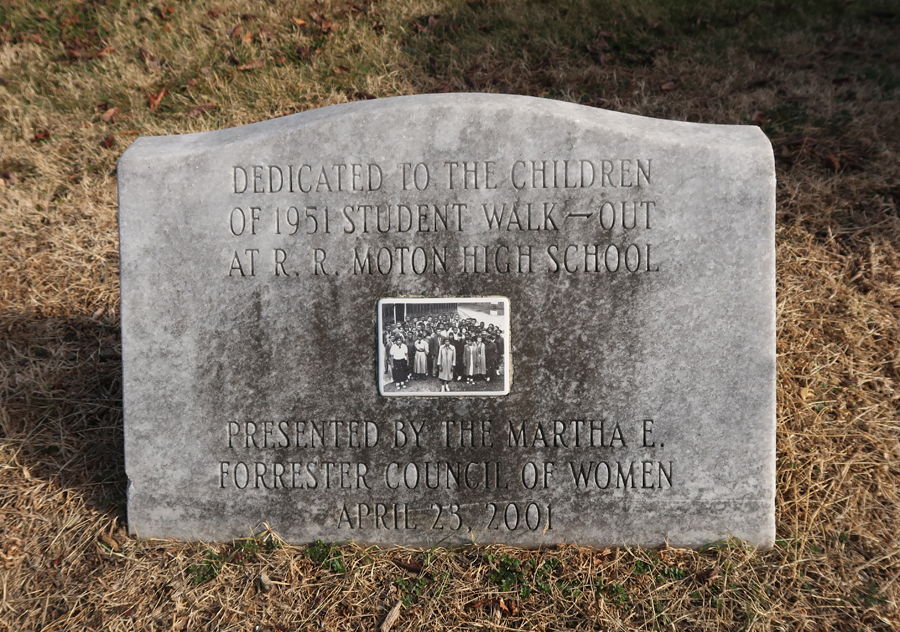

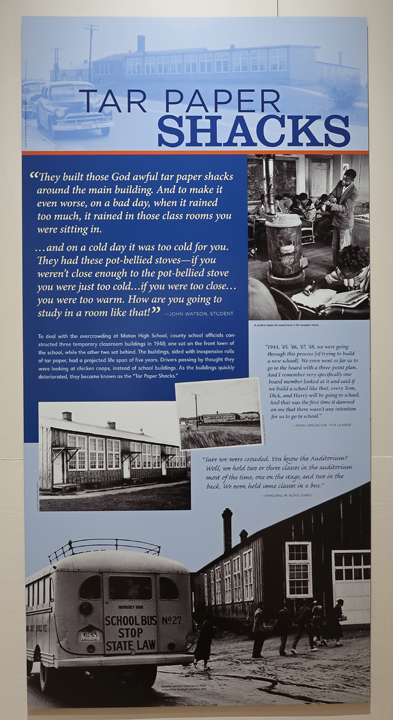
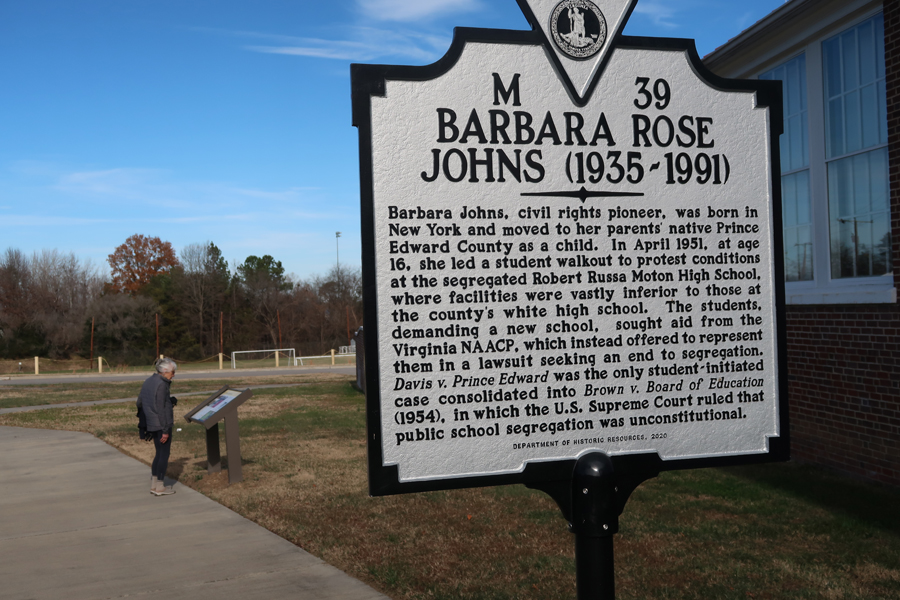
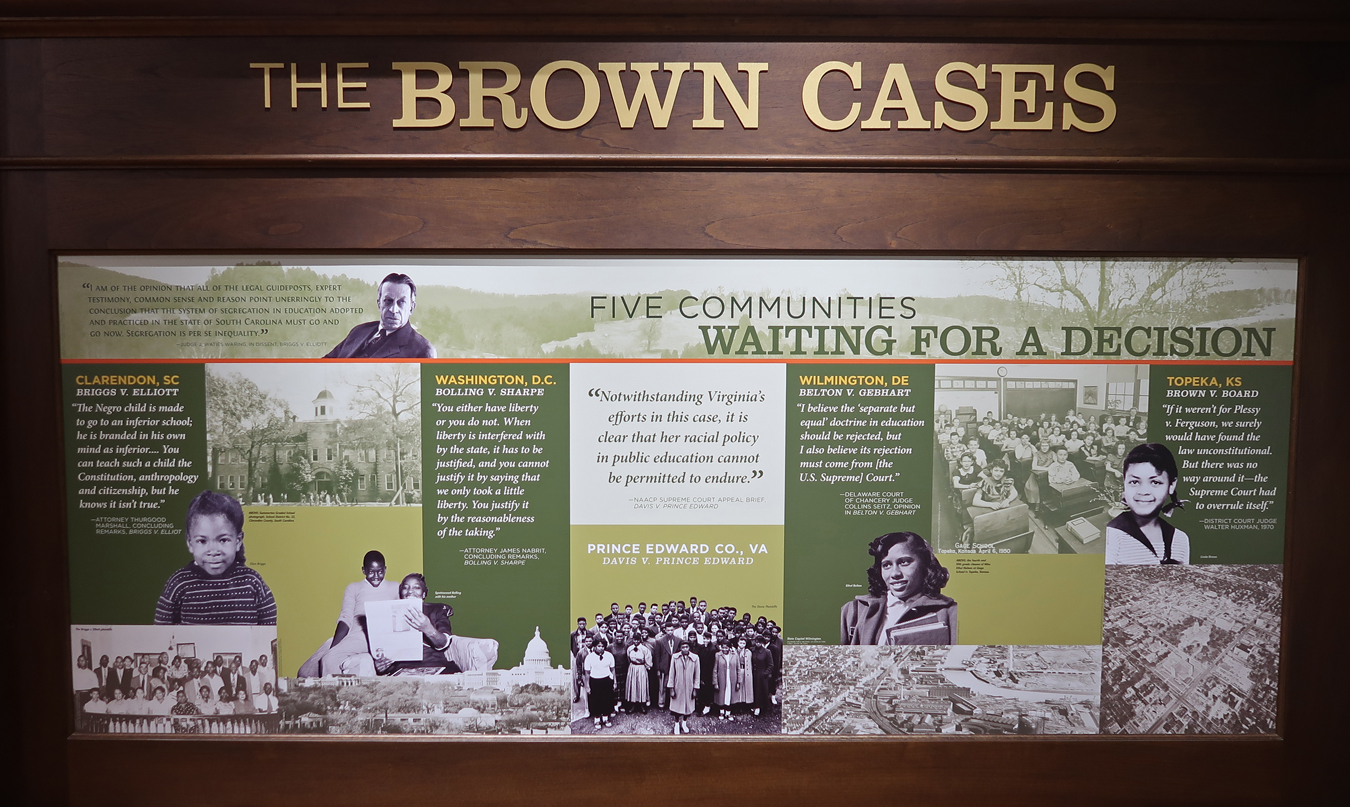
Local lawyers took up the cause and filed a lawsuit, Davis v. Prince Edward (county), to challenge racial segregation. Their suit was consolidated into the U.S. Supreme Court case of Brown v. Board, which led to the 1954 decision declaring that public school segregation was unconstitutional. Prince Edward County responded by closing its public schools for four years to prevent integration.

Barbara Rose Johns led a student walkout in April 1951.
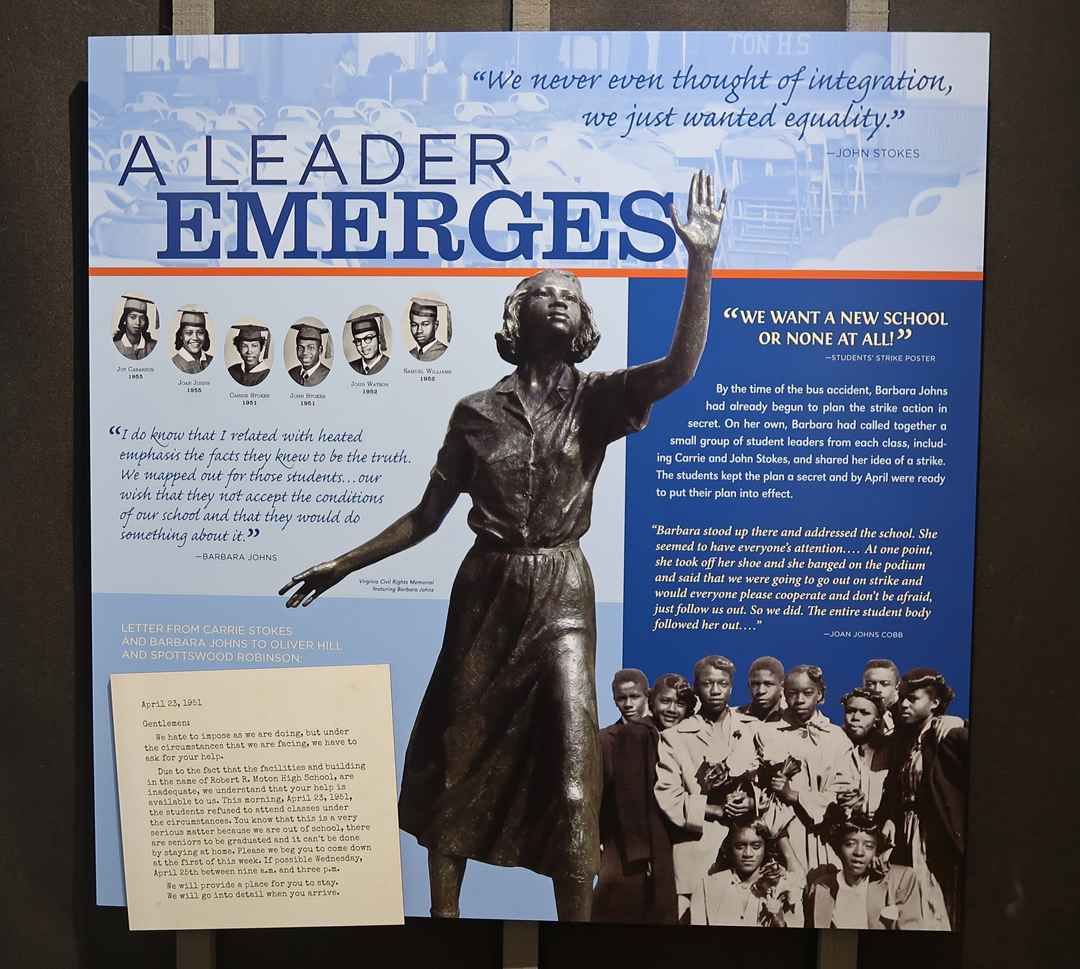
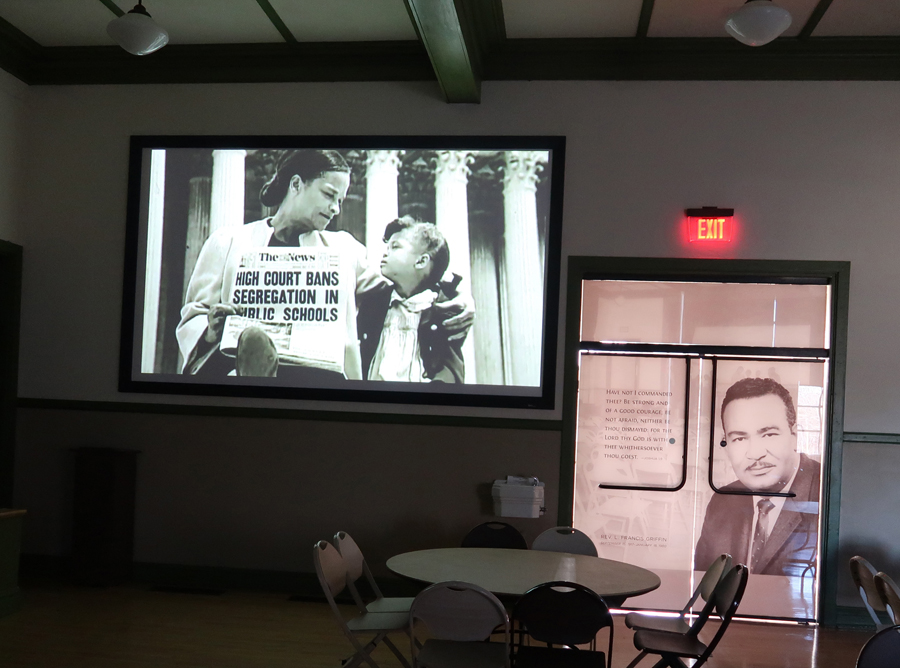
The museum and displays were well done –

Auditorium
These were the five cases combined into the Brown v. Board School Segregation lawsuit –
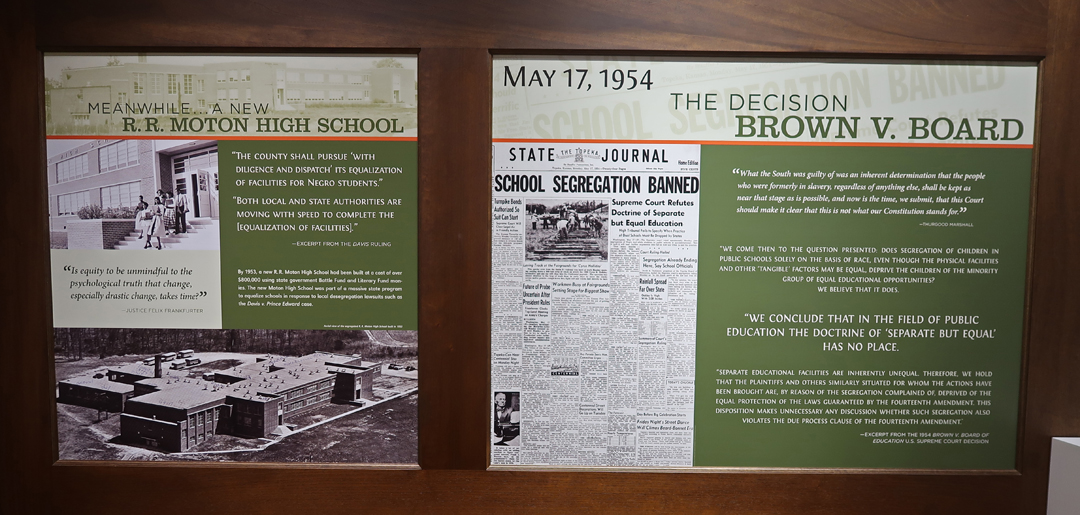
R. R. Moton High School is known as the birthplace of America’s student-led Civil Rights Revolution
7.5hrs to Springfield OH
 The Martin's Blog