
9/27 F – 4.5hrs to Oil City PA, our first stop in the Oil Region National Heritage Area – Oil City on Oil Creek.

..

Oil City is where Oil Creek enters the Allegheny River – it was a major center for transportation of oil.
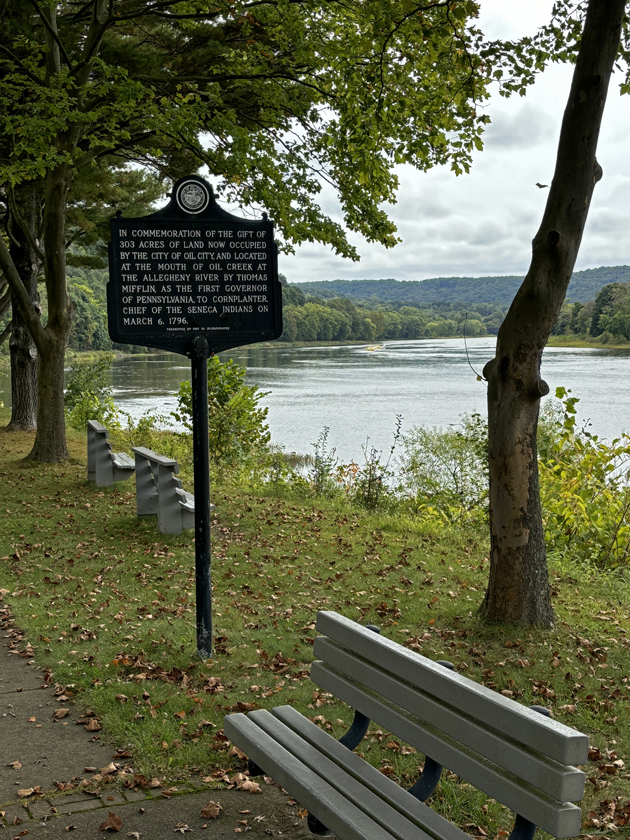
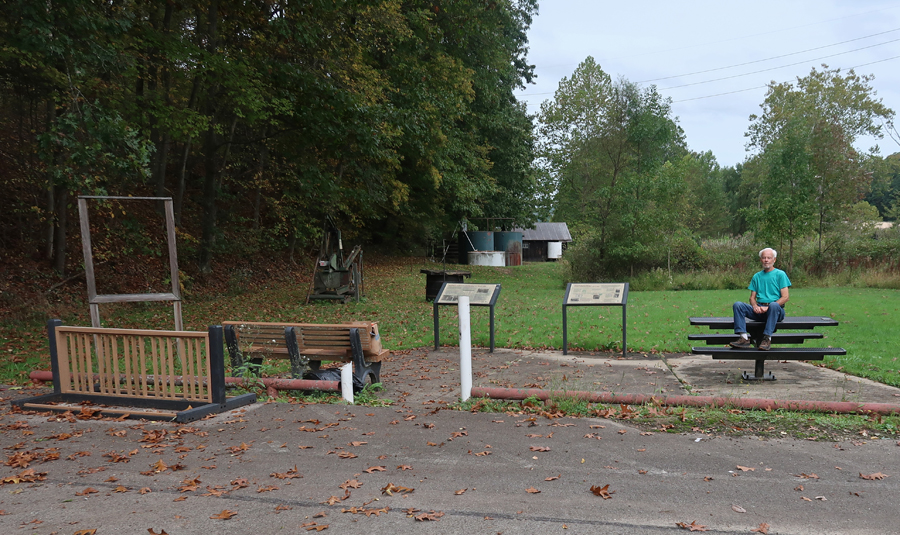
Three miles N is McClintock Well #1 on the Erie to Pittsburgh Trail
.

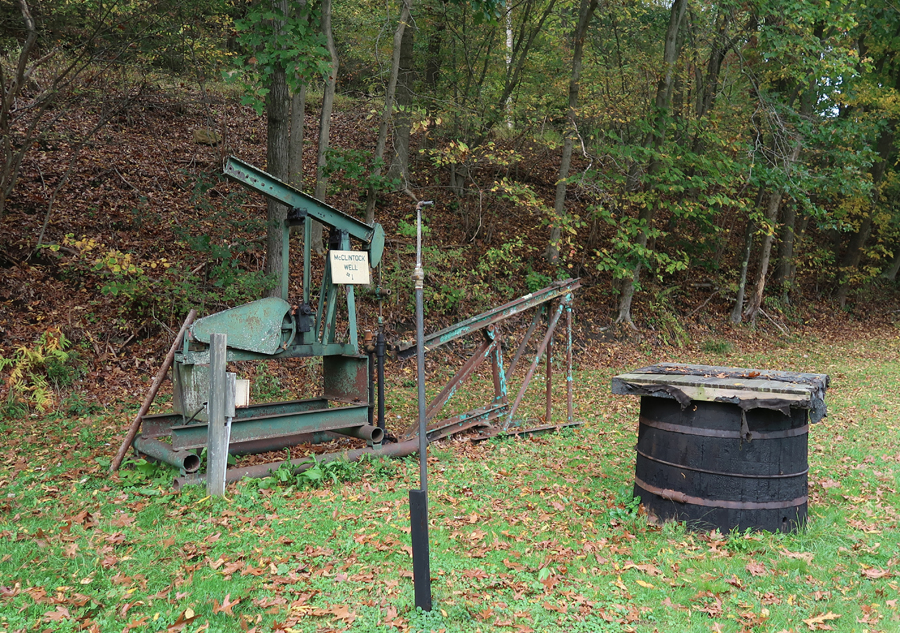
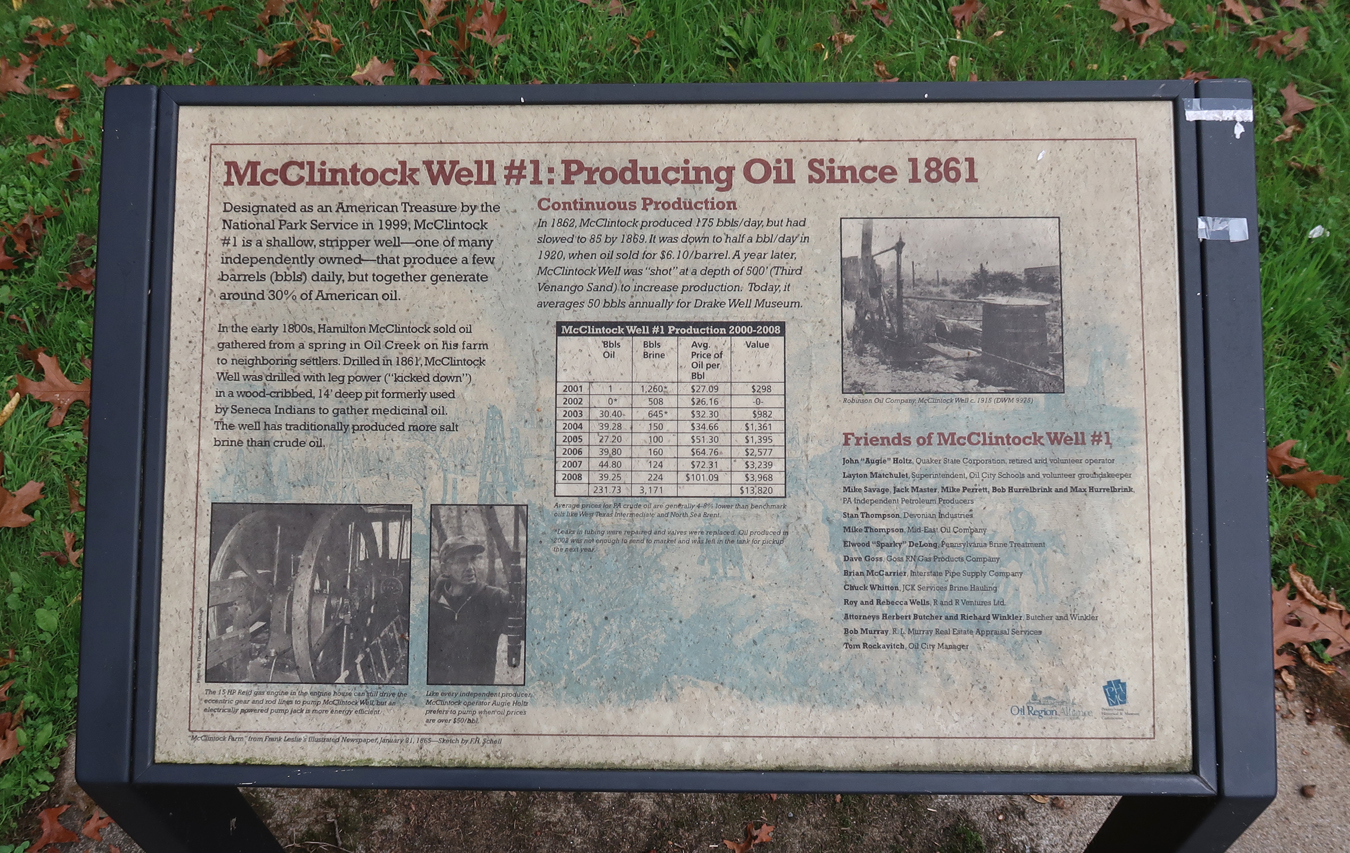
It was one of the hundreds of wells drilled along Oil Creek during the frenzy that followed the success of the Drake Well. Drilling in 1861. McClintock Well #1 initially produced 175 barrels of oil a day but was down to half a barrel a day in 1920. It is advertised as the longest producing well in the U.S (now >155-years). However, they only pump it once per year and the oil revenue is not sufficient to cover the cost of pumping – they just want to retain the record!
.
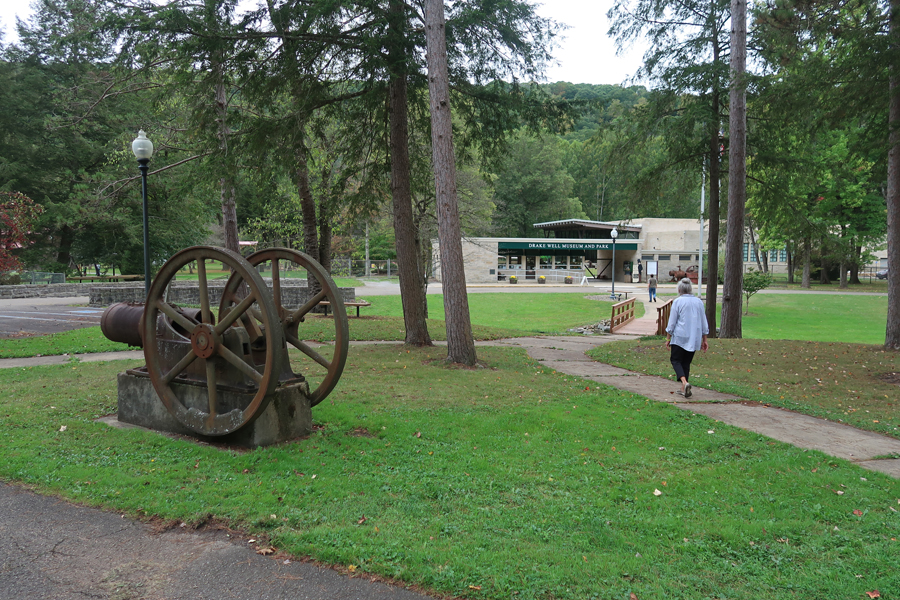
The Drake Well Museum and Park is only 20-min away just east of Titusville PA.
.
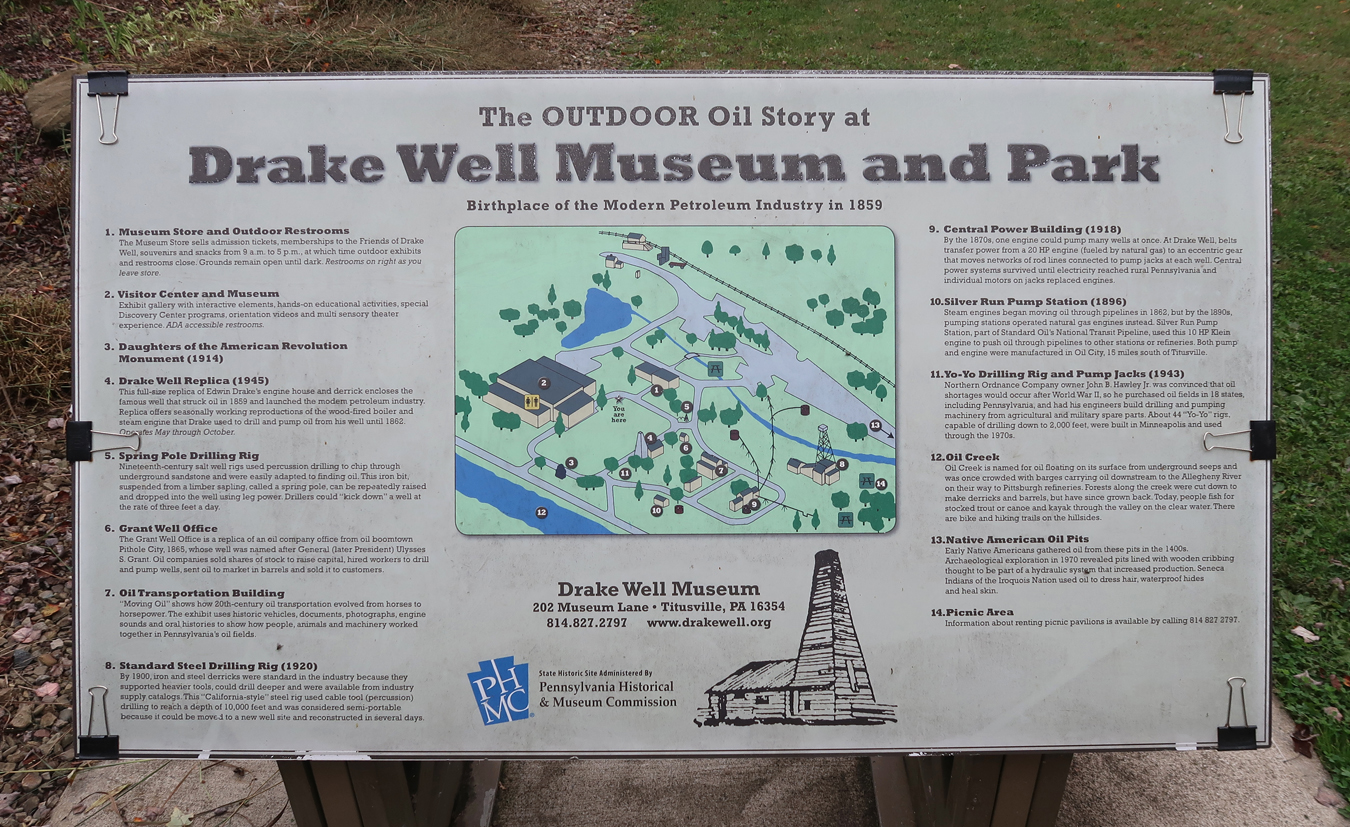
The 1859 Drake Well launched the modern petroleum industry. This replica engine house was built in 1945.

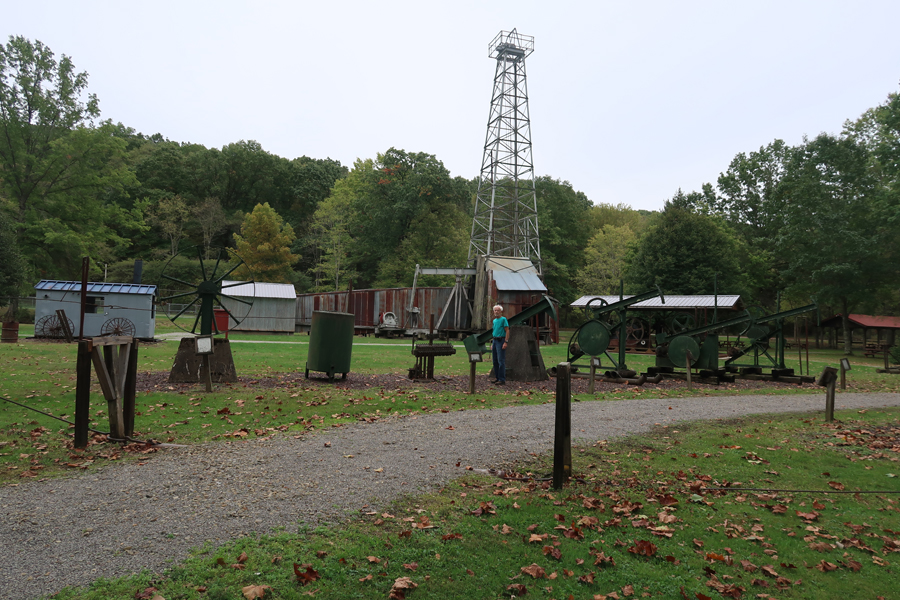
Oil Transportation Building on left, Engine House on right, and standard steel drilling rig (1920) in background.


Horse and Wagon Transport

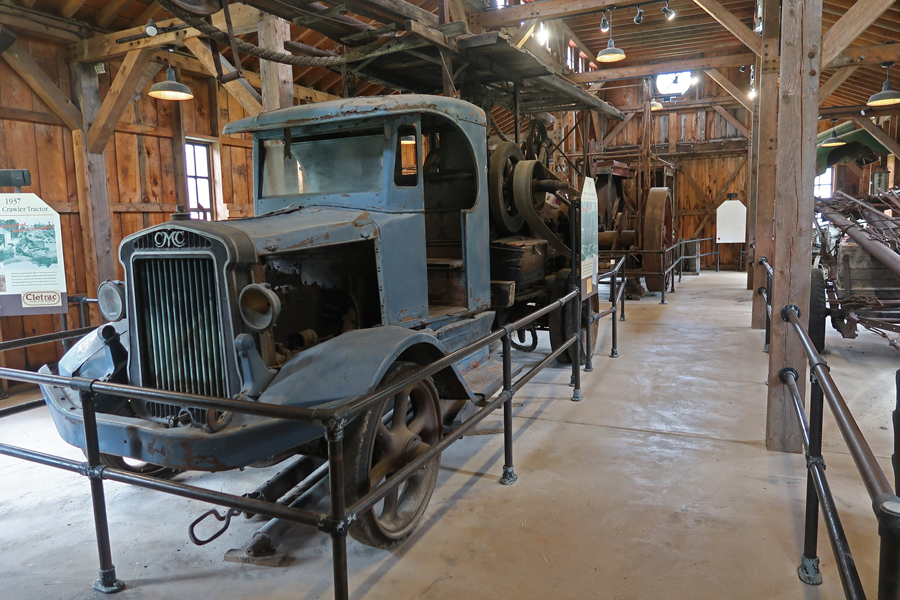
Truck Drilling and Transport
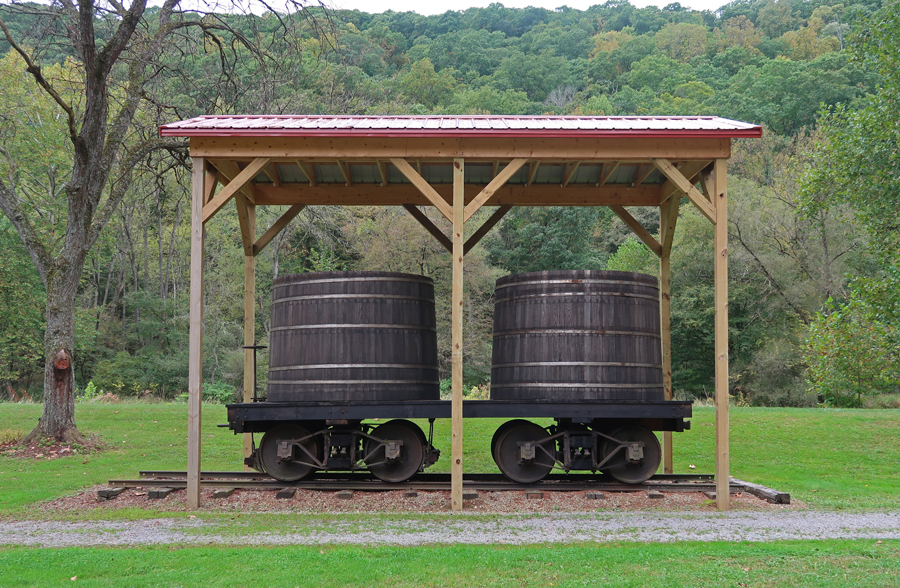
Railroad Transport
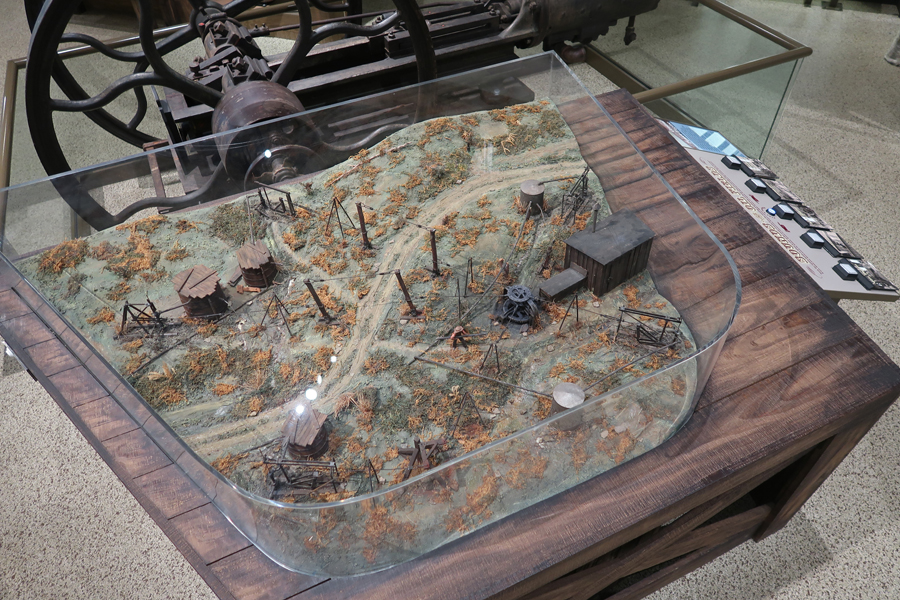
Model and recreation of early drilling
.
Museum

How many barrels of oil?

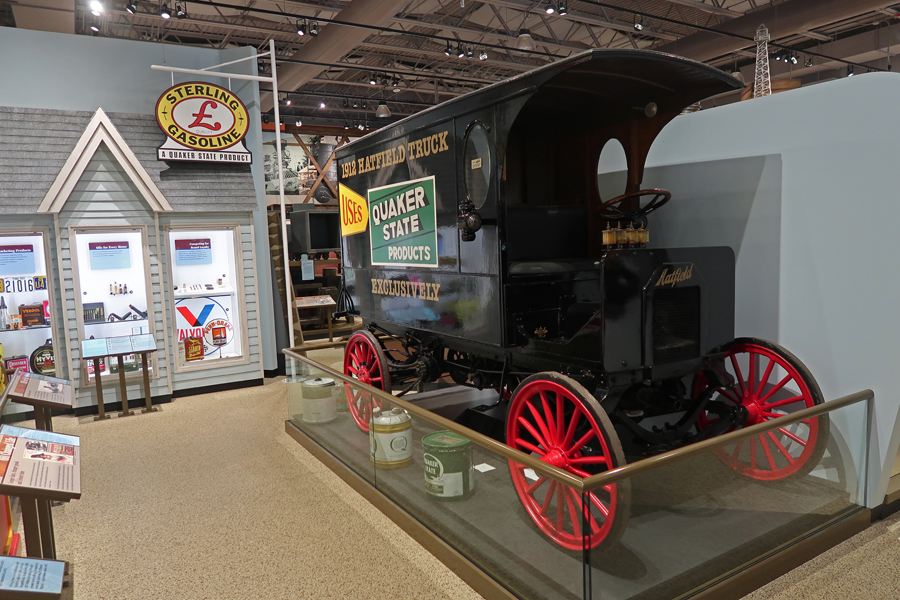
Quaker State Oil Company Truck
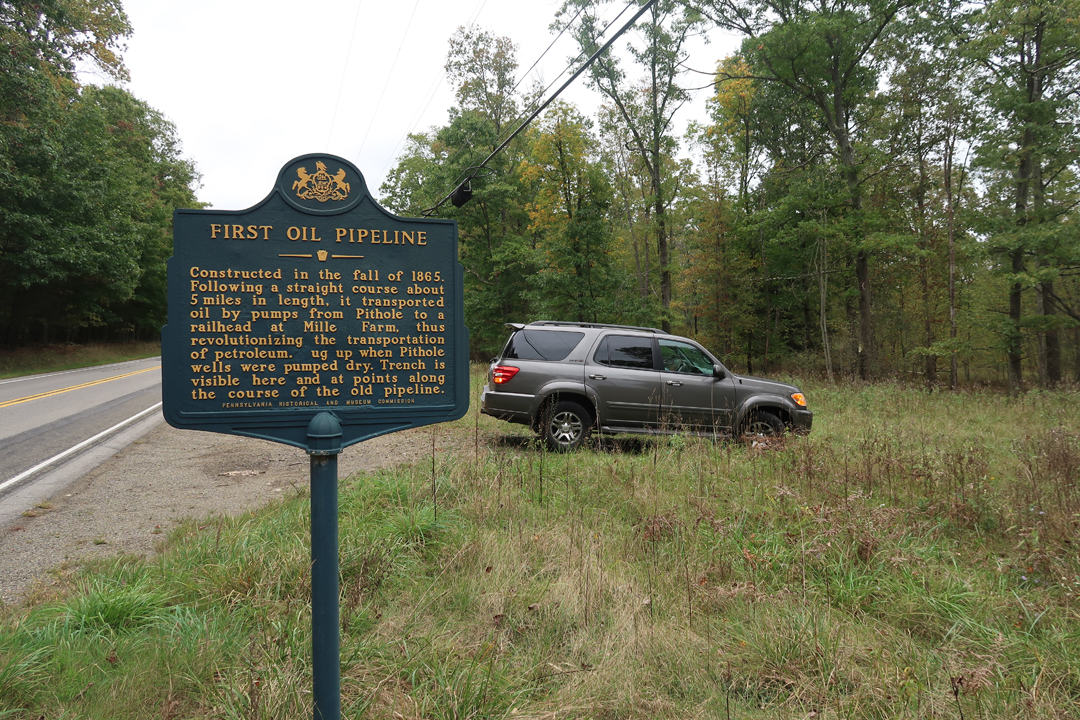
A 15-min ride on Rt 227 took us to this sign. The first oil pipeline (1865) was 5-miles in length and ran from Pithole City to the railroad in Miller Farm PA.
The site of Pithole City was a couple of miles off Rt-227 and 10 mins away. Now, there is only the Pithole City Visitor Center and descriptive signs.

Pithole City was at the base of this hill.
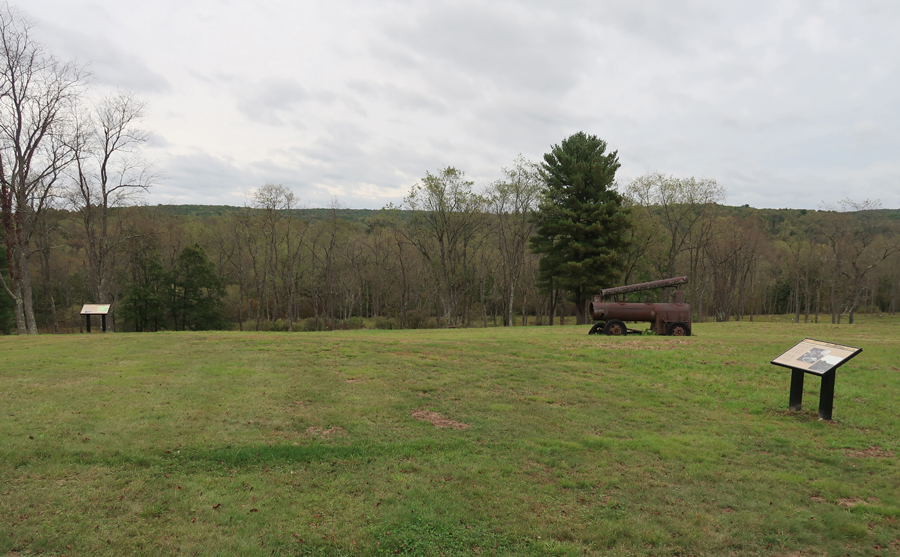
The following weekend they were going to have a lantern tour of the town footprint at the base of the hill.

.

Spent the night in Wilkes-Barre PA.
9/28 Sa – 4hrs to Old Sturbridge Village MA, arrived 11:30am. Paid our senior admission, $14 each (half-price today) and decided on our route through the village.
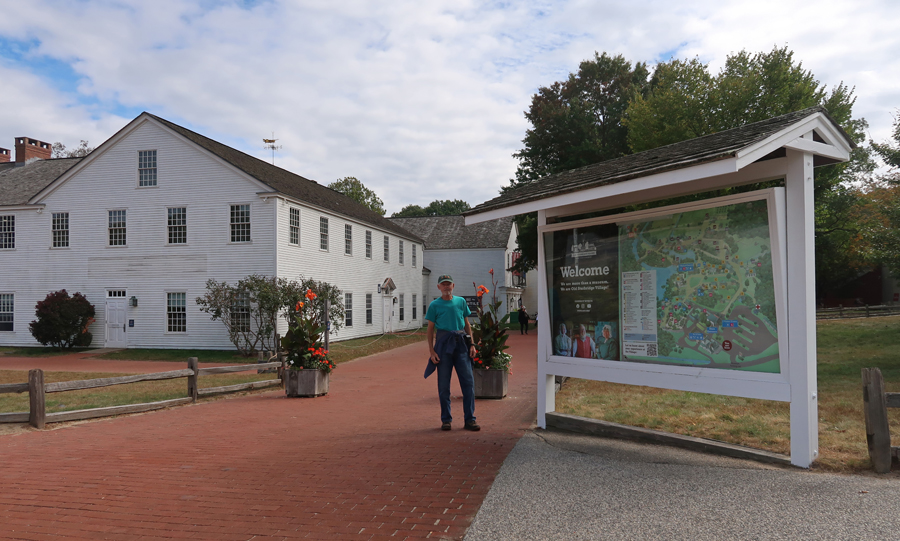
“Old Sturbridge Village is a living museum which recreates life in rural New England during the 1790s through 1830s. It is the largest living museum in New England, covering more than 200 acres. The Village includes 59 antique buildings, three water-powered mills, and a working farm. Third-person costumed interpreters demonstrate and interpret 19th-century arts, crafts, and agricultural work. The museum is popular among tourists and for educational field trips.” [Wikipedia]

We had an enjoyable, leisurely, afternoon on a beautiful Fall Day.
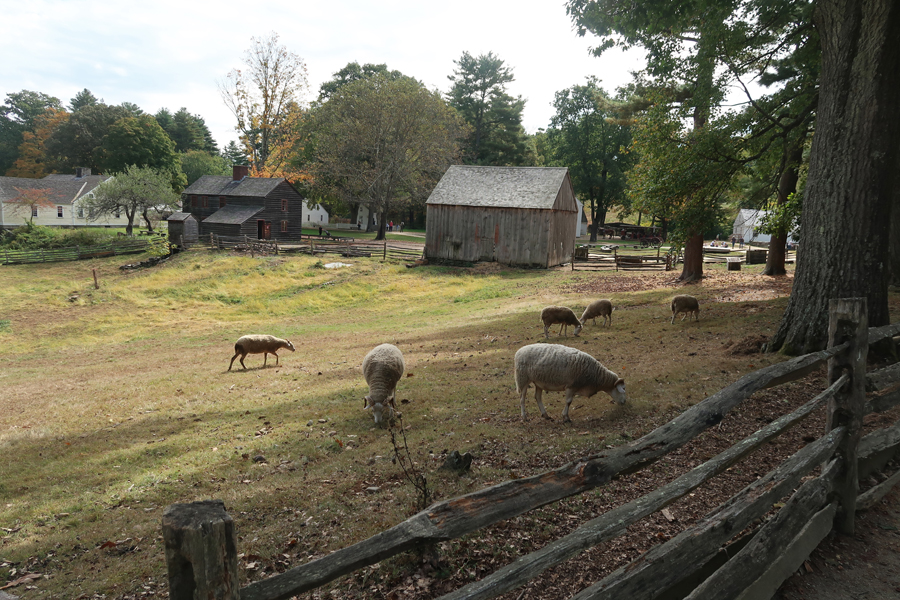
Costumed historians were located throughout the village – this one described life on a small farm.
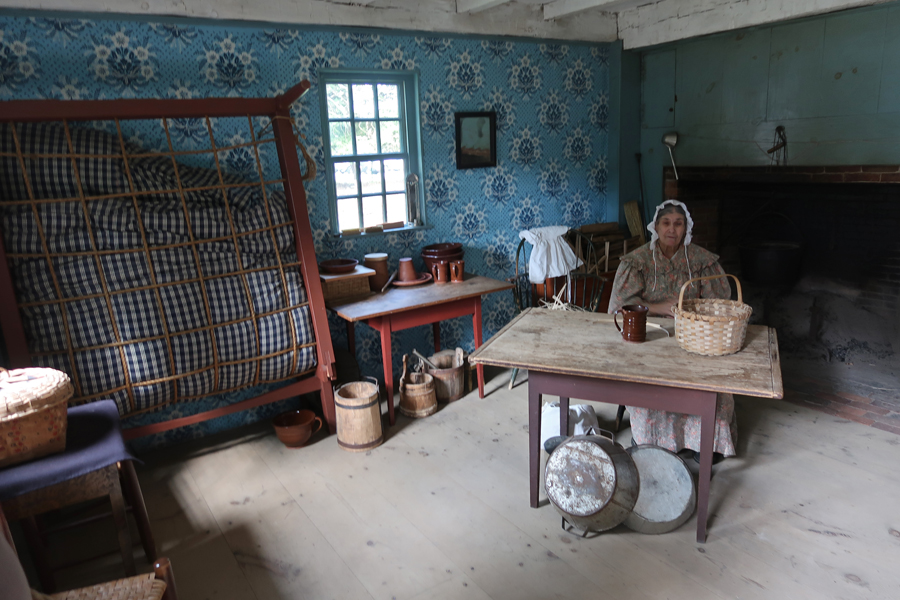
Photo of the Village Center
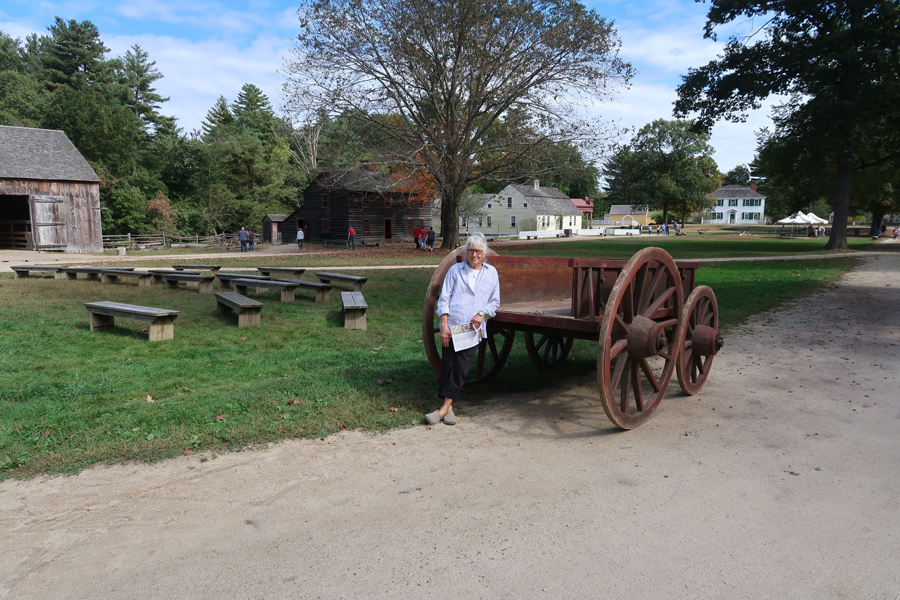
The Tin Shop

Shared Chicken Pot Pie and Shepherd’s Pie and a local beer at the Bullard Tavern and then toured the large “Salem Towne House” (1796). It was moved here from Charlton MA. A Federal Style house built for a prosperous farm family that were leaders in their community.
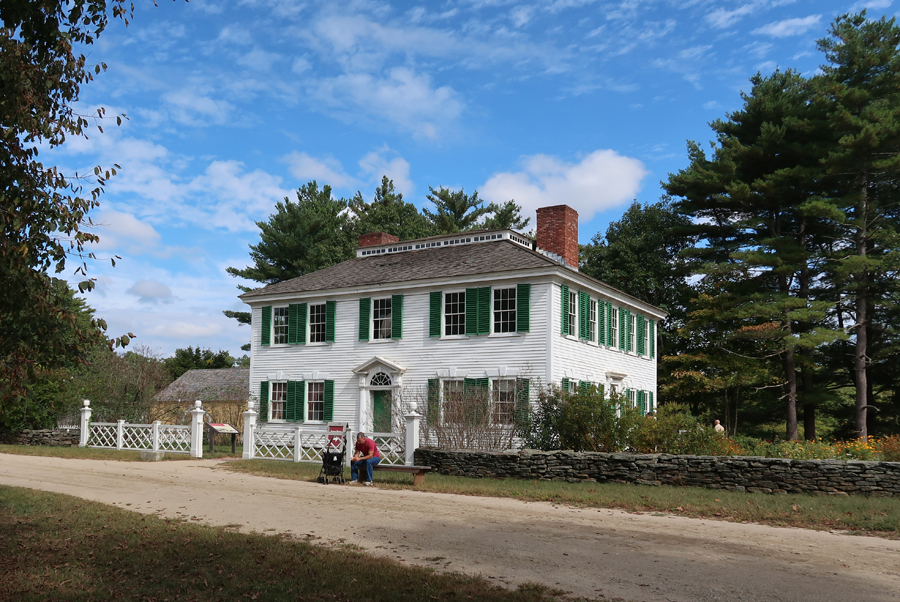
View from the garden
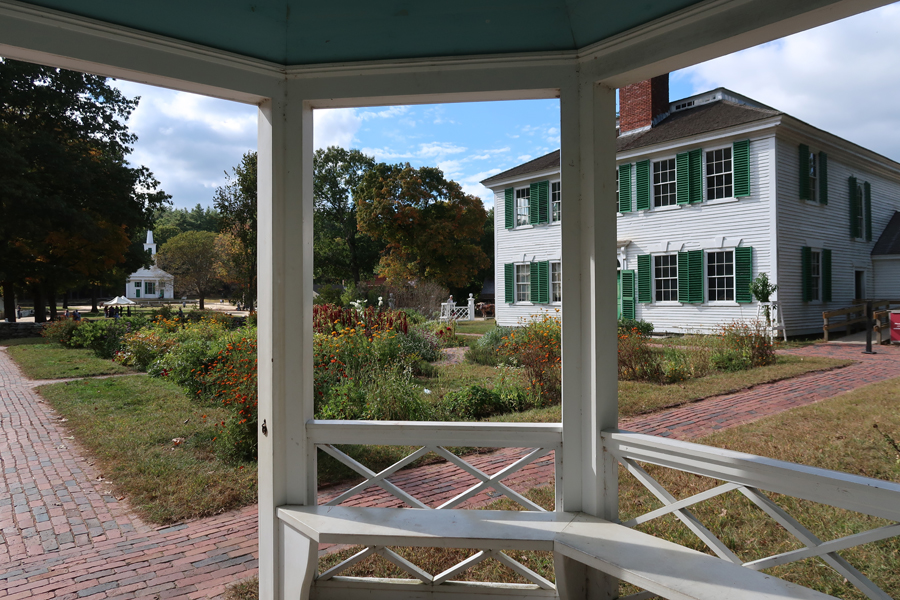
Village Well
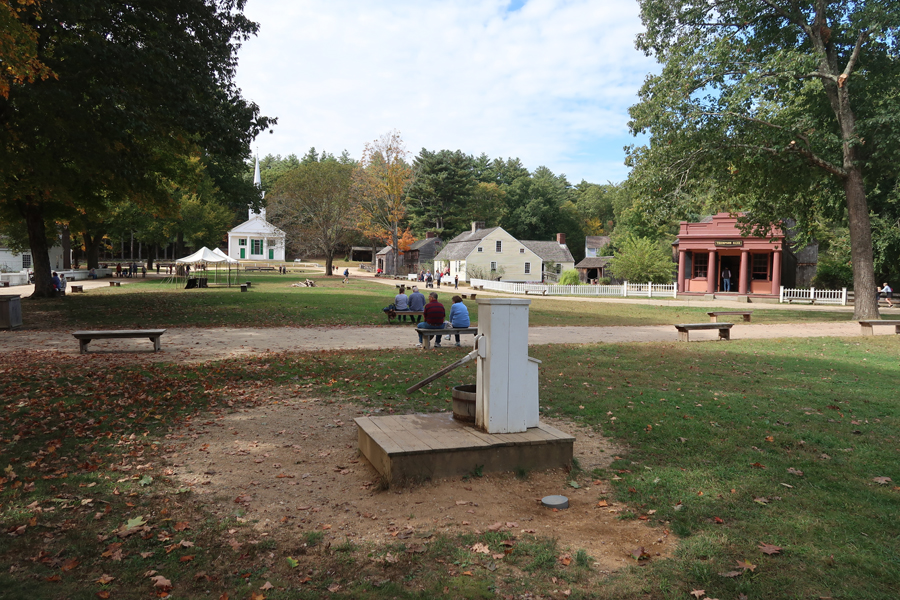
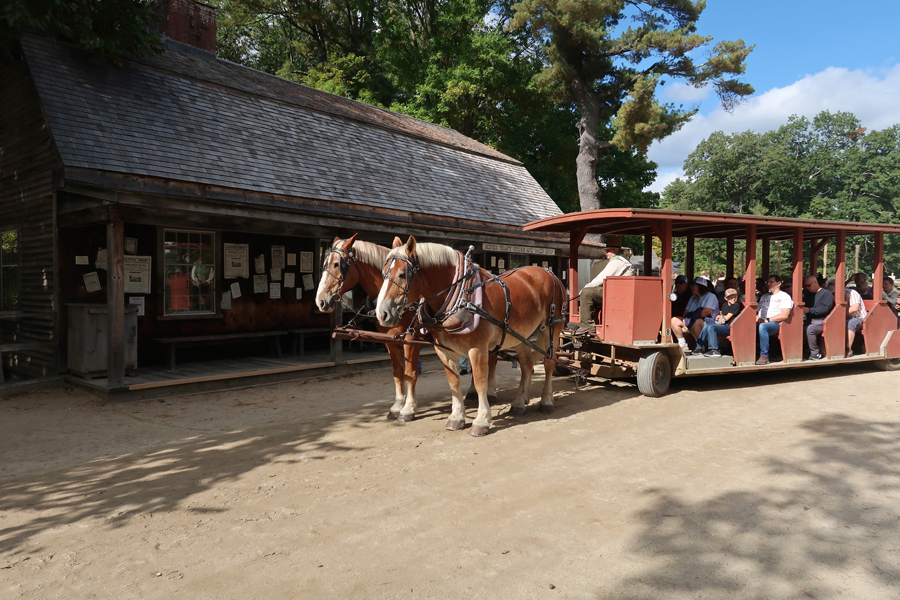
Tour Wagon in front of Minor Grant Store
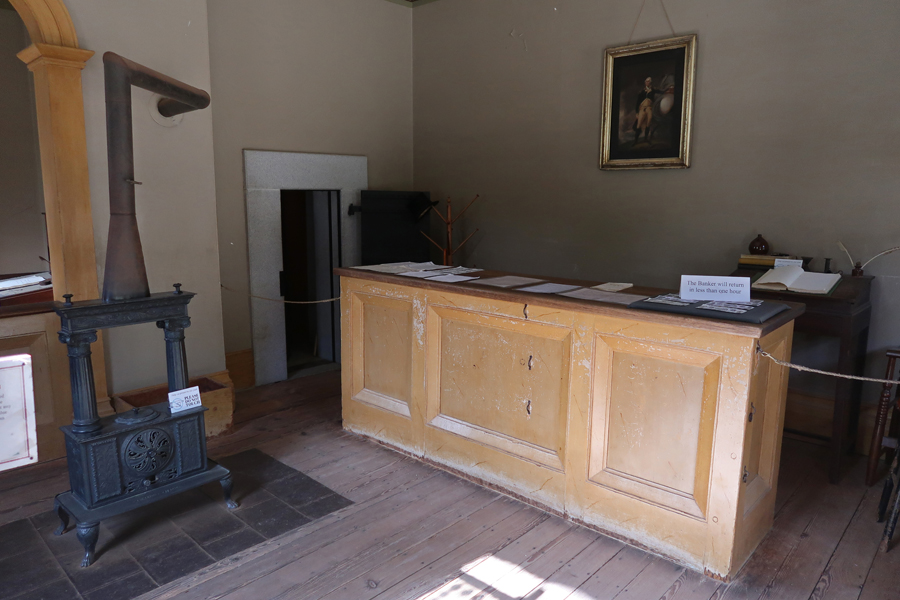
Thompson Bank

.
Fitch Barn and Garden

Weaving demonstration

VT Covered Bridge linking village to rural buildings and displays.

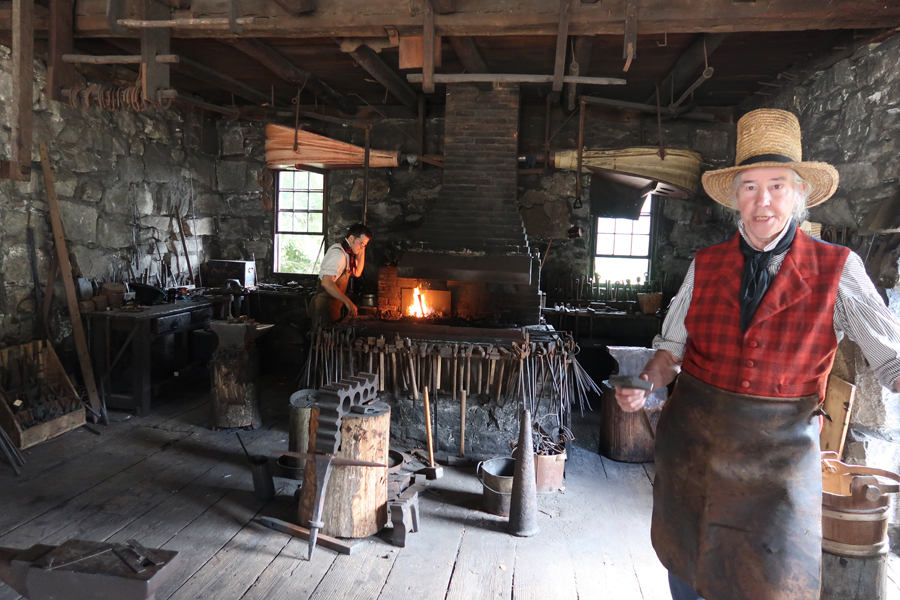
Village Blacksmiths
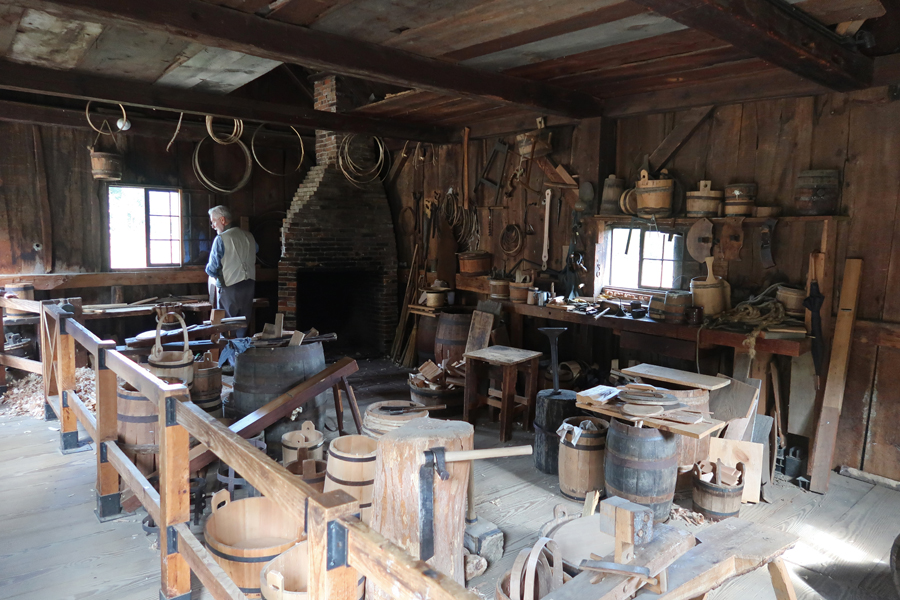
Cooper shop – barrels and buckets
Dinner recreation on the Freeman Farm

Freeman Barn with corn and hay

Pottery Kiln

.
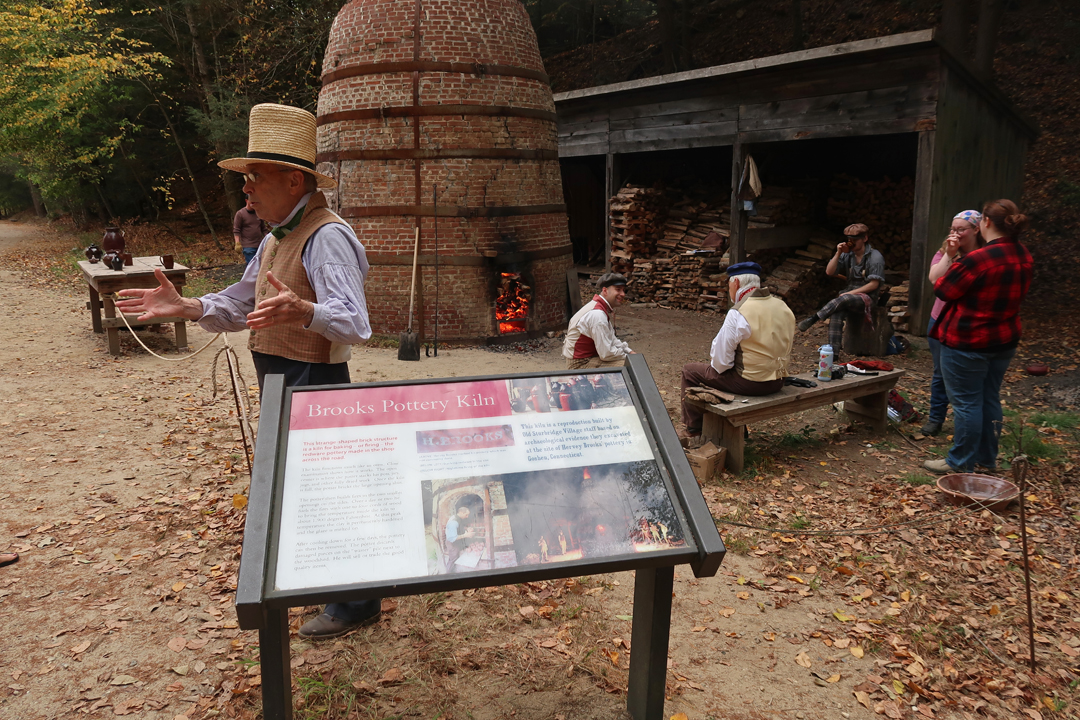
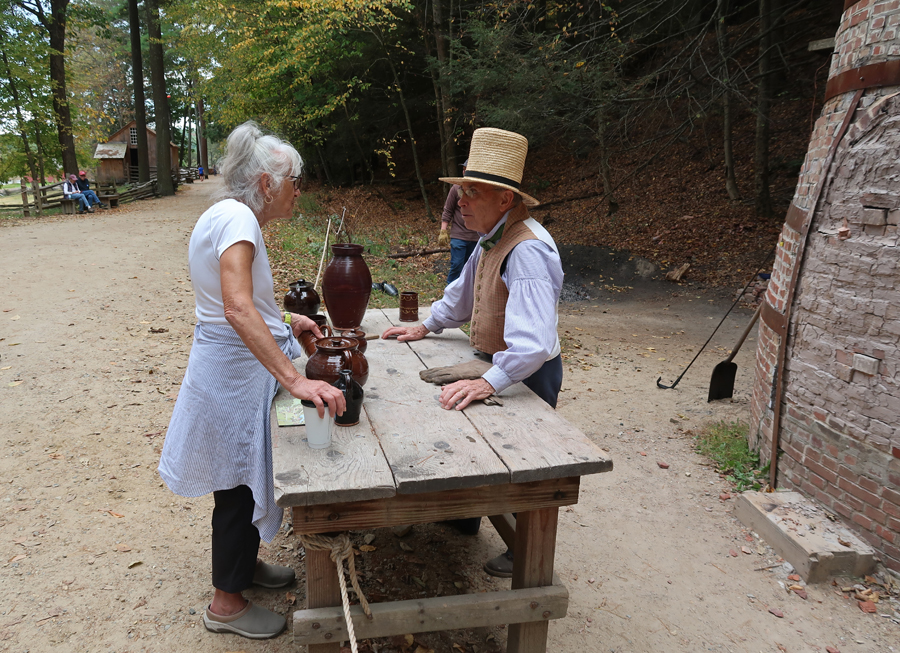
Kiln products
.

Going to Center (Friends) Meetinghouse (Church) for a Singing Performance by the Old Sturbridge Village Singers.

They sang period songs, some accompanied by a bagpipe, and were excellent.

Had an hour of “antiquing” in Sturbridge before a nice dinner at Sturbridge Seafood. Stayed in the La Quinta Inn & Suites by Wyndham.
9/29 Su – Old Sturbridge Village was our first stop in the Last Green Valley National Heritage Corridor (NHC), which runs from Eastern CT to North Central MA. The Last Green Valley is green by day and dark by night. With 84% forest and farm, it is the last swath of dark night sky in the coastal sprawl between Boston and Washington DC. We drove the Rt-169 National Scenic Byway past historic sites and buildings, stone walls, mature trees, colonial village centers, industrial-era mill villages, and farmsteads to experience the landscape and culture of southern New England.
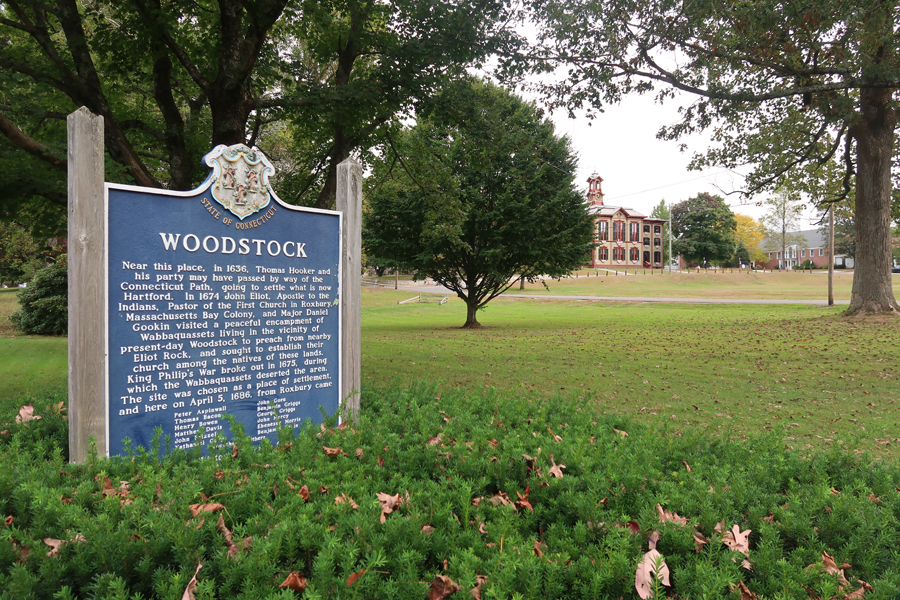
Our first stop today was Woodstock, CT.
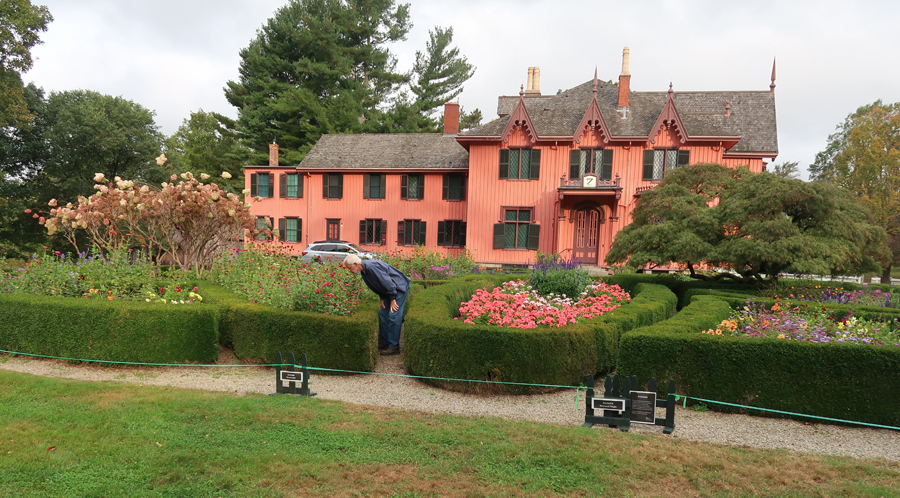
Roseland Cottage was the summer home of Henry and Lucy Bowen and their young family. It was built in 1846 in the newly fashionable Gothic Revival style, The house is instantly recognizable by its unusual color (rose?).

The landscape includes original boxwood-edged parterre gardens planted in the 1850s. The estate also includes an icehouse, aviary, and carriage barn.
.
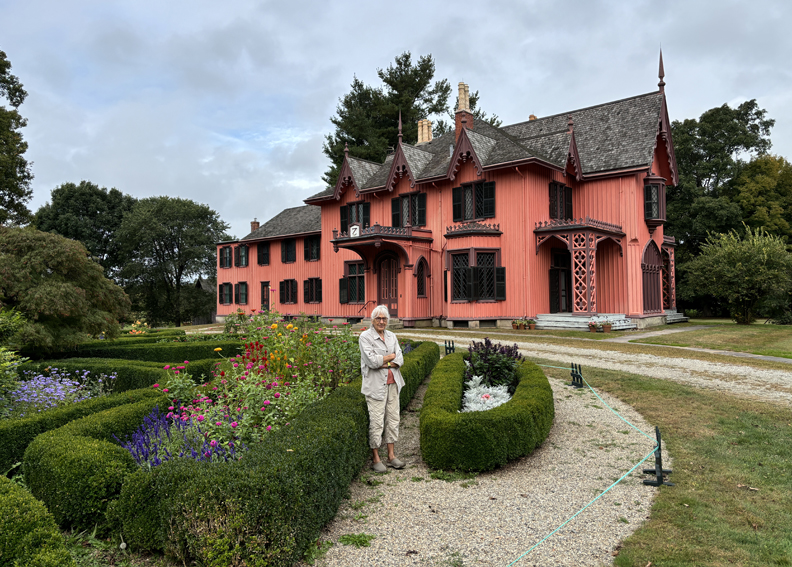
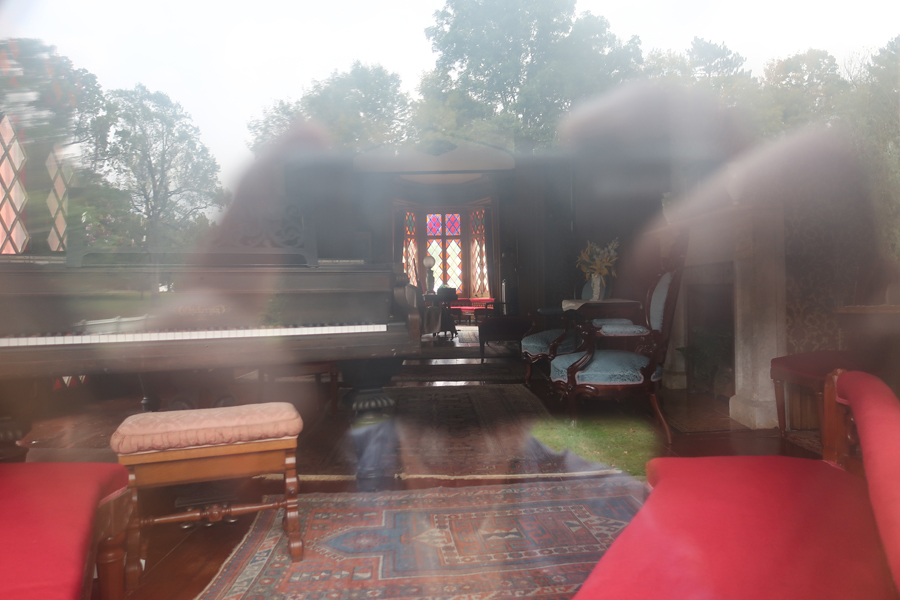
Unfortunately, Roseland Cottage was not open. It is known for its colorful interior, featuring elaborate wall coverings, heavily patterned carpets, stained glass (Victorian Era), and the nation’s oldest surviving indoor bowling alley. Henry Bowen used Roseland Cottage as a place to entertain friends and political connections, including four U.S. presidents. The house is a National Historic Landmark. Photos taken through windows.

.
One hour south on Rt-169 is the Norwichtown Green.

.
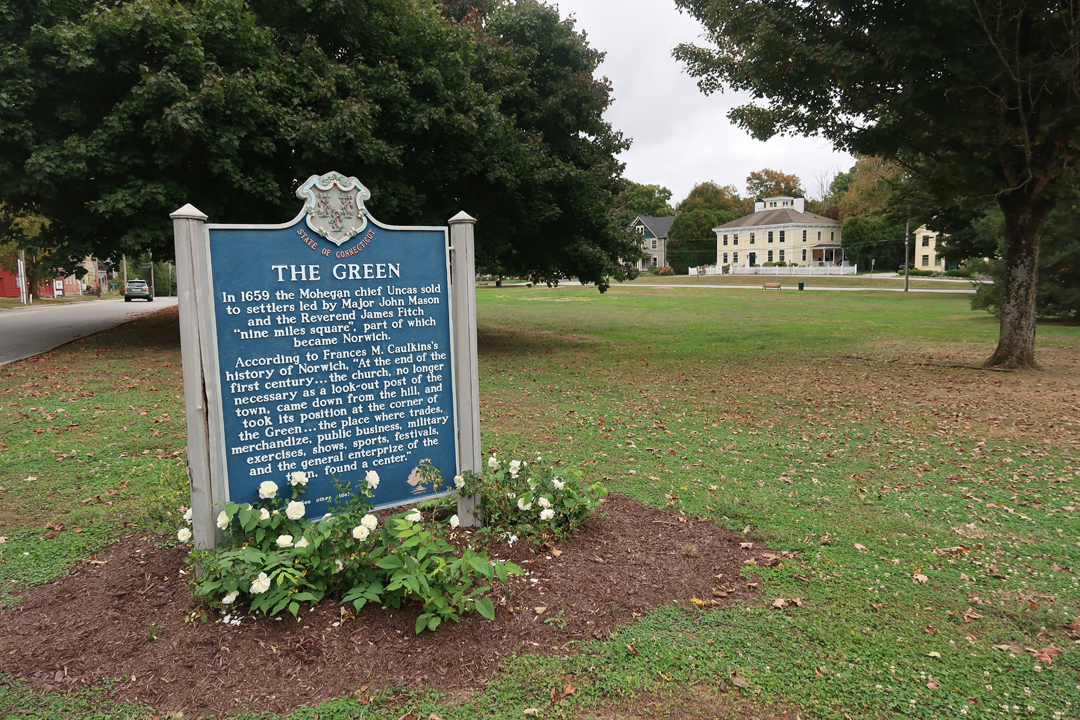
Norwichtown was settled in 1659 around this Green. “The Benedict Arnold Trail” which focuses on Norwich during the Colonial era and the Revolutionary War, begins at the Green. Benedict Arnold, one of America’s most notorious Revolutionary War traitors, called Norwich home. A two-mile trail passes the family homestead, Leffingwell Inn, and Olmstead-Lathrop Manor (1600s).

.

Huntington House (1765) decorated for Halloween.

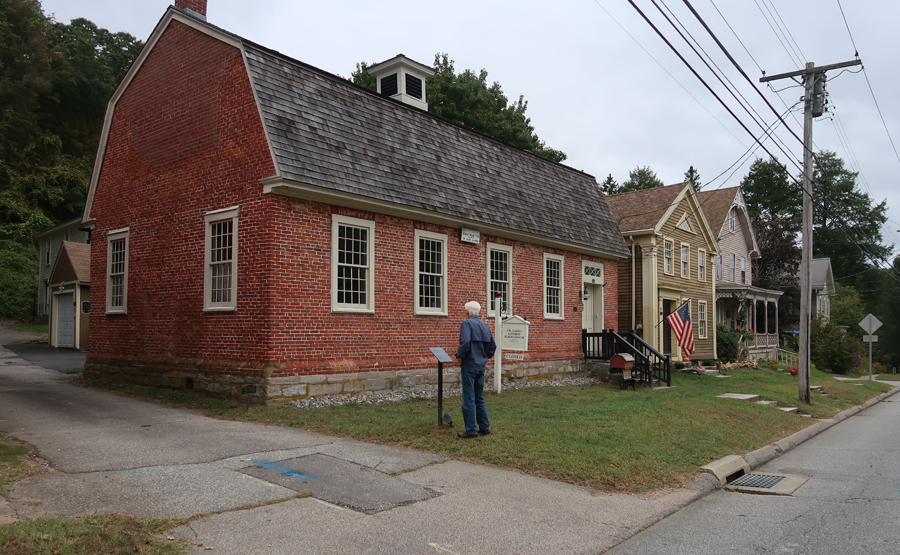
The Dr. Daniel Lathrop Brick Schoolhouse (1783) now serves as the Norwich Heritage & Regional Visitors’ Center.
Norwich was celebrating (2024) the Bicentennial of Marquis de Lafayette’s tour. In 1824, Lafayette returned to the U.S. to revisit places he served with General George Washington in the Revolutionary War. Helen’s celebration included a trip to “Millionaire’s Triangle” in Norwich for an Estate Sale.
Continuing south, we drove to Cockaponset CT State Forest and the Timberland Preserve.
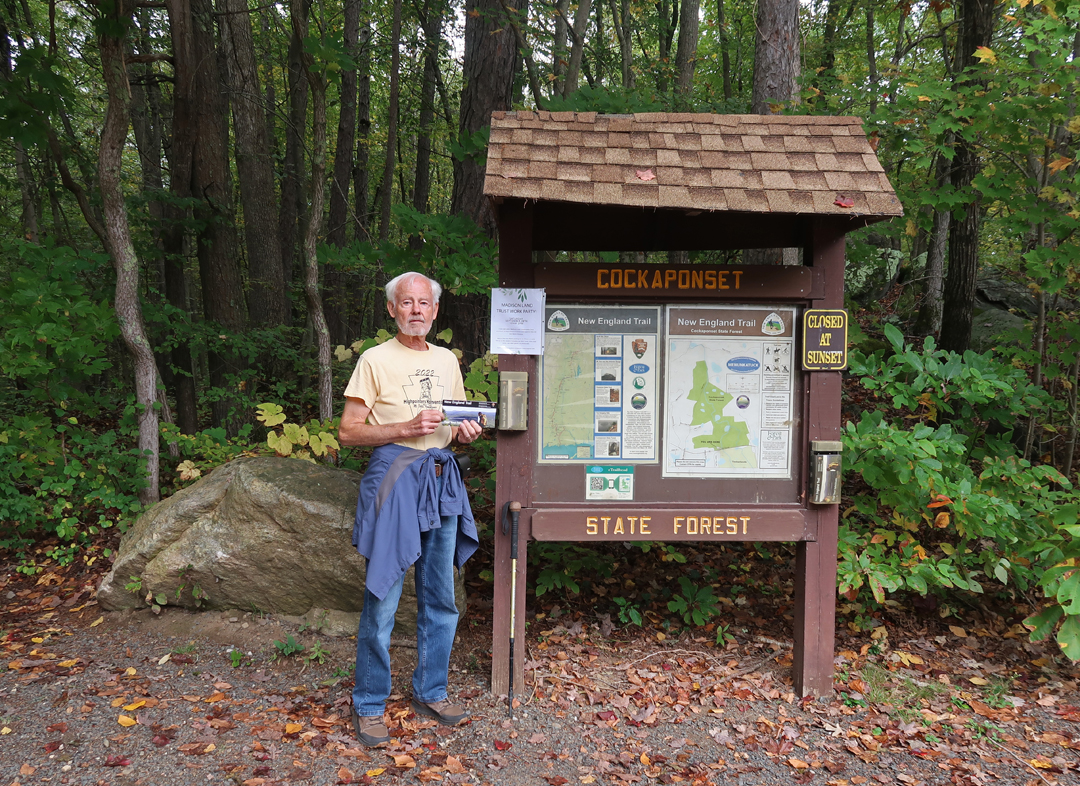
.
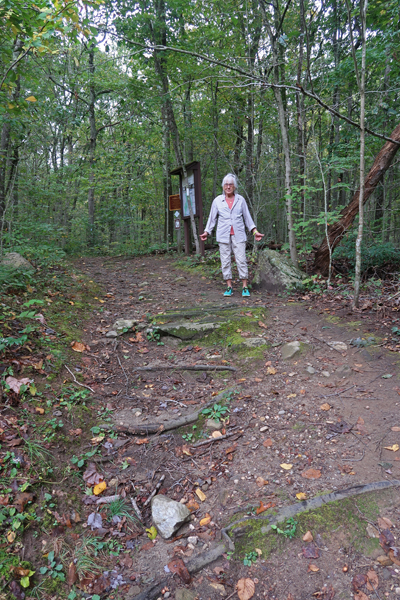
We did a 2.1-mile loop hike in the Preserve, which included about 1.5-miles on the New England National Scenic Trail (NST). The New England NST stretches 235-miles from Long Island Sound in CT to the MA-NH border.
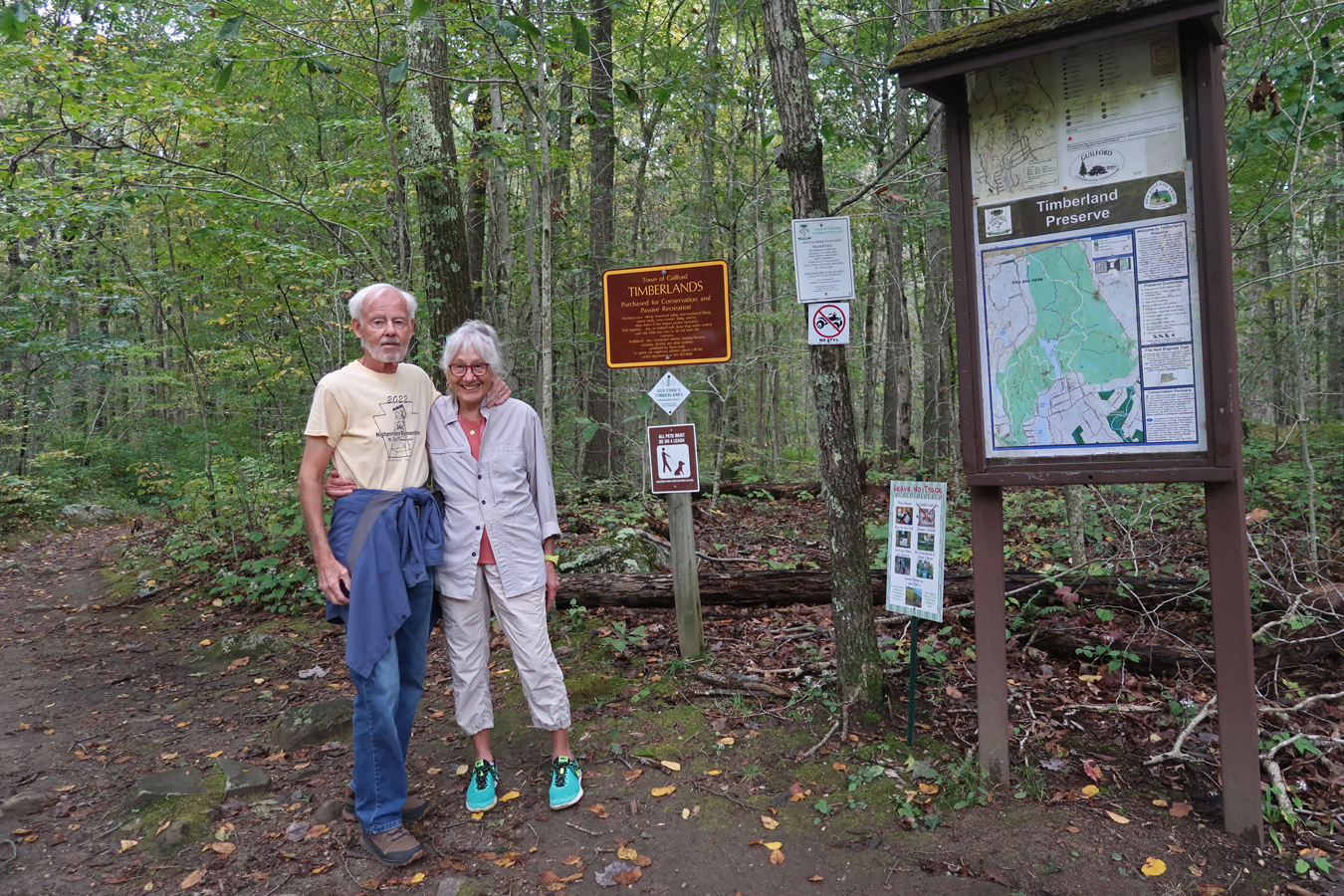
.

The New England NST follows the Menunkatuck Trail through this area.

.

The New England National Scenic Trail became a National Park Service Unit in 2023.
Note New England National Scenic Trail sign

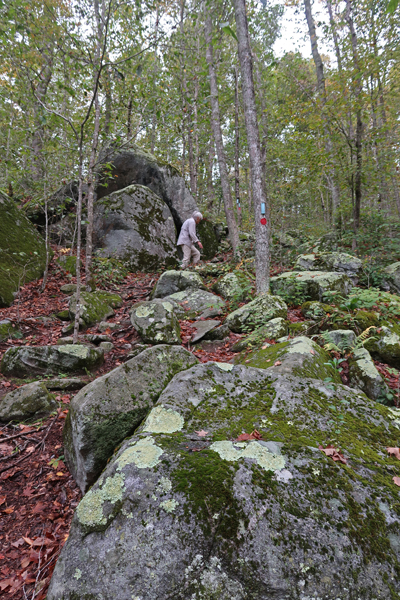
Trail and Markers
Upper Guilford Lake
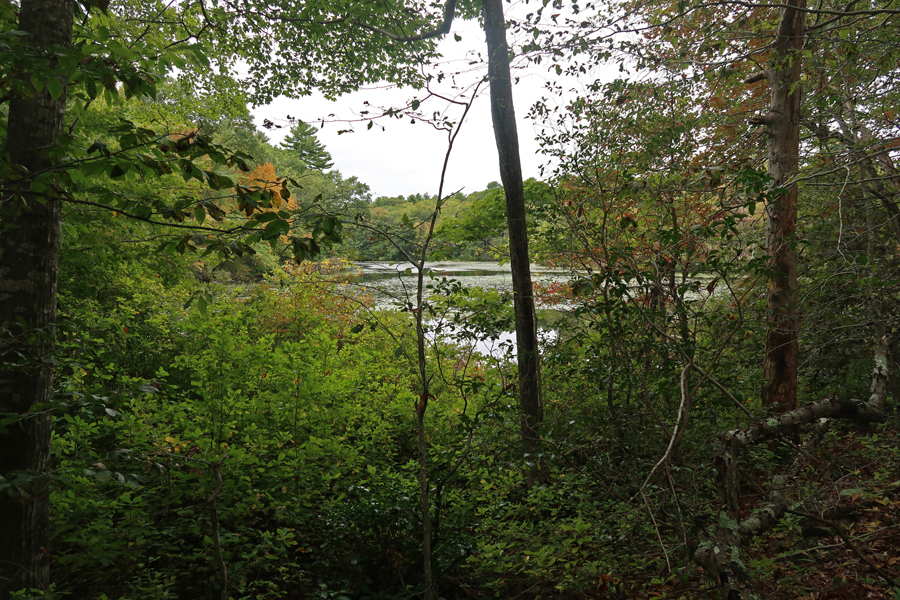
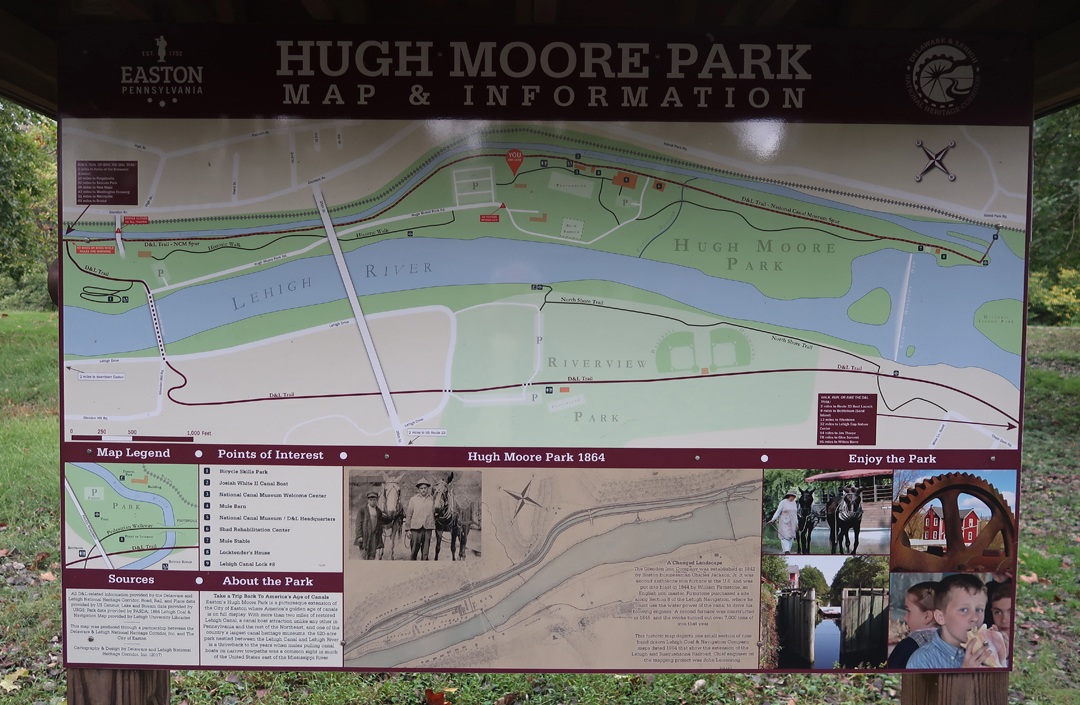
3.5hrs (180mi) from NE NST to Easton PA, where the Lehigh River enters the Delaware River. The Delaware and Lehigh (D & L) National Heritage Corridor Visitor Ctr is in Hugh Moore Park, which is on an island in the Lehigh River. The 165-mile D & L Trail Goes from Wilkes-Barre PA (Anthracite Coal Region), through the Lehigh Valley Region, and down the Delaware Canal to Bristol PA. The D & L Canal was built in stages from 1817-1845 to bring coal from the Anthracite Region to the population centers on the eastern seaboard.
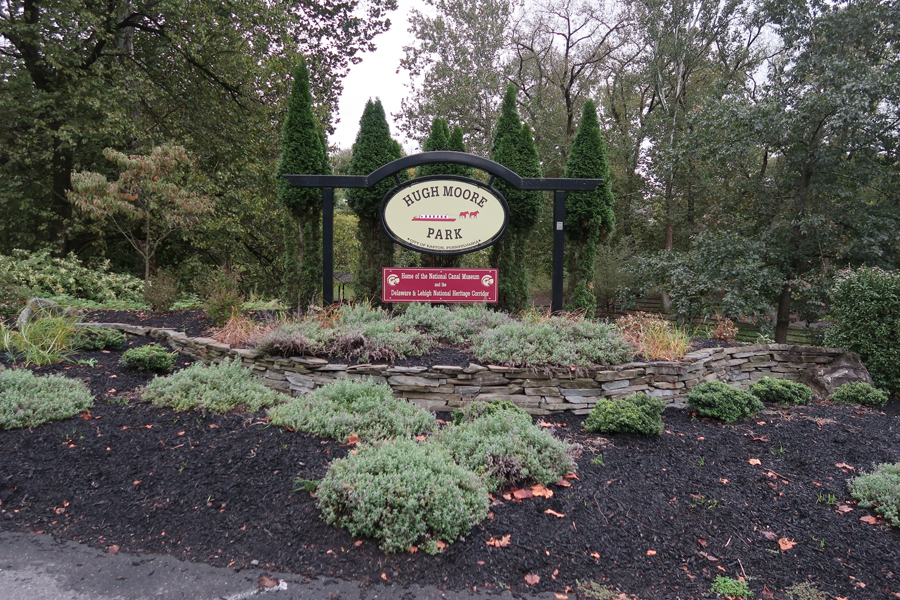
Entrance Arch

Map of Island
This was the last day of the year for Canal Boat Rides

.
Canallers would trade coal for services at towns and locks along the canal.

National Canal Museum

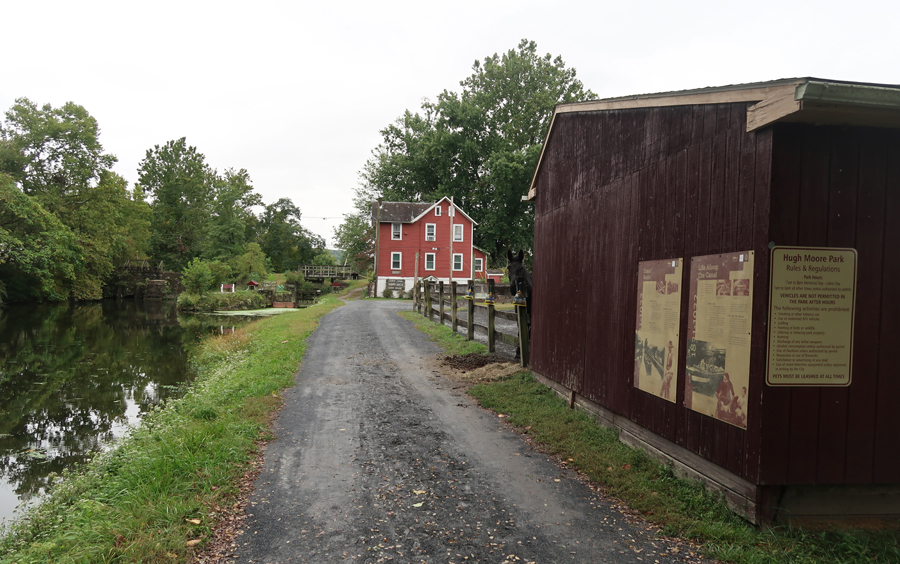
Hiked the towpath to Lock House #8 – do you see the Mule?
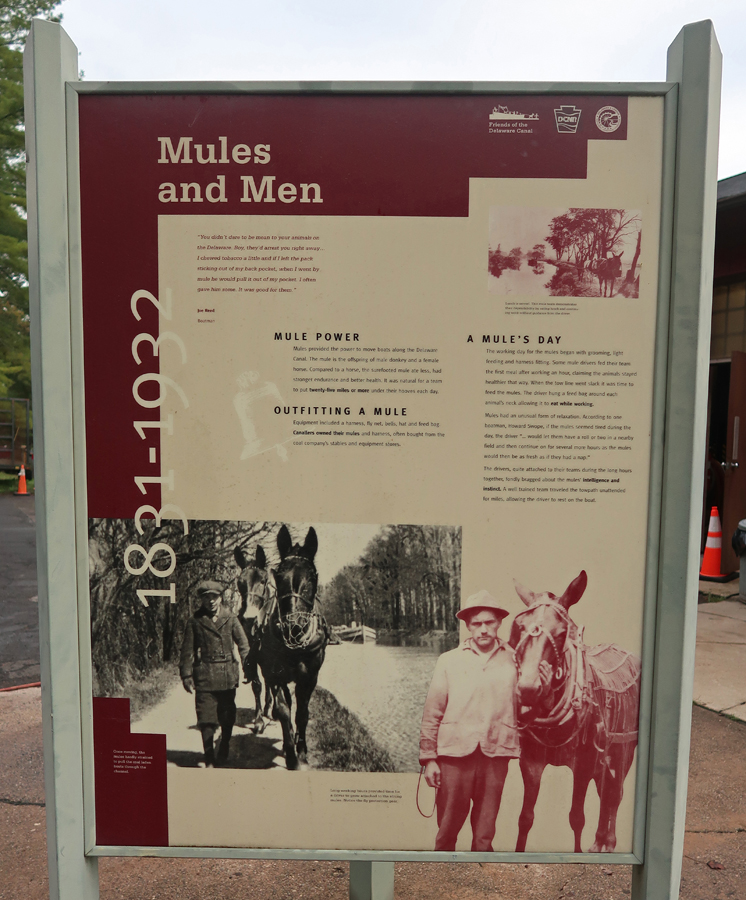
Mules and Men
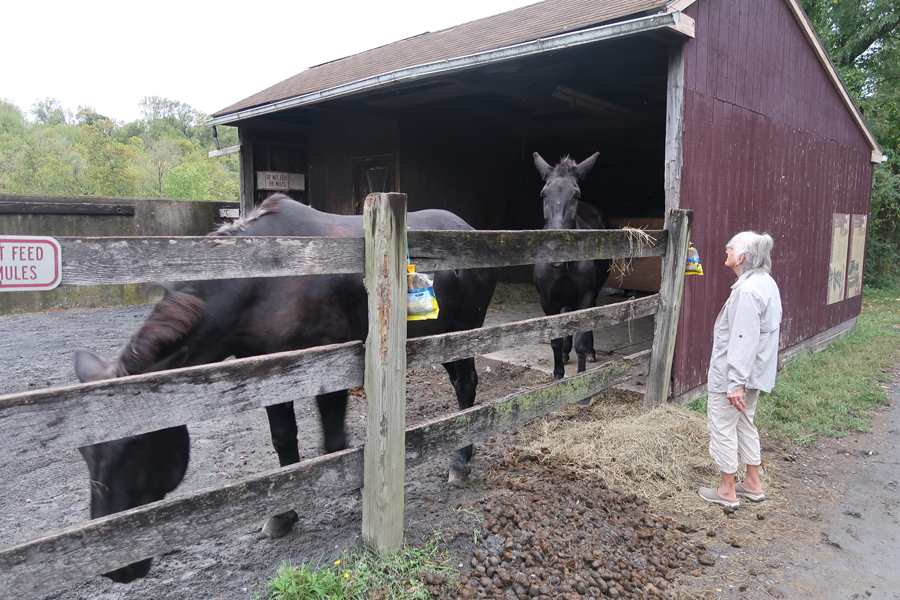
Mules and a Woman
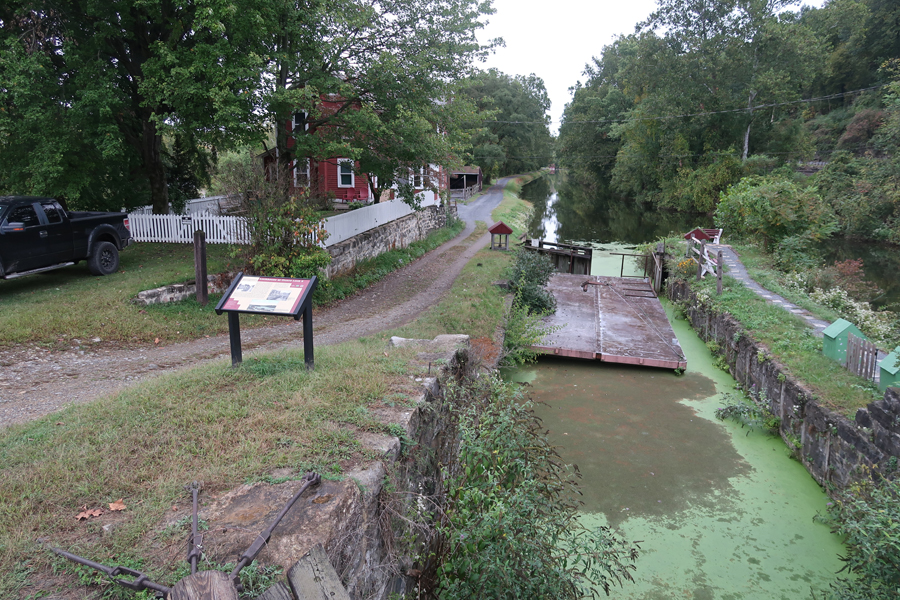
Locktender’s House, Lock, and upriver Gate on Lehigh River
.


The Lehigh and Susquehanna RR, as well as floods, led to the canal closing in 1942.
Stayed at the Holiday Inn Express in Easton PA.
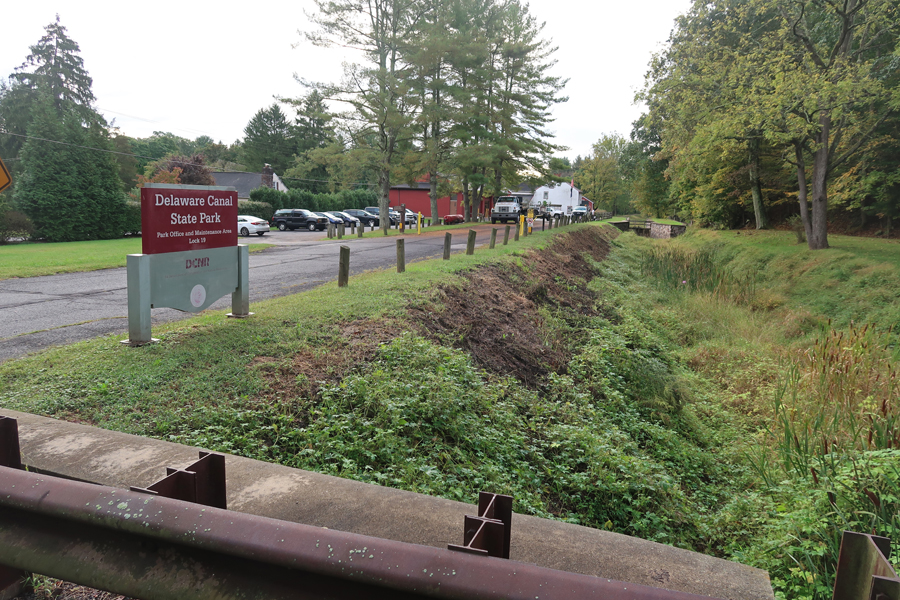
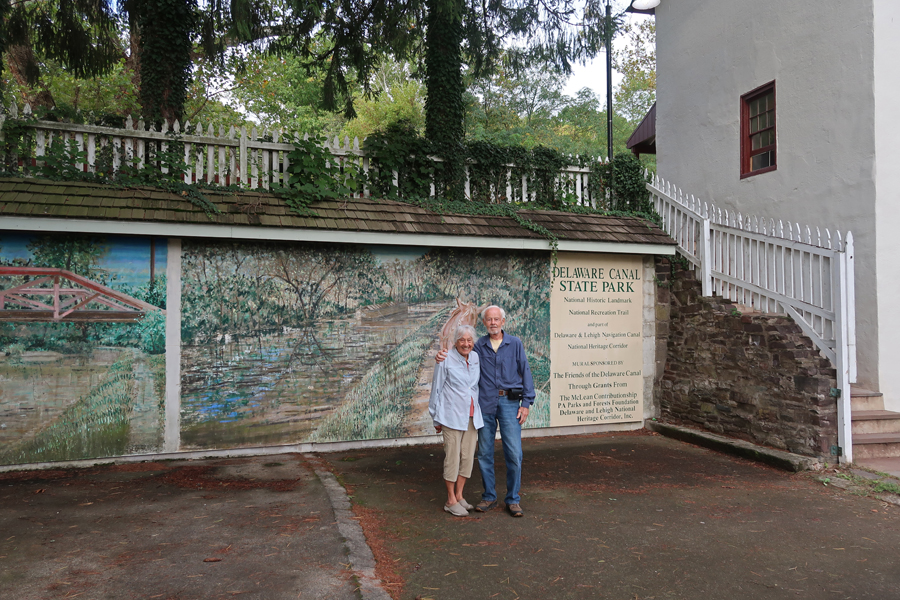
9/30 M – continued driving through the Delaware and Lehigh NHC to the Delaware Canal State Park office in Upper Black Eddy PA. Picked up information and continued down the Delaware River to New Hope PA.
.

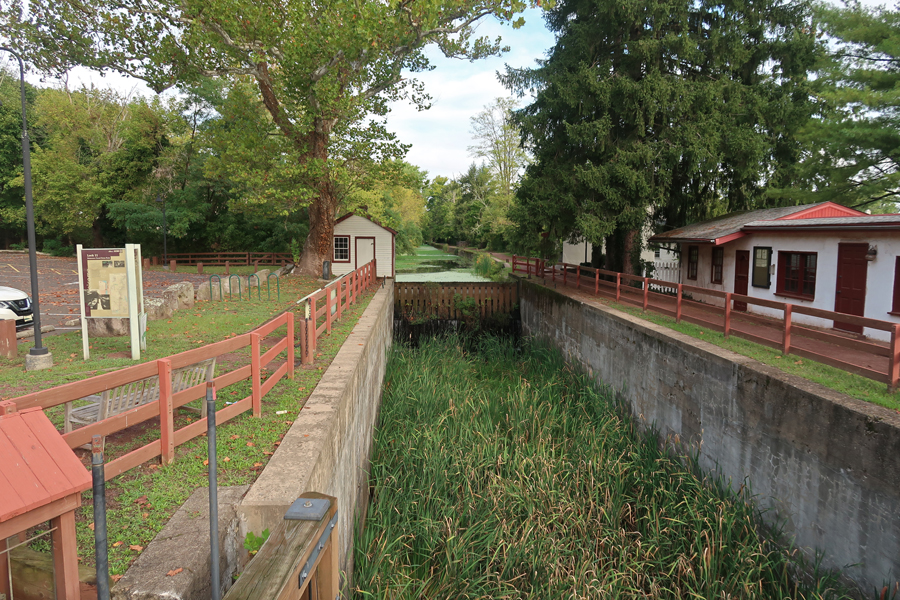
The 59-mile Delaware Canal is the only remaining continuously intact canal of the early 1800s towpath canal-building era. Beginning in 1832, mules towed boats loaded with coal and other cargo along the canal, which ran parallel and used the water of the Delaware River.
.

.
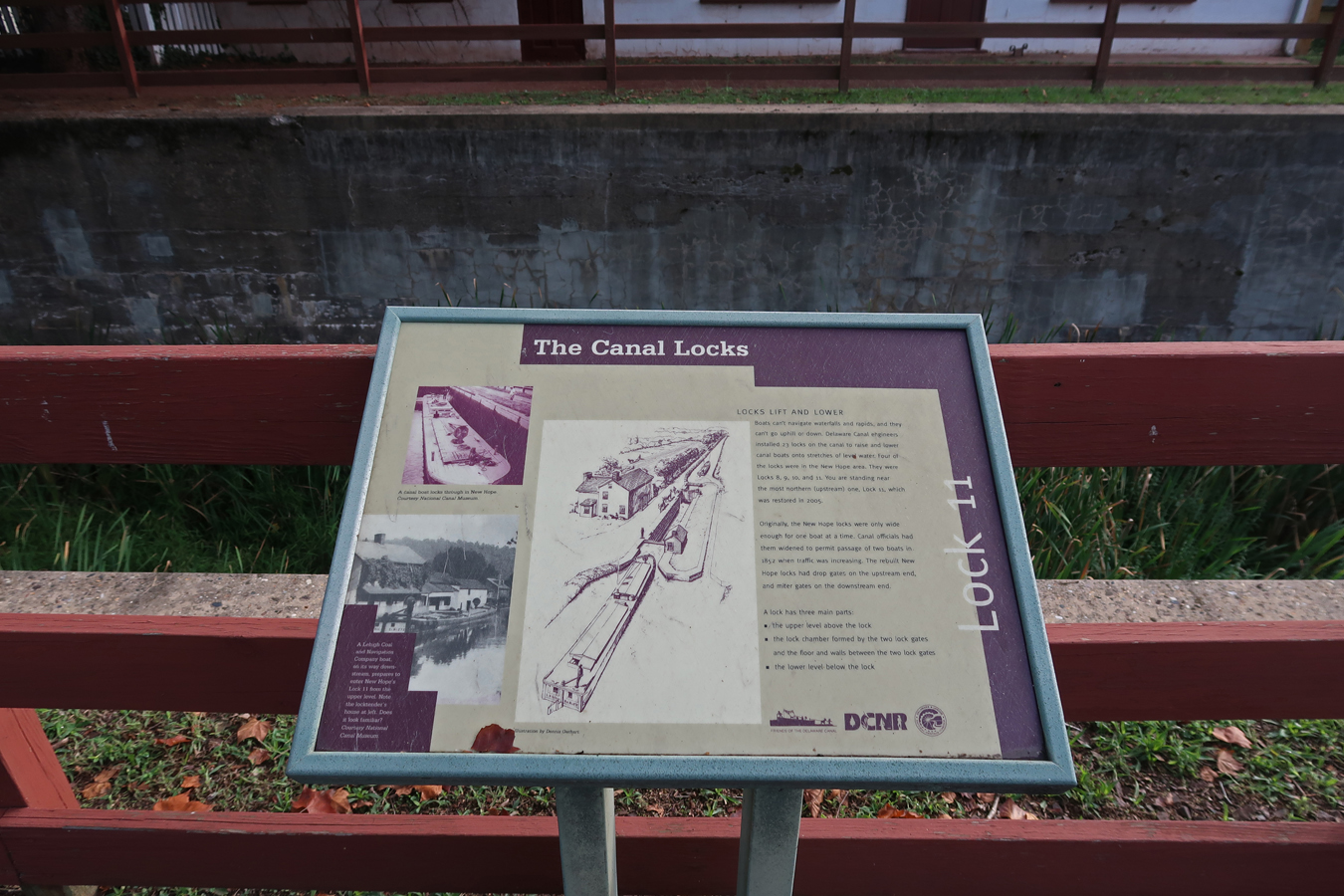
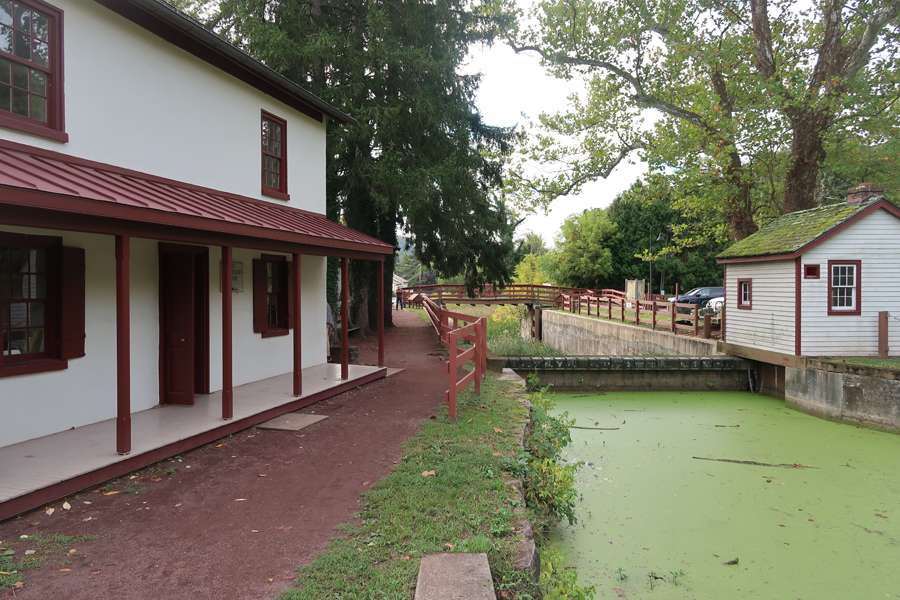
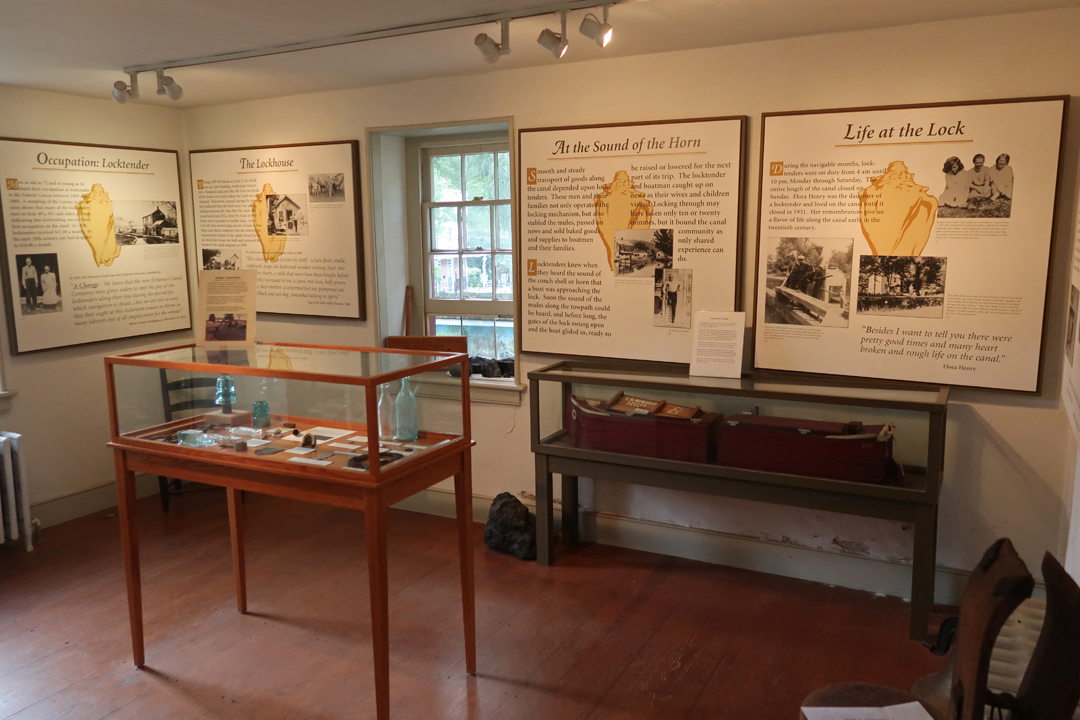
Locktender’s House at Lock 11 on the Delaware Canal in New Hope

.
Locktender’s House and Museum
.
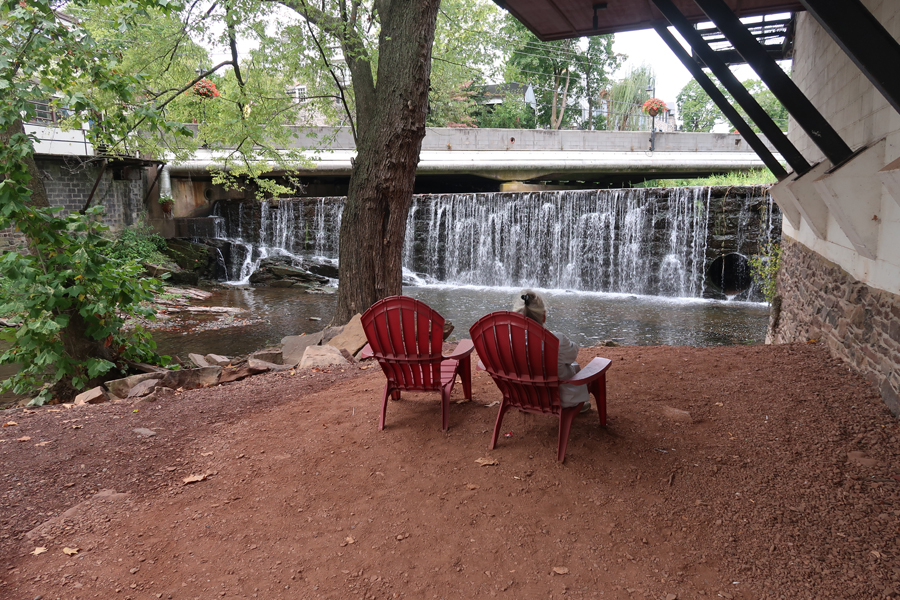
Aquetong Creek
.

New Hope Mills – now converted to the Bucks County Playhouse

Parry Mansion Museum, the first of five generations of Parrys moved into the mansion in 1787. The New Hope Historical Society purchased it in 1966.
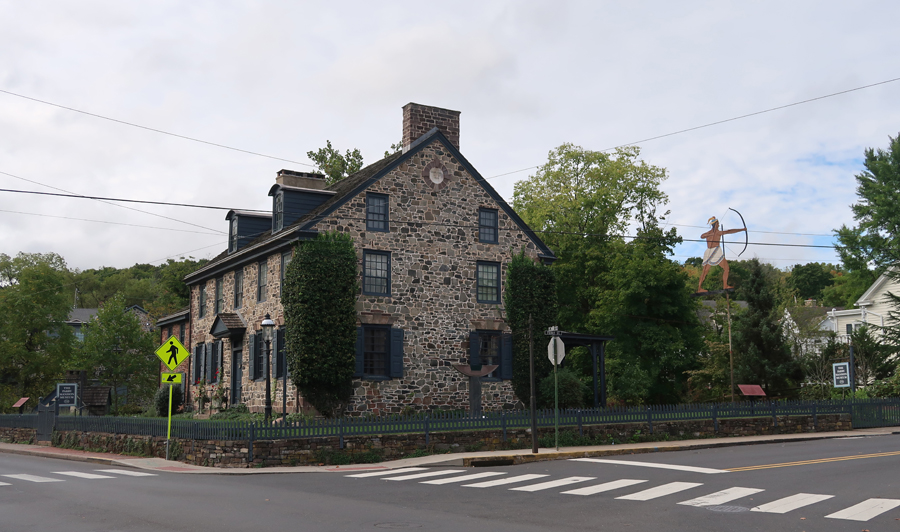
It is the location of the Indian Logan weathervane (on Ferry Street).


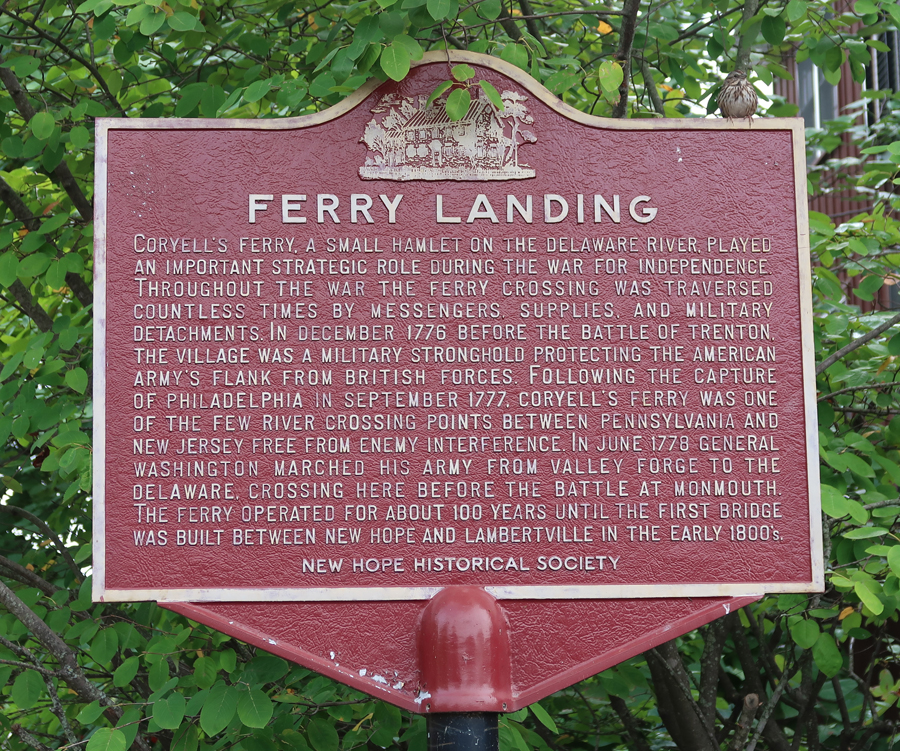
Coryell’s Ferry

.
Civil War Cannon located across Ferry Street from the Parry Mansion.

.

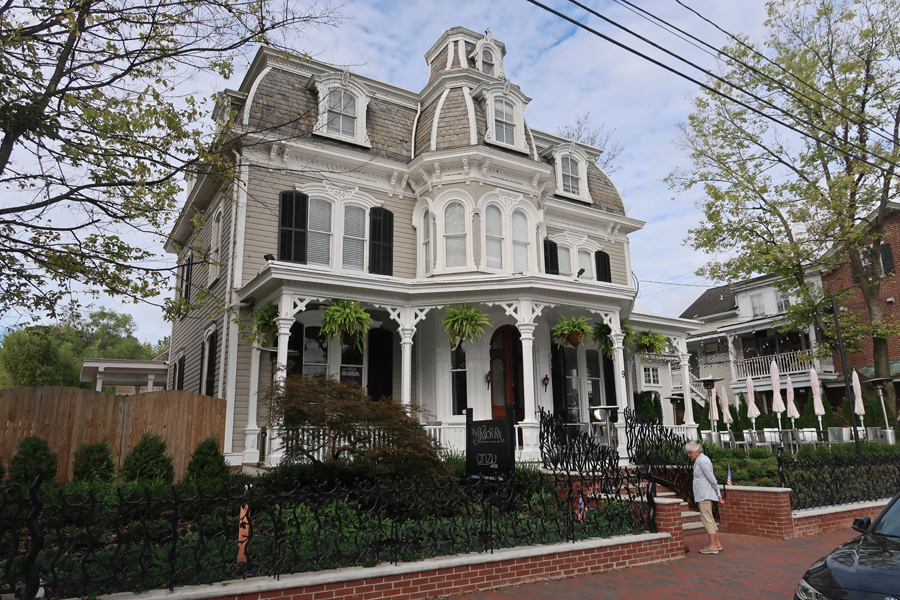
The Mansion Inn
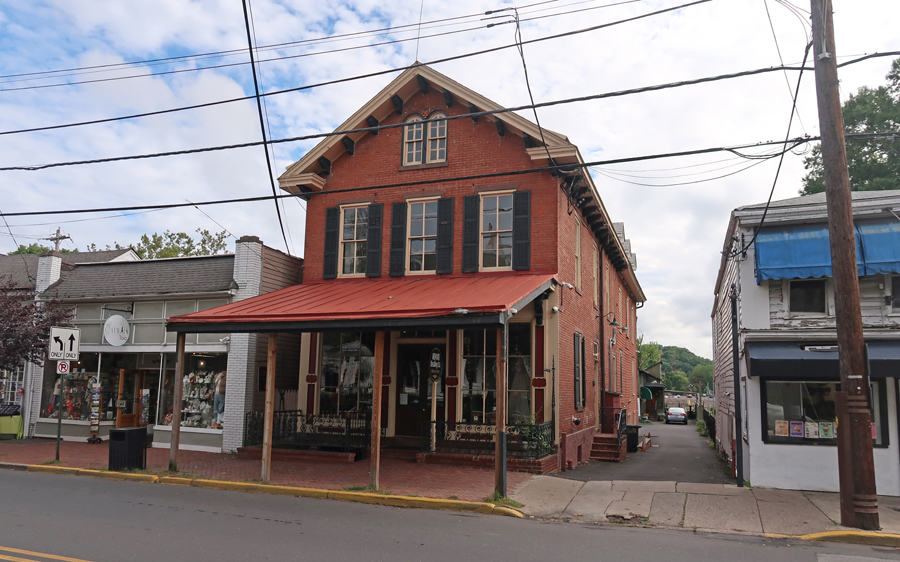
Former Stables in downtown New Hope
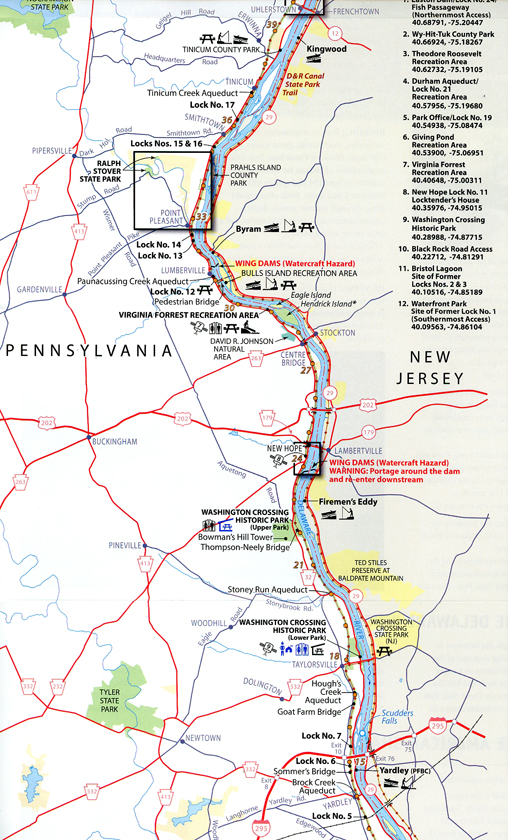
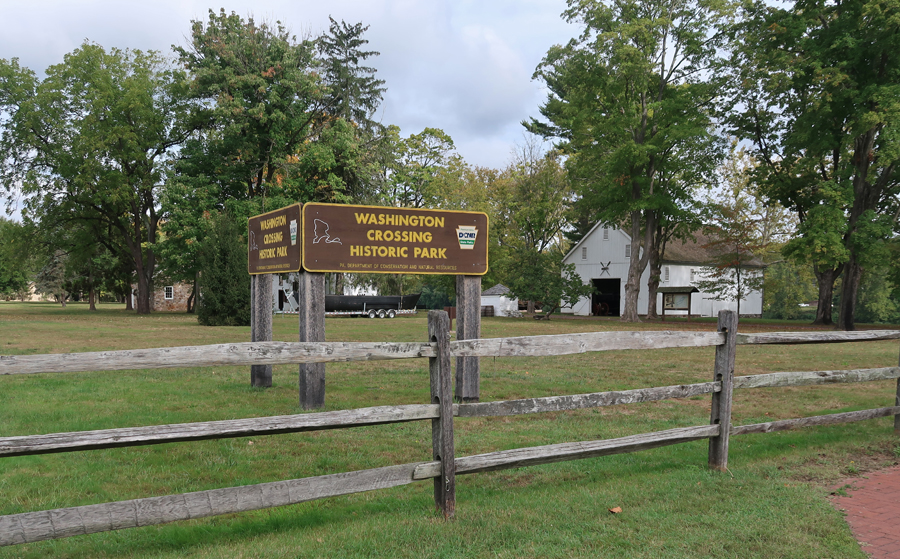
A ten-minute drive south on River Road (Rt-32) took us to Washington Crossing Historic Park.
.
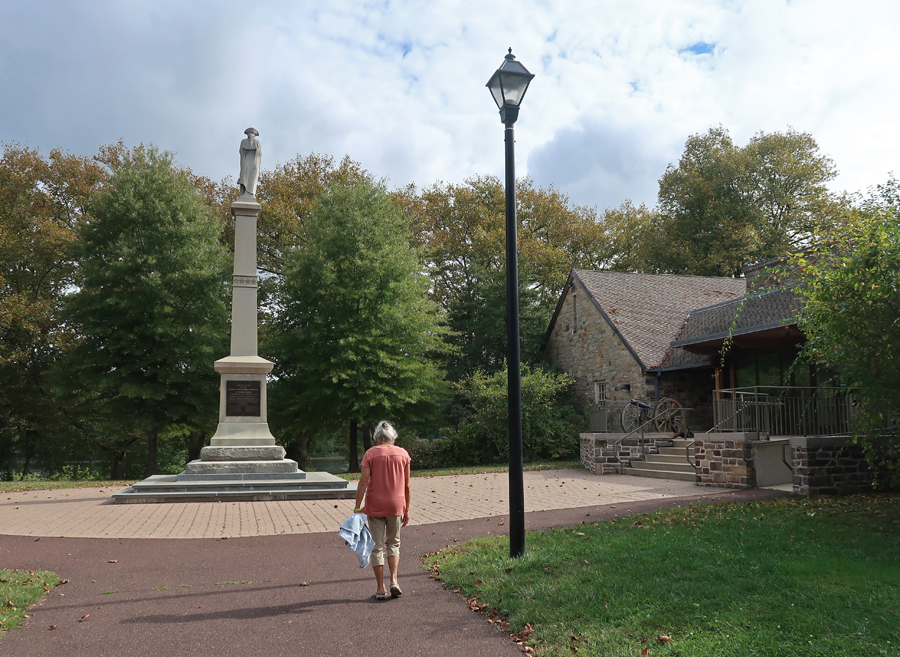
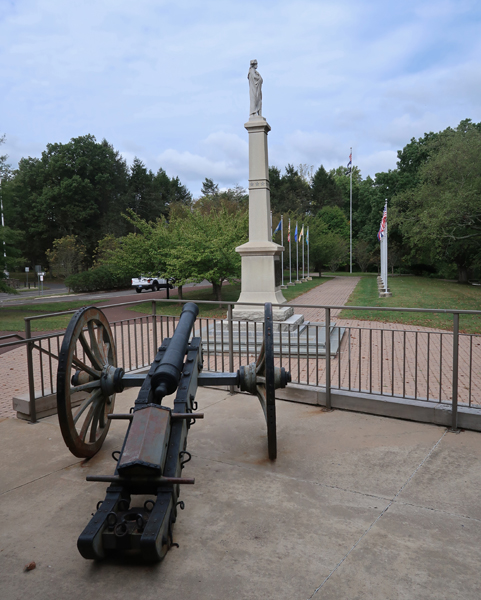
Washington Monument and Visitor Center

.
.
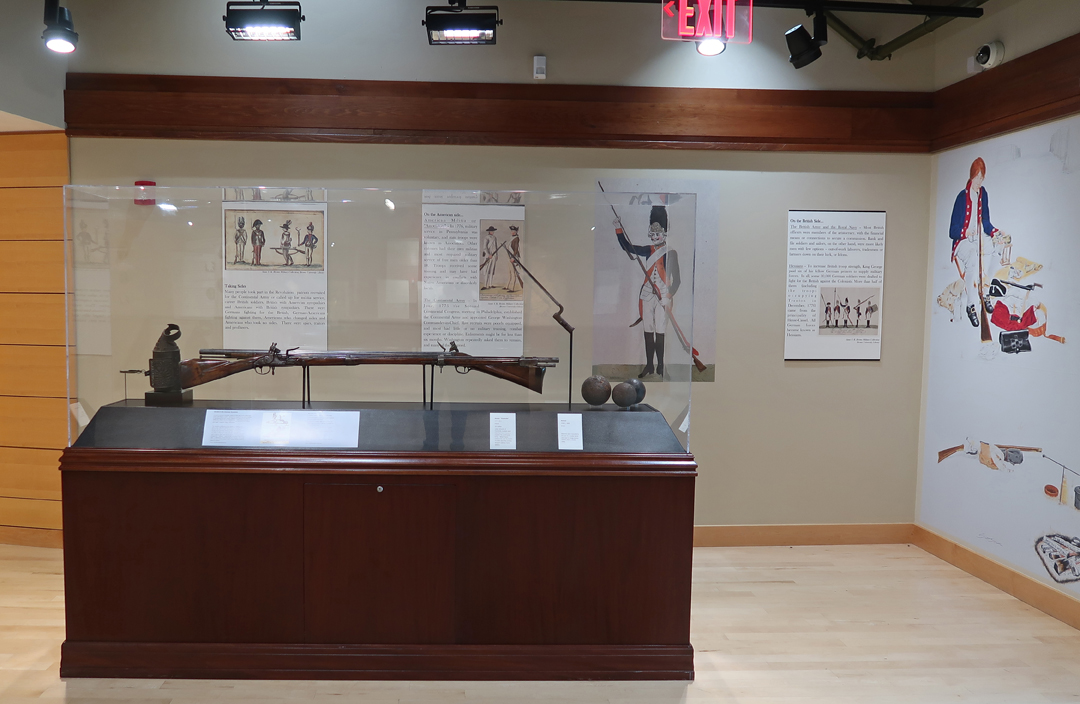
December 25, 1776 – Christmas. Washington crosses the icy Delaware River with 2,400 troops, 18 cannons, supplies, and about 65 horses.

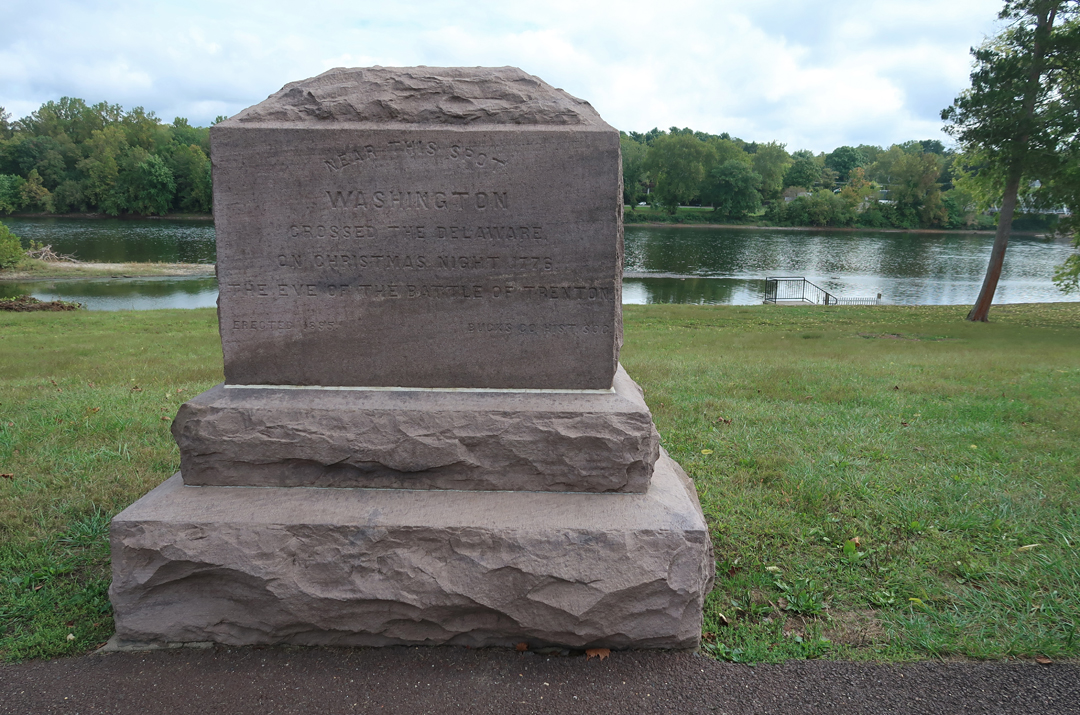
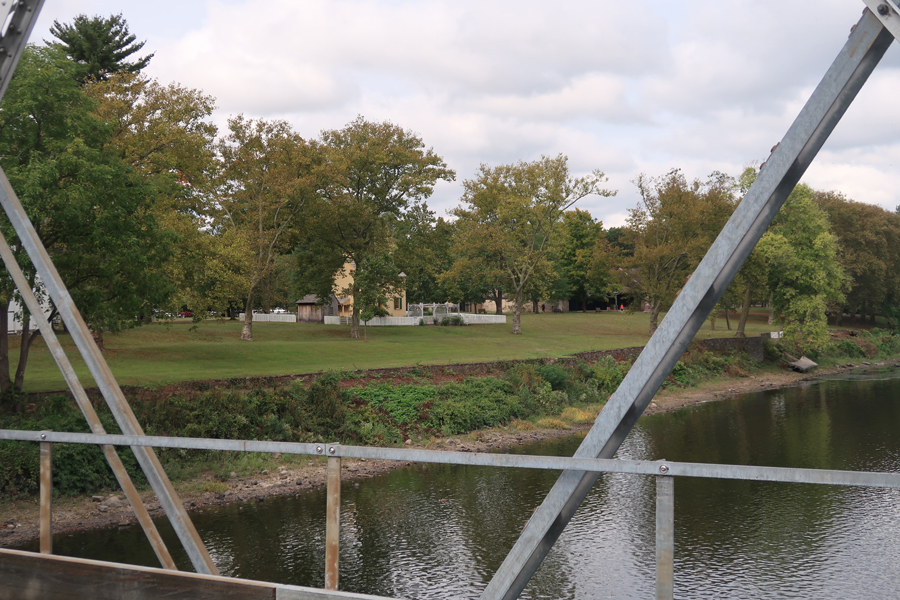
McConkey’s Ferry was on the west side of the Delaware River in PA, and Johnson’s Ferry was on the east side in NJ. This stone marks the general crossing area.

.
Map of the march to attack Trenton. The Hessians stationed there were German mercenaries hired by the British. Magnify the photo to read about the battle.

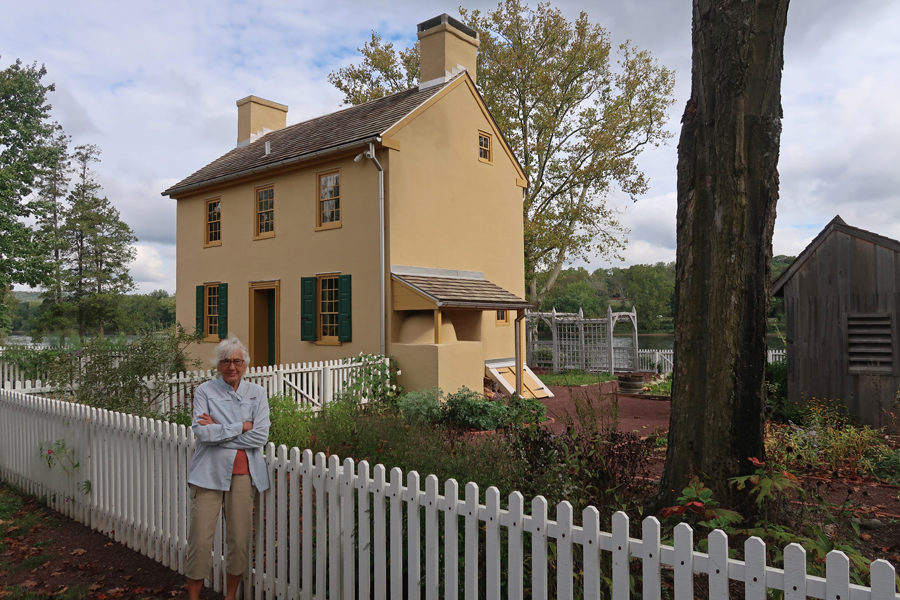
Hibbs House (1829) built 48 years after Washington’s Crossing.
.
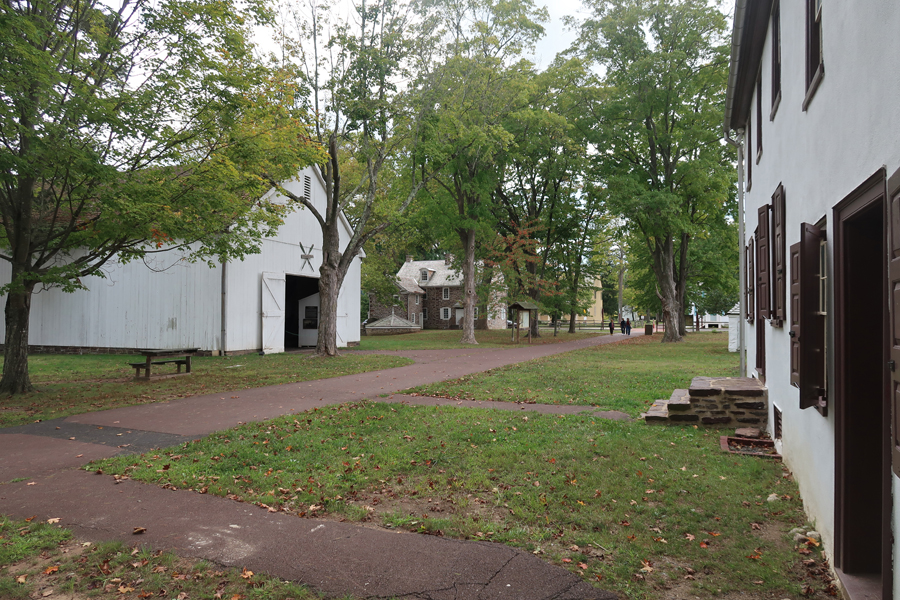
Durham Boat Barn, this is where boats and cannon are stored for the crossing reenactment that takes place each Christmas Day.
.

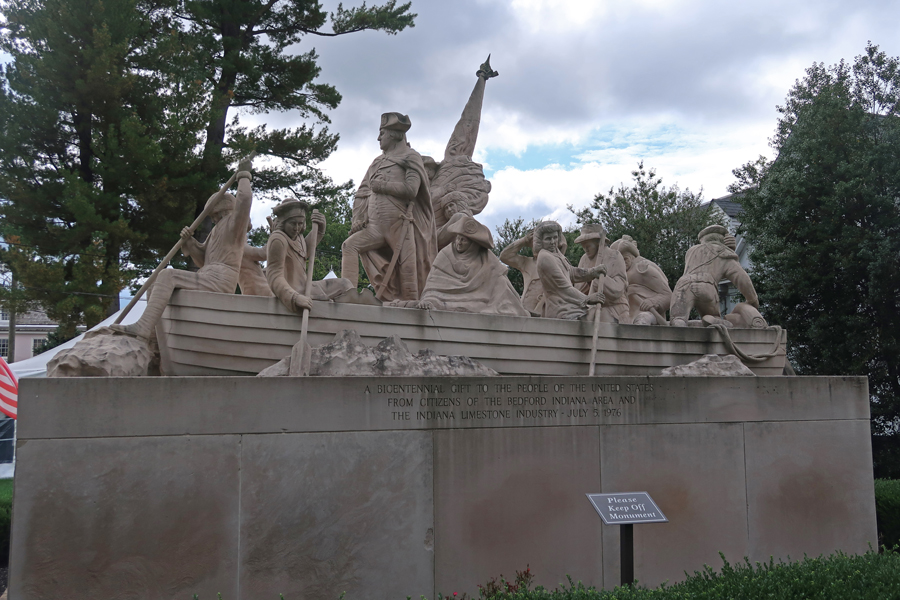
Monument donated by the people of IN for the Bicentennial of Washington’s Crossing (1976).

.
9hr (540mi) drive, from Washington Crossing to Springfield OH, through rain and wind from Hurricane Helene.
 The Martin's Blog