
Carlisle Federal Indian Boarding School NM – PA and Lake Erie Bluffs – OH
April 16, 20254/14/2025 M – it was a 1.5hr drive from Alex and Brett’s house to the U.S. Army Barracks in Carlisle PA just west of Harrisburg.

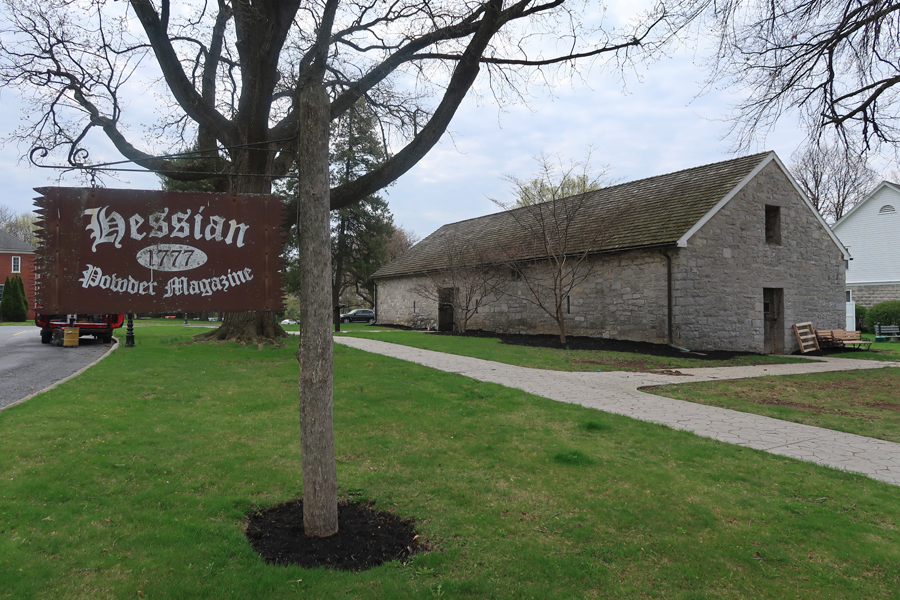
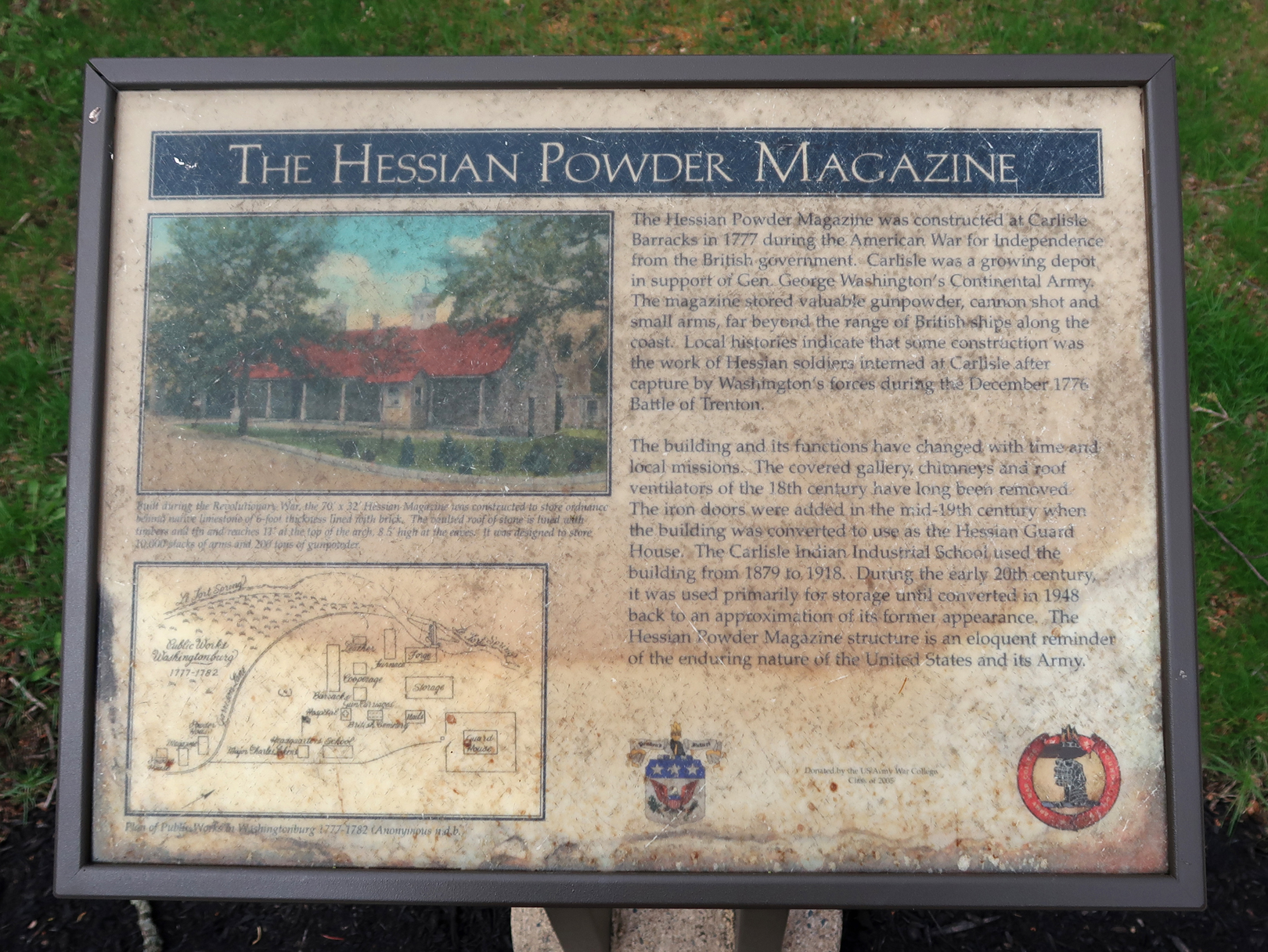
Carlisle was the jumping off place for traders and settlers heading over the Allegheny Mountains in the mid-1700s. In 1757, British Colonel John Stanwix built a fort here that was operational during the French and Indian War. The 1777 Hessian Powder Magazine was used during the Revolutionary War. It now serves as the Hessian Guardhouse Museum.
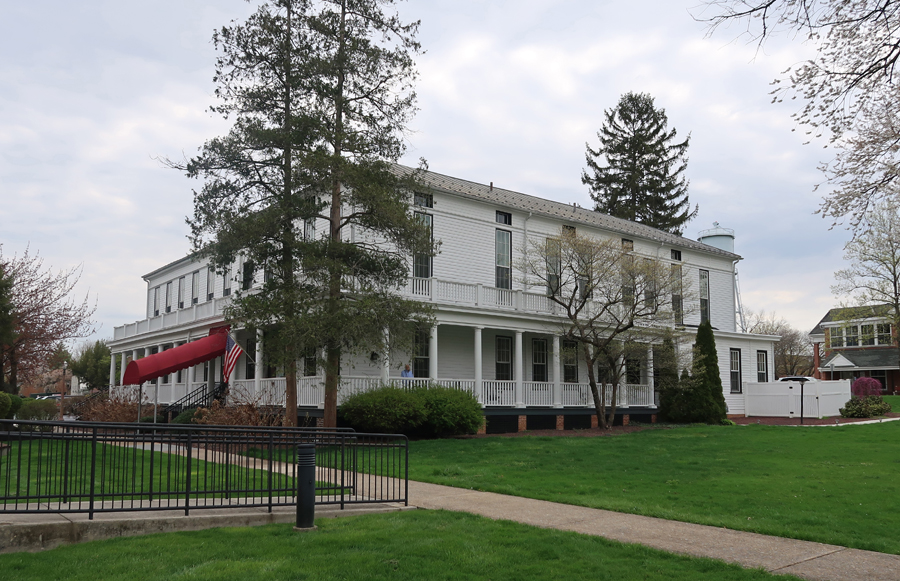
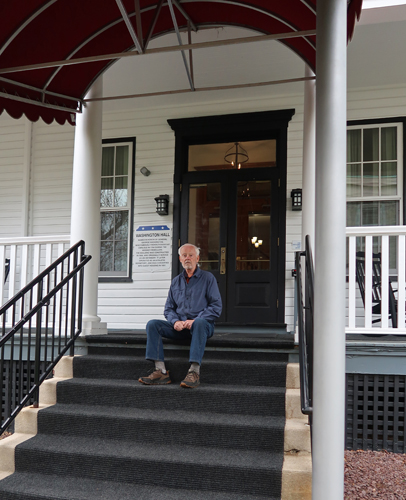
After the Revolutionary War, Carlisle continued as an Army Base and was active during the 1794 Whiskey Rebellion. Washington Hall –
.
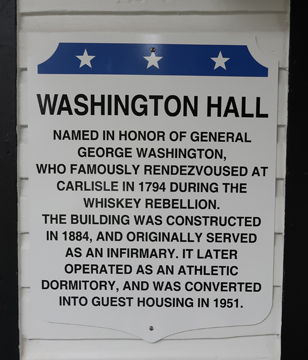
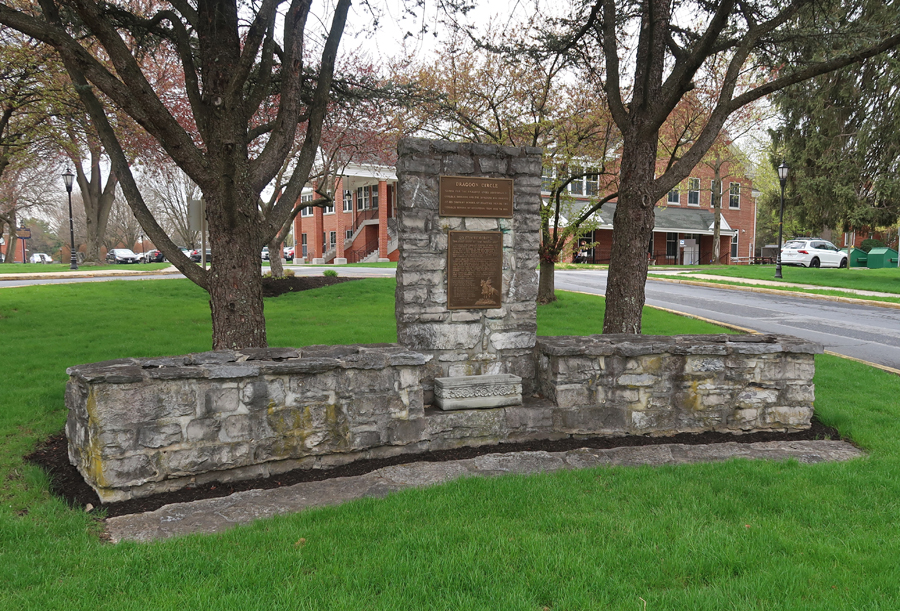
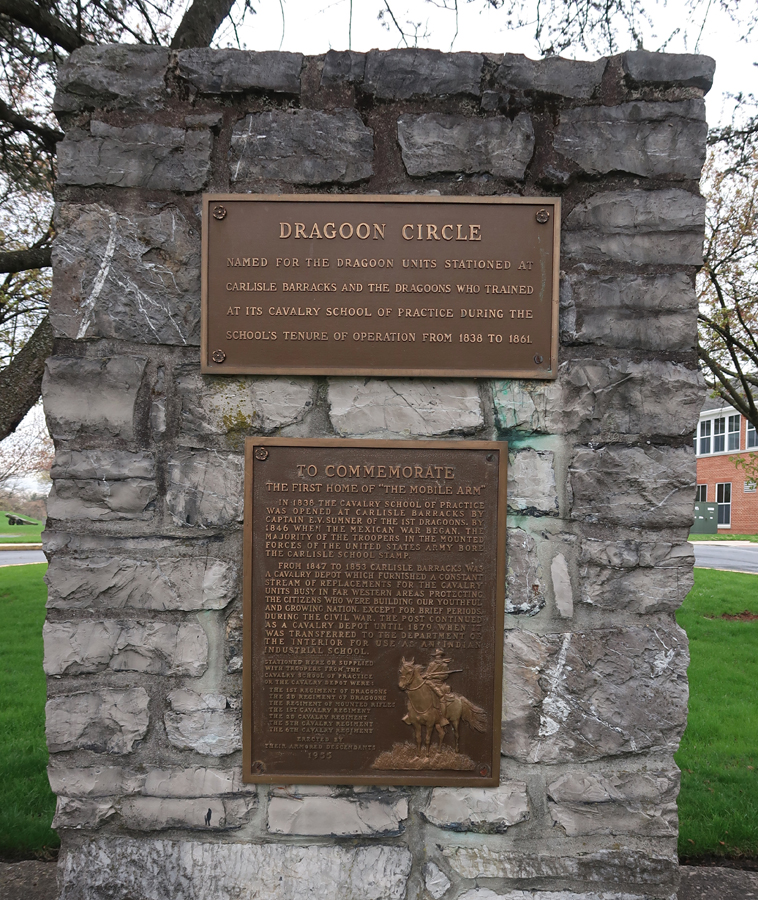
In 1838 the Army established the US School of Cavalry Practice and trained a horse mounted force of U.S. Dragoons. In 1863, Confederate troops took the base and prepared for the Battle of Gettysburg. After the Civil War ended, the barracks returned to its pre-war mission of receiving, training, and forwarding cavalry recruits destined for the Indian wars on the western frontier.
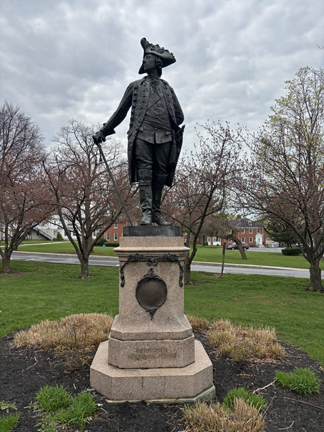
This statue of Frederick II of Prussia was given to the US in 1902. “Frederick the Great,” King of Prussia, is credited with transforming Prussia into an eighteenth-century European power. He was known for his military prowess. The statue was at the U.S. Army War College in Washington DC but was taken down before World War I. After the War College was moved to Carlisle in 1951, it was decided to place “Freddy” “in a position overlooking the Parade Ground.

This is a Monument to graduates of the U.S. Army War College. It is still operational, and trains selected officers for high command positions. Some notable graduates include John J. Pershing (1905), Dwight D. Eisenhower (1927), and Omar N. Bradley (1934).


In 1879, the War Department transferred control of the post to the Department of the Interior to be used for the first off-reservation Indian boarding school for the education of Native American children. The purpose was to assimilate and integrate the children by teaching them English, trades, and Christianity. Also, the children could be used as political hostages to prevent uprisings from the Indian bands from which they were taken. The Carlisle Indian Industrial School operated until 1918. The base was then returned to the U.S. Army.
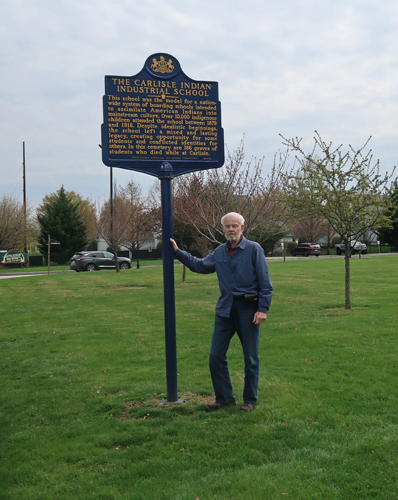
.

So, there is a long history of various U.S. Army missions at this base. However, my focus for this trip was the Carlisle Federal Indian Boarding School NM established last December by President Biden. Several of the buildings on campus were used and/or built by the 7,800 Indian students, from more than 140 Tribes, that lived here from 1879 to 1918.


Sioux students in uniform at Carlisle Indian Industrial School, circa 1880 –

Carlisle is considered the first Federal Indian Boarding School. It was founded by Richard Henry Pratt, a military officer famous for his philosophy of “Kill the Indian, Save the Man.” The school forced Indian children to change their clothing, language, and worked at changing their beliefs. Males had their hair cut and wore uniforms. Females had to wear long confining Victorian dresses. All Indian clothing and possessions were confiscated (e.g., moccasins, medicine bags, jewelry, and ceremonial rattles). Before (Indian dress) and after (Western dress) photos were taken of each child to demonstrate the dramatic change produced by the school. It was an attempt to “civilize” the America Indian. The school promoted athletics and produced several outstanding athletes. For example, the athletic stadium is named for Frank Mt Pleasant, of the Tuscarora Nation, who participated in the 1908 London Olympics.
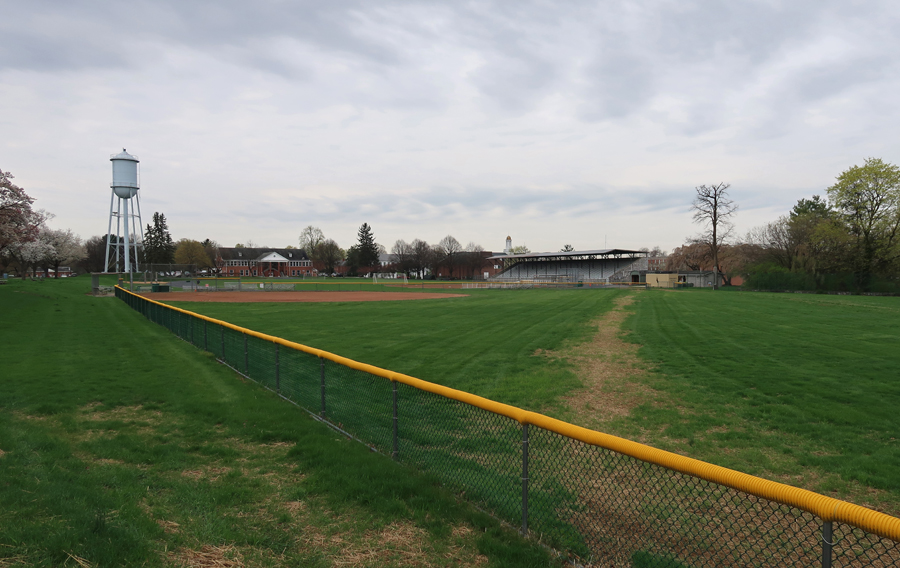
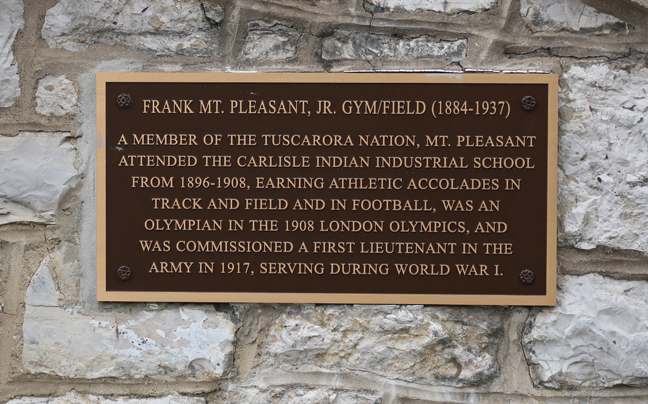
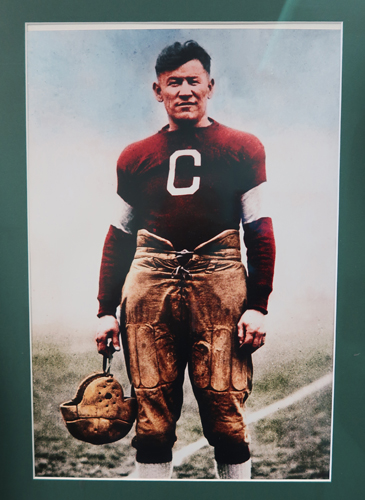
Perhaps the most famous graduate was Wa-Tho-Huk of the Sac and Fox Nation in Oklahoma; he was renamed James “Jim” Thorpe.

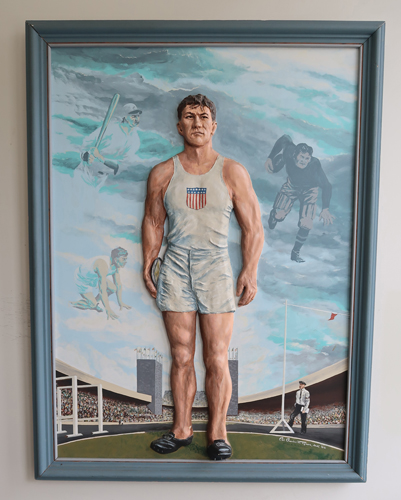
The Thorpe Hall Gym is named for him –
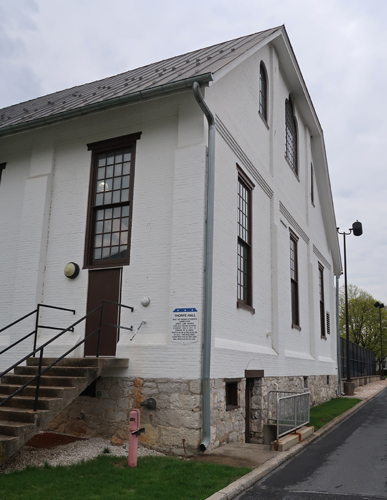
.

There is a small collection of memorabilia in the Gym –

.

The most poignant reminder of the excesses of the Carlisle Indian School is the Indian Cemetery.

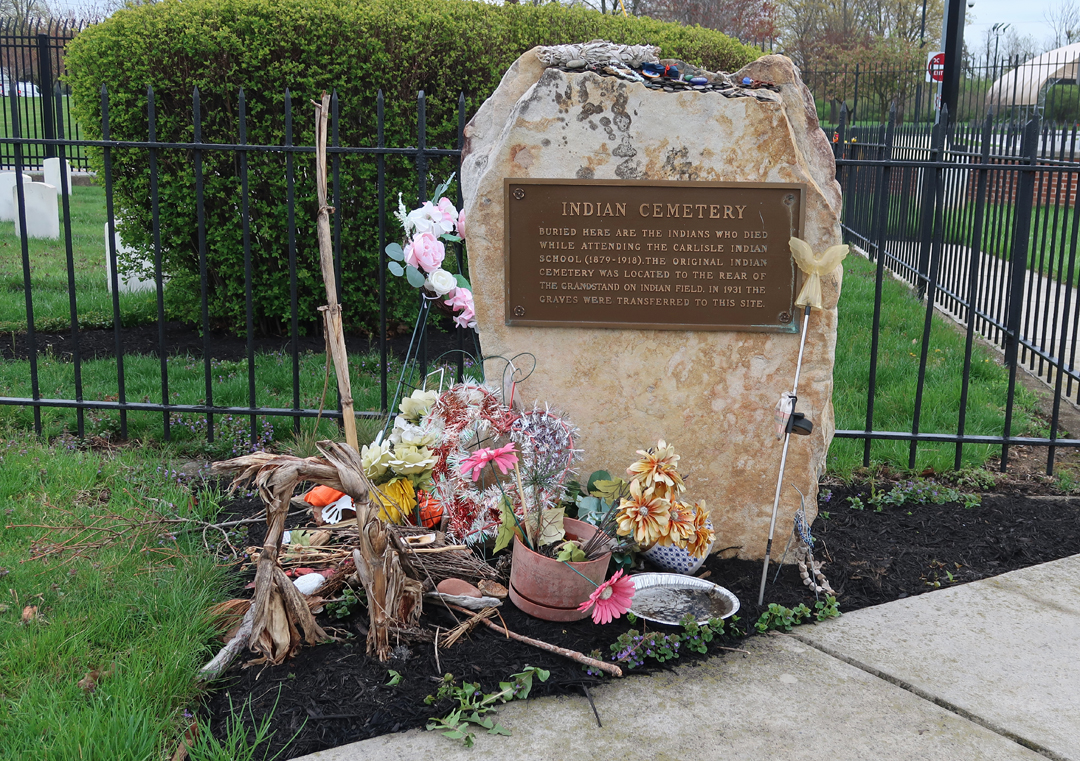
More than 180 Indian children died at Carlisle – note the different tribes represented in the cemetery.
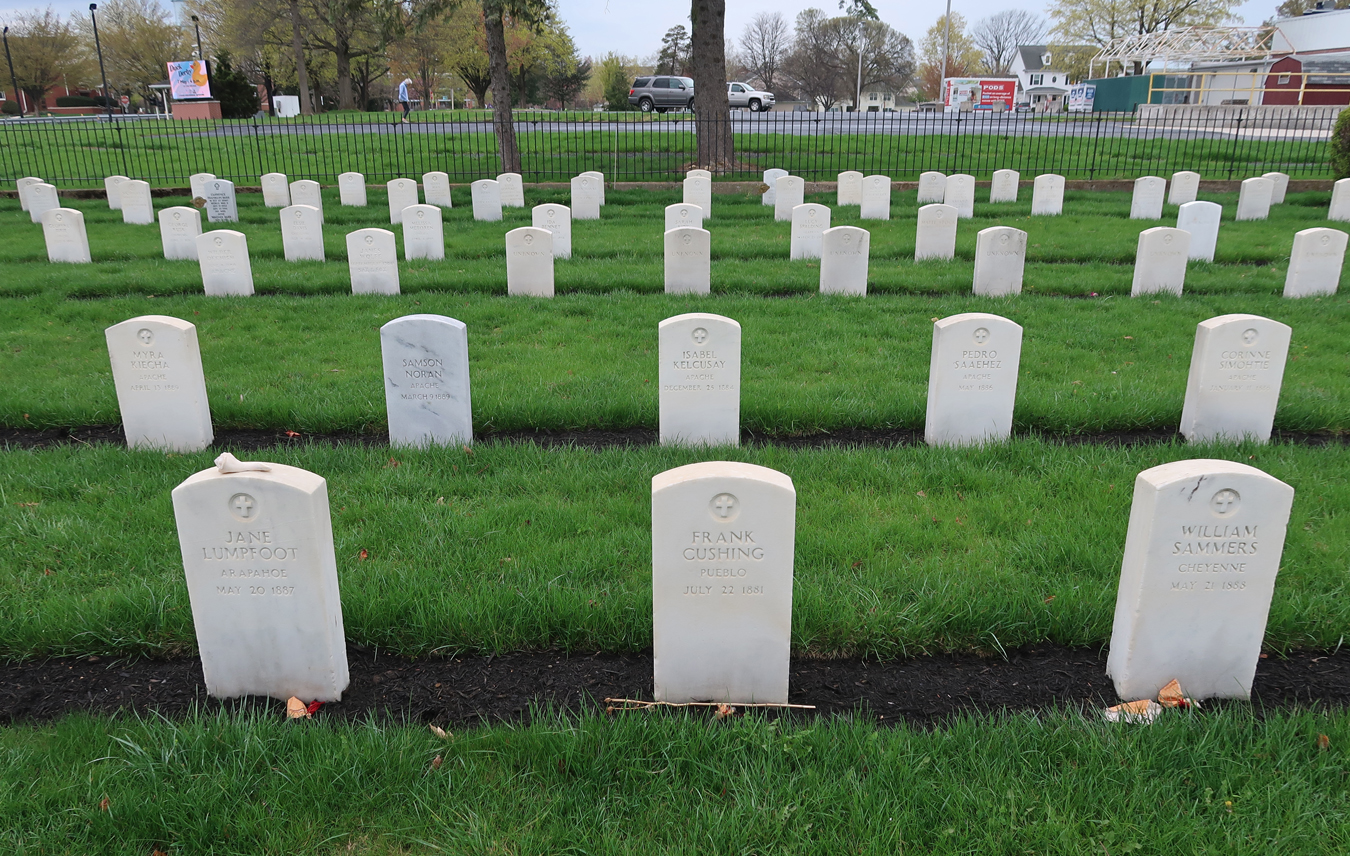

A seven-year U.S. Army disinterment project has been identifying remains and returning them to their tribal descendants. As of the creation of this sign, about forty have been “Respectfully Returned to Their Families.”

Lake Erie Bluffs Hike
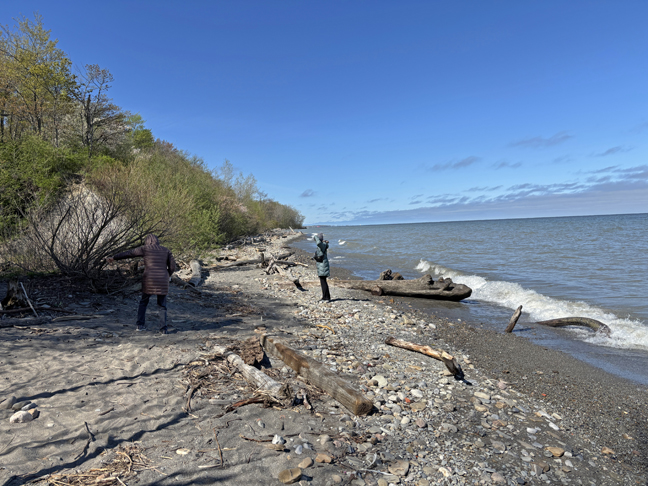
4/30/2025 – We have the East Coast on the Atlantic Ocean, the West Coast on the Pacific Ocean, and the “North Coast” in northern Ohio on Lake Erie! We did a very enjoyable two-mile loop hike along the “North Coast” in Lake Erie Bluffs (Lake Metroparks east of Cleveland) OH. It was a cold, crisp, and clear day.

Started with a view from the Observation Tower – Jan and Helen

.

Lake Erie is the shallowest of the five Great Lakes (210ft at deepest point) but provides more fish for human consumption than the other four lakes put together. It is known as the “Walleye Capital of the World.” It is also the warmest of the Great Lakes with an average August water temperature of 75-degrees. There was lots of interesting driftwood along the beach part of the hike.
.

 The Martin's Blog
Thanks tom and Helen for another great lesson of historic value.
Leaf