
Flight to Anchorage
June 17 – Pat & Diane picked us up at 4:15am (what great friends!) for our flight from Dayton to Atlanta. We then flew to Seattle and onward to Anchorage arriving at the Microtel Inn at 5pm, that’s over 16 hours traveling! We took a walk along Lake Hood and then hit the sack.
Katmai National Park
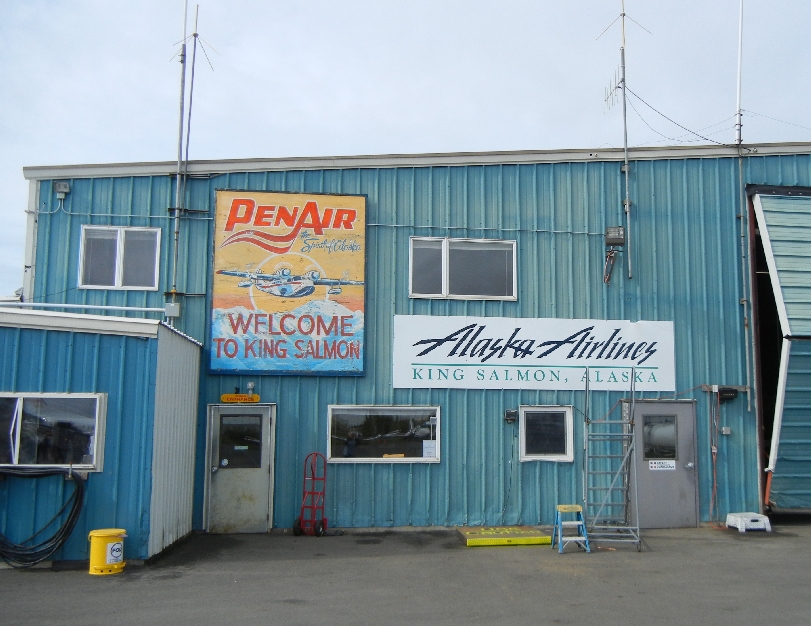
June 18 – flew Penn Air from Anchorage to King Salmon and then took a Katmailand float plane into Katmai NP and Brooks Camp.

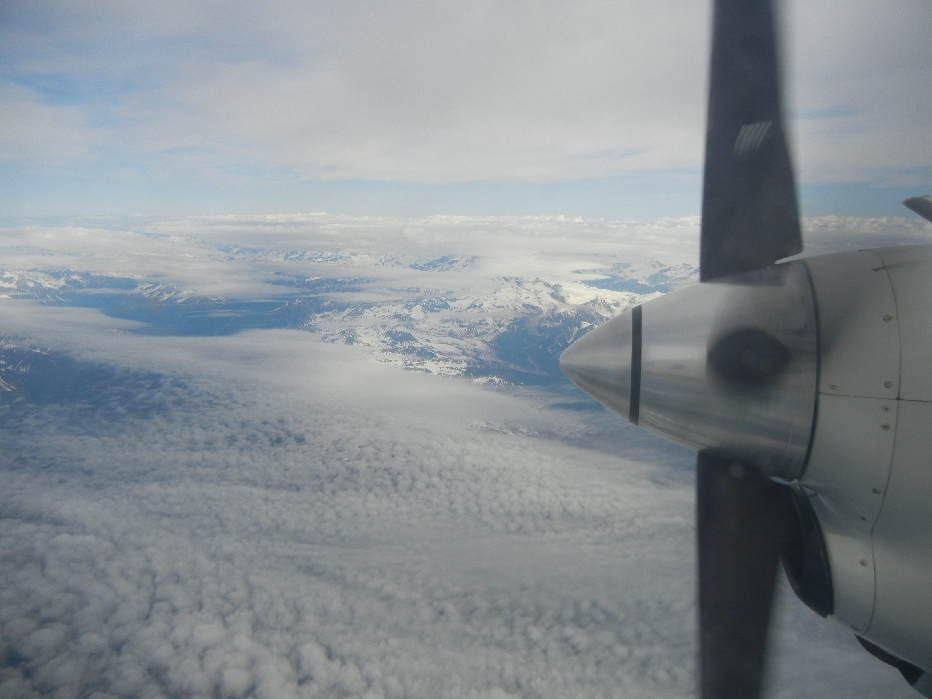
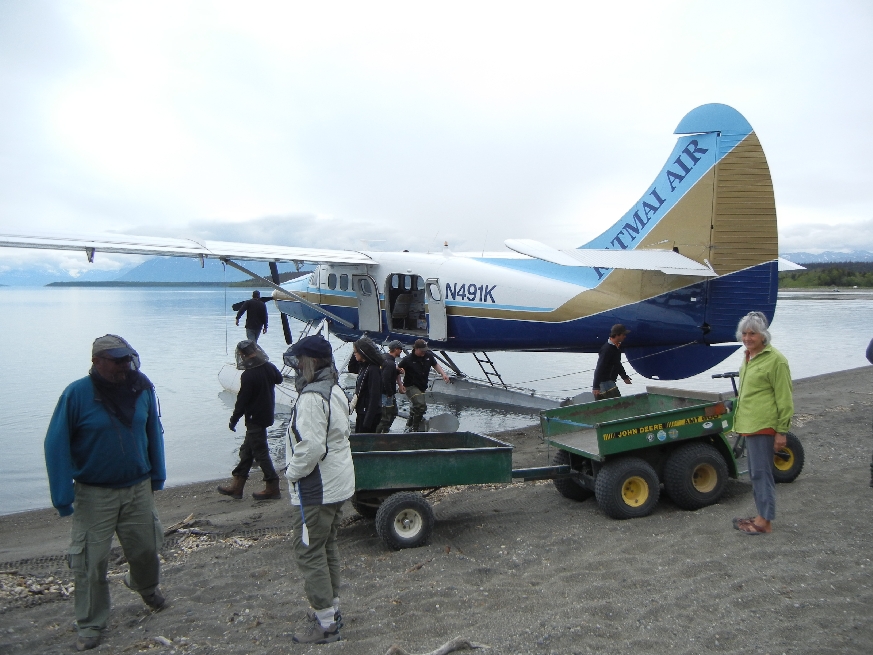
We were a bit surprised at the swarms of mosquitoes as we boarded our Katmailand float plane for the trip to Brooks Camp.

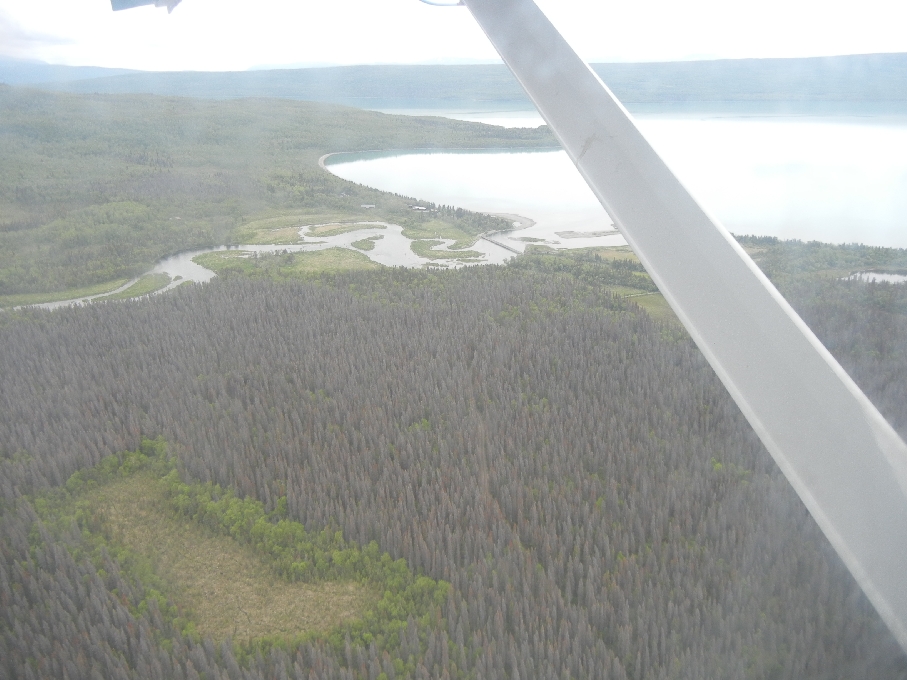
This is an aerial view of Brooks Camp as we came in for a landing on Naknek Lake.
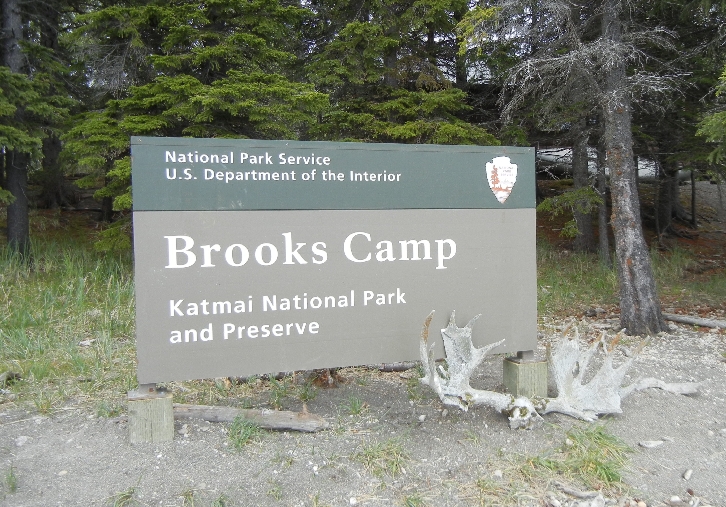
Our first stop, required, was the Katmai NP Visitors Center for our “bear orientation.” We attended 3 evening ranger presentation, one on the Novarupta (1912 eruption of Mt Katmai) and two on bears.

Our next stop was the office for sign-in and to purchase mosquito head nets!

After dinner at the Lodge, we walked the beach to the Brooks River. It flows a distance of about 3 miles from Brooks Lake to Naknek Lake. The Brooks River and especially Brooks Falls are main viewing areas for big brown bears. These bears are called Grizzlies when they are inland but are called Brown Bears when near the ocean. We saw a “sub-adult” (4 year old) bear they call Tundra.
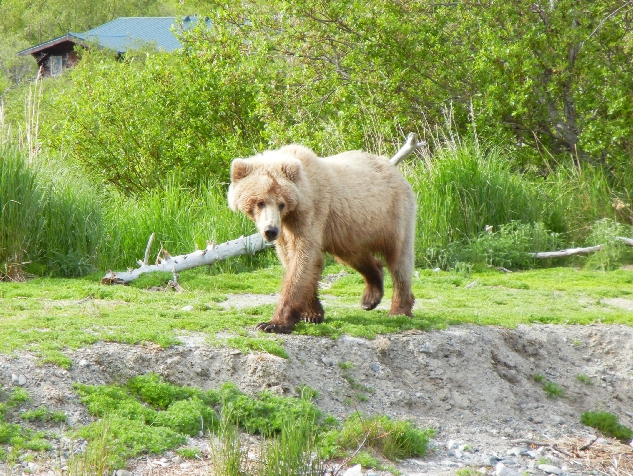
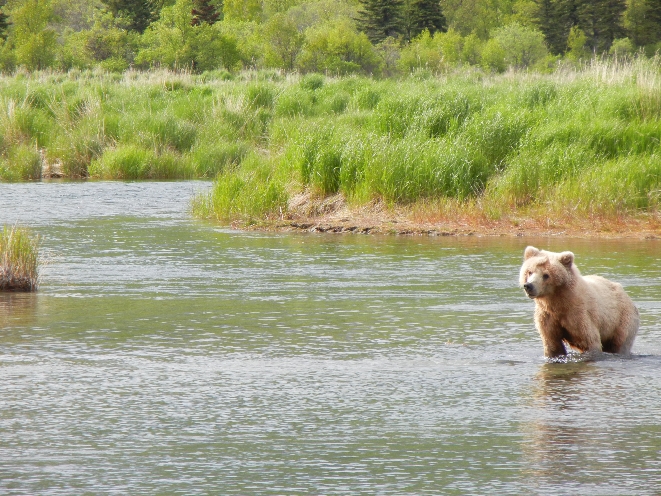
June 19 – “Father’s Day,” we started the day with coffee around the fire place before breakfast.
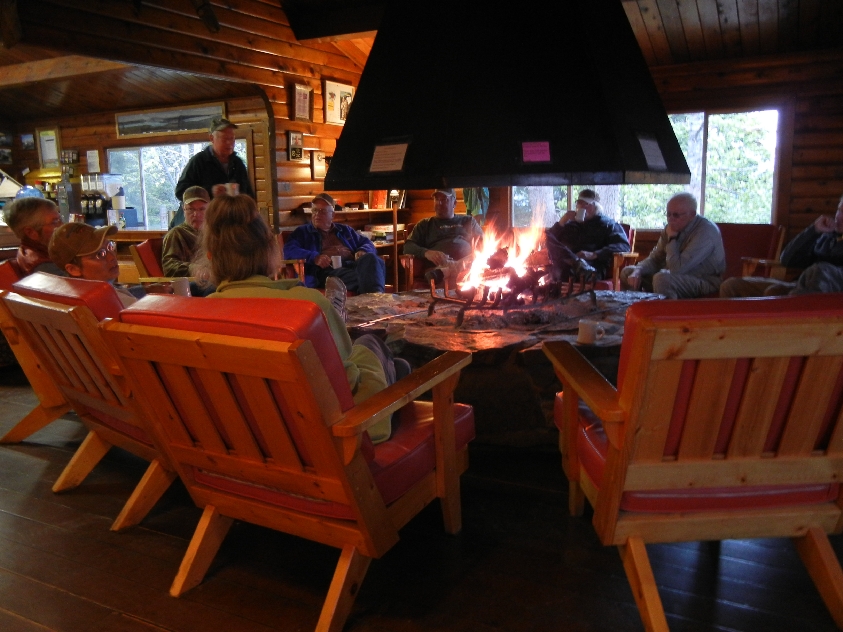
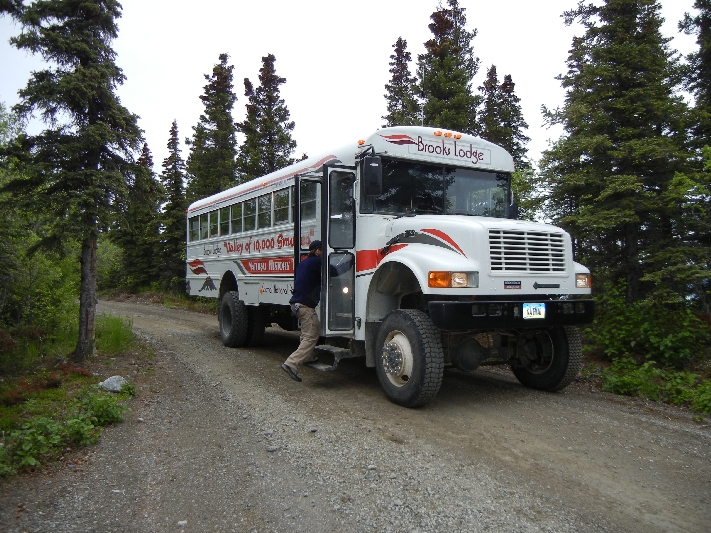
We were 2 of 11 people (3 Germans, 2 Italians, 2 Australians, and 2 other Americans) who took the Valley of 10,000 Smokes tour. It was 26 miles, on a cool four-wheel drive bus (forded 3 rivers), to the start of the trail. The chassis of the bus was made in Springfield!
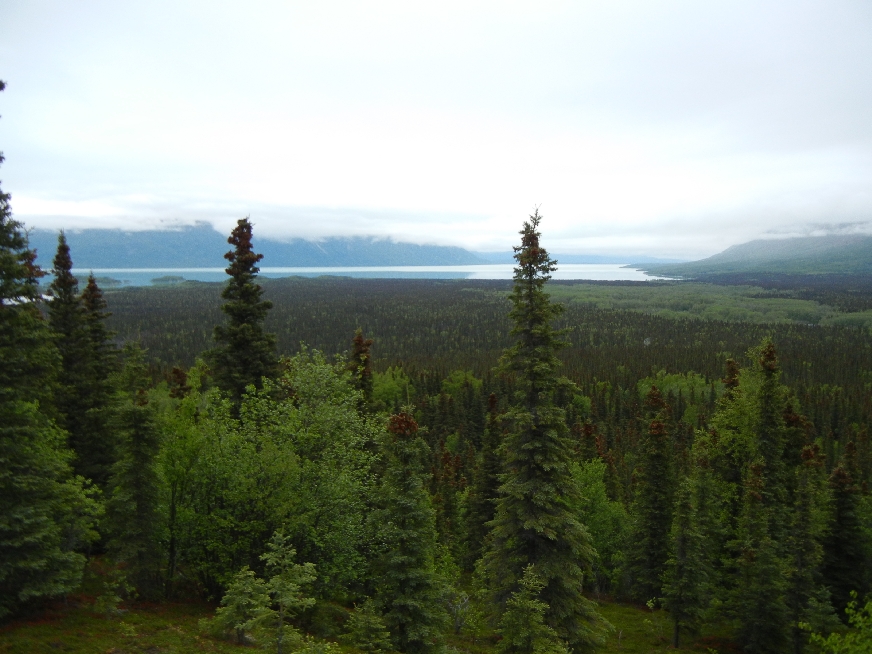
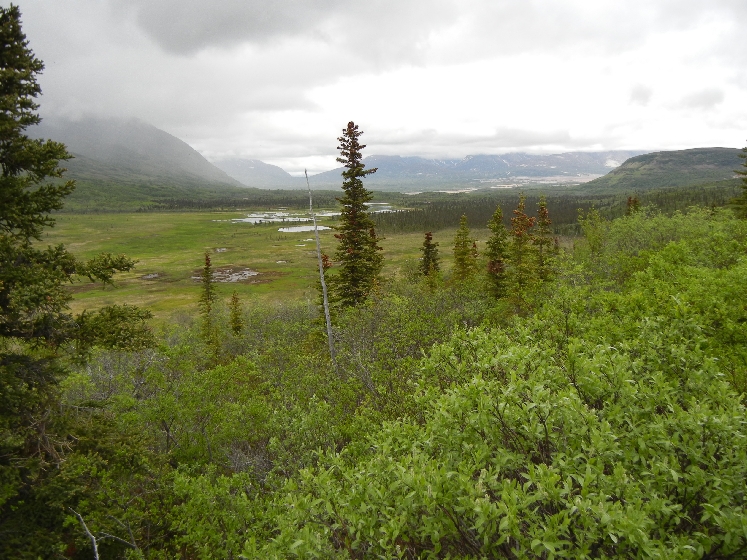
There was a visitor area there where we ate our boxed lunch before starting our ranger guided hike.
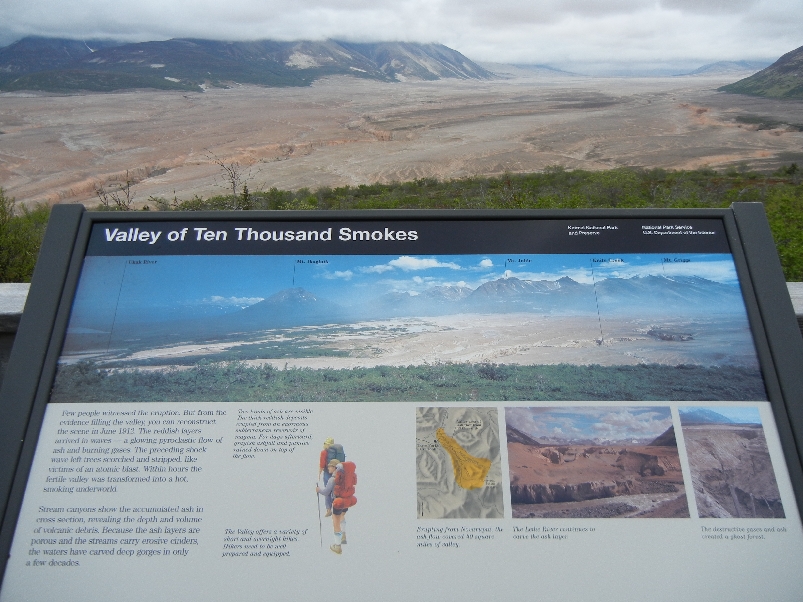
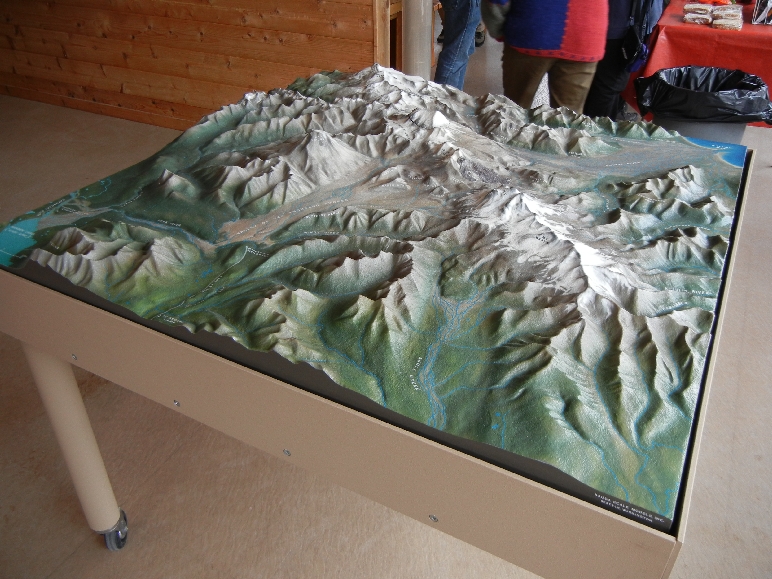

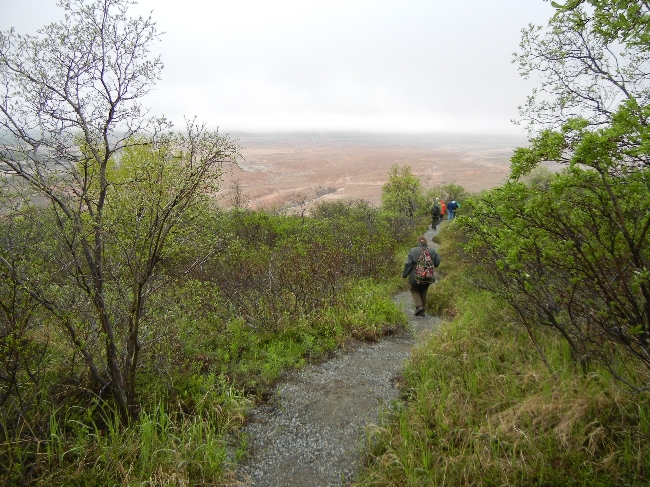
The Valley of 10,000 Smokes was the result of the 1912 eruption of Mt Katmai. This eruption was over 10 times stronger than the eruption of Mt Saint Helens in 1980 and covered over 40 square miles in up to 700 ft of ash and pumice. It was the largest eruption of the 20th century. Just two eruptions in historic time were larger, Mt Tambora in Indonesia (1815) and Greece’s Santorin in 1500BC.
Katmai was made a National Monument in 1918 partly because it was thought that Yellowstone’s geysers would become dormant and this park would be able to demonstrate that kind of volcanic activity into the foreseeable future. Ironically, the opposite happened. There are no more “smokes” in the valley; however there is a fascinating landscape of volcanic debris. Katmai became a national park and preserve in 1980.


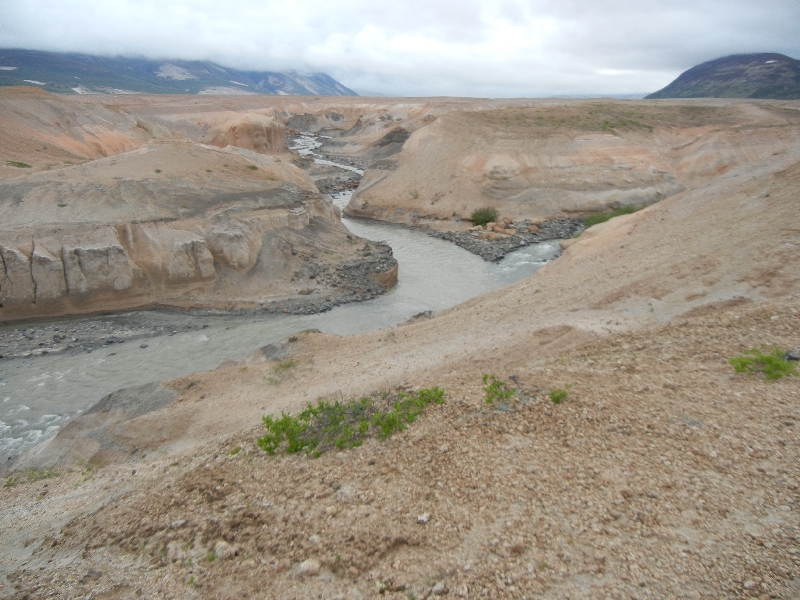
The Ukak River is now cutting deep gorges in the accumulated volcanic ash.
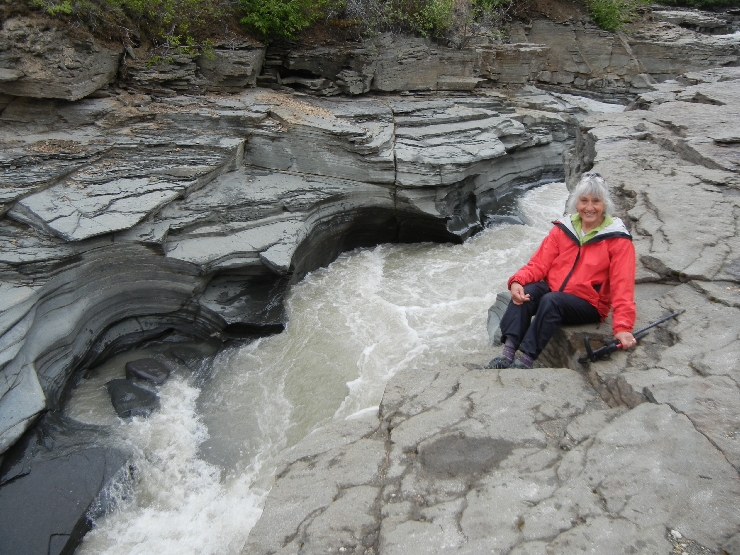
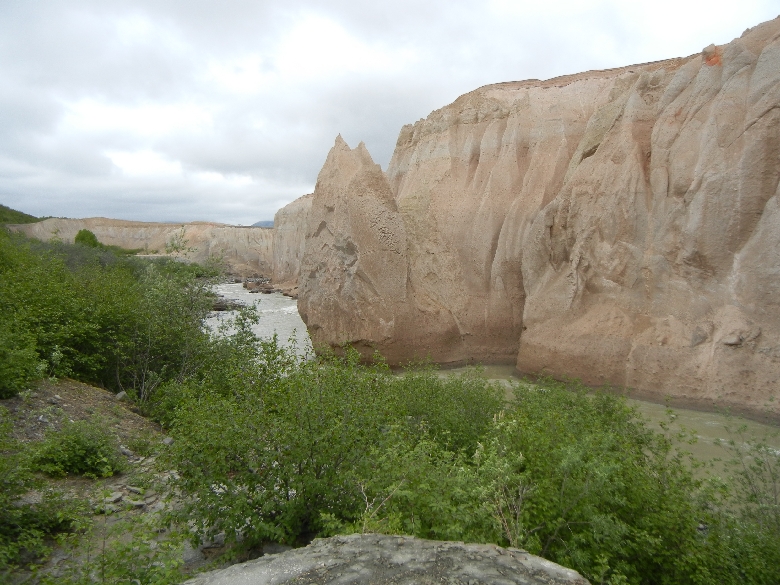
We took an additional half mile trail out over the volcanic ash to Confluence Falls.
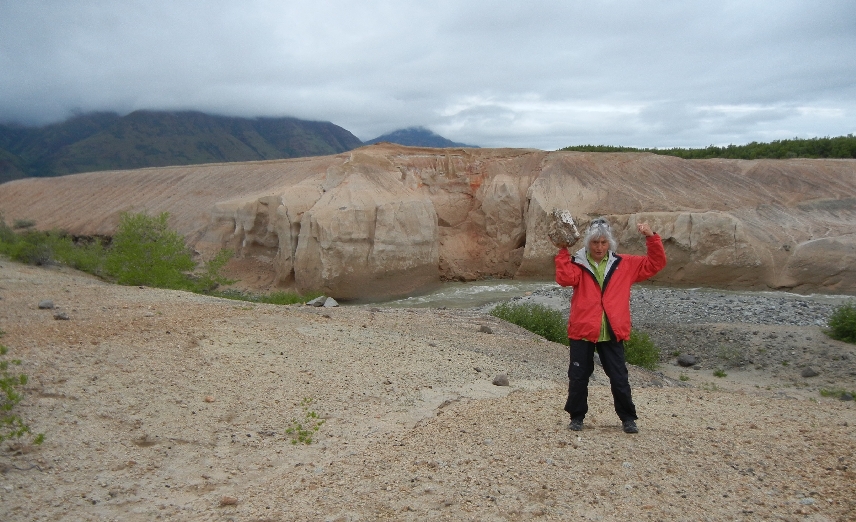
Strong woman (pumice)!
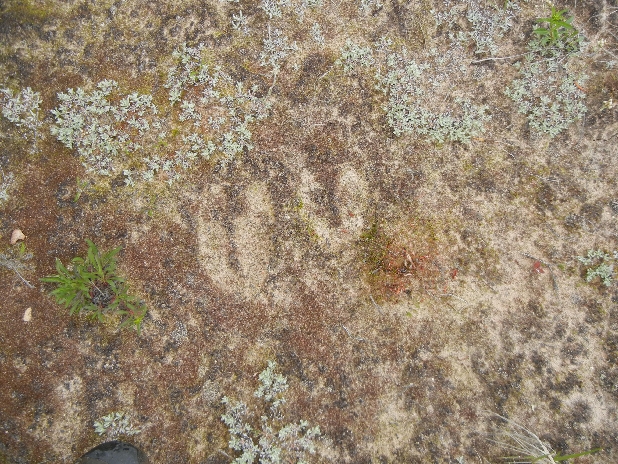
Moose prints
June 20 – hiked with our new German friends to Brooks Falls and Brooks Lake in the rain, 4-5 miles. In a few days thousands of salmon will be running up stream and large numbers of bears will be here to feast on them for over a month. A small school of salmon was seen in the river today and an angler caught one.
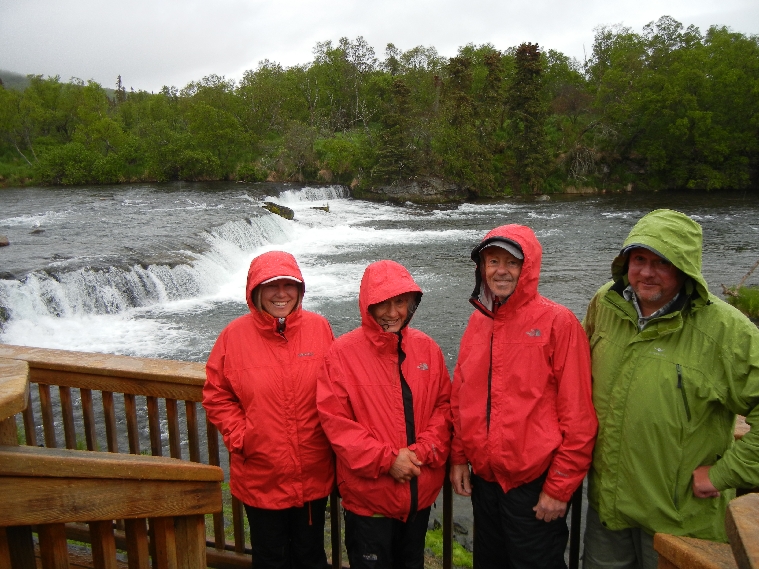
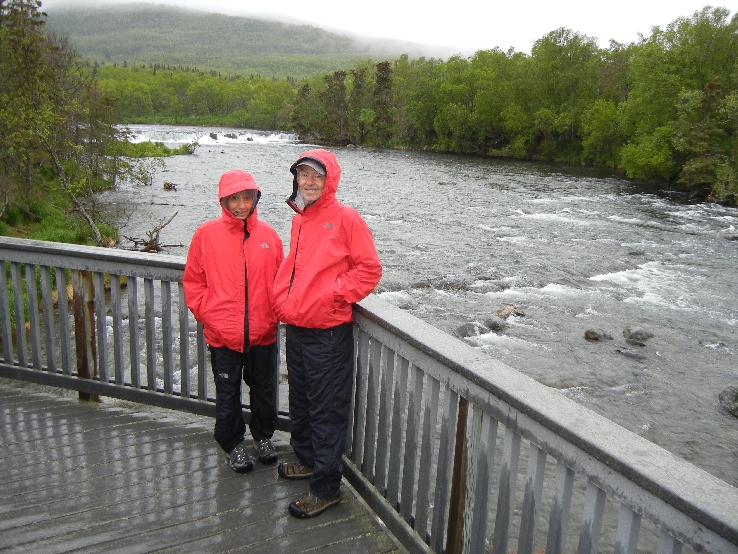

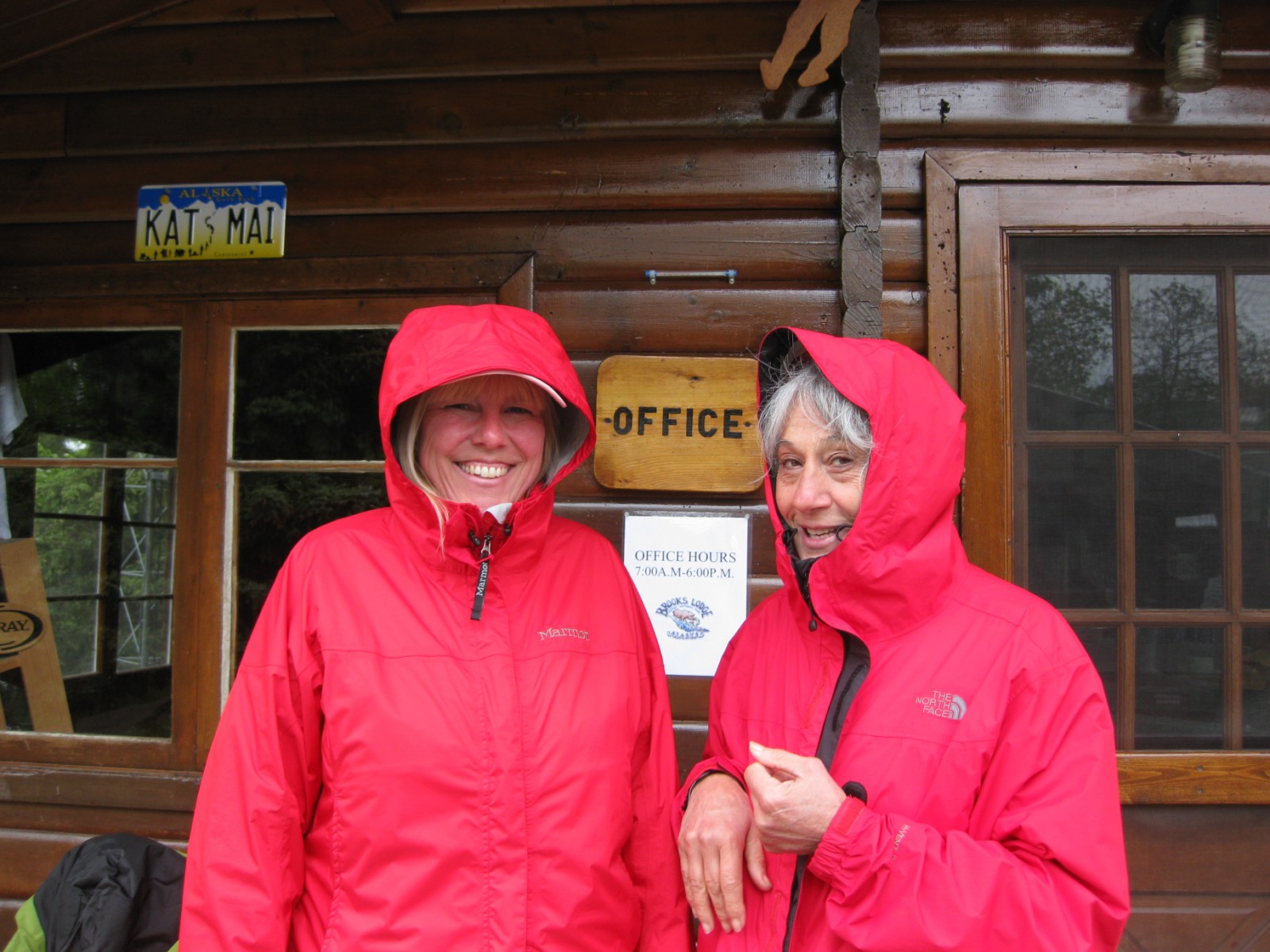
Drying out in the Lodge

Helen- we saw bear, we saw salmon, but not together (so sad!). We were about two weeks early for the famous shot of the bears in the falls catching salmon but we had a great time anyway.
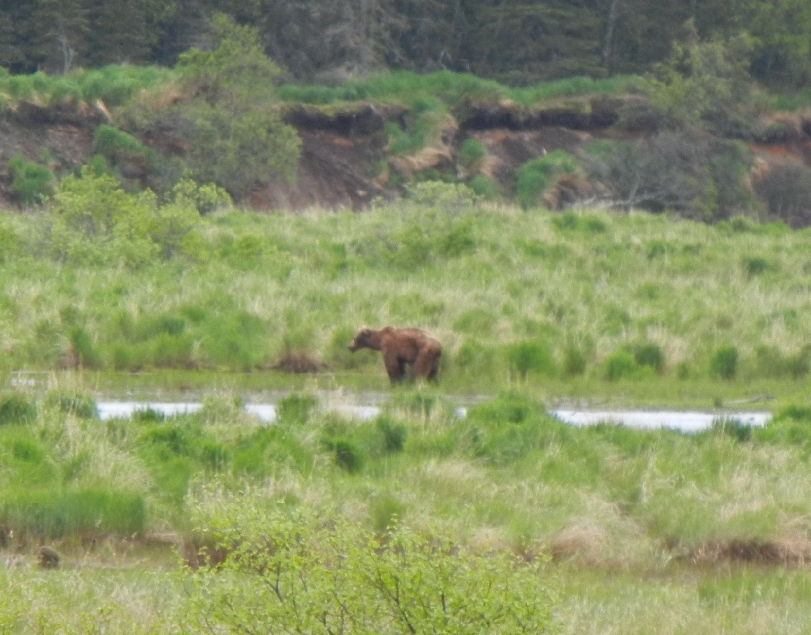
Large male bear they call Popeye and bear print


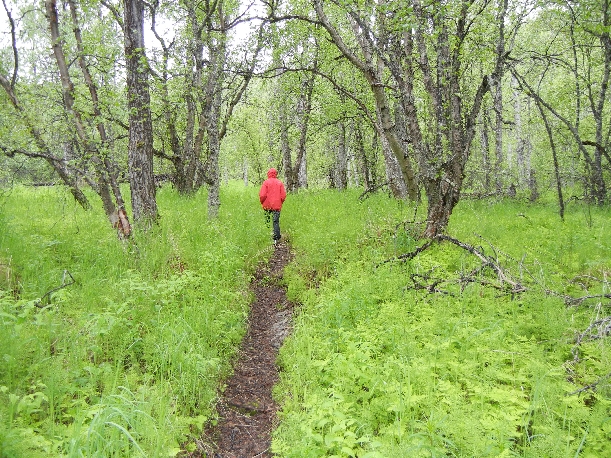
Trail to the Dumpling Mtn overlook, about 3 miles
Hardy geraniums
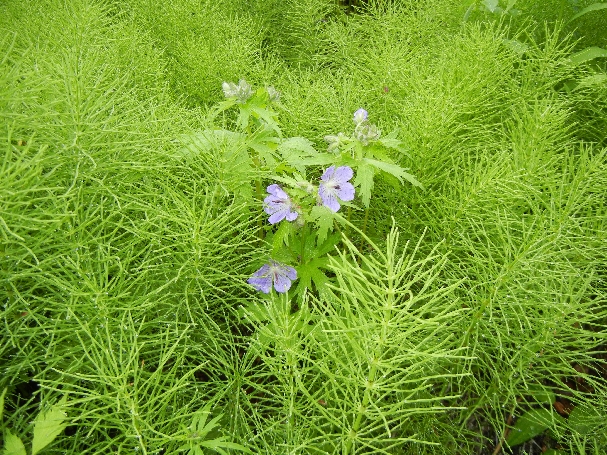
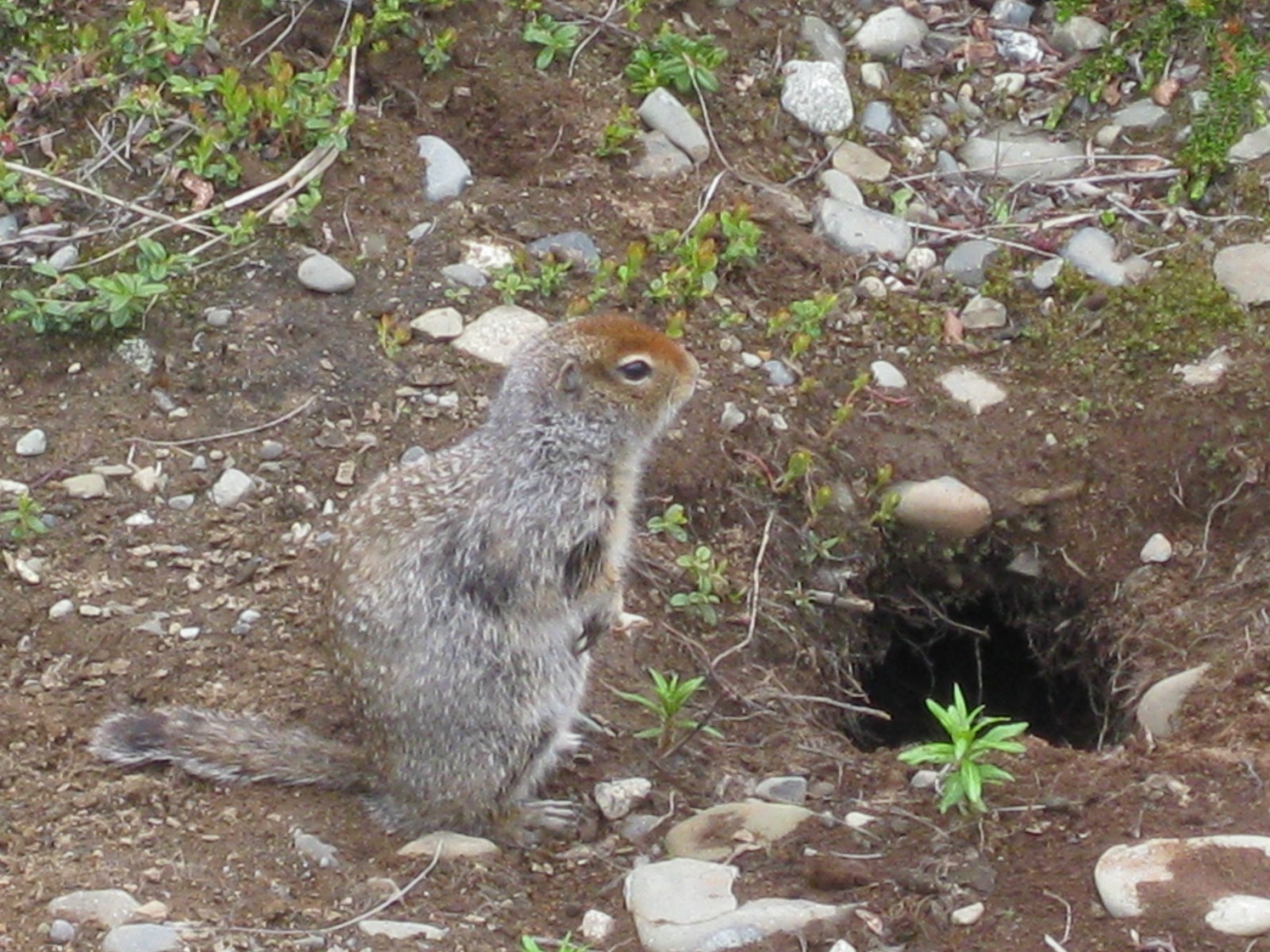
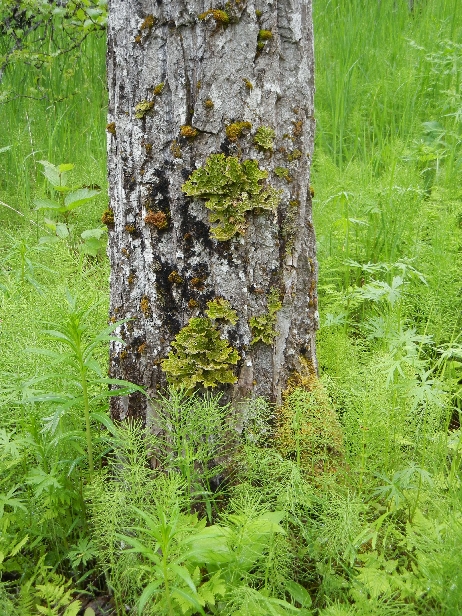
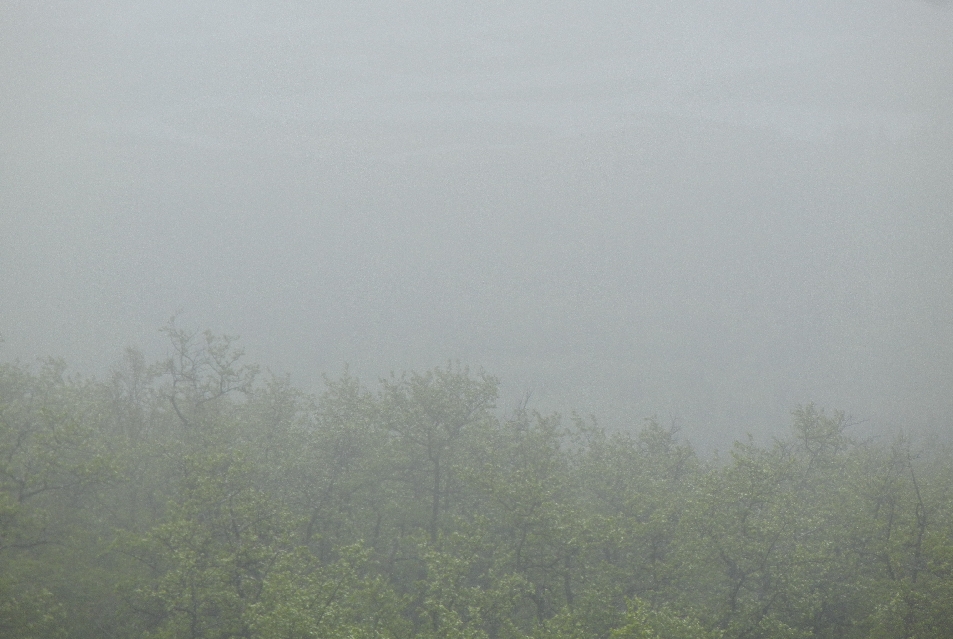
View from overlook (not much)! This was a rainy/cold day and we discovered that our Keen GorTex (waterproof) boots LEAKED! We used the heater and hair dryer in the cabin to dry them out.
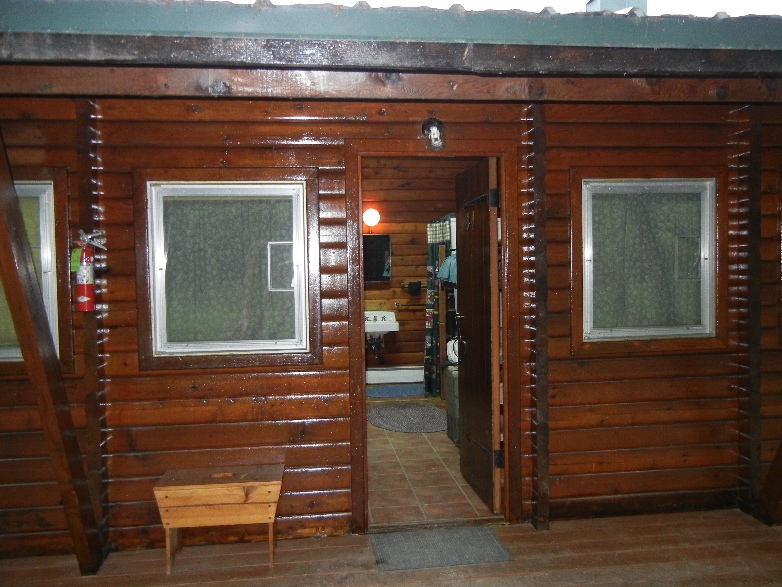
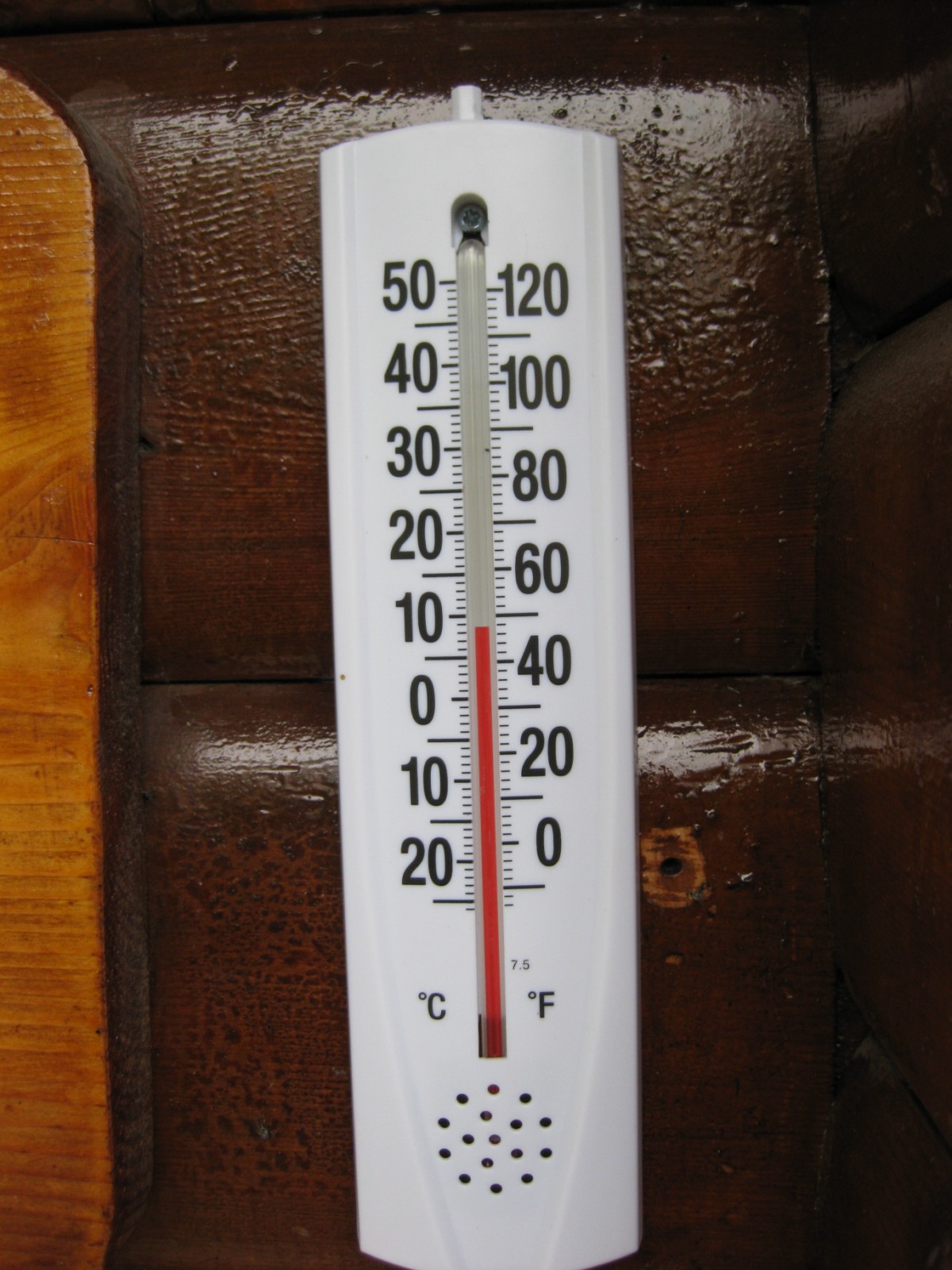
June 21 – packed up our cabin for departure, note the two bunk beds and the temperature.
Helen – the food at the Lodge was great, buffet style at each meal and we ate lots! The cabin room had a shower, a small table, one chair and two sets of bunk beds. It took us awhile to decide how we were going to sleep but finally settled on the bottom bunks even though we bumped our heads each time we got up during the night to use the potty. I guess that was better than falling out of the top bunk!

We walked to Brooks Falls again and saw a few sockeye salmon attempting to jump the falls. I told Helen to stay a minimum of 150 ft from any bear!
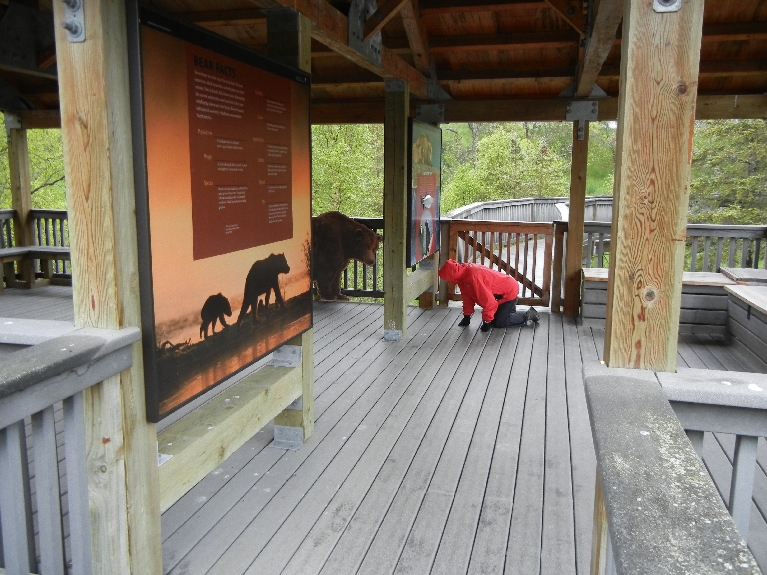
These are pictures from the lower viewing platform and from the other side of the electrified bridge. Rangers are stationed at each end of the bridge. Note ranger wearing mosquito netting.


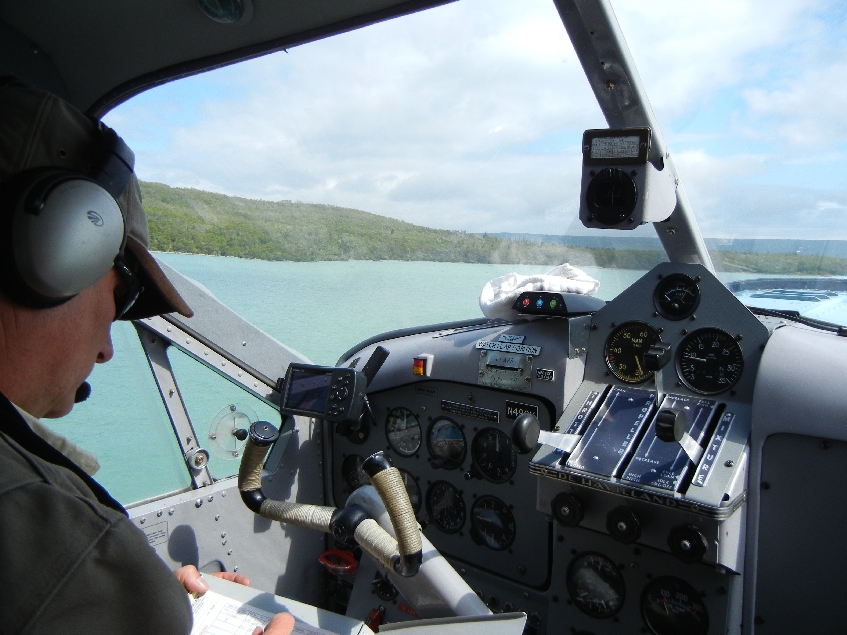
We flew back to King Salmon at 1pm and were the only passengers on the float plane. I got to sit up front with the window open to take some pictures as we flew over the camp and the Brooks River.


Anchorage
Flew out of King Salmon, arrived in Anchorage at 4pm and took a taxi to the Oscar Gill B & B, a historic home across from Delaney Park near downtown.
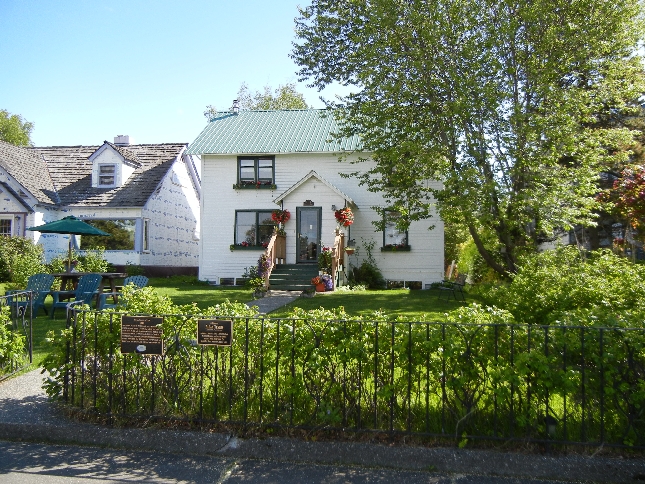
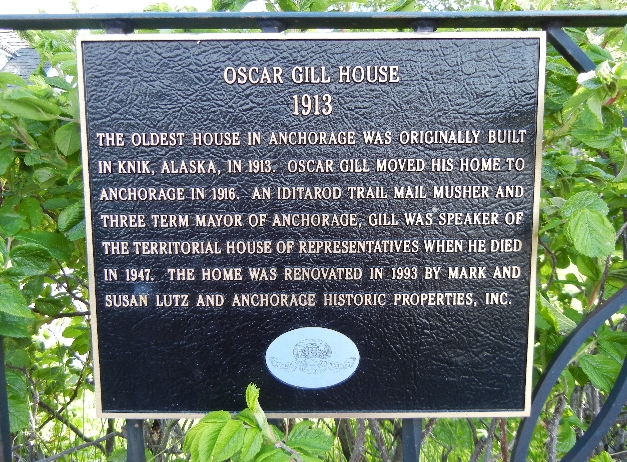
Today is the summer solstice, 20 hours of daylight and 4 hours of dusk. We expected parties in the park, downtown, etc. but discovered that the celebration took place last weekend. We walked through the park, downtown and ate dinner at Humpy’s – blackened Halibut salad and Salmon plank, yum!

June 22 – borrowed some bikes from the B & B and rode downtown to Resolution Park and the Captain Cook monument. We then peddled to REI looking for new waterproof boots but were unable to find ones that worked for us.

Lake Clark National Park
Our Lake Clark Air flight left at 1pm for Port Alsworth in Lake Clark NP. The flight through Lake Clark Pass and the Chigmit Mountains was spectacular. Our small plane flew below the cloud cover along the Tlikakila National and Wild Scenic River.


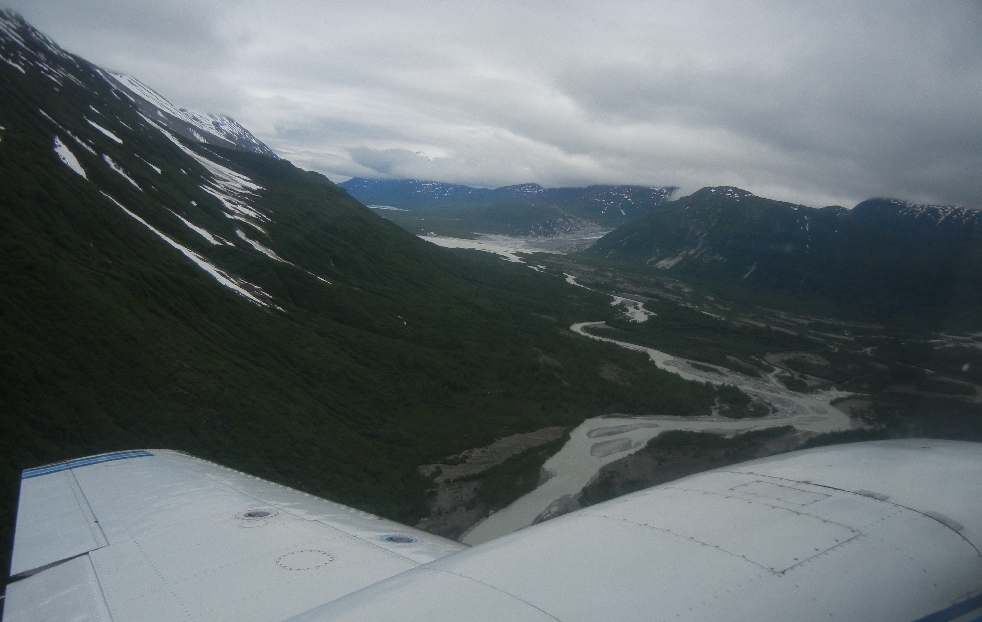

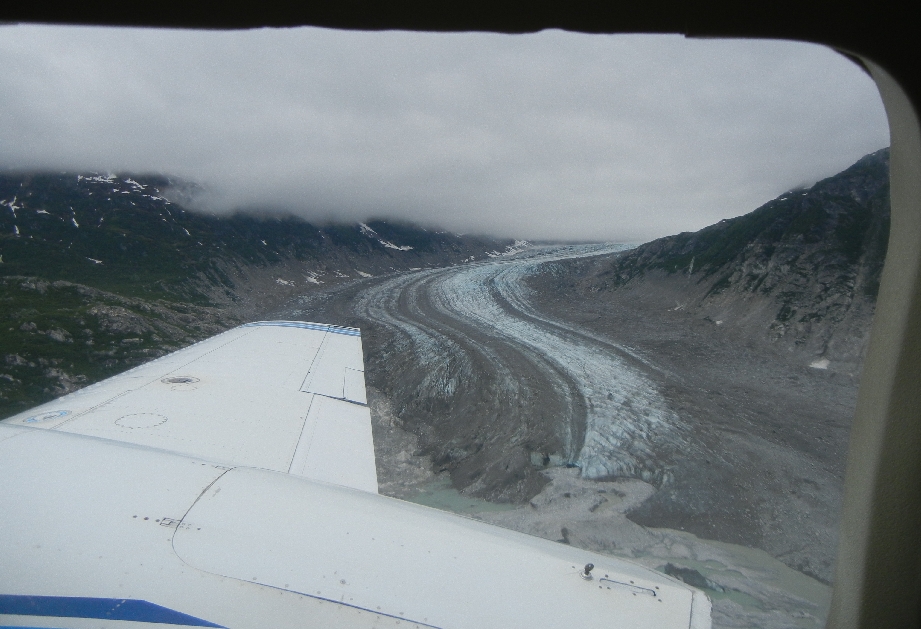
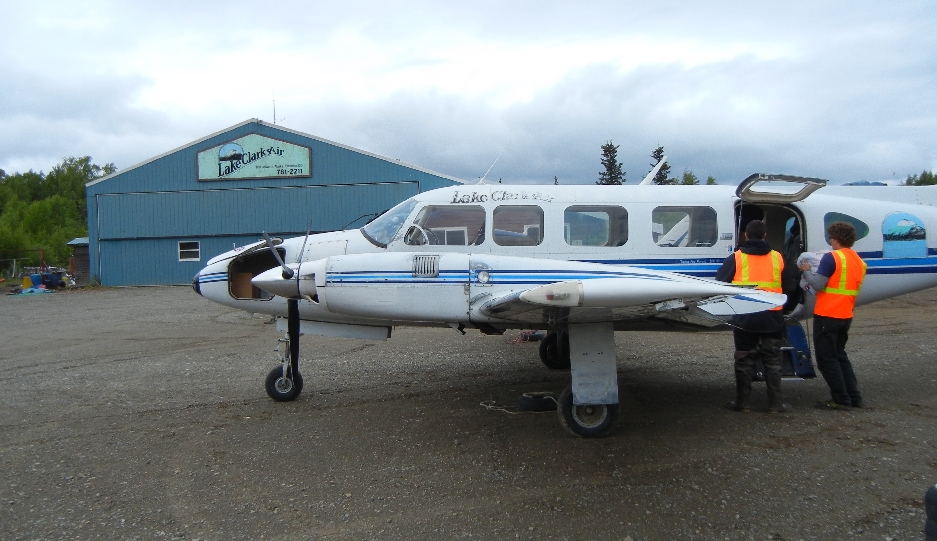
Helen – going into Lake Clark was a little hairy. We flew over Lake Clark Pass and in below the clouds and close to the mountains – my blood pressure was up! When I got off the plane, I said I would not fly if it was raining the day we were scheduled to leave. Two weeks later, two small planes hit going over Lake Clark Pass!
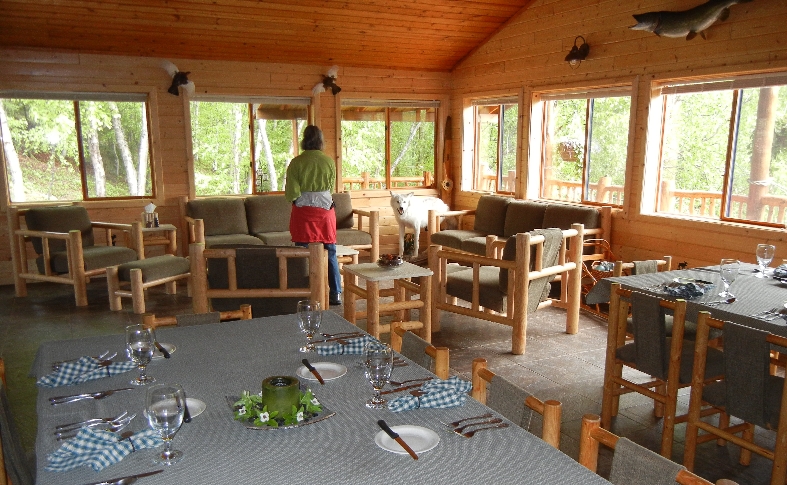
Helen – this is the Farm Lodge dining room. This was a small lovely camp right on the lake and the food was great.




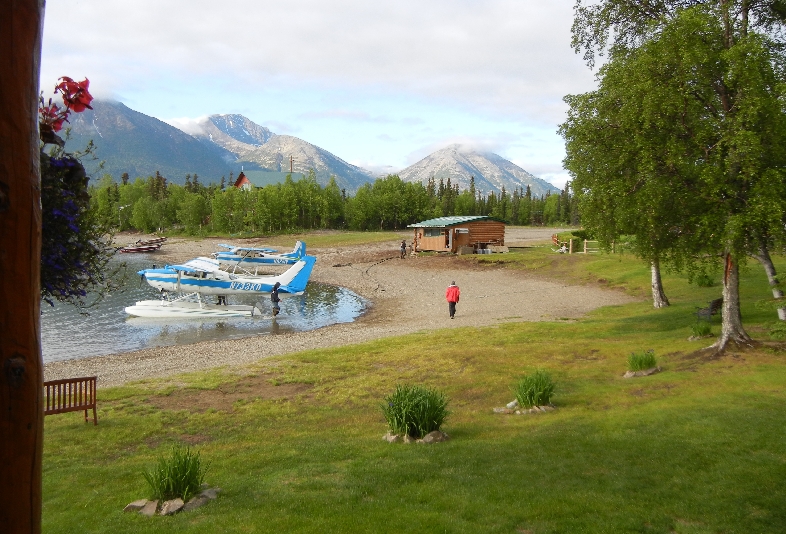
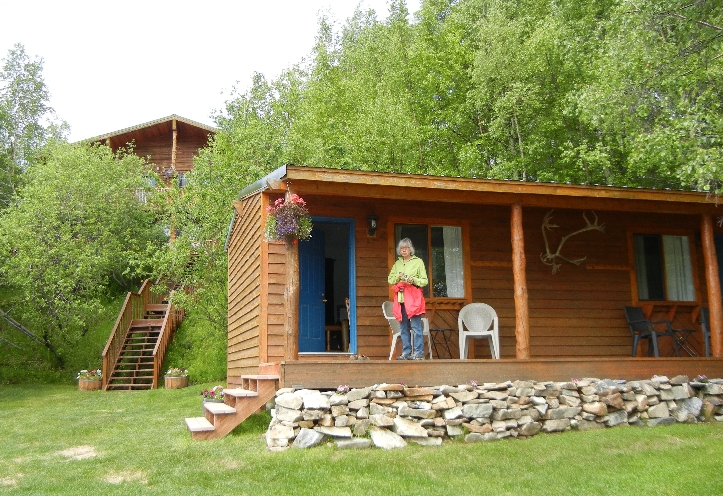
Our cabin
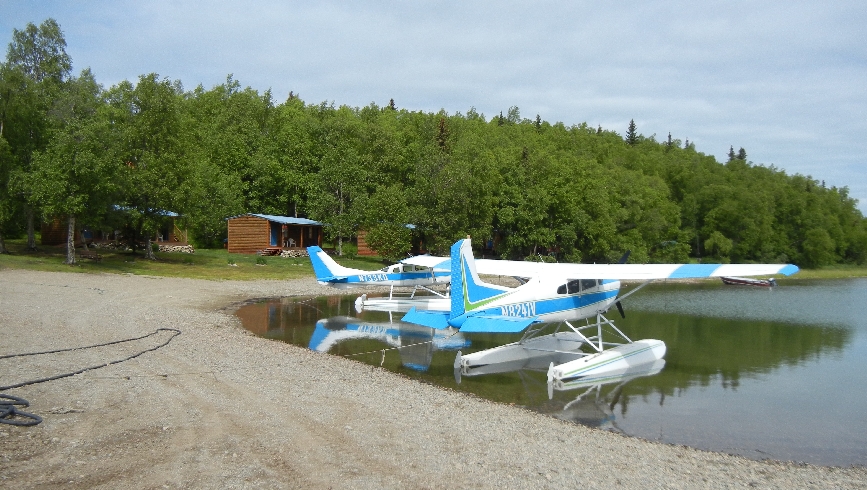
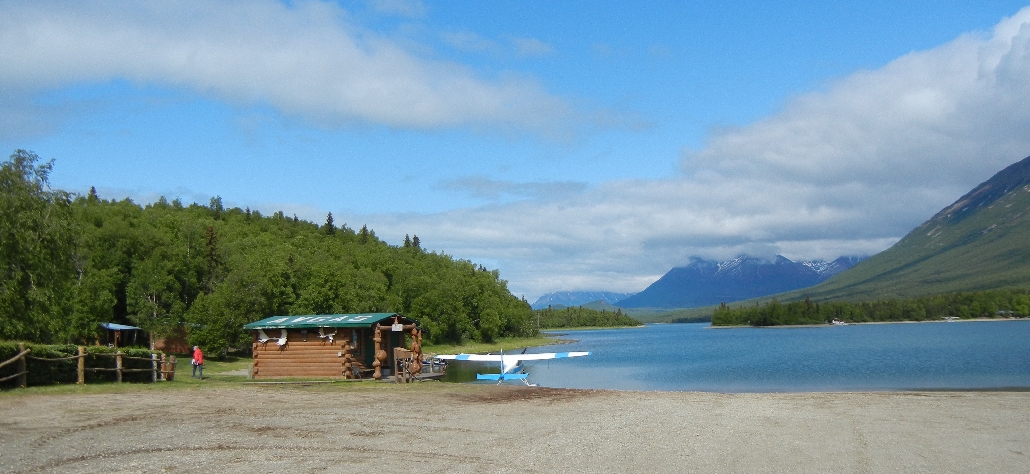
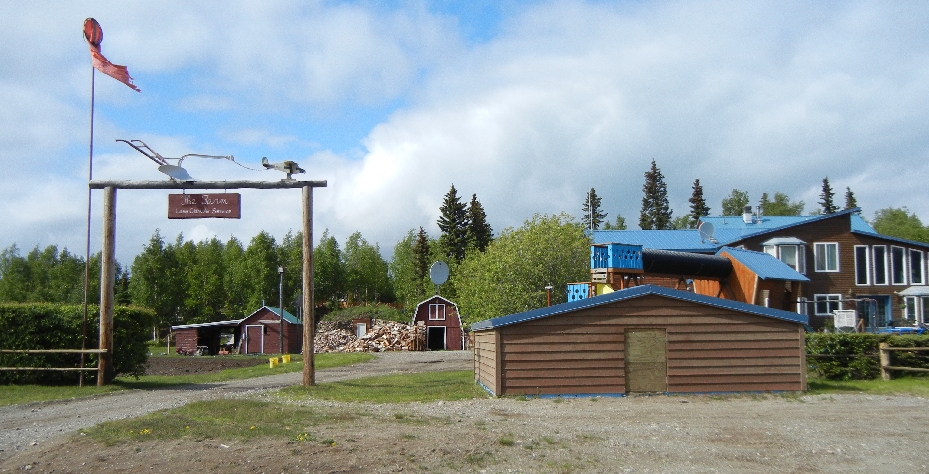
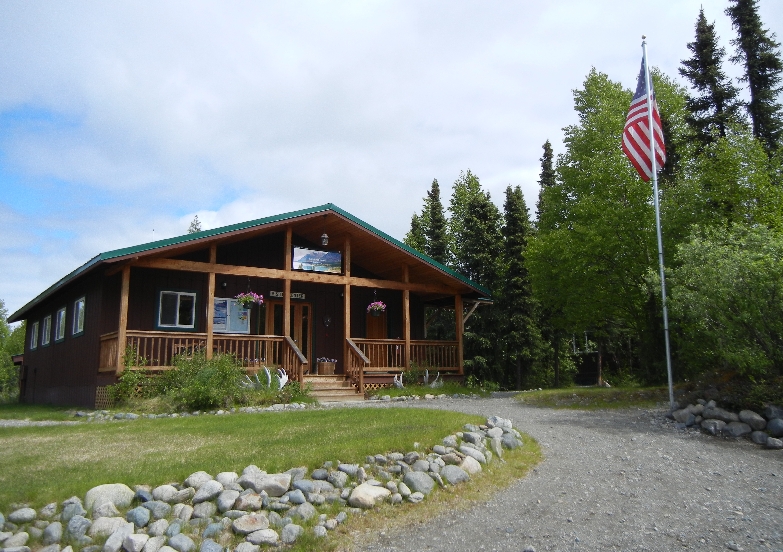
Lake Clark NP Visitors Center and Athabascan native ranger with salmon drying racks and storage.


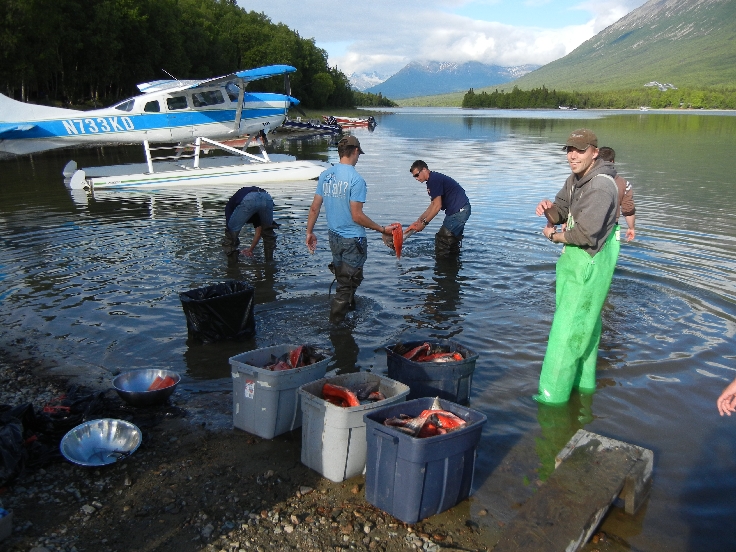
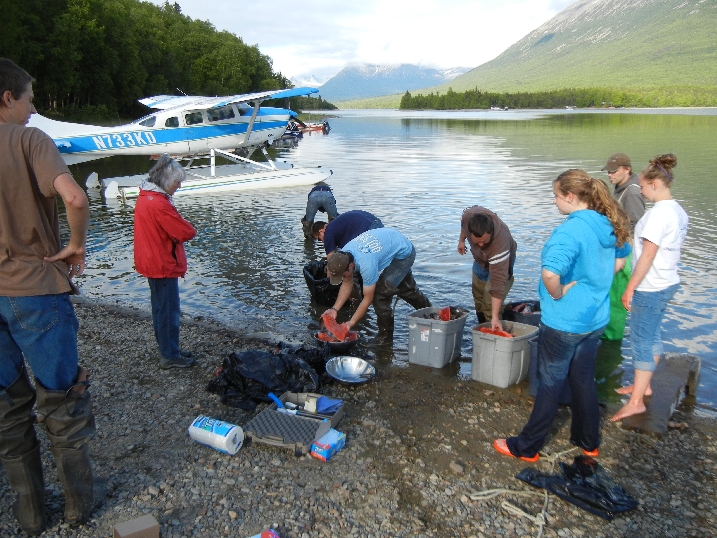
The Farm Lodge had just flown in a commercial catch of salmon from Bristol Bay. They cleaned and filleted 300 lbs in the lake, vacuumed sealed them and then froze them. They will serve the salmon throughout the coming year.


June 23 – Terry, an internist from Oklahoma City, joined us for a hike to the Lower Falls of the Tanalian River. He stayed to fish and we continued to the viewpoint for the Upper Falls. Terry was carrying a revolver and I had a can of bear spray. We saw some bear, moose and wolf prints and scat but no animals.

After the Upper Falls, we continued on the trail to Kontrashibuna Lake. About 50 ft from the lake, we were going up a rise and right at the top, the toe drop problem of my left foot (herniated lumbar disk, some loss of function of L5/S1 nerve roots) caused me to trip on a rock and I went flying forward trying to catch my balance. Fortunately, I did slow my momentum but unfortunately, I did a face plant on some rocks at the top.
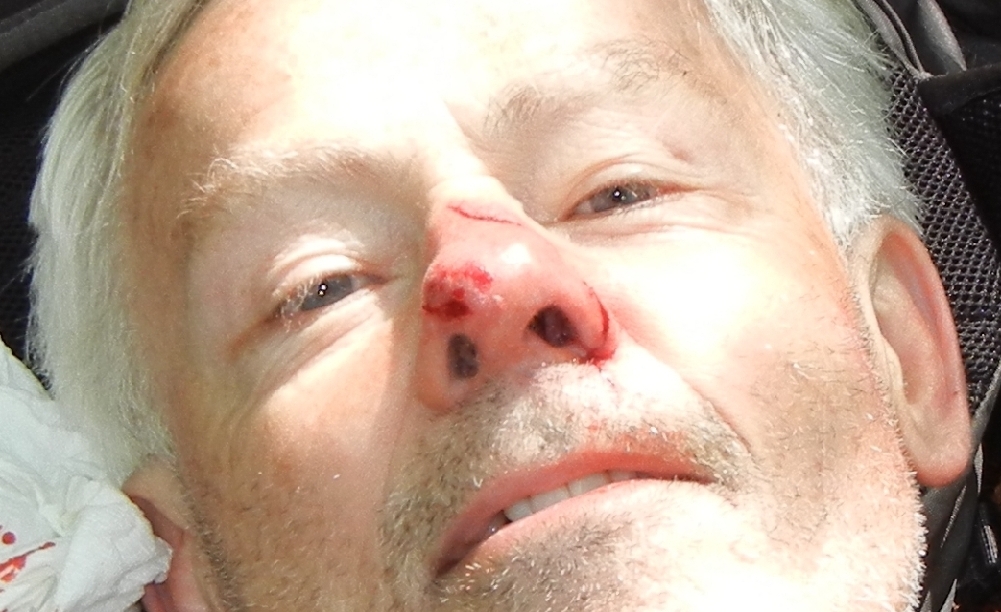
Trying to encourage me?, Helen said, “Tom, you look terrible, wait till you see your face!” “I can’t stop the bleeding!” “Did you break your nose?”

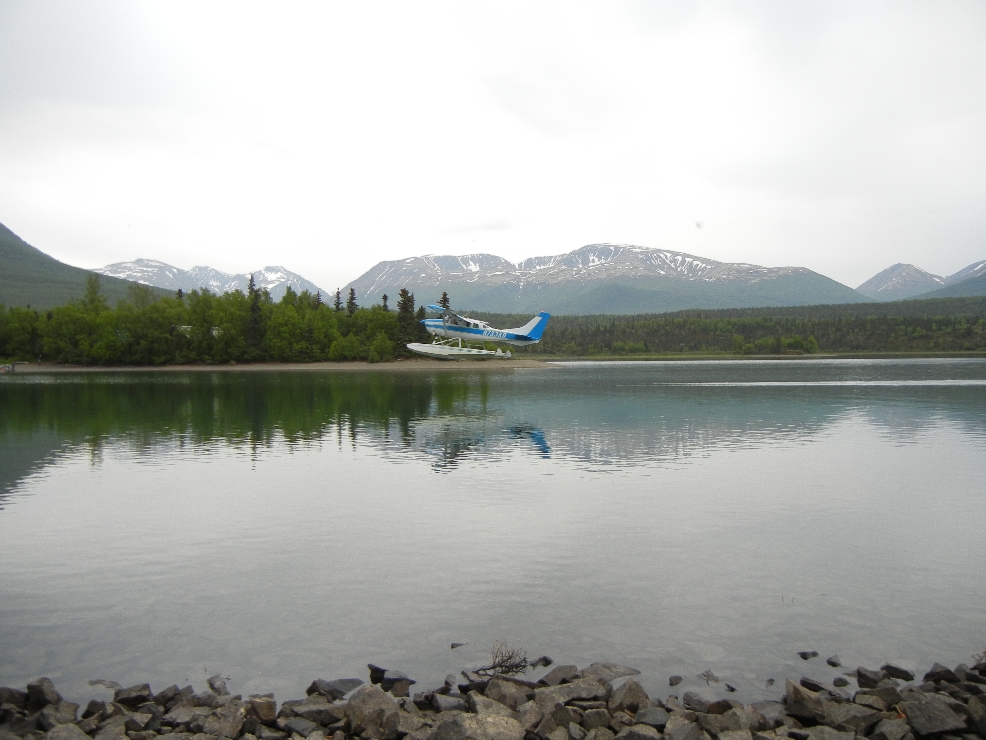
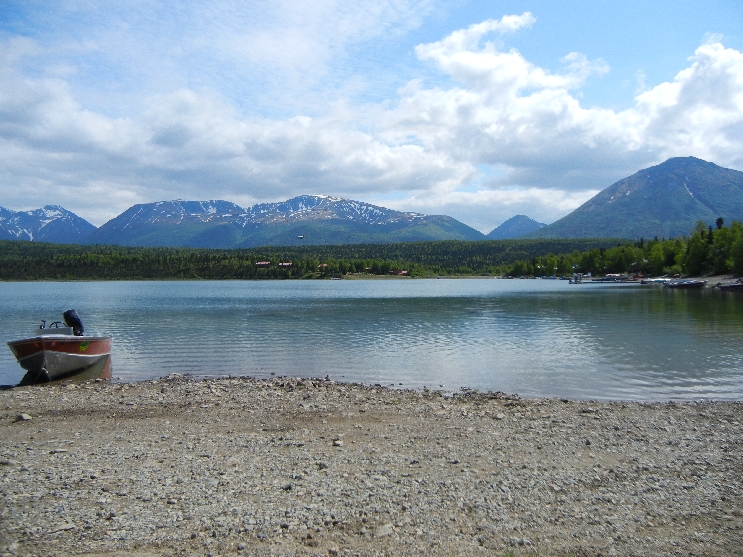
Nurse Helen was able to stop most of the bleeding. At the lake we found a small aluminum skiff with two paddles. We were blessed with a glorious day; the first sunny day of our trip. So, we took the boat out into the middle of the lake. We were enjoying the crystal clear water and the outstanding scenery when I asked Helen if she was throwing water into the boat with her paddle. She said no but water level in the boat was rising. Looking closer, we discovered two small pieces of duct tape on the bottom of the boat where the water was bubbling in – we headed for shore and dumped about 10 gallons of water from the boat!

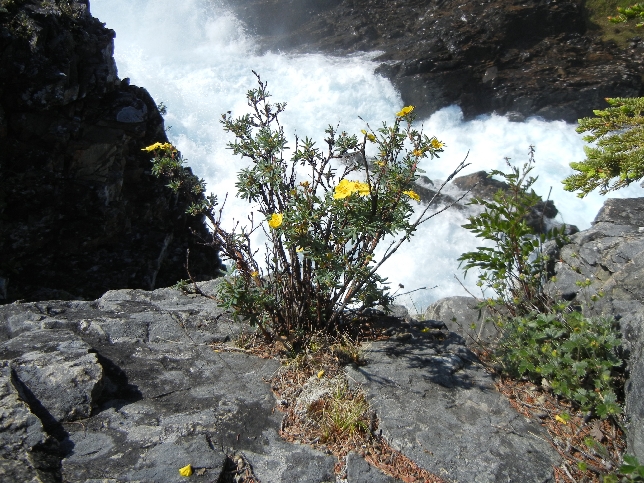
We headed for the top of the UpperFalls for lunch. I wish we could have stayed there for hours! We have experienced many special places, this site (pristine scenery, comfortable rock alcove to sit in, waterfall spray and sound) with perfect weather conditions (crisp cool air, clear blue sky, little wind and comfortable temperature), ranks near the top! Terry arrived unexpectedly, examined my nose, and said he would clean and close two of the three cuts and stitch the third if he had the supplies.


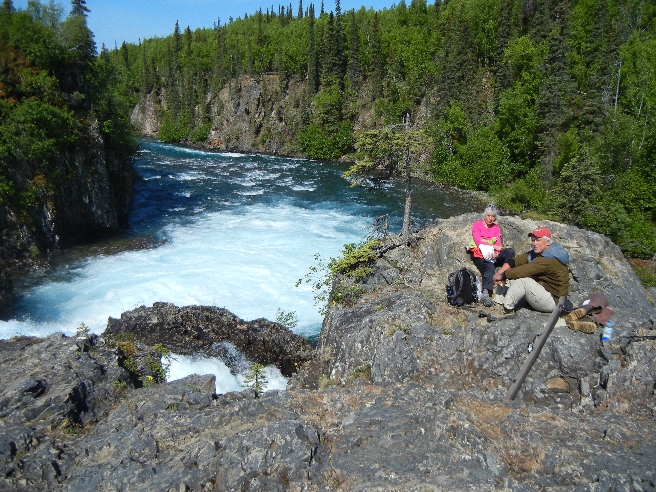
After lunch we hiked together to a branch in the trail and then Helen and I took the longer Beaver Pond trail back to the lodge. In total, we hiked about six miles.
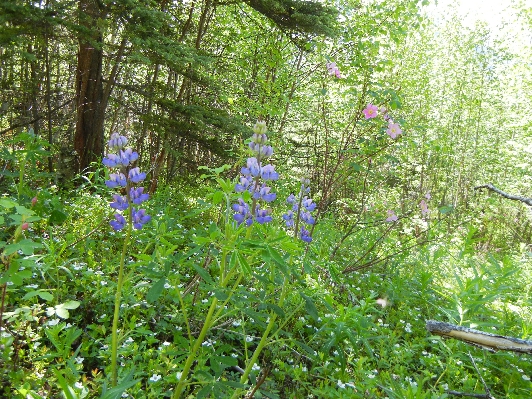
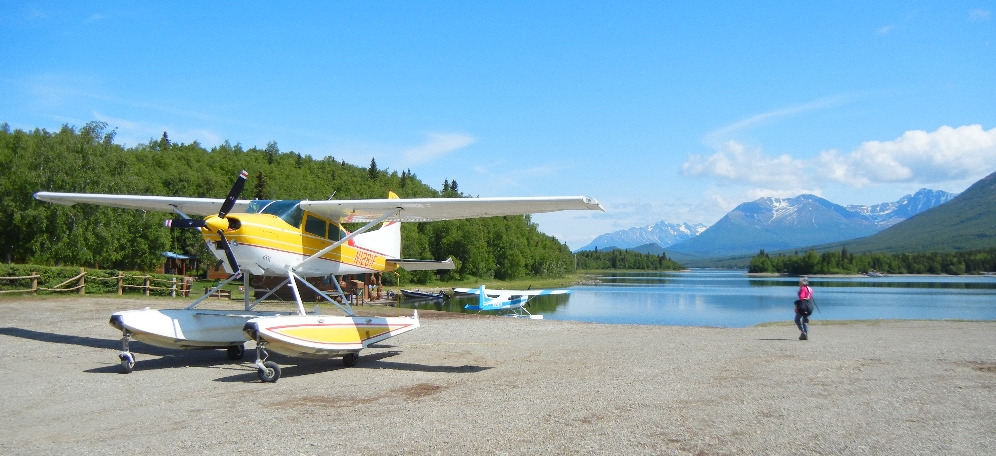
After I showered, Terry cleaned my wounds and applied small band aids in an attempt to close them.
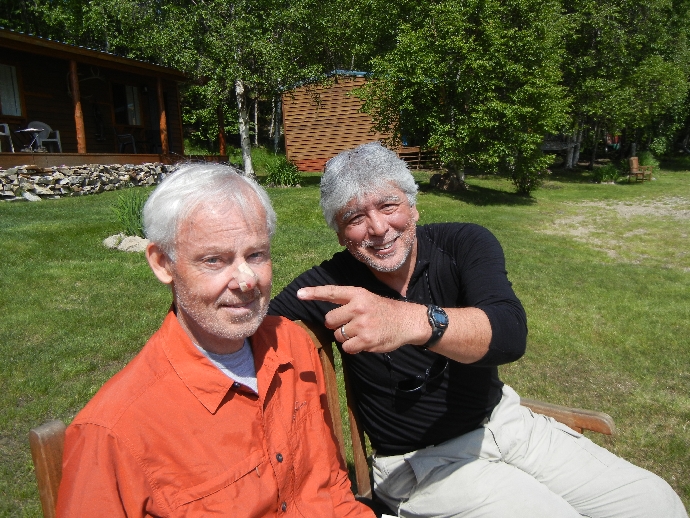
At dinner (pecan crusted fresh salmon!) we discovered that there was a camp doctor at the Bible Camp for disadvantaged kids across the runway.
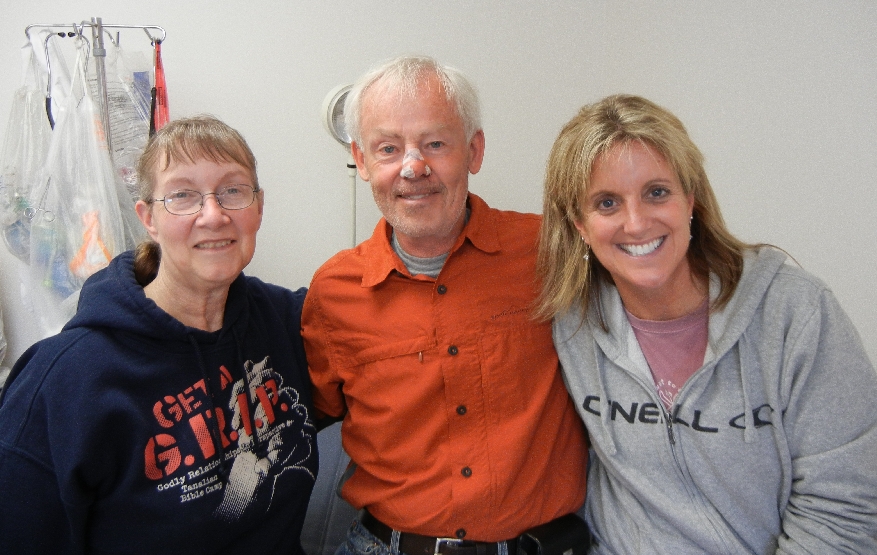
They rotate kids in and out a week at a time and are now building cabins for wounded veterans. Nurse Sally and Dr. Judy (?) cleaned, prepped, durra-bonded and put two stitches in the worst cut. When I asked how I could pay, they said that there was no charge, this is what they do! They even gave me meds and a kit for removing the sutures. That night we taught Terry how to play Farkle.
June 24 – The morning was cloudy and cold so I got caught up on my computer work and Helen did her cross-stitch. Judy, Terry’s wife, flew in this morning and they joined us in our cabin to eat our sack lunches.
We shared the cost of a guide and boat for an afternoon “wildlife” tour on Lake Clark. We saw a bald eagle and the dog in our boat. It was cold as the boat moved to the north end of the lake.
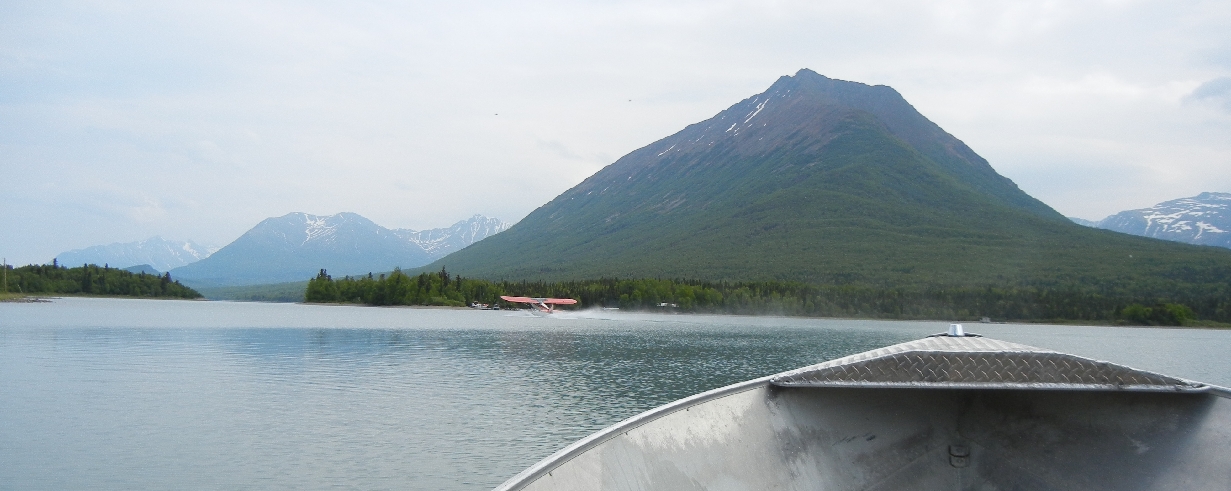
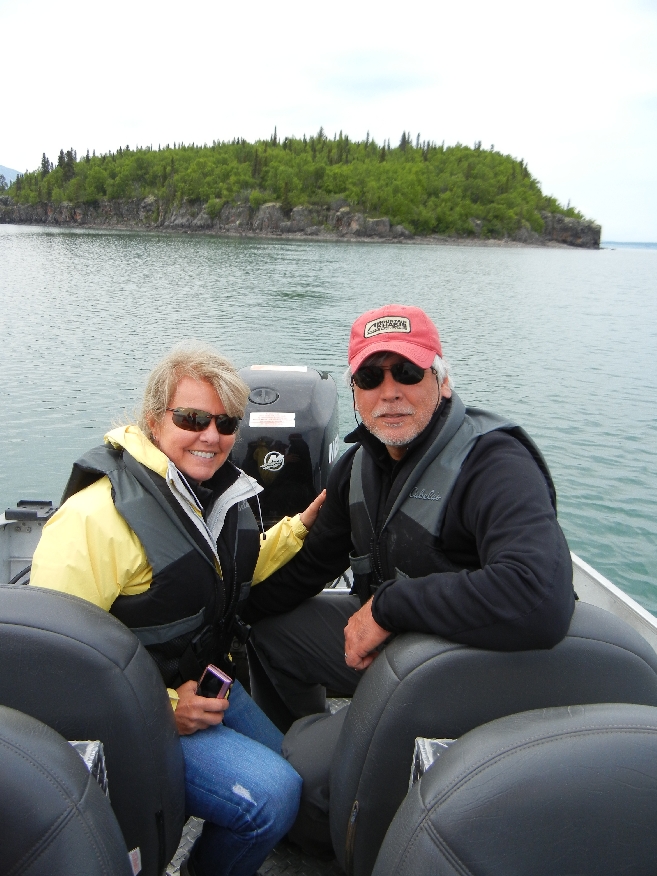
We made three beach stops to view the scenery and check the animal tracks.
Helen – we had to be carried out of the boat twice to get to the beach and walk around – couldn’t afford to get our boots wet as we were leaving on the float plane after we returned.
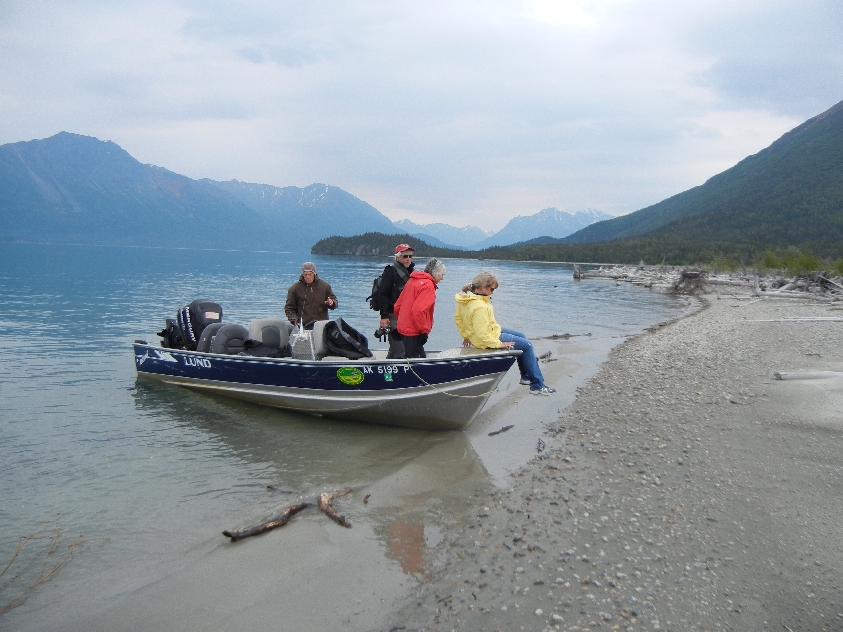

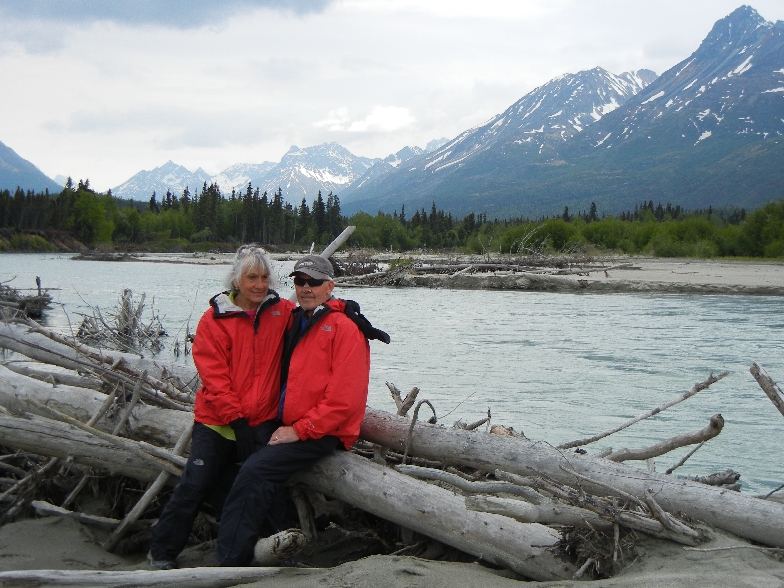
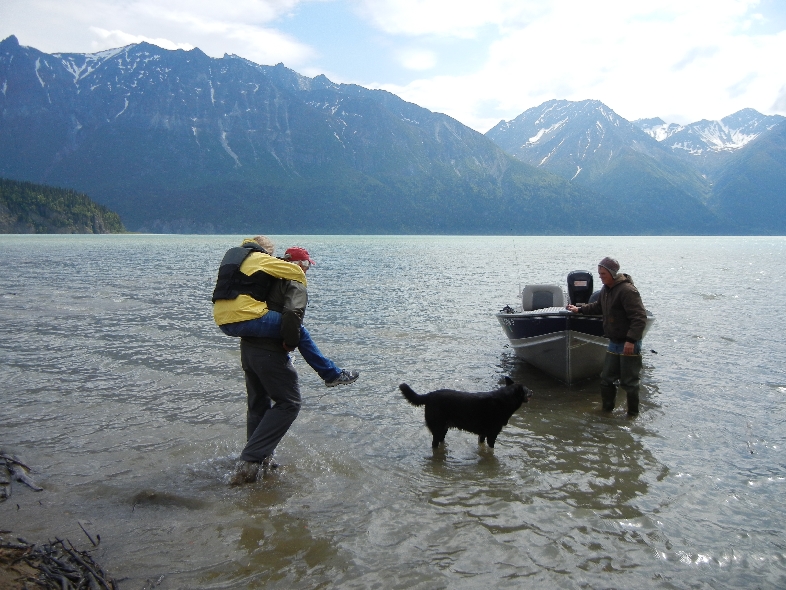
Terry did a little fishing at one of the stops and had a couple of catch and release lake trout.
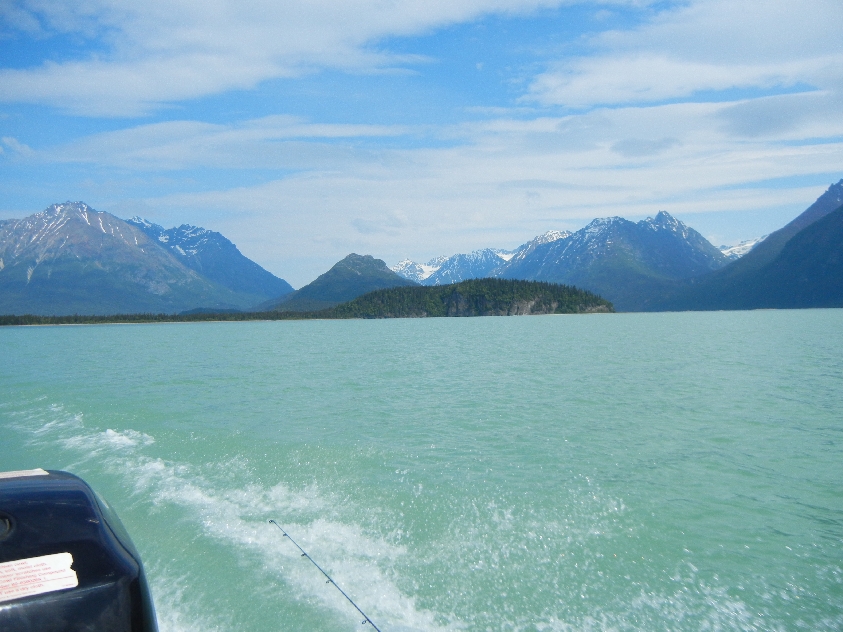
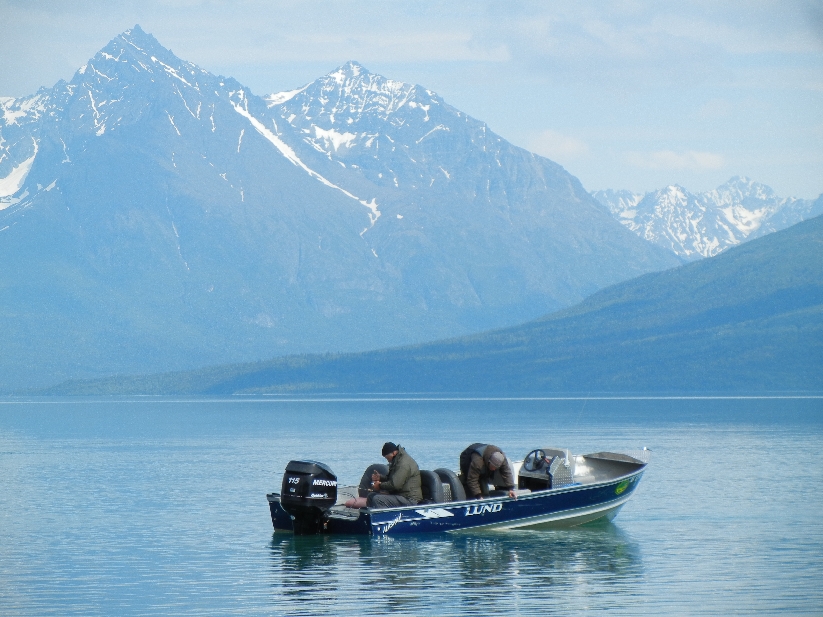
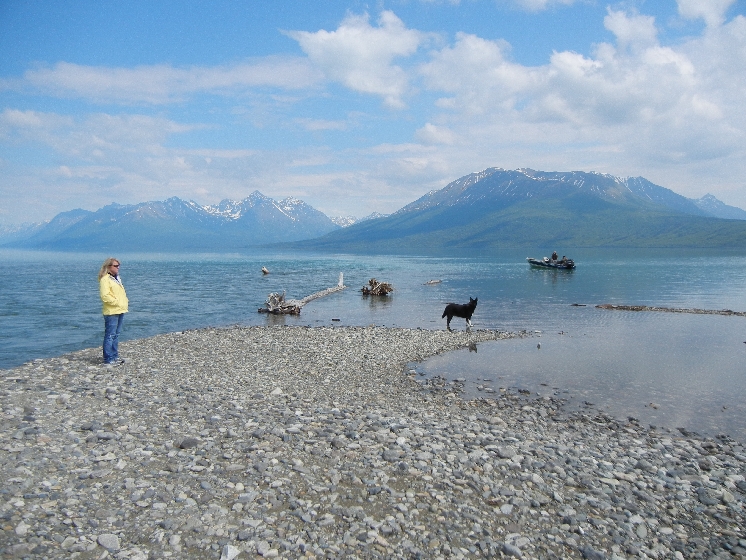
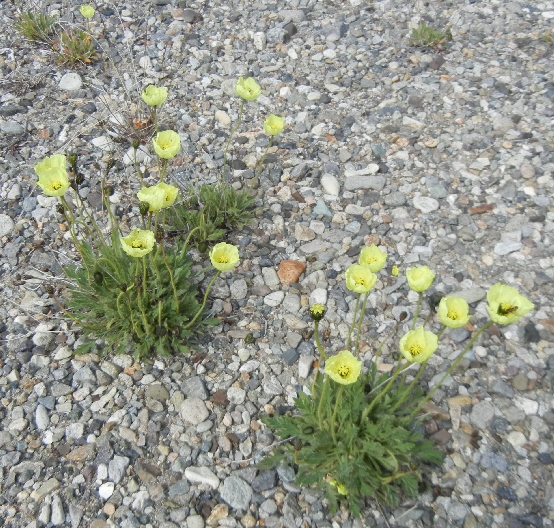
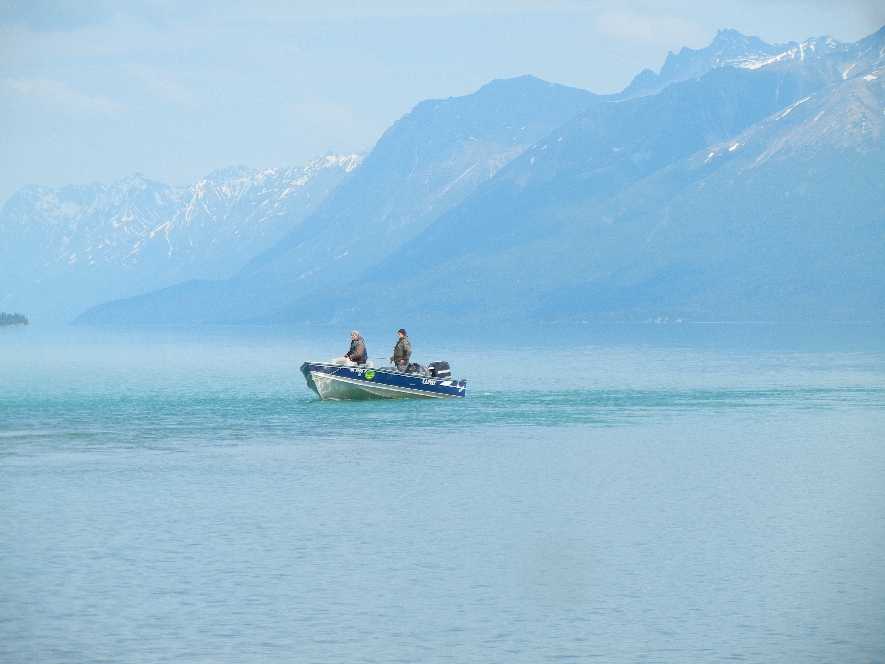
We enjoyed the sun and apricot brandy on the porch with Terry and Judy while awaiting our 6pm departure from Port Alsworth.

Beach and river valley where some of our previous pictures were taken.
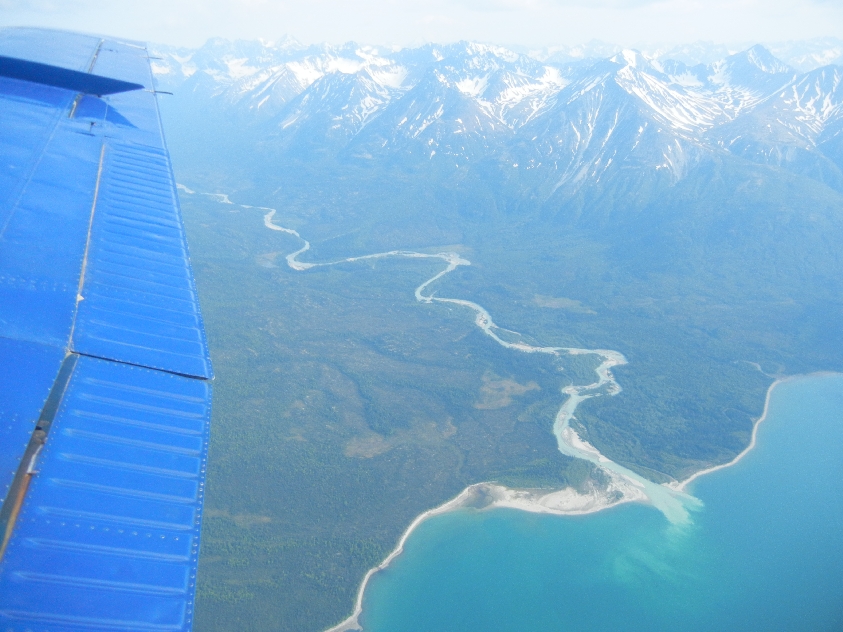
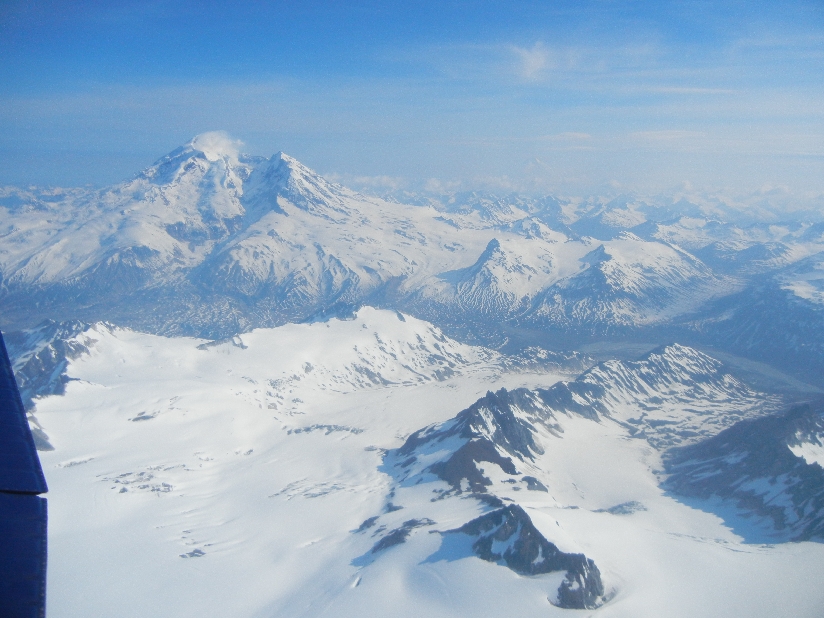
We were able to fly at a higher altitude on our way back to Anchorage and had some good views of the Chigmit Mountains, Mt. Iliamna and Mt. Redoubt, which last erupted in 2009.


Anchorage
We arrived at the Oscar Gill B & B at about 7pm and ate the sack lunches we had received at the Farm Lodge.
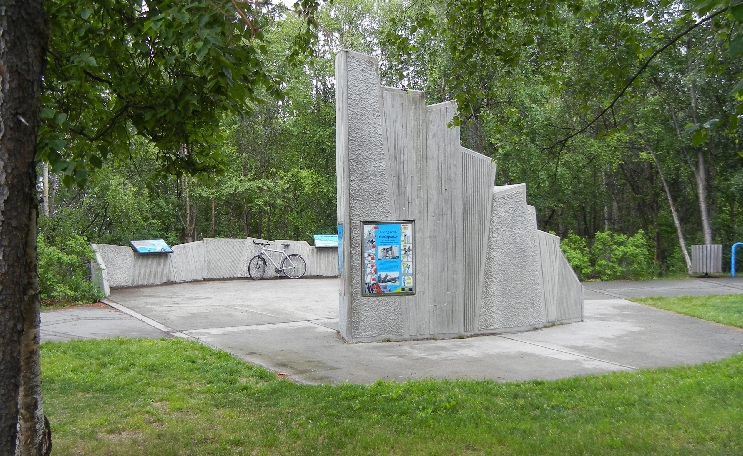
June 25 – I borrowed a bike and rode the Coastal Trail past Earthquake Park (commemorates 1964 earthquake) to the airport to pick up our rental car. I upgraded to a Nissan Murano SUV to be a bit safer on the dirt/gravel roads we would be driving. Helen did laundry while I was gone.
I picked up Helen and we went back to REI.
Helen – our B & B is great! We again shopped at REI for waterproof boots. I found some, Tom did not. We both found pants on sale and I also got a shirt. Tom discovered that he gets a 10% discount on everything at REI because he has a five digit membership number – meaning he was one of their first members!
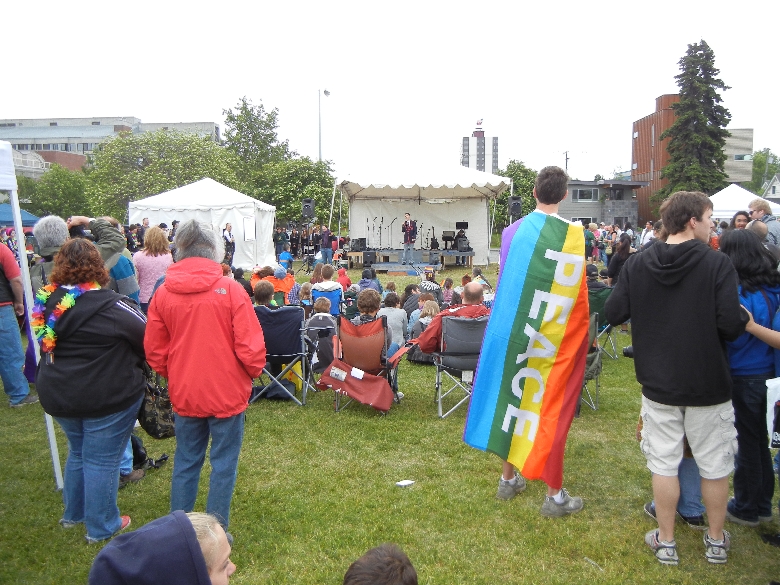
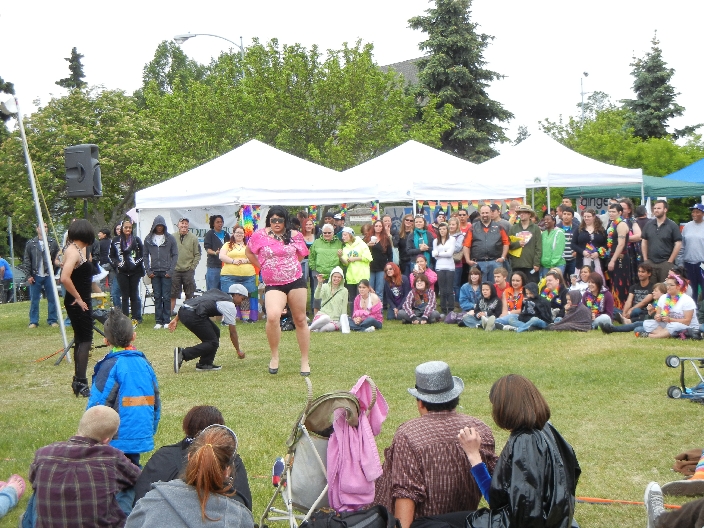
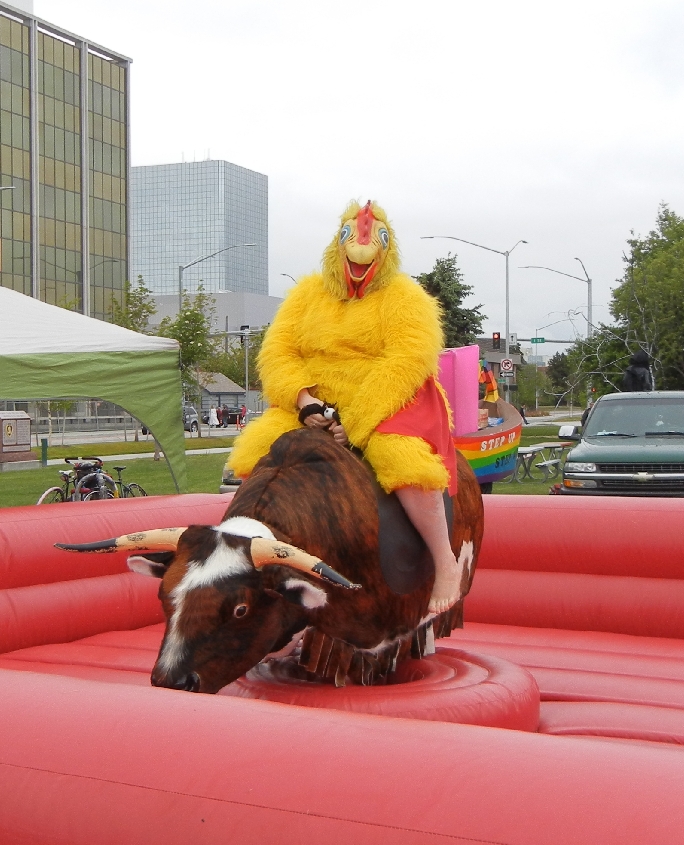
Helen – we went to Delaney Park where they were celebrating “Pride of Alaska” and decided to have lunch. Ate some salmon tacos and then walked around; saw some really weird far out outfits and some talent presentations. We found out it was a gay/lesbian rally…we had fun.


Helen – in the afternoon we found a Salvation Army store. Tom bought goulashes to put over his boots and a really neat ceramic beer pitcher from Leisy Brewery in Peoria, IL decorated with Egyptian motifs. Got it for half price ($10) and he now carries it in his back pack for safe keeping – and you all think I am bad!
McCarthy and Wrangell-St.-Elias National Park
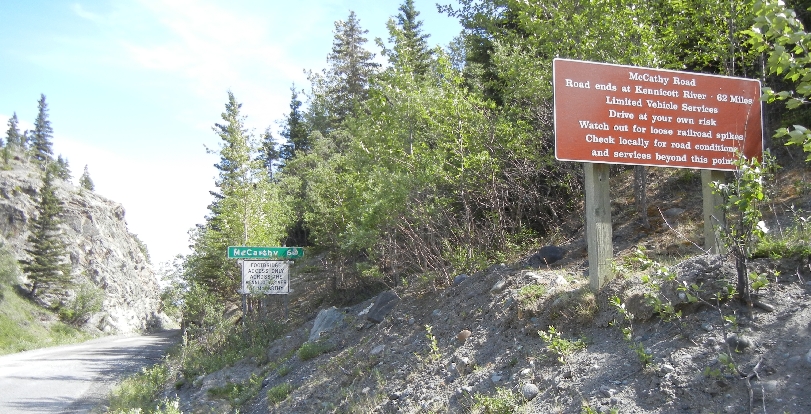
June 26 – Rosemary at the B & B prepared an early blueberry pancake breakfast for us. The drive to McCarthy and Wrangell-St. Elias NP was about 300 miles and it took us 9 hours. The last 60 miles were on a dirt road where most rental companies do not allow their cars. However, the owner of our hotel guaranteed that if anything happened to our car that he would be responsible for assisting us.

Environmentally neutral graffiti
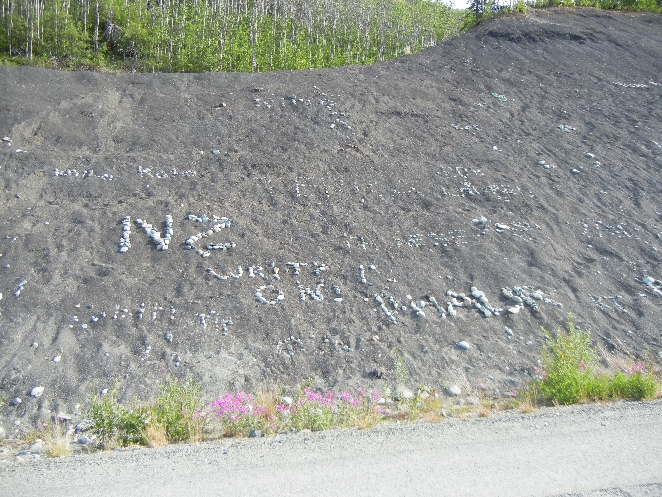
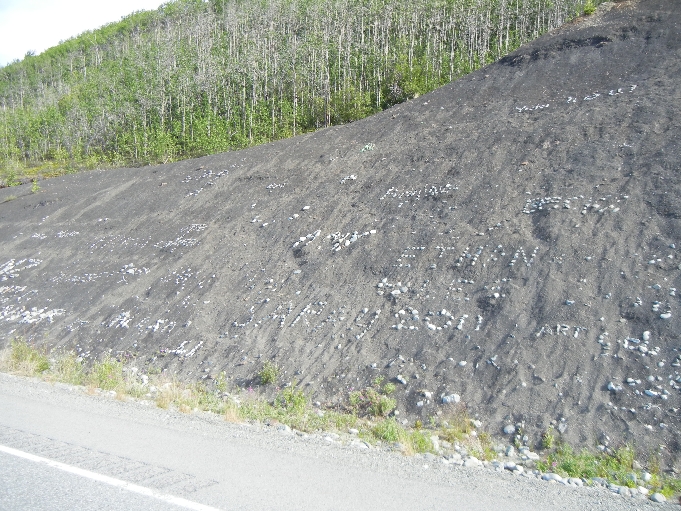
Raven Woman
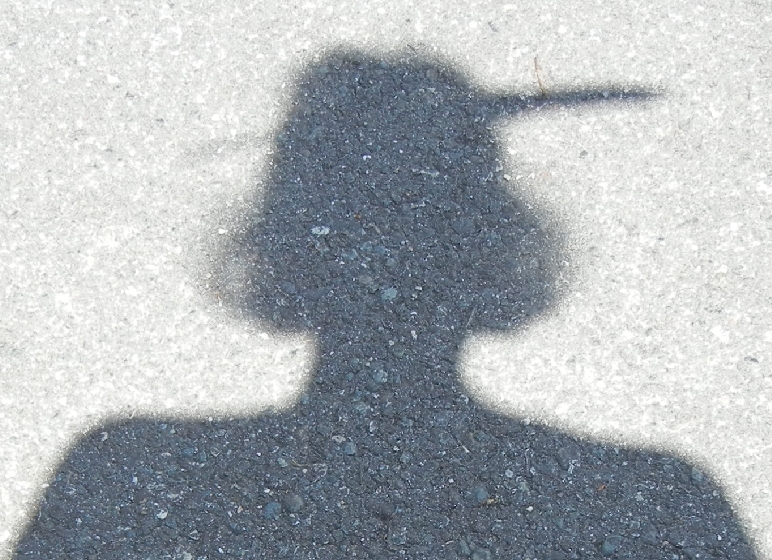

McCarthy Road

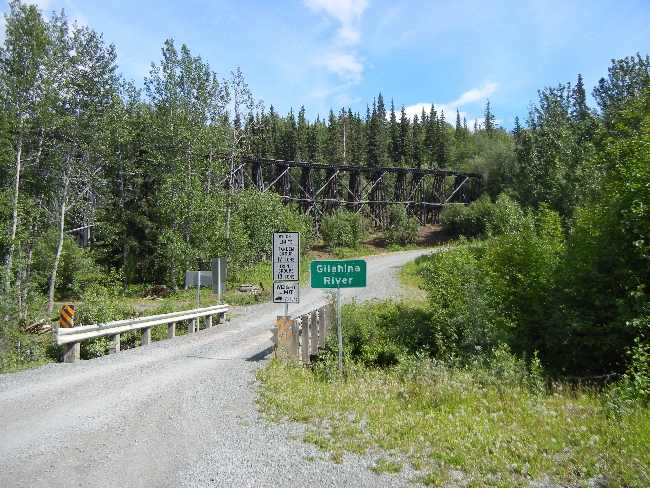
One-lane Bridge over Kuskulana River


Old Railroad Bridge for Kennecott Copper Mine
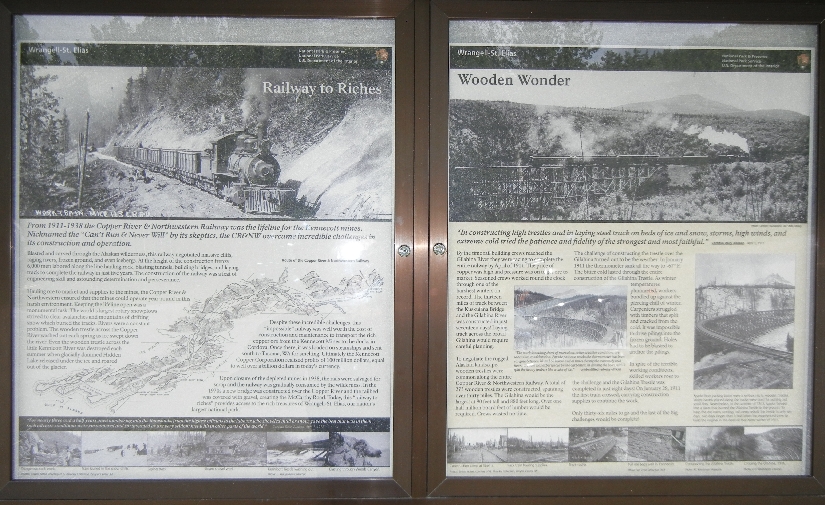
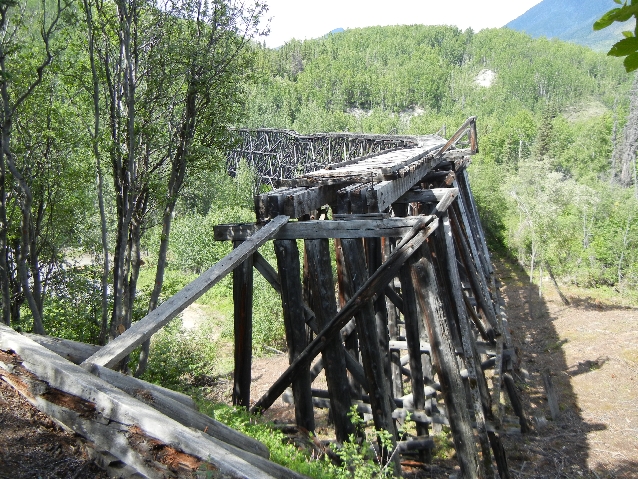
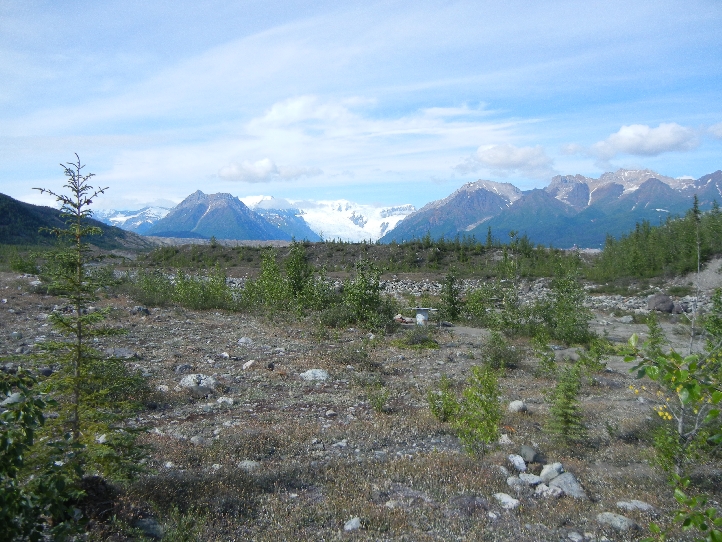
The road ended at the Kennecott River where there was a view of the Root Glacier and a footbridge to cross. A van picked us up on the other side for the short ride to McCarthy.

Helen – we stayed at the Ma Johnson Hotel. It was a turn of the century “Victorian” hotel with a squeaky bed (Tom just fit end to end) and bathroom across the hall. We ate all of our meals at the restaurant across the street (owned by the same man) – the only decent place in town but expensive.
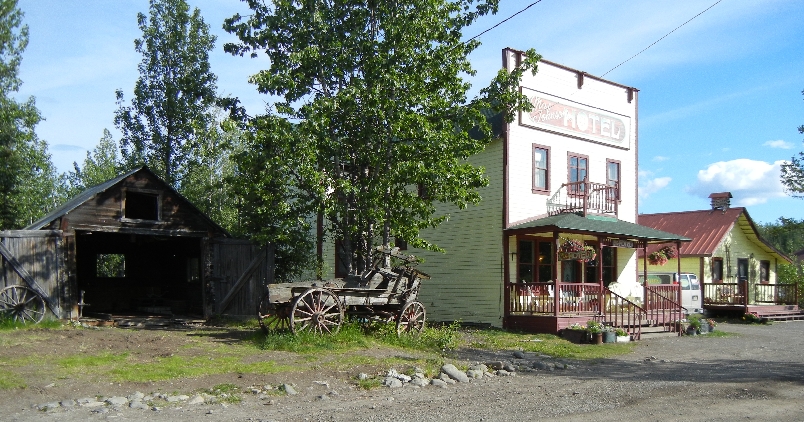
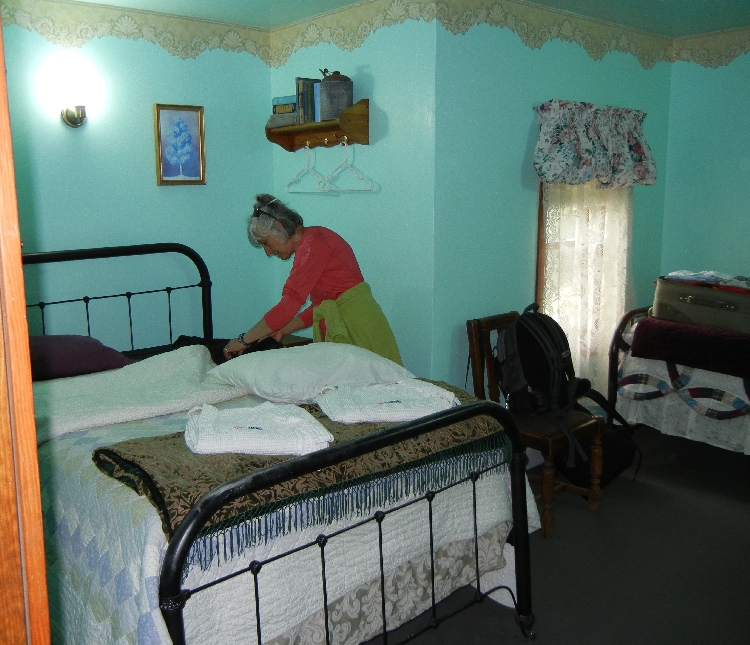
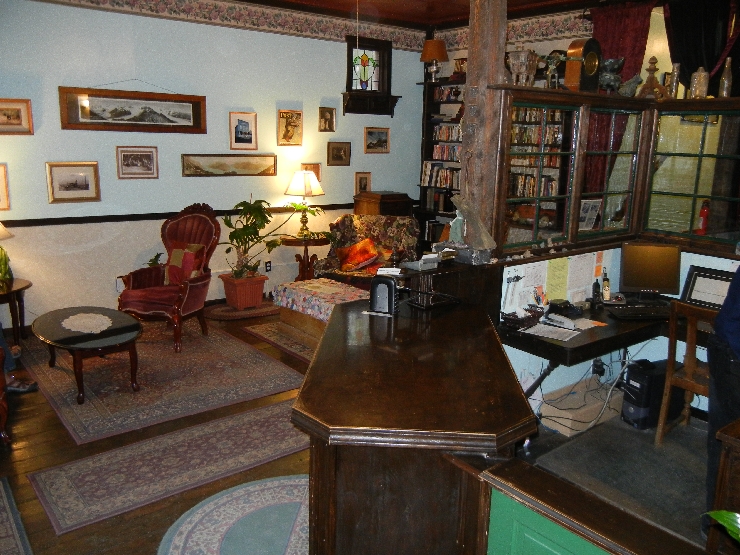
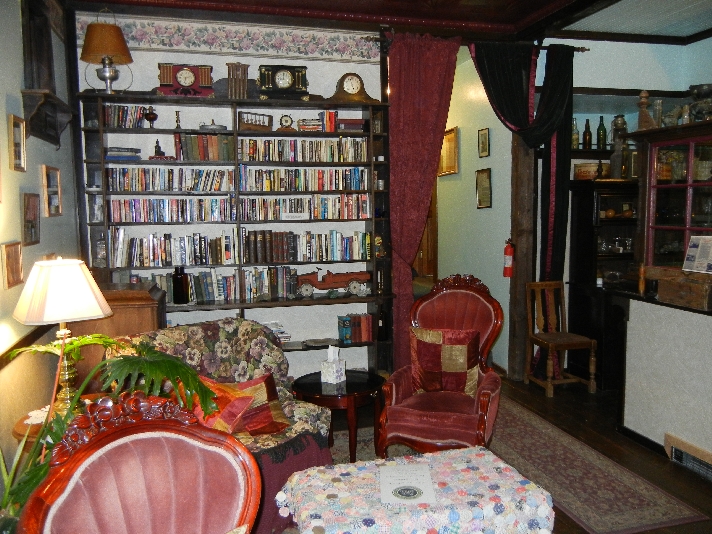
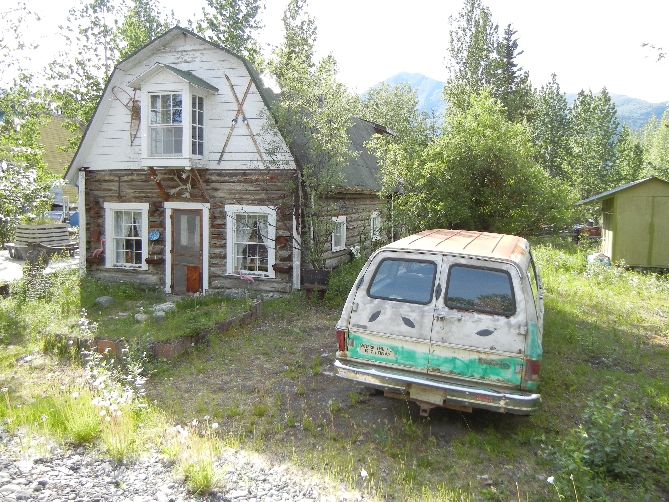
Other notable structures in McCarthy

June 27 – After breakfast we took the first van to the Kennecott Mines National Historic Landmark. We watched a film, listened to a ranger presentation and did a self tour of the site.

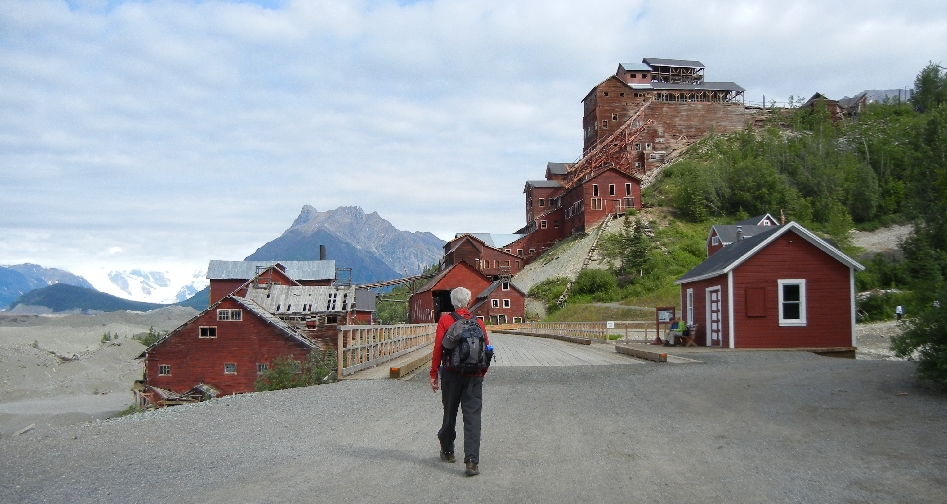


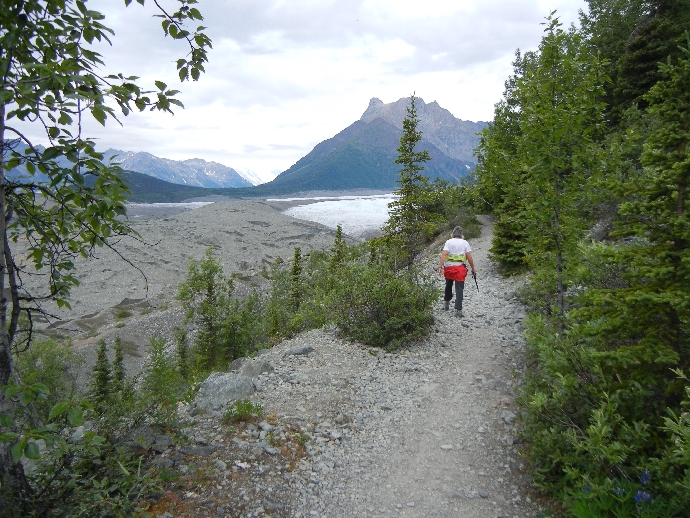
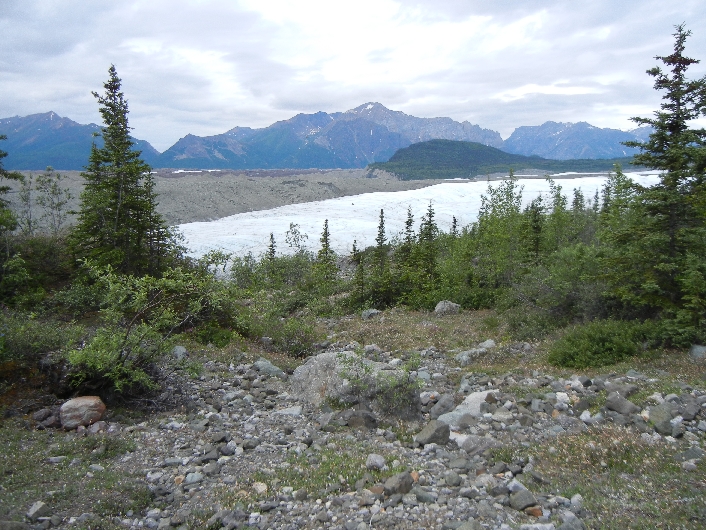
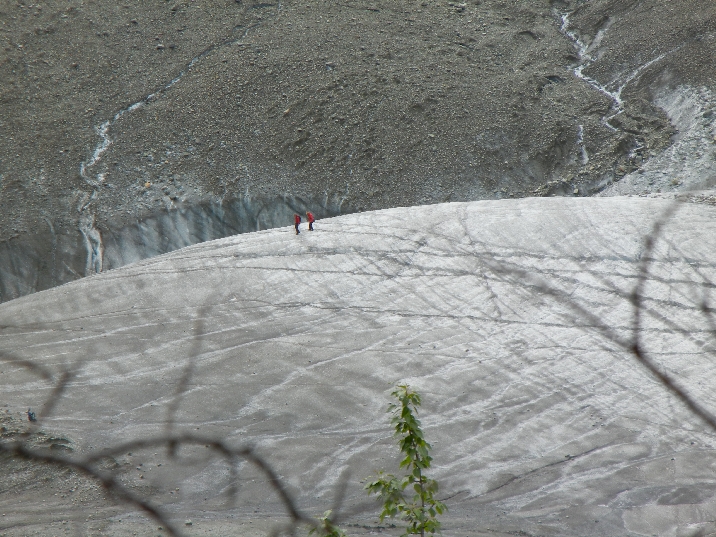
We then did an 8 mile hike up and down the trail beside the Root Glacier.


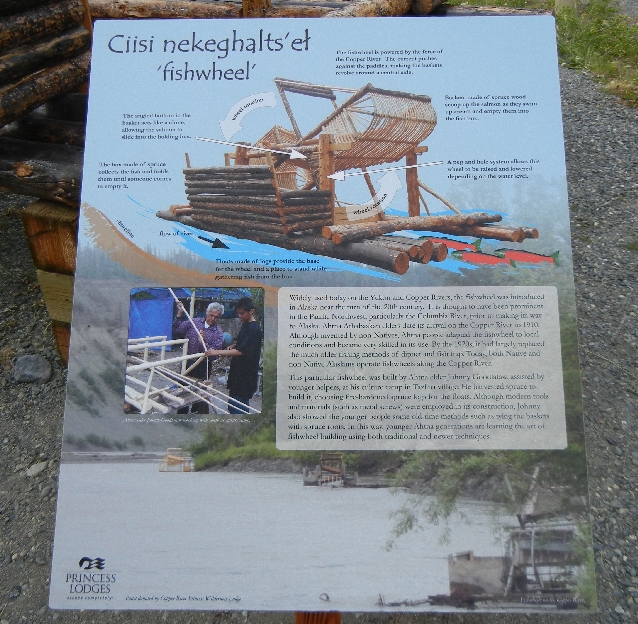
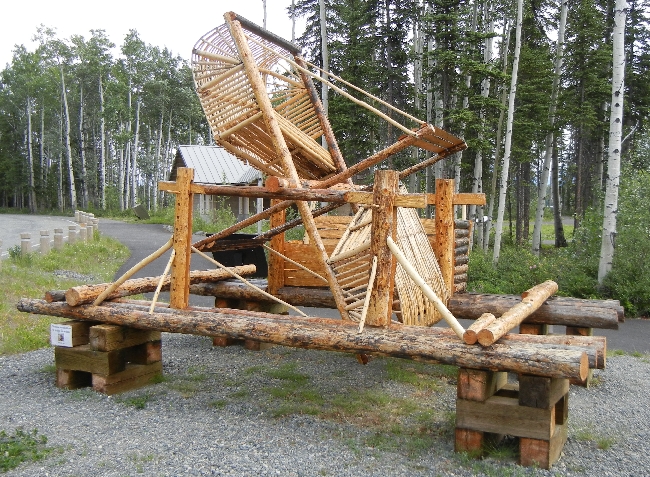
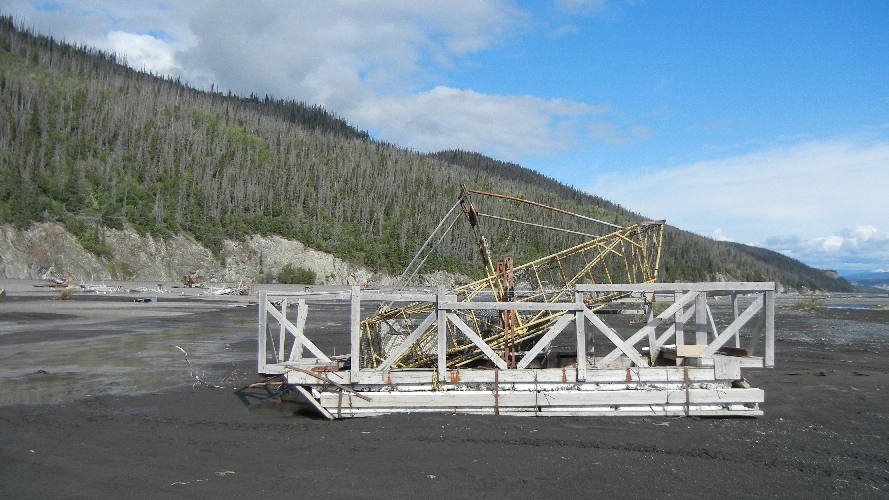
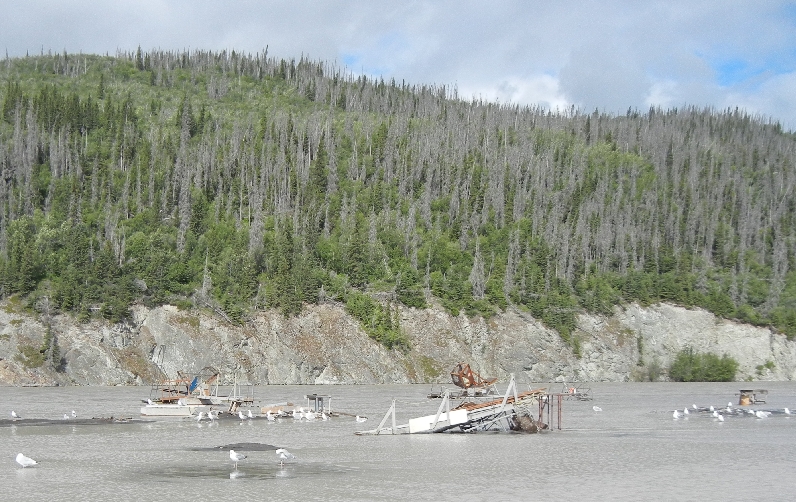
June 28 – on our way back to Anchorage, we stopped to see the natives using their fish wheels on the Chitina River. Basically, the fish wheels consist of two baskets that are turned by the force of the river and drop the salmon into a holding box. Here is a picture of an old one and some of the ones used today.

We again stayed at the Microtel Inn near the airport because of our early flight the next day.
Juneau– Mendenhall Glacier
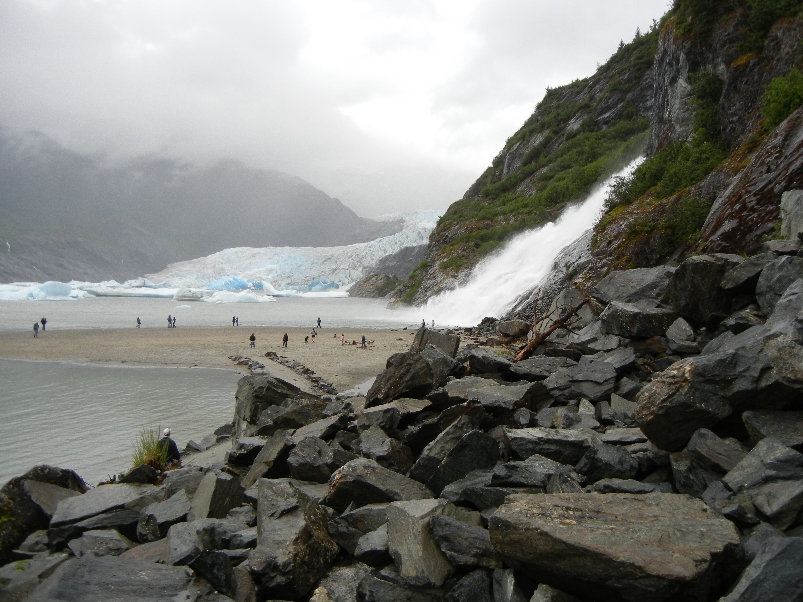
June 29 – Helen – Tom’s 68th birthday! We flew Alaska Air from Anchorage to Juneau where we had a 6 hour lay over. We decided to go to the Mendenhall Glacier Visitors Center from the airport. We shared a taxi with 3 women, toured the center, and walked out to Nugget Falls and Mendenhall Lake near the toe of the glacier in the rain.


Glacier Bay National Park
We then flew to Gustavus (13 minutes!) where a bus took us to Glacier Bay Lodge in the National Park. We had a nice seafood dinner at the Lodge and then listened to a park ranger presentation on the second floor, which serves as the visitors center.
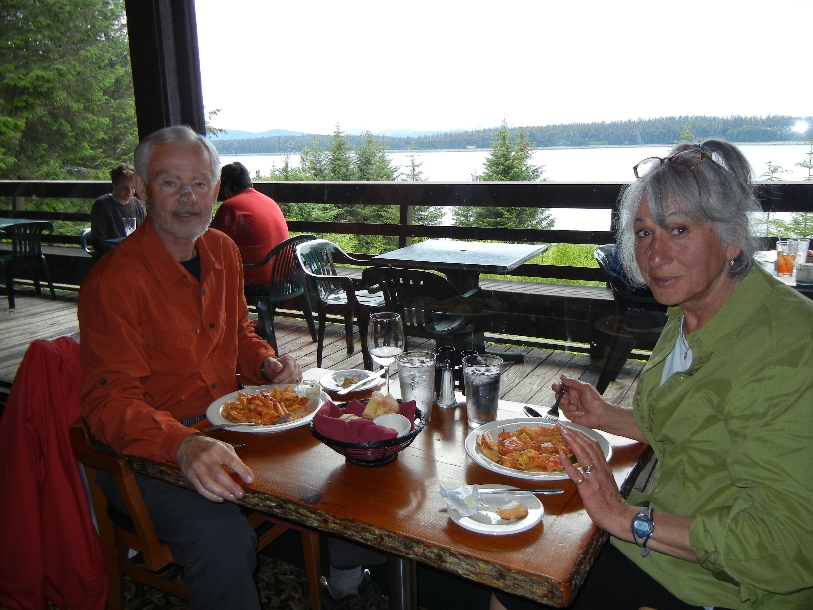
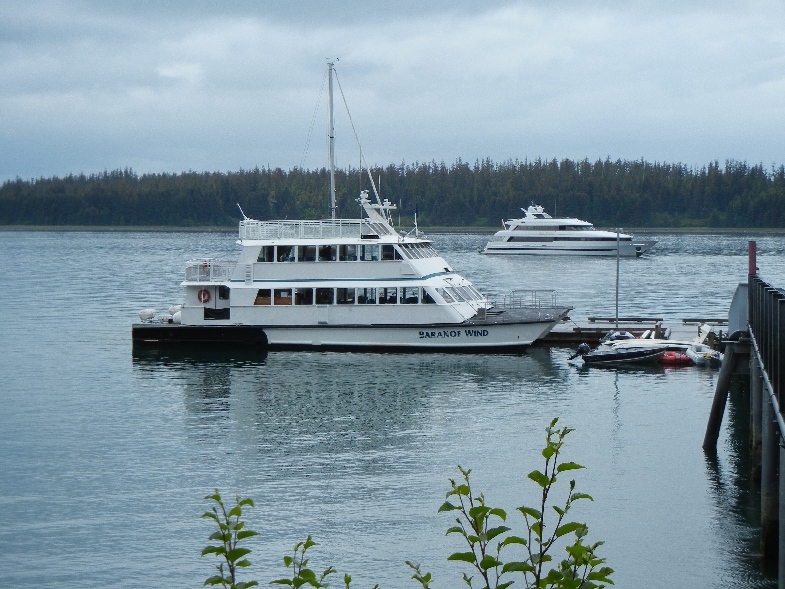
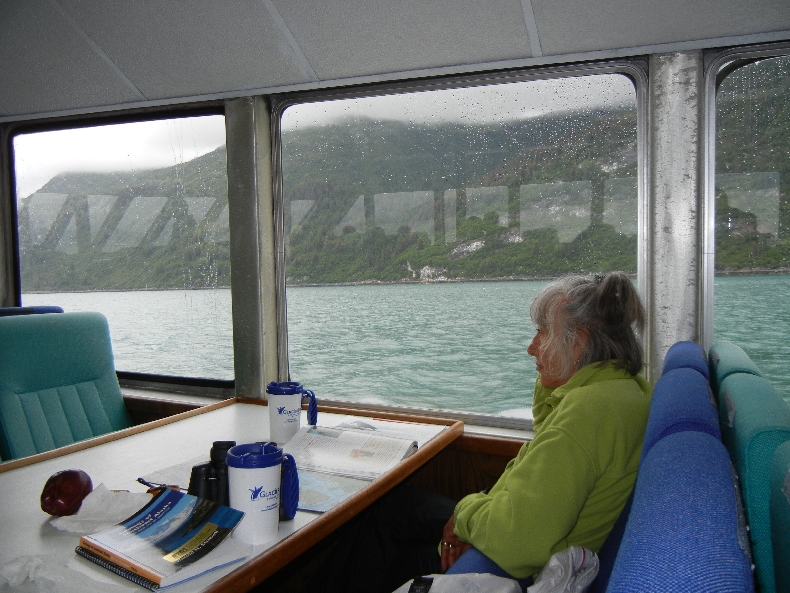
June 30 – we were up early to take the Baranof Wind boat tour of Glacier Bay NP. The boat carries about 140 people and there were only about 50 on our all day cruise. Helen and I each had our own binoculars and it was very easy to move about the boat. The day was not good, rain, cloudy and mist, but the trip was spectacular!
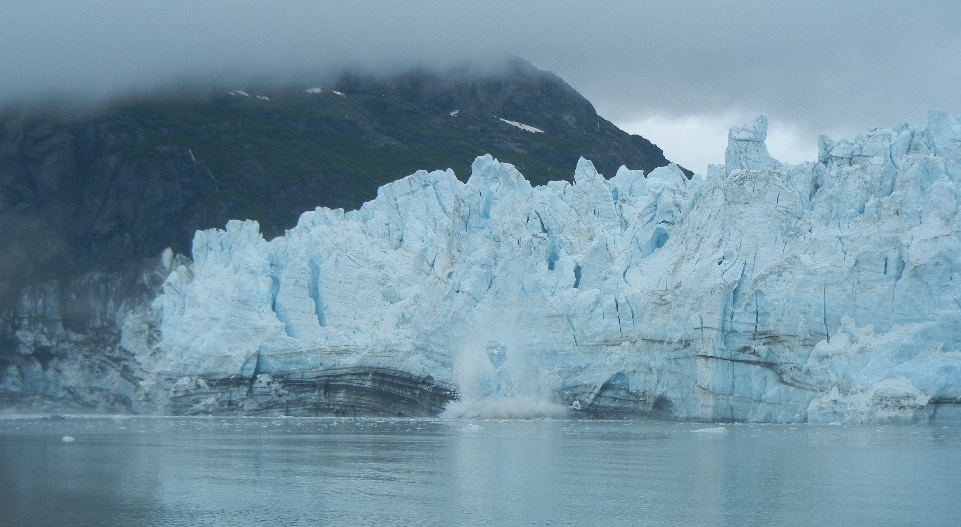
Helen – the tour of Glacier Bay was fantastic! We saw mountain goats, 2 bears, otters, whales, lots of seals, sea lions, eagles, puffins and the Margerie Glacier calving!

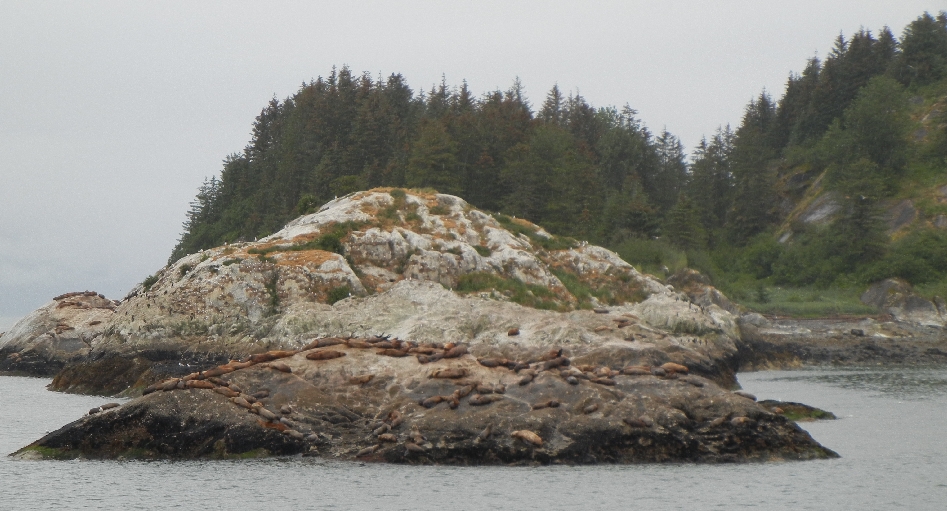

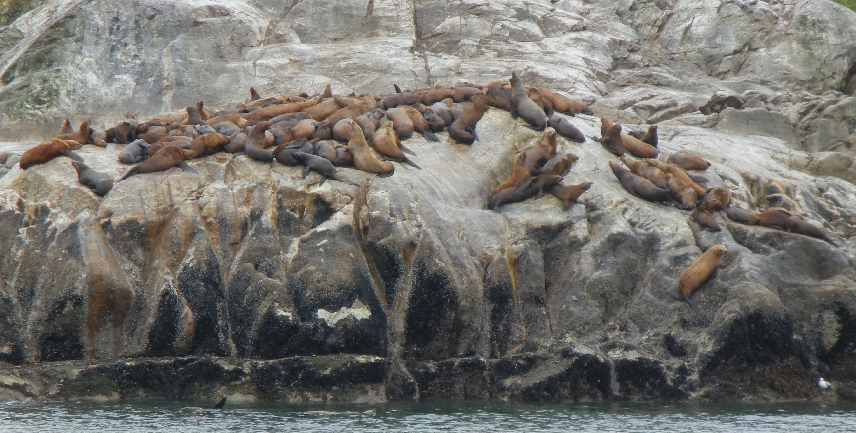
Margerie Glacier, only two Cruise ships per day can enter Glacier Bay
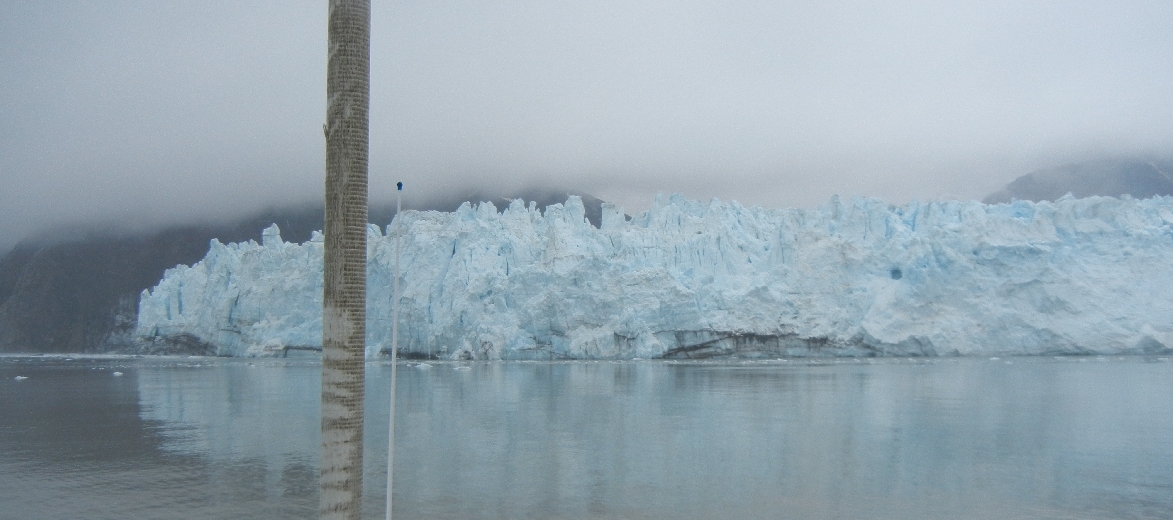
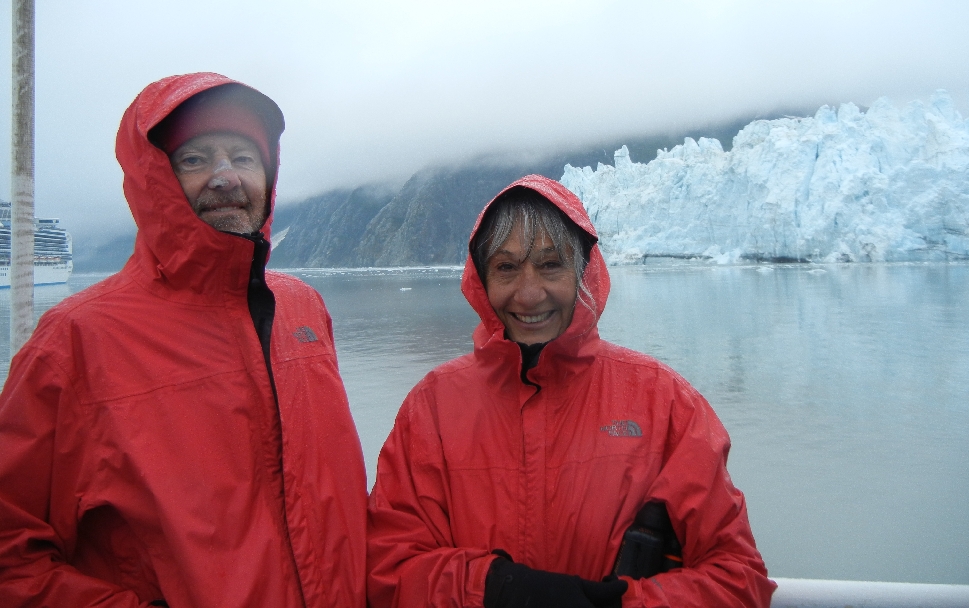
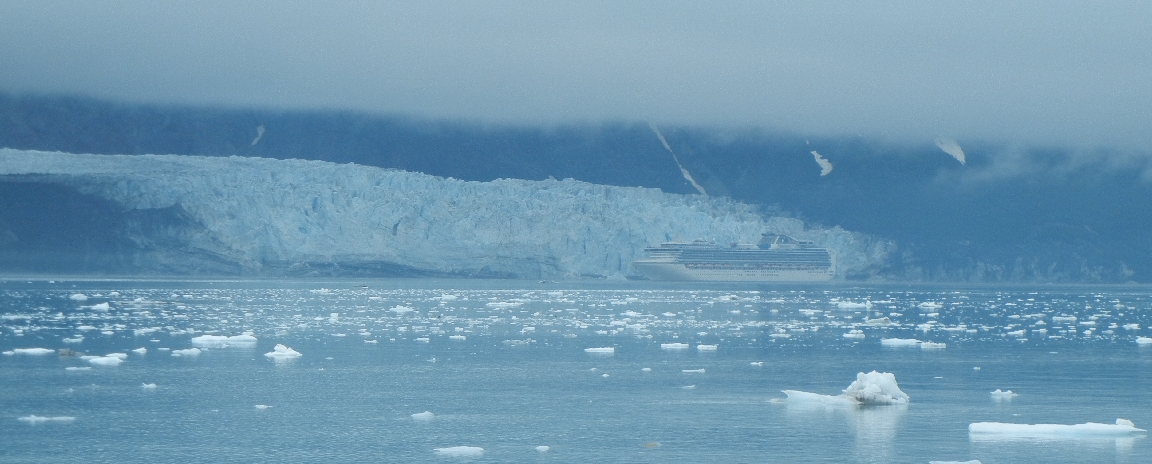
Johns Hopkins Inlet and Glacier
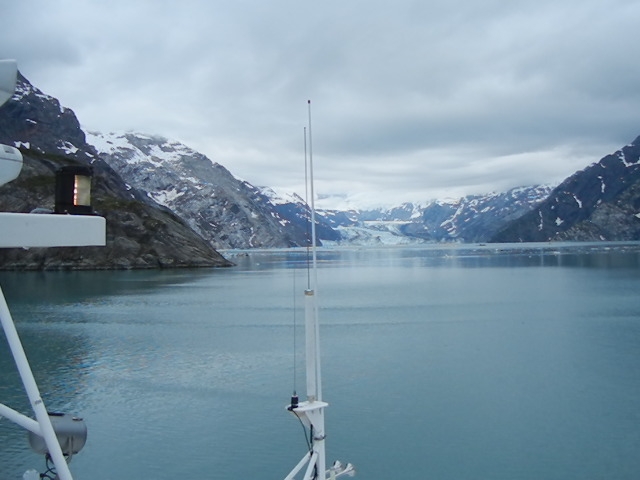
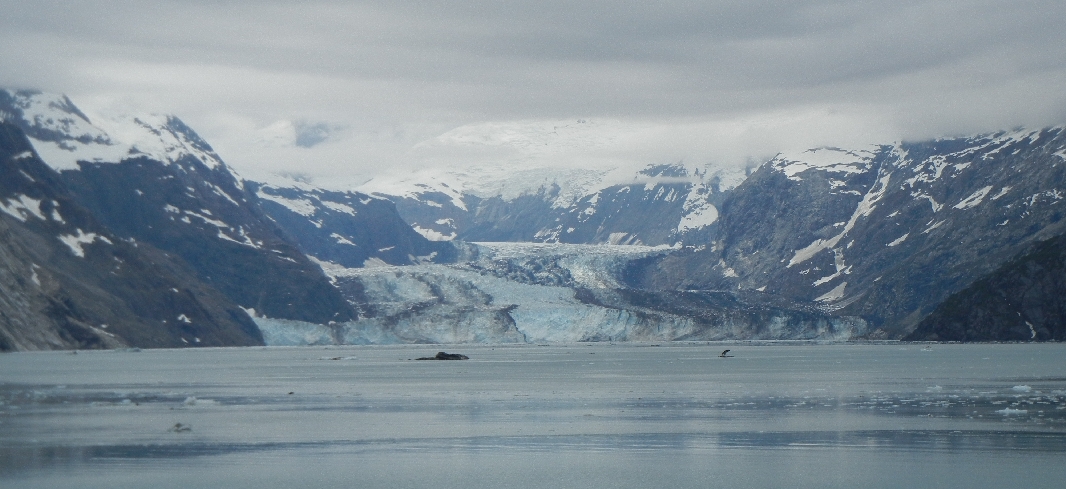
Lamplugh Glacier
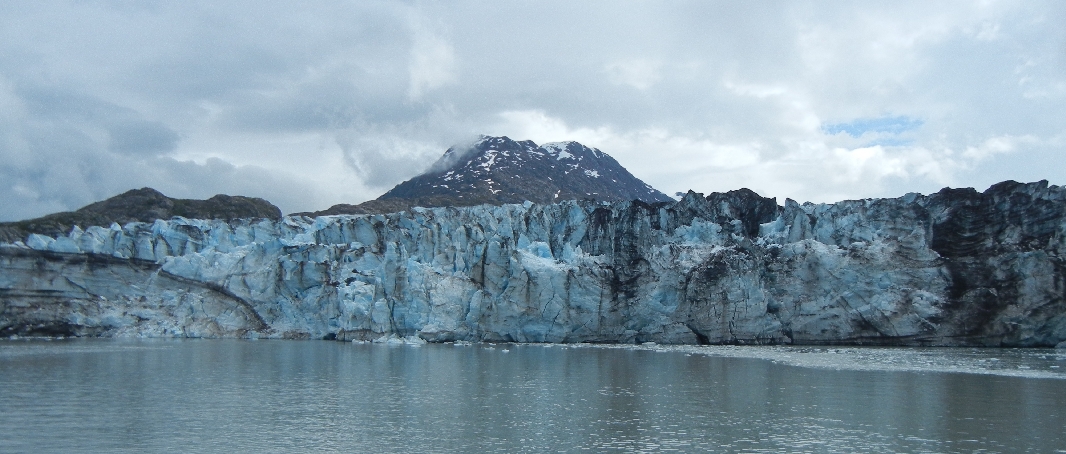
Reid Glacier
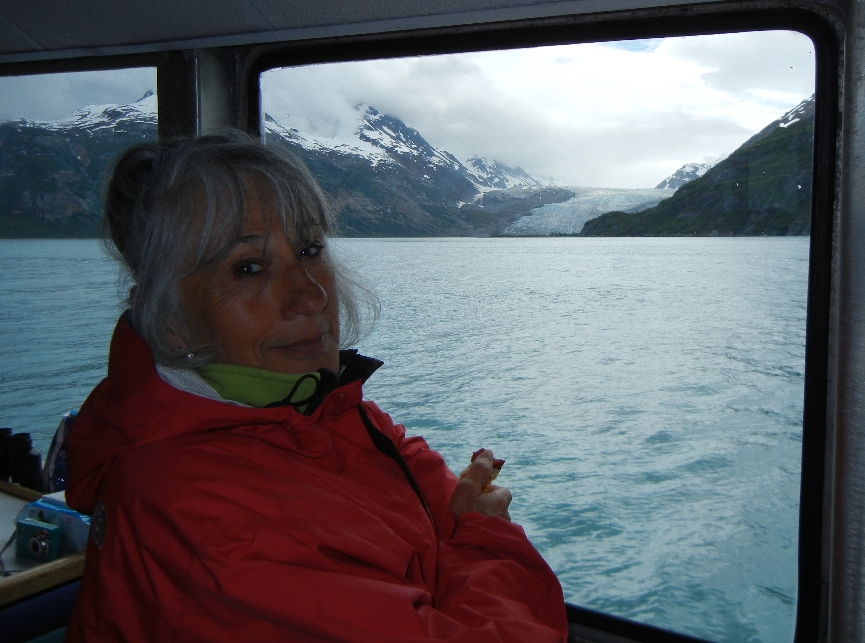
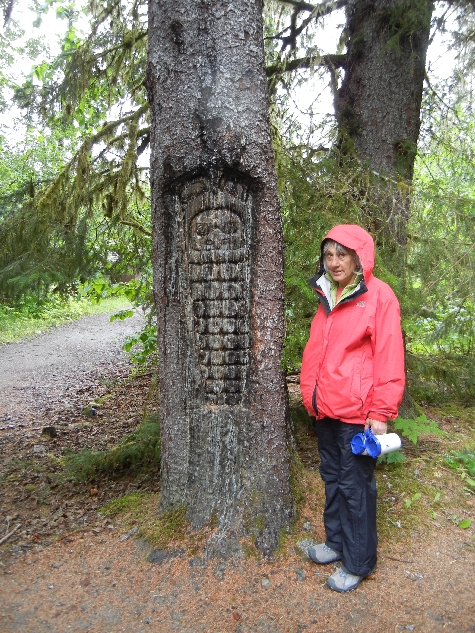
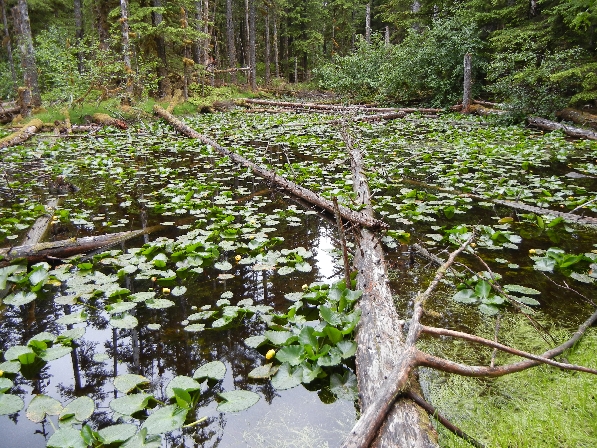
After the boat tour we hiked the beach at Bartlett Cove and did the Forest Loop trail marked by two Huna Tlingit trail markers carved in living spruce trees.
We were able to contact Terry and Judy (met at Lake Clark) at their B & B in Gustavus and went to the Home Shore Café for pizza and drinks.
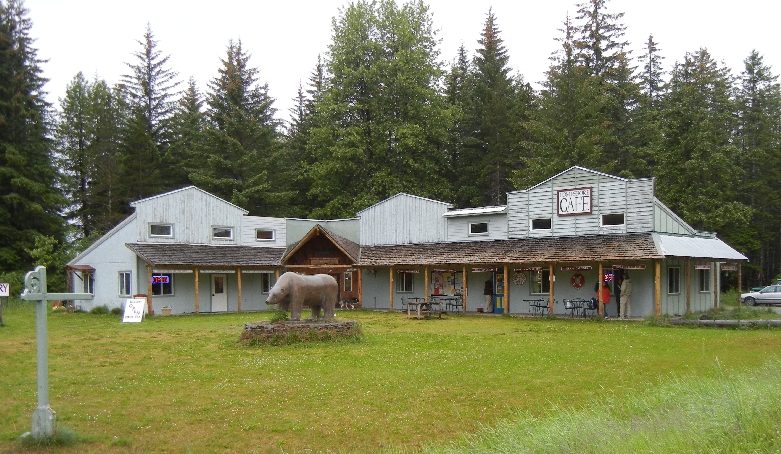
Those old gas pumps still work

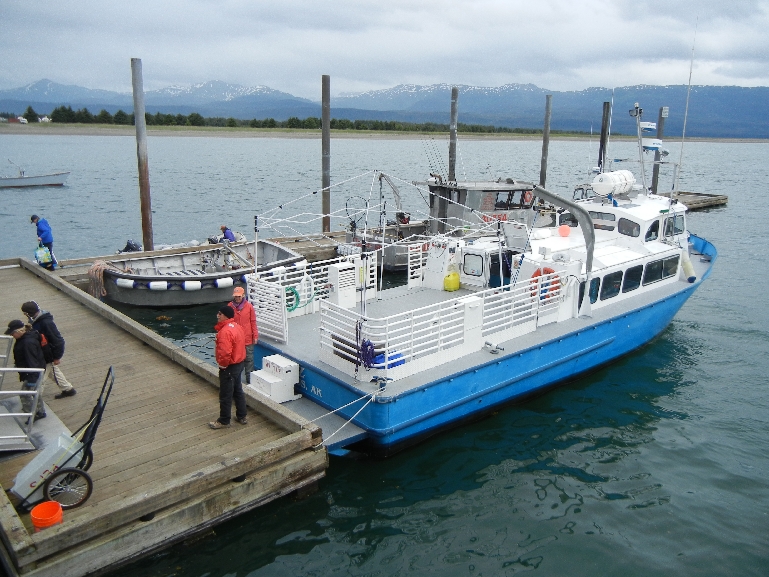
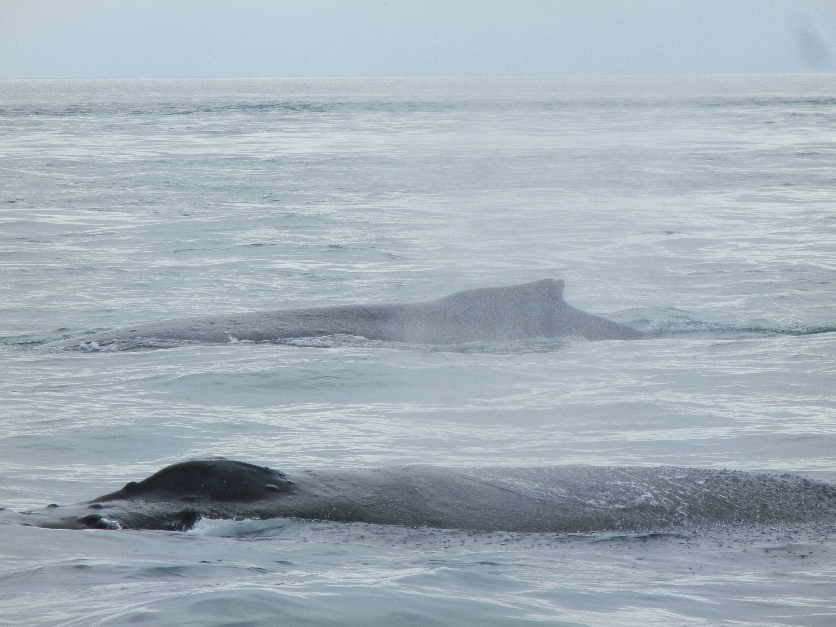
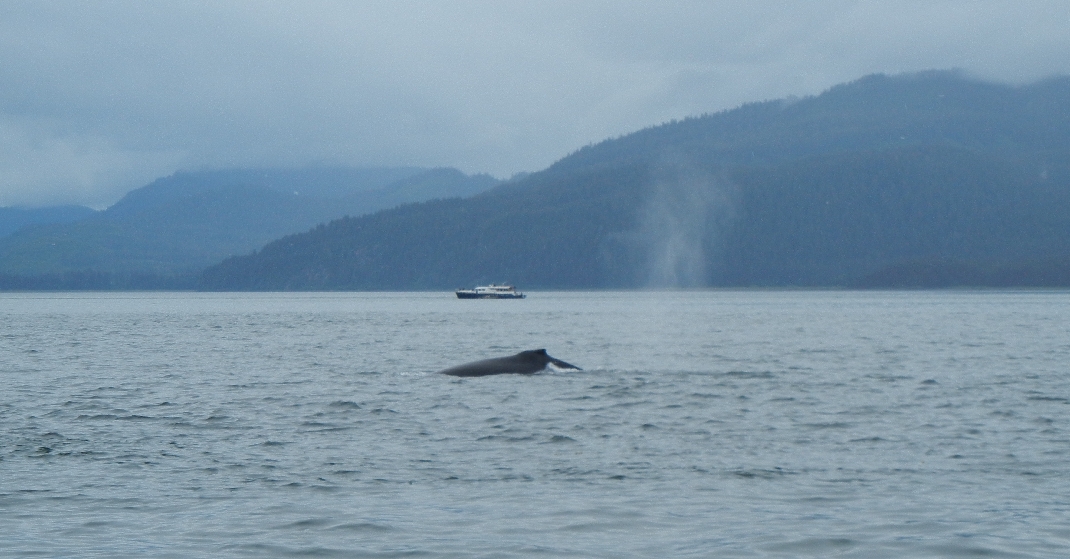
July 1 – we decided to do the TAZ Whale Watching tour out of Gustavus this morning and were not disappointed – saw several pods of humpback whales, up close and personal!
Helen – we went whale watching and saw so many. I kept running from one side of the boat to the other and actually saw one breech totally out of the water. It was awesome!



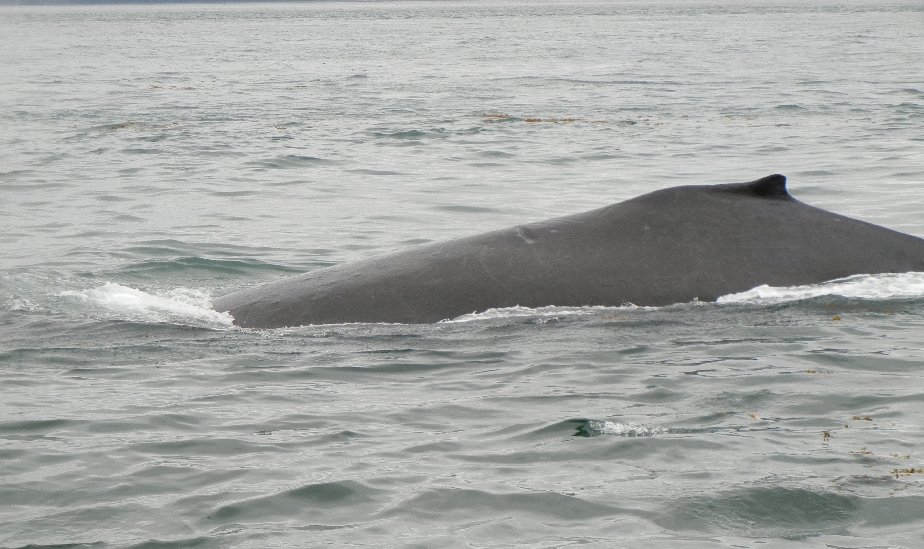
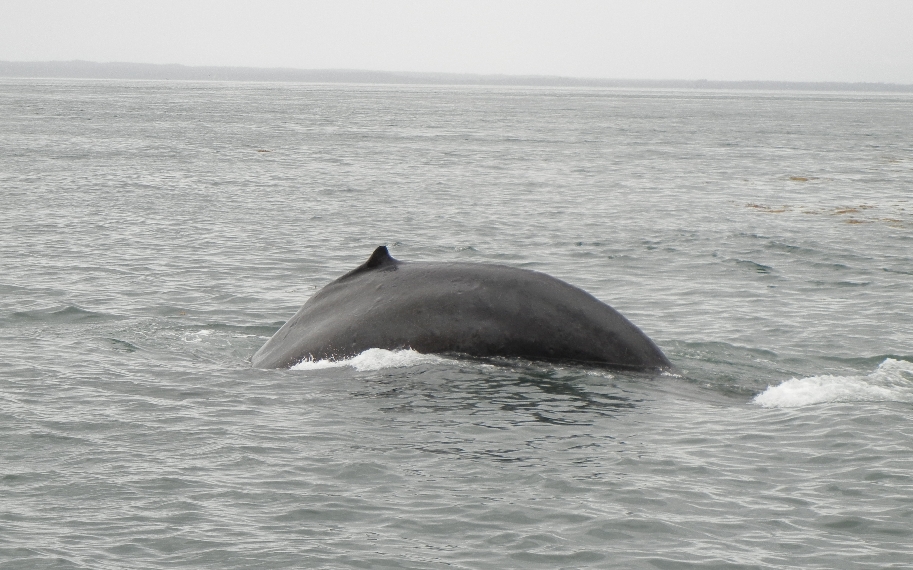
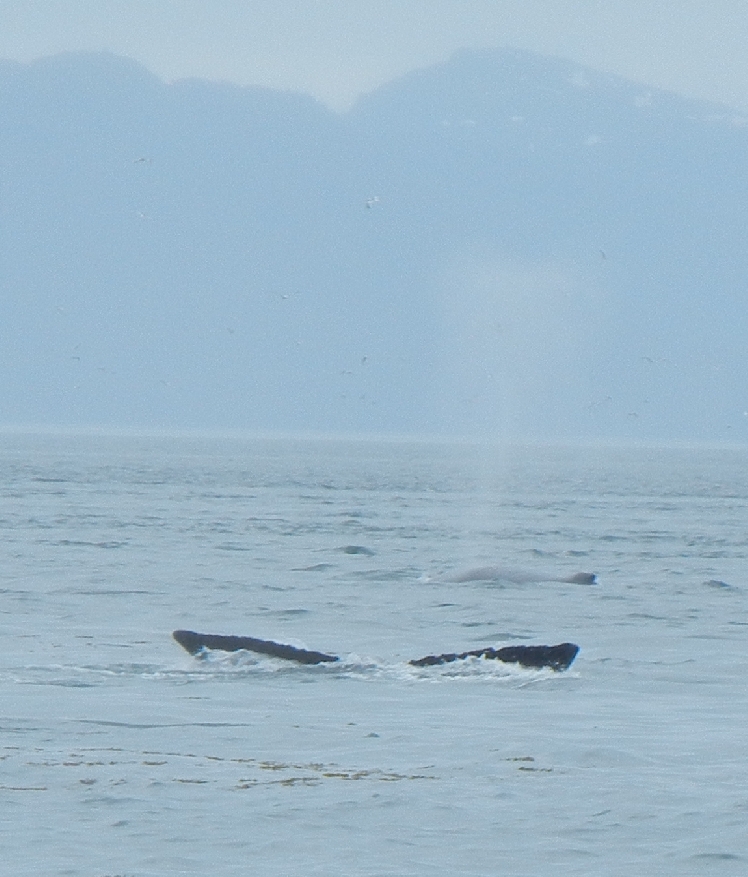
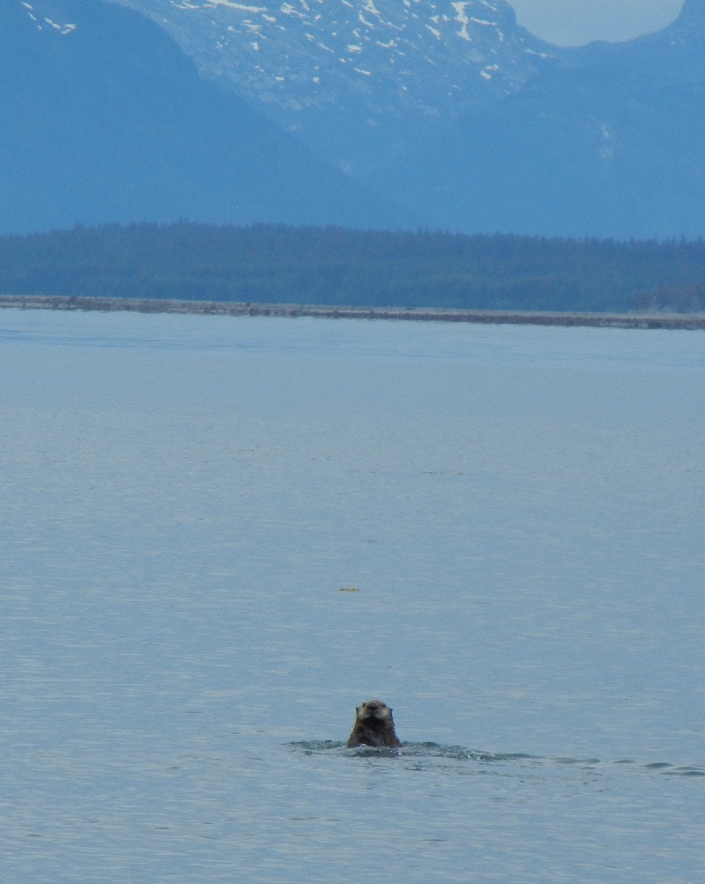
Other wildlife – sea otter, seal and eagle
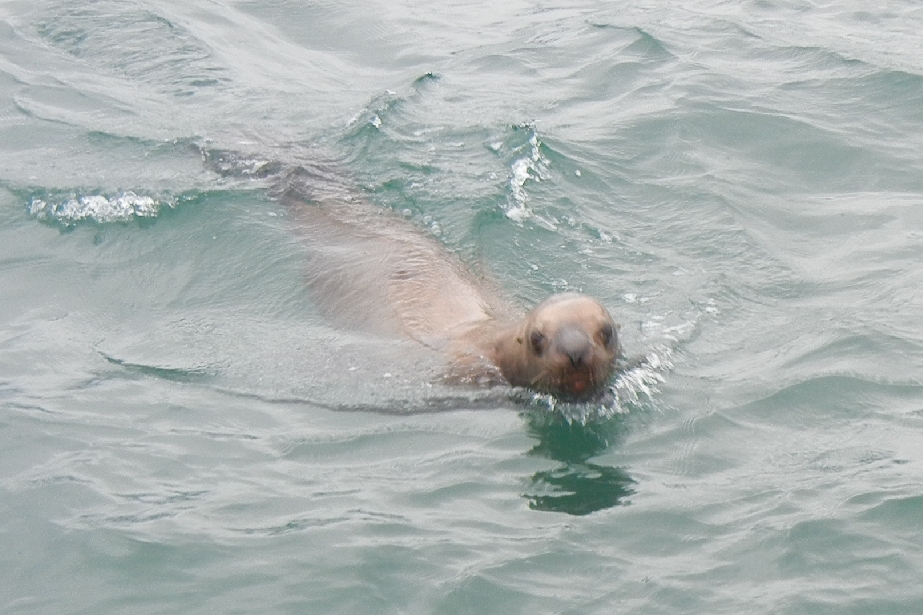
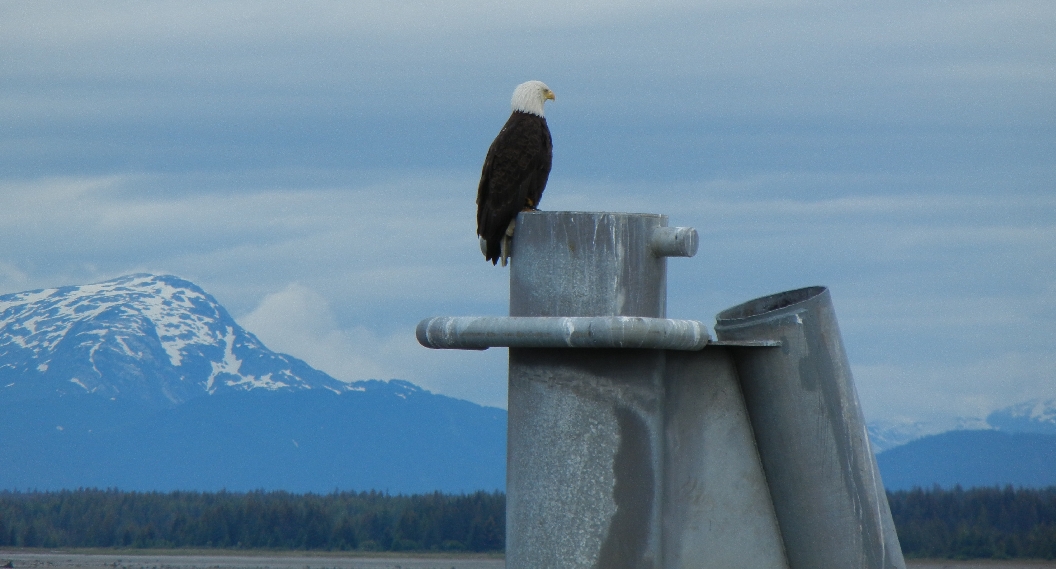
Juneau
We took a late afternoon flight back to Juneau and stayed at the airport TraveLodge.

July 2 – we took the 7:15am TraveLodge van to downtown Juneau and did a walking tour of the city. Saw the state capital, St Nicholas Russian Orthodox Church, numerous shops/stores and the cruise ship docks. Had a great blackened salmon wrap at the Hanger Restaurant on the water.
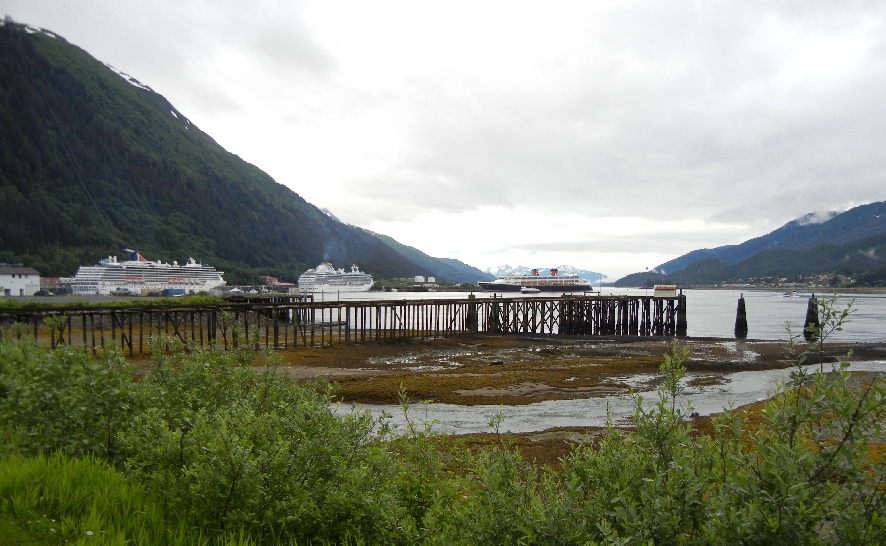
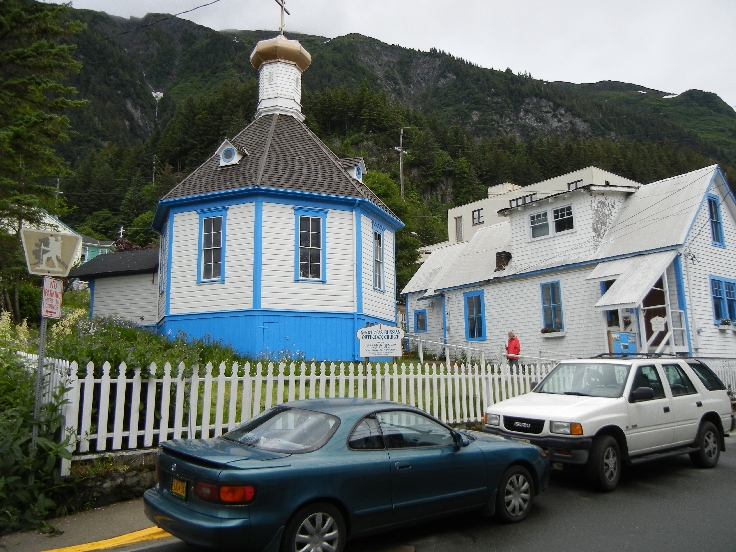
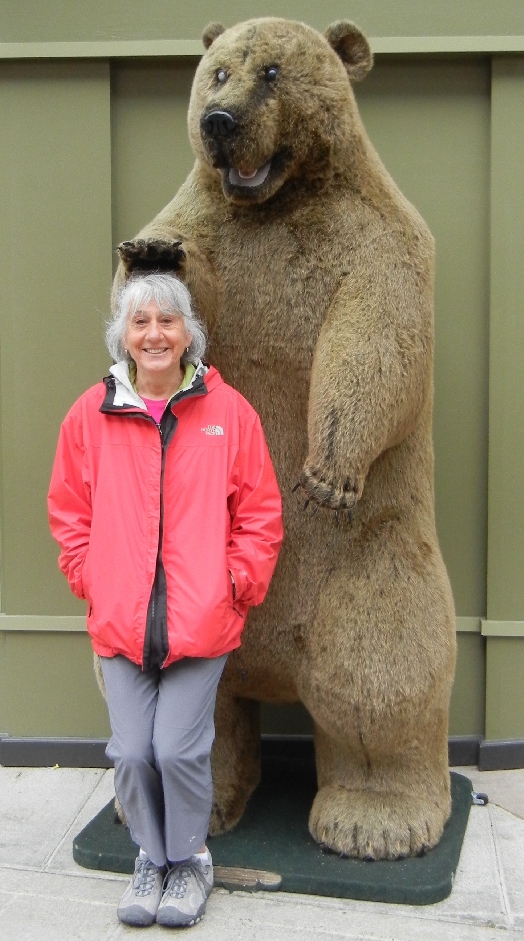
Skagway and Klondike Gold Rush National Historic Park
Caught the 4pm Alaska Marine Highway Ferry Malaspina to Skagway. A picturesque 6.5 hour cruise up the Lynn Canal with great views and whale sitings; arrived at the Sgt. Preston Lodge at 11pm.


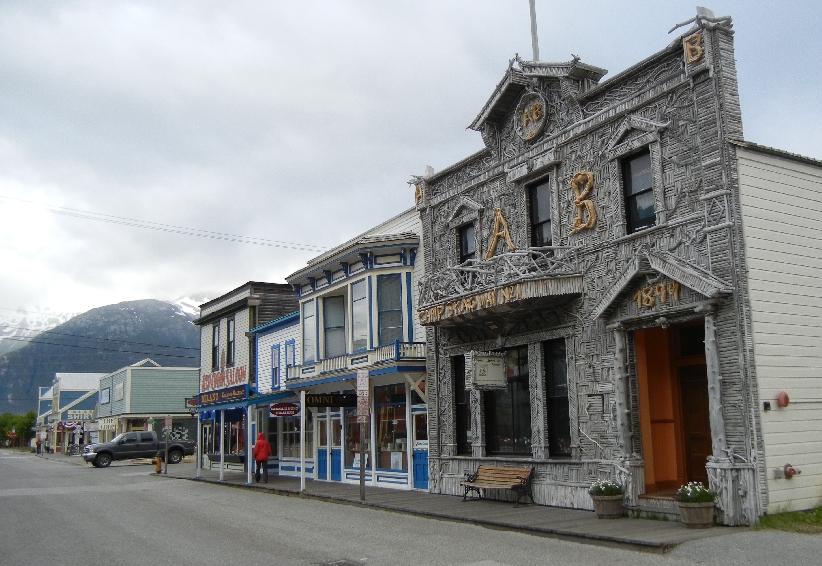
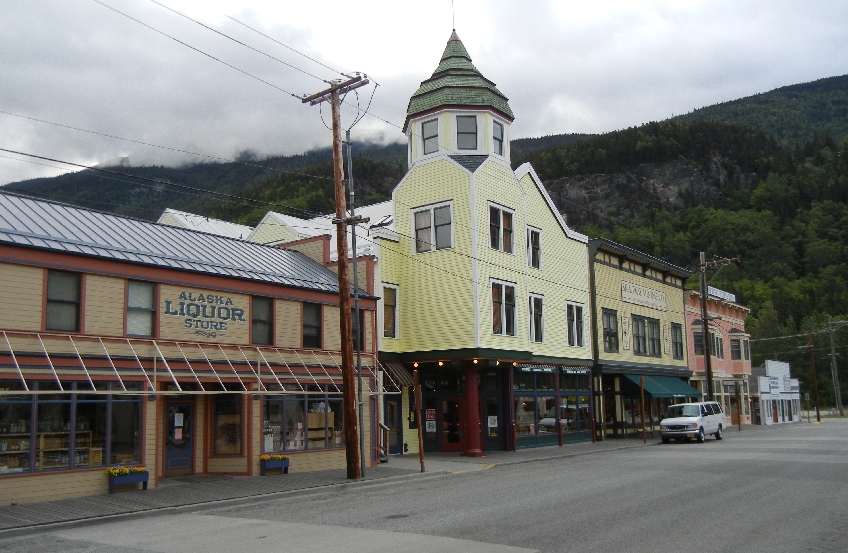
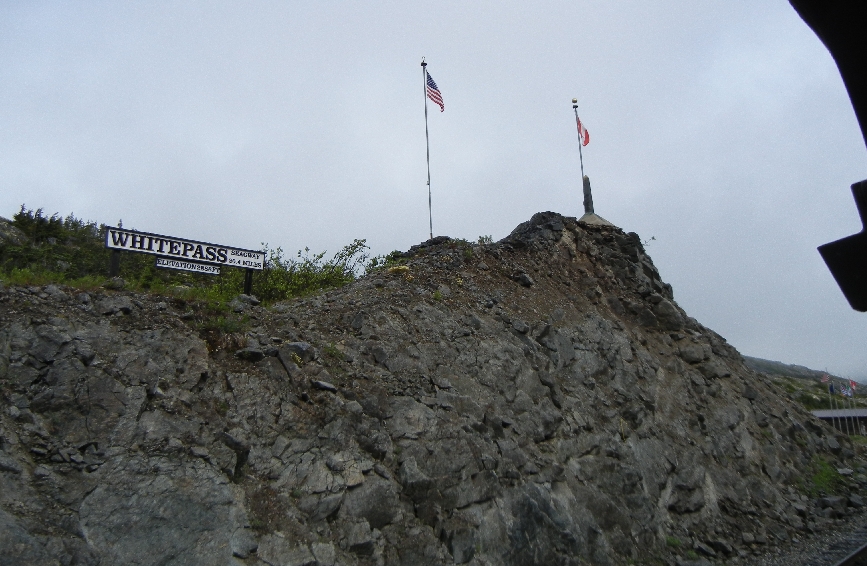
July 3 – walked to the Klondike Gold Rush National Historic Park Visitors Center at 7:30 and found the town to be almost deserted – no cruise ships in port yet! At the spur of the moment, decided to take the White Pass & Yukon Railroad trip to White Pass. The White Pass Trail from Skagway and the Chilkoot Trail from Dyea, a short distance away, were the two main routes for more than 40,000 gold rush stampeders who were heading for theYukon and the Klondike gold fields beginning in 1897.
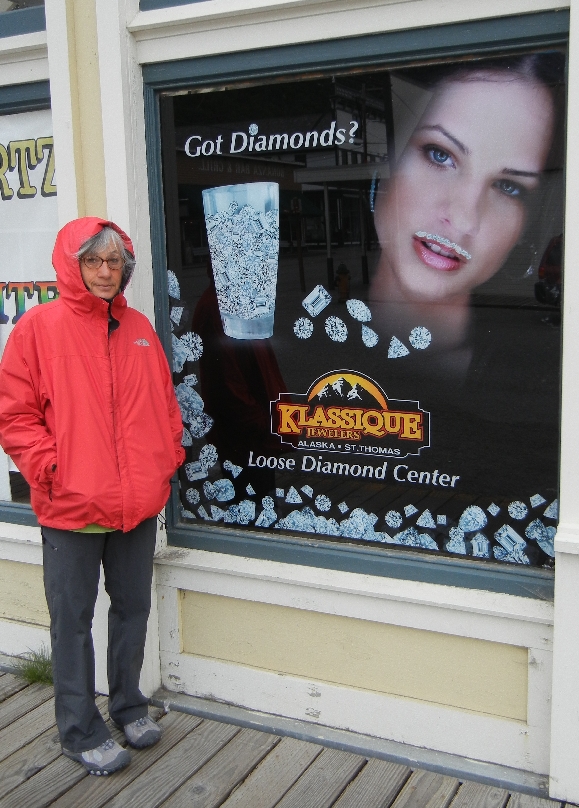
Helen – I like the diamonds on the smile!
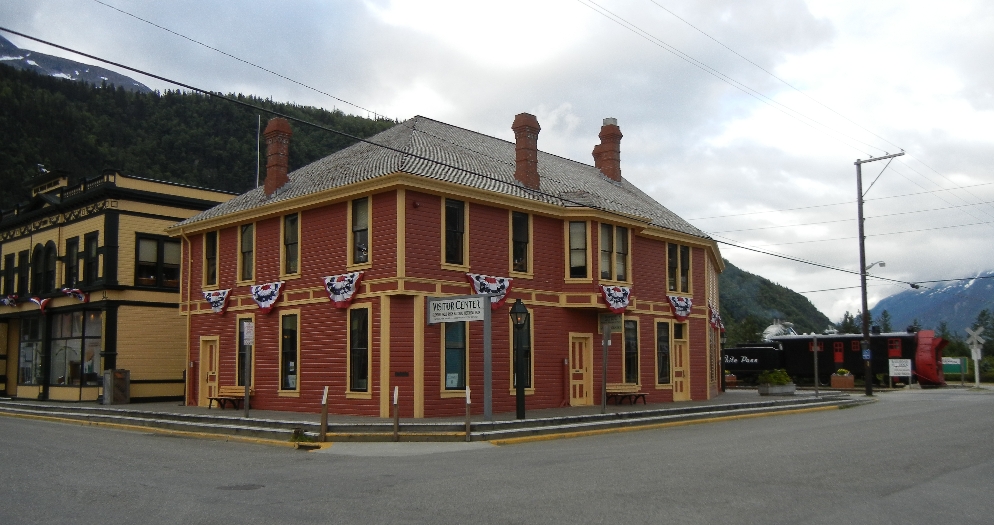

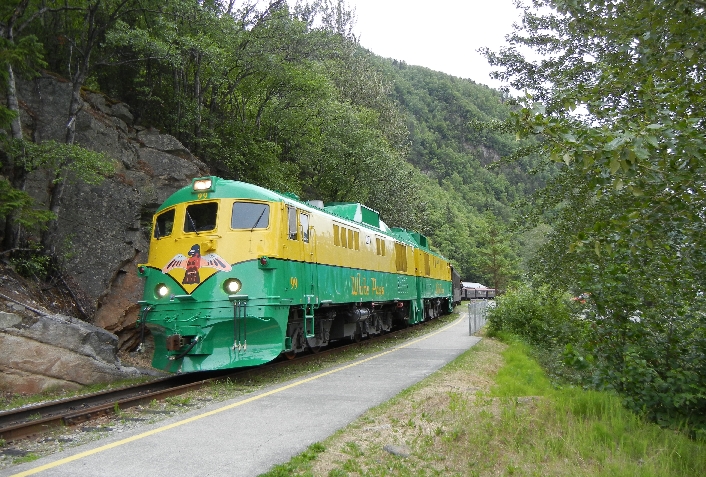
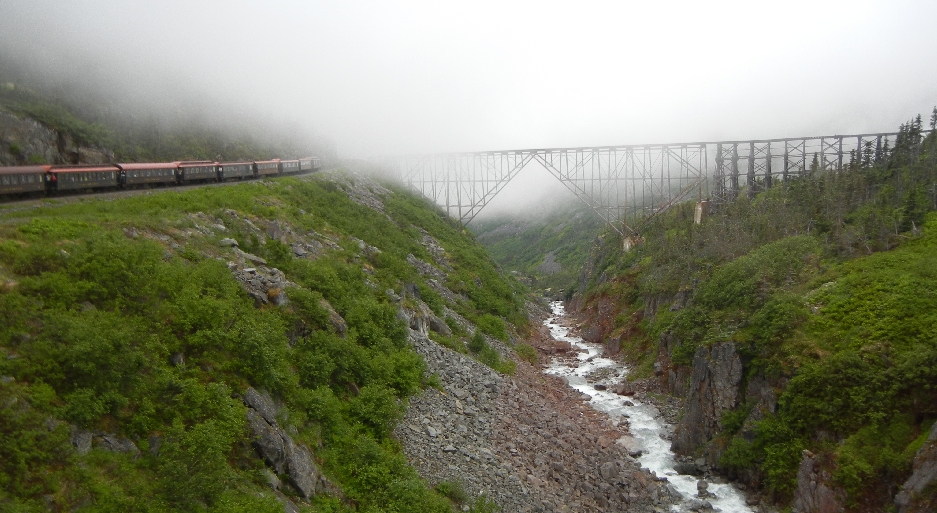
The train trip was enjoyable despite the fact that it rained most of the way. It is a narrow gauge railway that uses passenger cars that are a hundred years old. The route weaves its way up to White Pass and the Canadian border gaining 2885 feet in 20 miles.


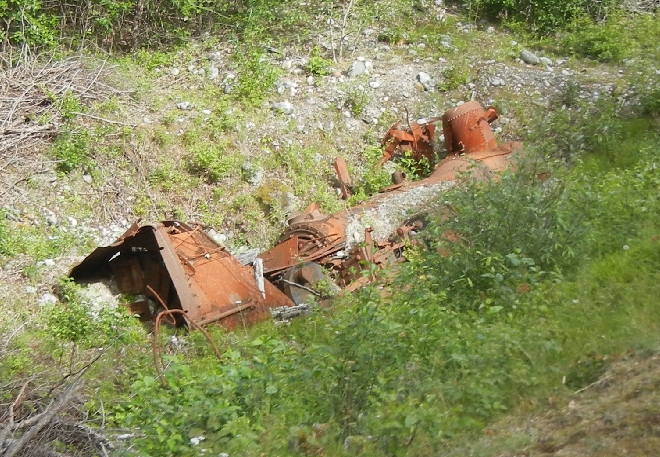
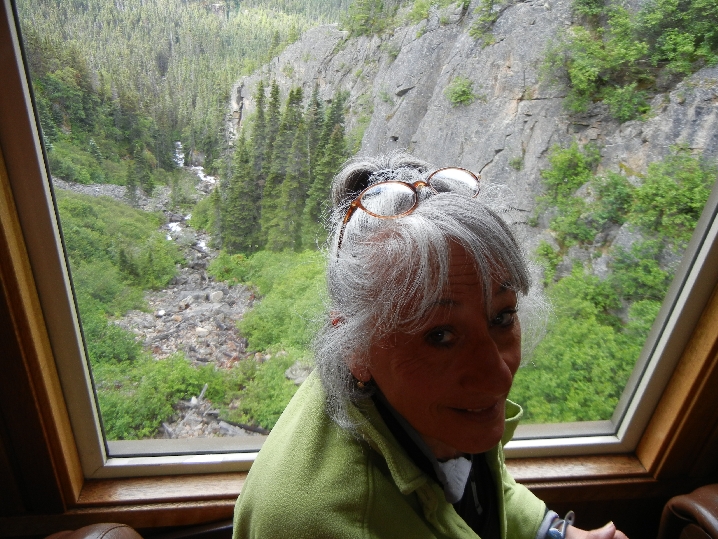
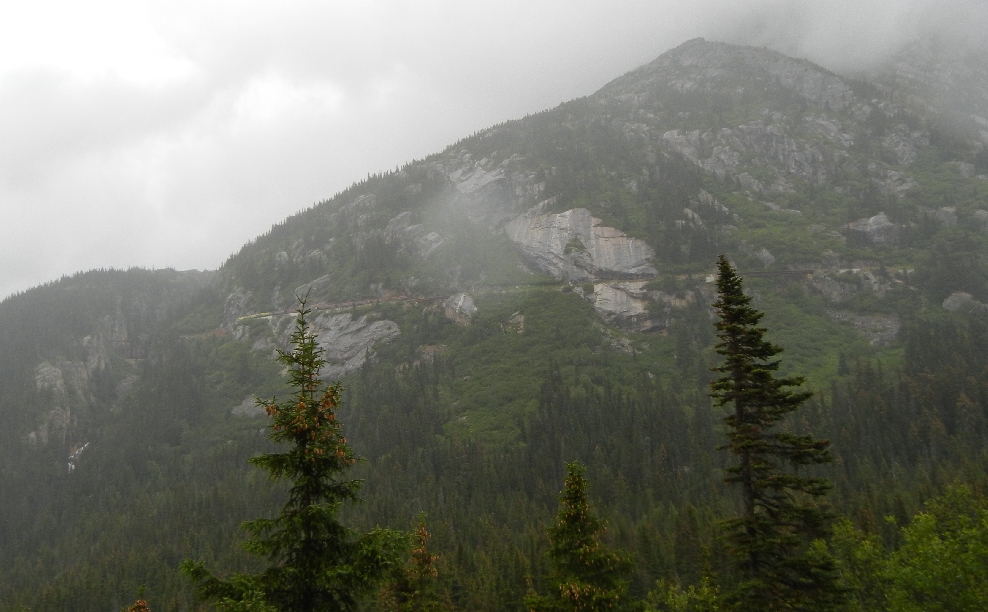
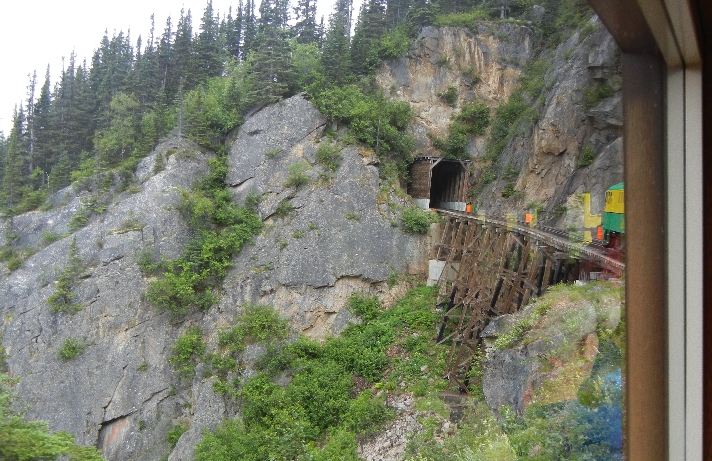
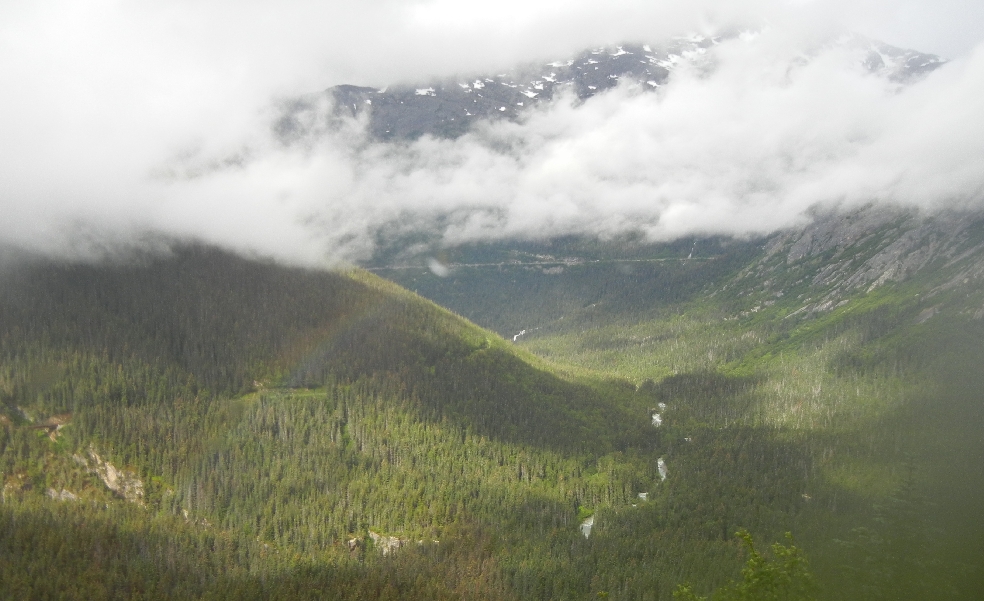
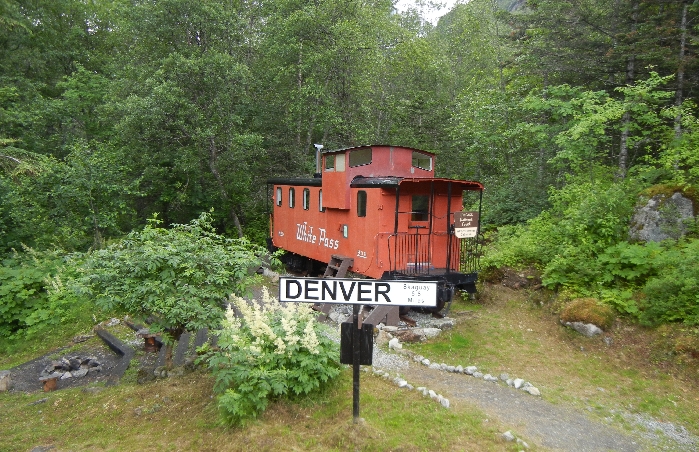
This caboose is now a cabin that can be reserved through the USFS
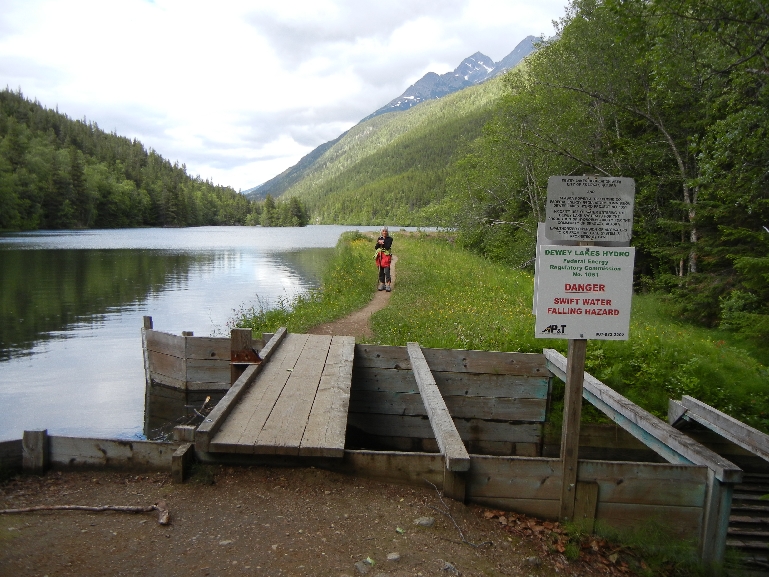
After lunch we toured the Visitors Center and took a 45 minute ranger walking tour of historic Skagway. Then we hiked up to and around Lower Dewey Lake (4 miles) and after returning to town hiked out to Yakutania Point (1.5 miles).
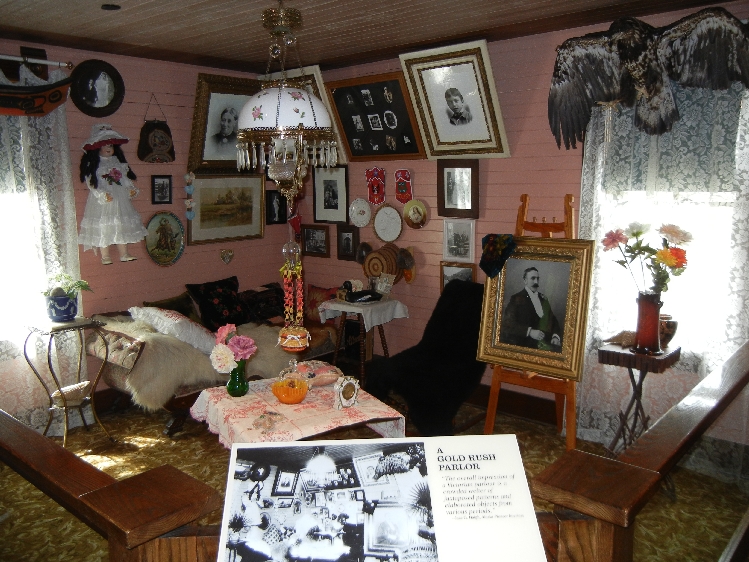
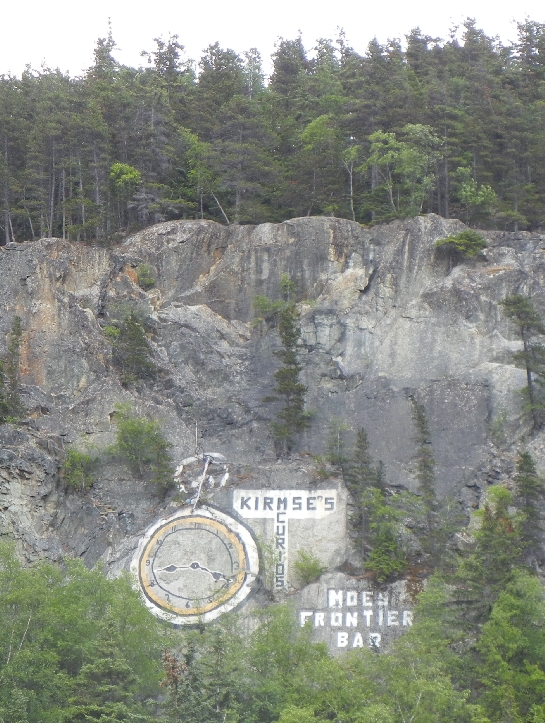
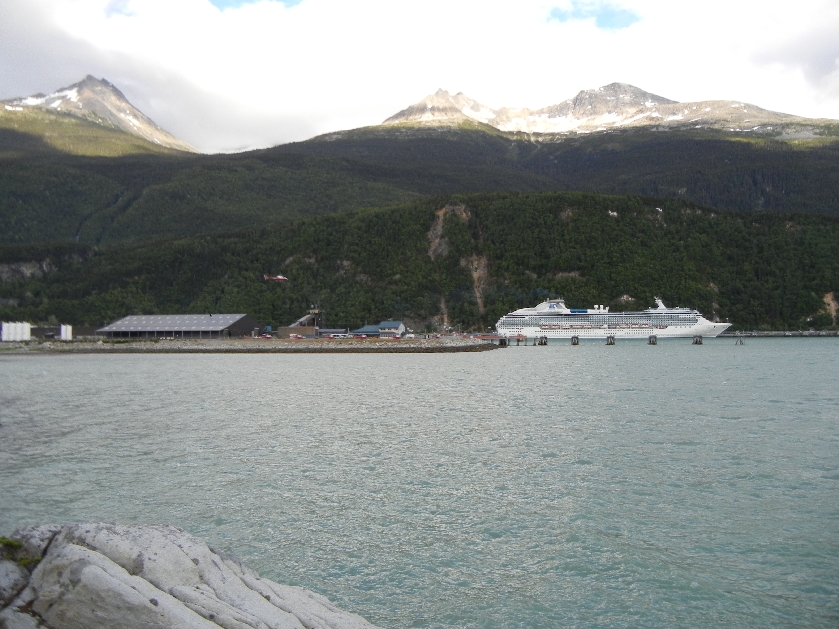
We went to the Red Onion Saloon (formerly a brothel) for dinner and to hear the band that was playing for the start of the 4th of July festivities. The artist who painted the pictures of prostitutes that hang behind the bar used women from town as his models – teacher, nurse, etc. The opposite wall contains old photos of prostitutes and the top of that wall has about 50 different bed pans as decorations. There is a tour of the upstairs brothel museum which states “$5 for 15 minutes.”
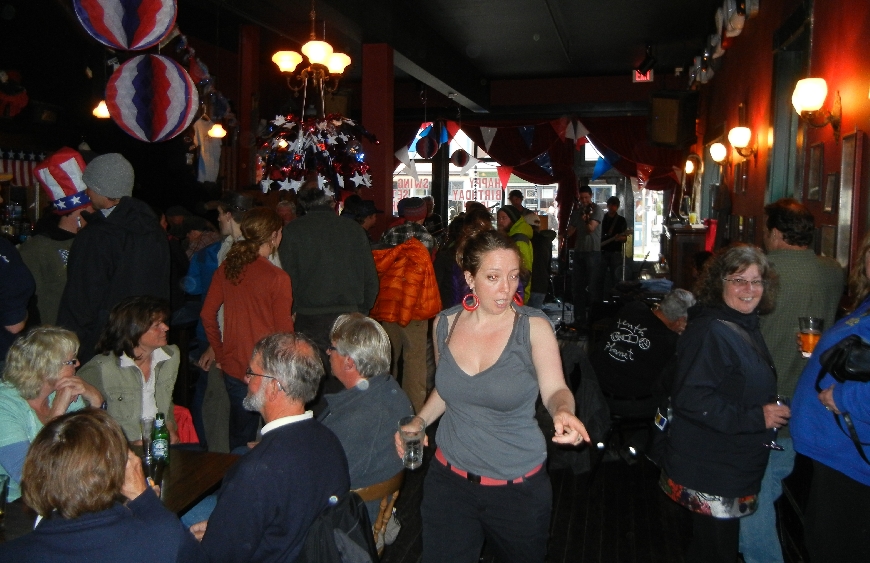
The Alaskans start their celebration on July 3rd! Dave and Sheri (from Enon!) met us for drinks at 8pm. The place was packed shoulder to shoulder with others dancing out in the street in a light rain. Returned to our room to shower and then watched the 11pm fireworks from the Lodge.
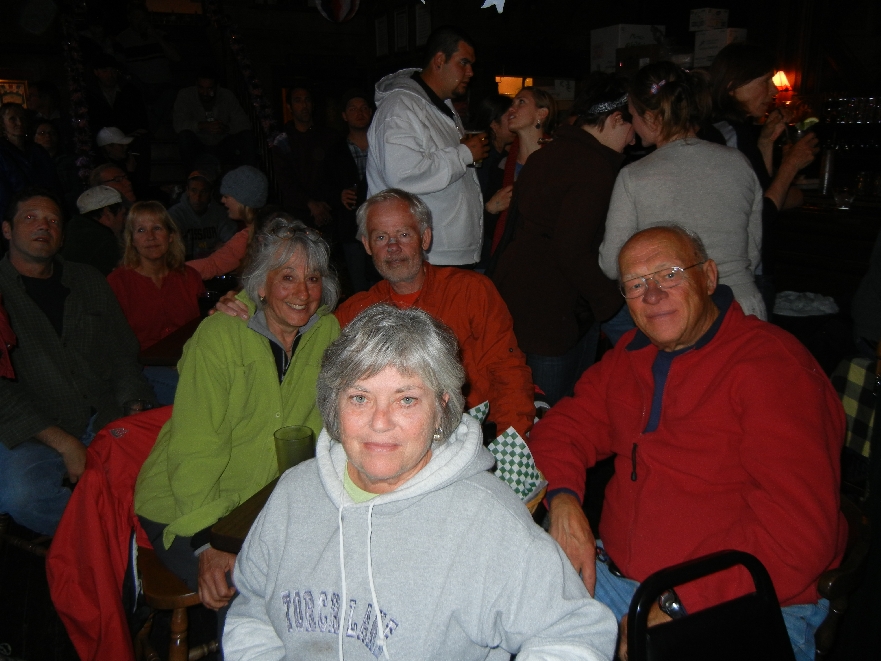
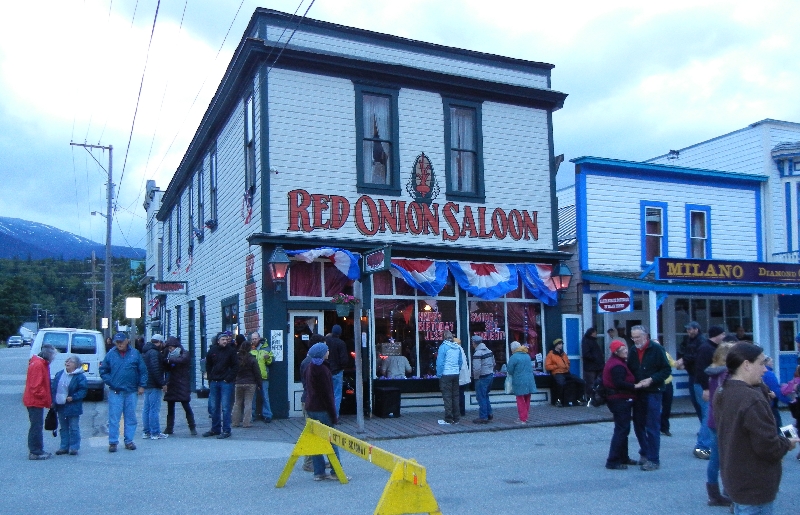
Helen – And the Rest of the Story – we were attending a ranger tour walk in Skagway. The ranger asked for a volunteer and I raised my hand. He asked my name and where I was from to which I responded…Helen from Ohio.
Minutes later a woman in the group came up to me and asked which city. I said Springfield. She gasped and replied that she was from Enon (next town over), then said “you look so familiar, do you know Nancy Sheehan (my neighbor).” I said “yes”, she asked “what is your last name.” I reply “Martin.” She asks, “Is your husband Tom?”
Well we come around to discover that she has seen me many times in the yard while visiting our neighbor. So she tells me that she and her husband are traveling in an RV and drove from Ohio and will be touring Alaska and several other states for the next 3 months.
Meanwhile, I had been in an antique shop earlier and saw a really neat amber footed fluted glass bowl that I wanted but had no way to bring home with my backpack and carryon. After we departed I left my phone number on her car window asking her to call me and asking if she could take something back home for me.
She didn’t call, the store closed and we went on a 5 mile hike. While walking my phone rings; she just got back to her car and asked how she could help. I explained that the store had closed but perhaps we should meet for drinks before the fireworks…agreed. We meet and I tell her about the bowl. I also give her the address of the store, because we were leaving the next morning at 6am on the ferry to return to J uneau, and said if they had time perhaps she could check on the bowl. She did, called me when we were on the ferry and said she bought the bowl and is bringing it back for me in exchange for dinner and beers!!!
Life is full of surprises and I am bringing something home!!!!!
Ferry to Juneau
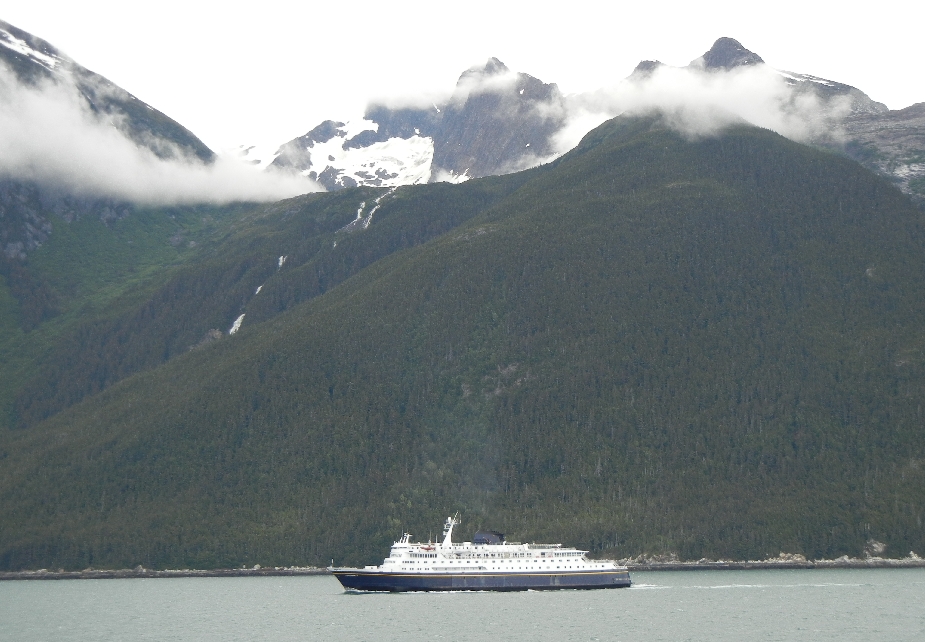
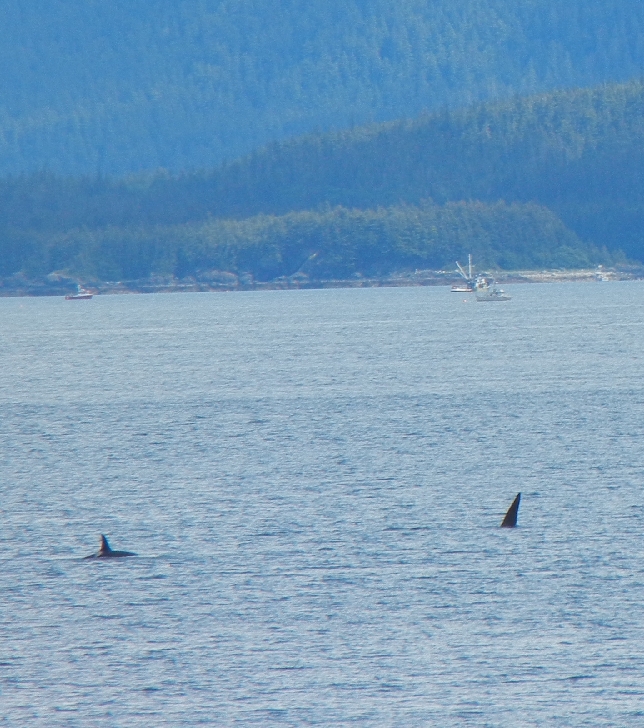
July 4 – caught the 7am ferry back to Juneau and arrived at 1:30. Along the way we were again treated to beluga whale sitings and great scenery along the Lynn Canal. We met Jim and Patrice fromMinnesota on the ferry and that night went to the Baranof Hotel for King Crab dinners together. This is supposed to be the fanciest restaurant in Juneau and we were not pleased with the service. It took 45 minutes to be served; the crab was not hot and appeared to have been frozen (shells that did not crack easily).
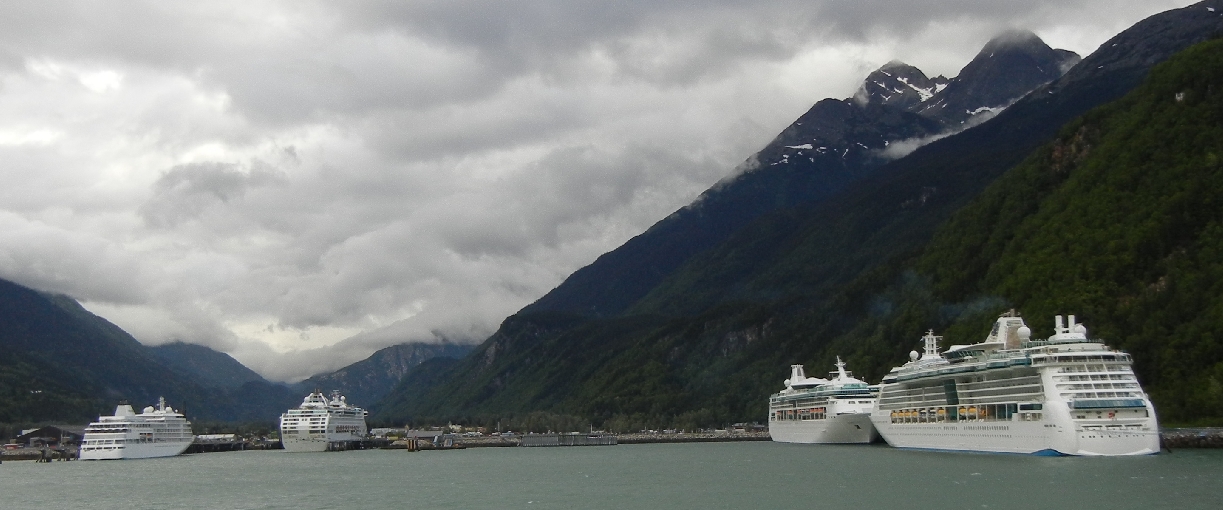
We stayed at the Silverbow Inn & Bagel Shop in downtown Juneau for two nights. It was a fun/informal place to stay with breakfast, food throughout the day and wine tasting from 5-6 every evening.

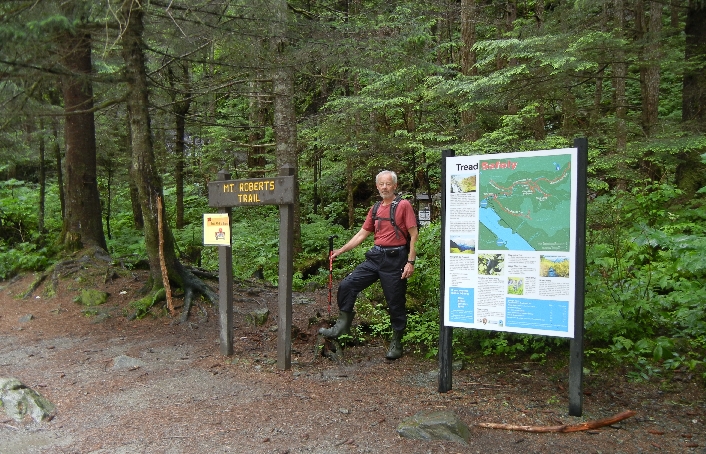
July 5 – it was raining, so we slept in. Had breakfast and were on our hike up Mt Roberts at about 9:30. It was a pretty but muddy trail as we worked our way up the ridge. My $3 Salvation Army goulashes worked well over my boots. We hiked up past the top of the Tram and Father Brown’s cross in a slight rain. We also did the half mile nature trail before returning to the top of the Tramway. In all we hiked about 4 miles and gained 2,000 ft in elevation.

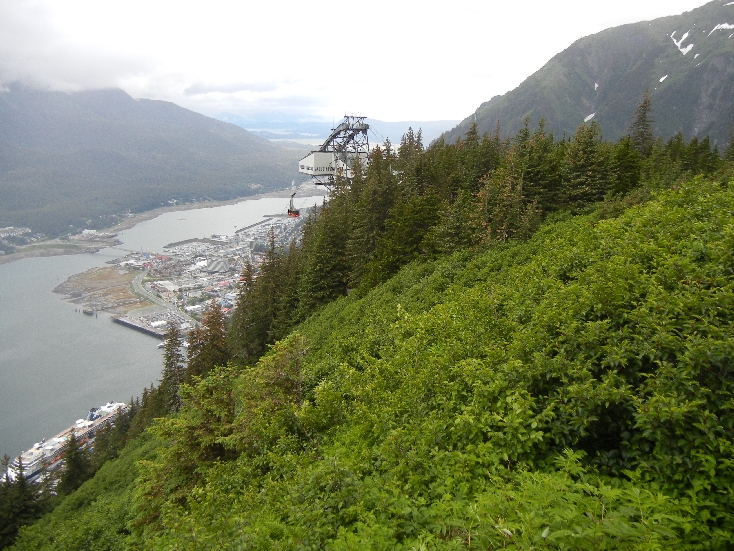
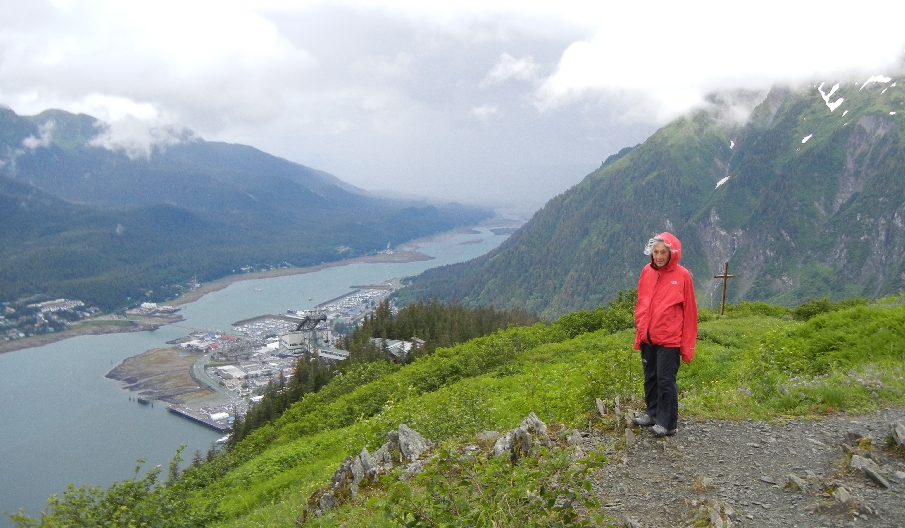
We watched a Tlingit culture film, toured the nature center and had crab cheese Panini’s in the restaurant. If you spend $10 a person at the top of the tram you got a free ride down – so that’s what we did!
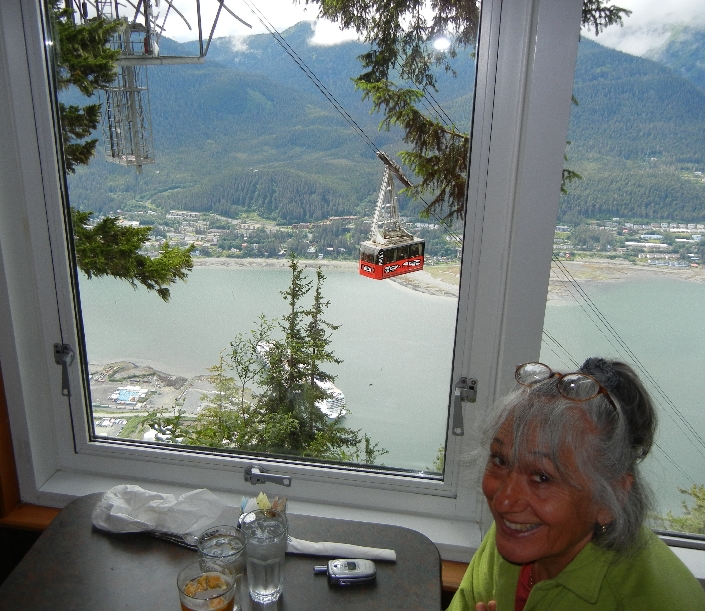

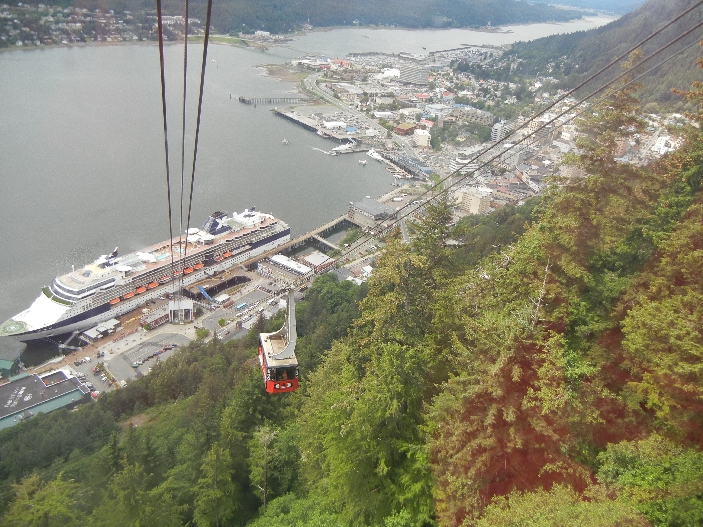
Walked back to the Silverbow and relaxed before walking to Tracy’s Crab Shack for dinner – Crab Bisque and Crab Cakes (yum).
Juneau– Mendenhall Glacier Lake – Kayaking
July 6 – we were picked up at 9:15 by the Alaska Boat & Kayak Shop (with all of our luggage) for our paddle on Mendenhall Lake. We first went to the office where we could store our luggage and be outfitted with rain suits, rubber boots and PFDs. Drove to the west end of the lake and after basic instruction on rain skirts, paddling, righting a capsized kayak, getting back in with the use of paddle floats and emptying the boat with a bilge pump, we launched for our ice paddle adventure.
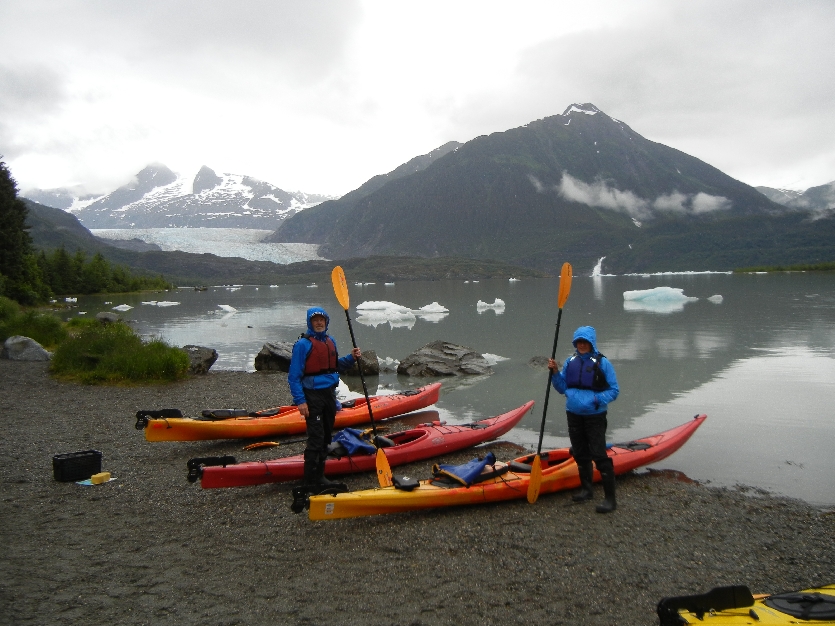
Helen had had a series of freighting dreams the night before and was very apprehensive of an impending disaster. She refused to follow my lead as we approached the icebergs and was upset I wasn’t following the recommended route. In the middle of the icebergs my rudder control broke and I beached the boat near the Nuggets Waterfall. Helen refused to go to the beach, an ideal spot for our snack/lunch, and floated nearby while I attempted repairs. I was unable to fix it and paddled the rest of the day without a rudder.


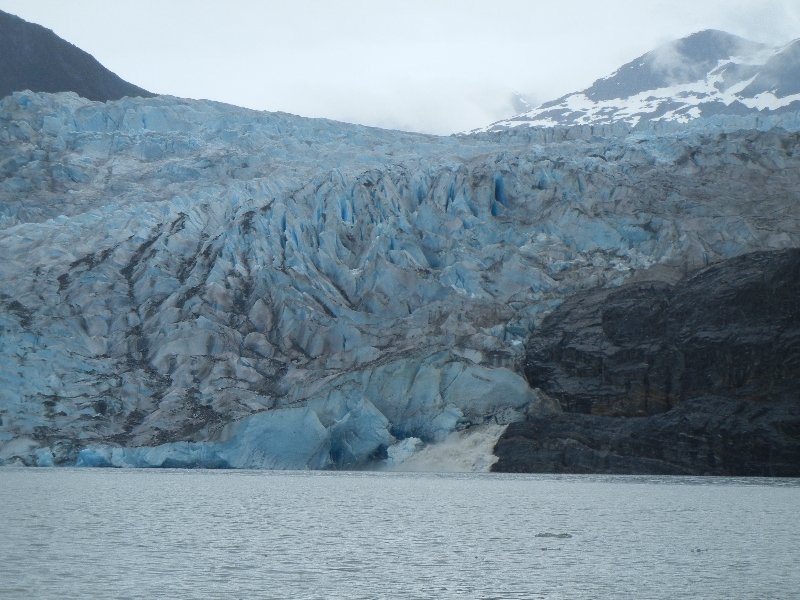
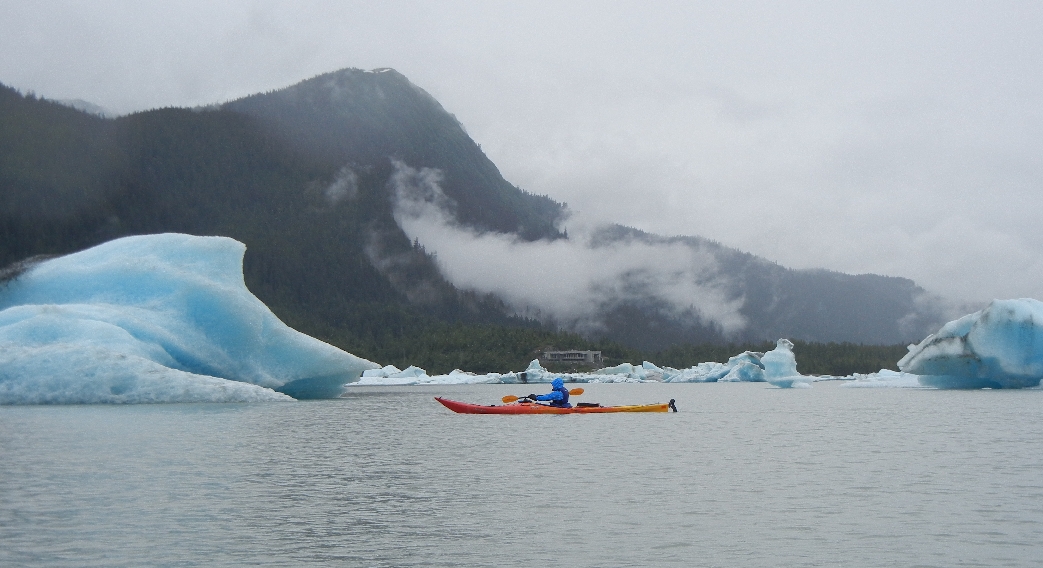
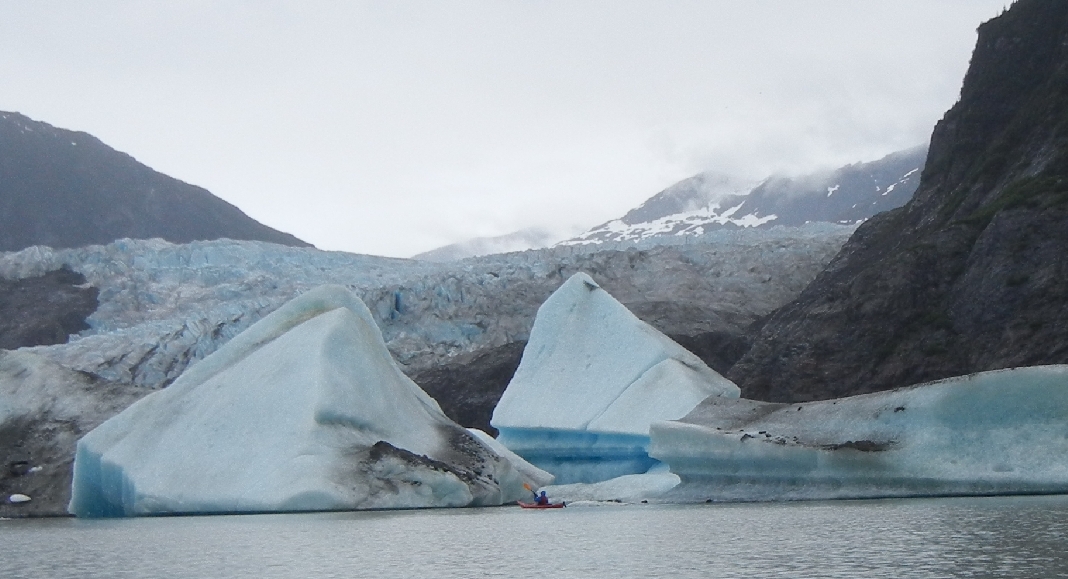


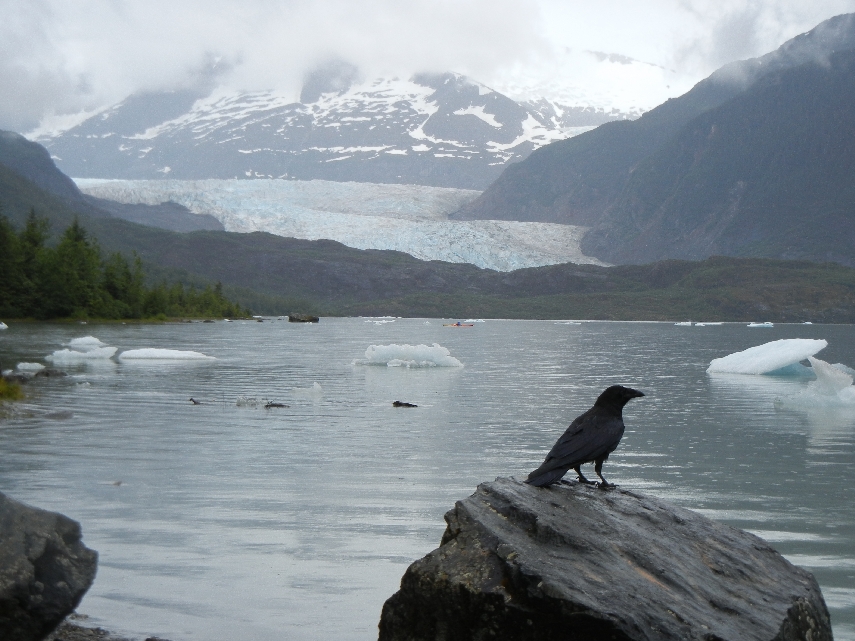
I was able to get her in a couple of pictures and she took one of me but then refused to do anymore. She said we were late and had to start paddling back for pick-up. I told her we had another hour. She said I was wrong and she was paddling back – no more pictures!
I stayed with her to make sure she was safe and we arrived at the beach an hour early. We had to wait in the rain for two other kayaks to return – they couldn’t find the landing beach and were 45 minutes late! So, we were standing in the rain for almost two hours.
This was one of the best and worst days of our trip. The paddle, views, icebergs, glacier were amazing. The disappointing part was that we did not have enough time to explore.
We were dropped off at the airport TraveLodge and headed straight for the hot tub to “cool” off.
Helen – back to the Mendenhall Glacier today (remember we went there on a stop over in Juneau when we first arrived before going to Skagway) this time to kayak. Last night I had some bad dreams, one after another. So I woke up this morning not feeling too secure about this trip. As you know, Tom and I can not be in one kayak, so we were the only two in singles.
After getting the info about safety and the route, Tom is the first in the water and I am second. I follow the recommended route; Tom takes off across the bay. I feel abandoned…he feels that I don’t trust him. Well, we meet up at the point going into the glacier area together; then his left rudder pedal gets disconnected and he heads for a beach area. I stay in the middle waiting for him to return. He fixes it temporarily and as we go through the ice fields it disconnects again. I am a mess so we head back through the ice fields.
It was raining most of the time but we finish with little to be said between us. The other two couples get lost and go to the wrong beach, after 30 minutes past due time the driver finally gets them on the phone and directs them toward us. We go back to the office to return our equipment and our bags are packed in the back of the van. We were the first to get out. The driver opens the back door rather quickly and Tom’s backpack falls out onto the ground…we hear a crash…yep!!! It was that antique beer pitcher he bought in Anchorage…
So we get into our room and look it up on Google. It is not quite as rare as we thought, probably worth one to two hundred dollars (especially since we didn’t have any mugs) but still it was interesting. Now it will remain in the trash bin in our motel room.
So back to those dreams I had last night. I know I didn’t have a good feeling about today. However, we’re back on good terms and drinking rum and coke. I seem to be drinking more on this trip than usual!

Angoon and Admiralty Island National Monument
July 7 – We were up at 5am to catch our 7am ferry (LeConte) to Angoon. Angoon is a Tlingit Native village of about 400 on Admiralty Island. We arrived at 12:15 and Sharon the owner of the Favorite Bay Inn B & B was there to meet us. After settling in the B & B, we walked through town and then did the Danger Point trail, which passes through the village cemetery. On the way back to town we walked the shoreline picking up treasures from the sea including rocks, sea glass and bones.

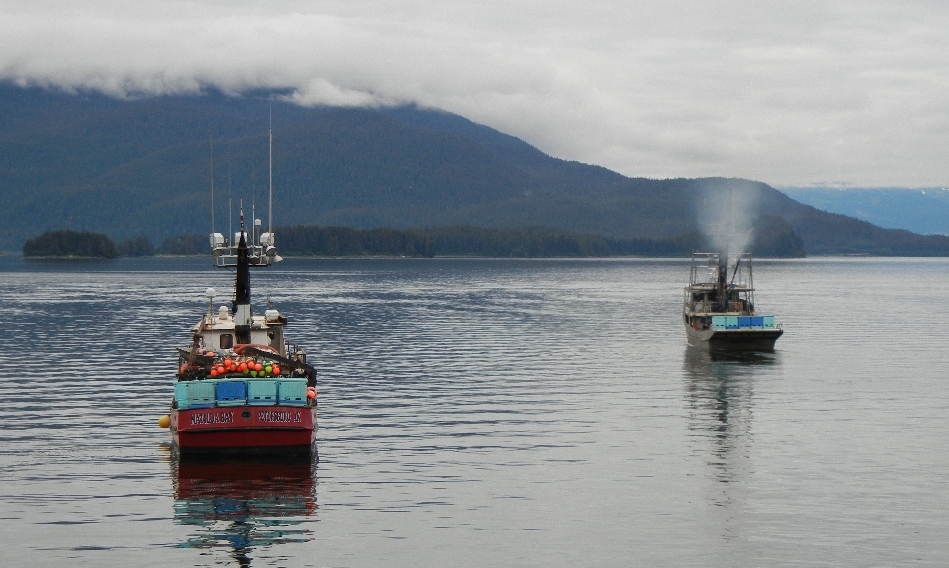


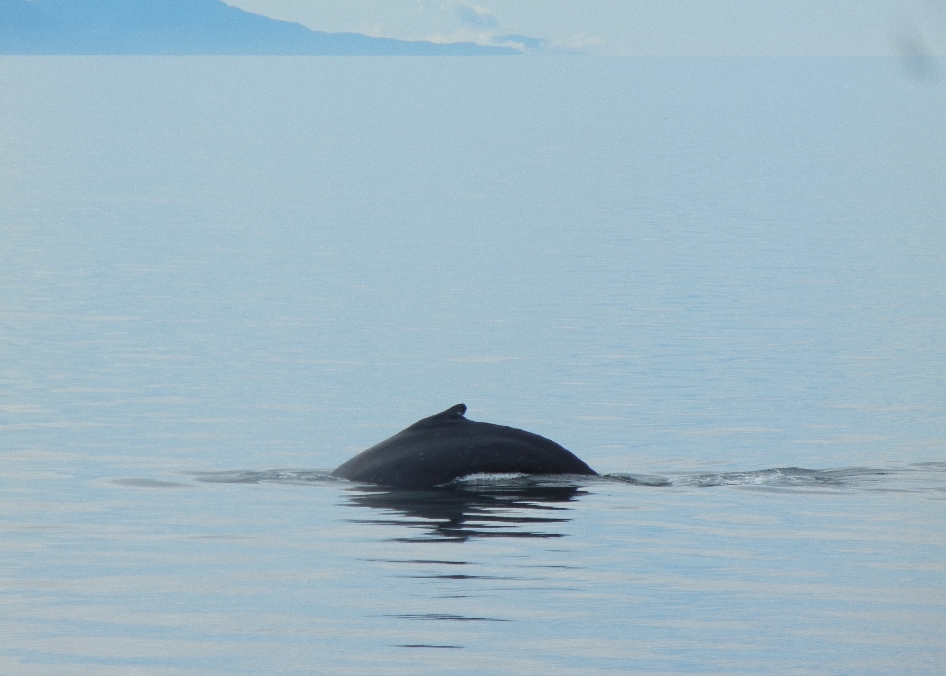
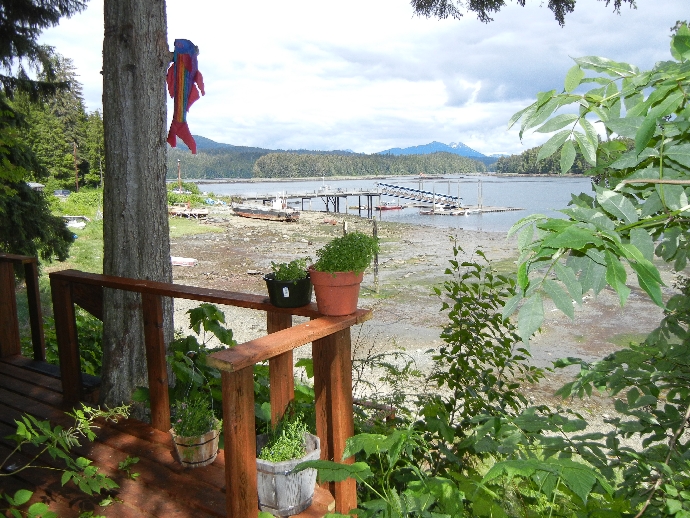
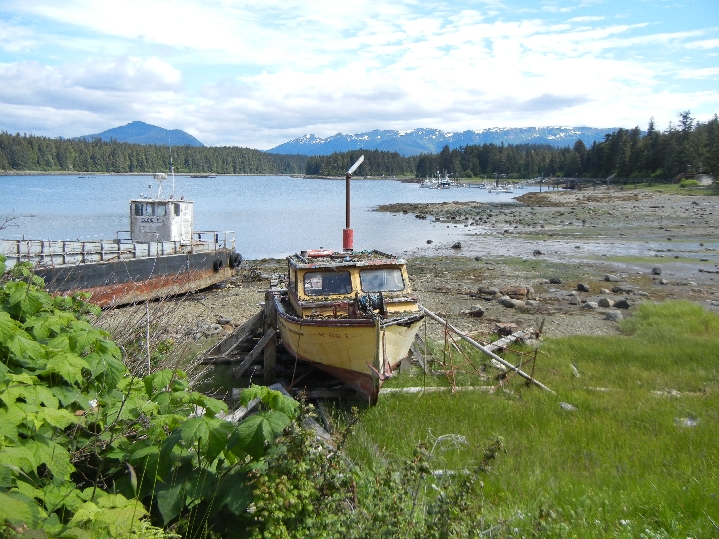
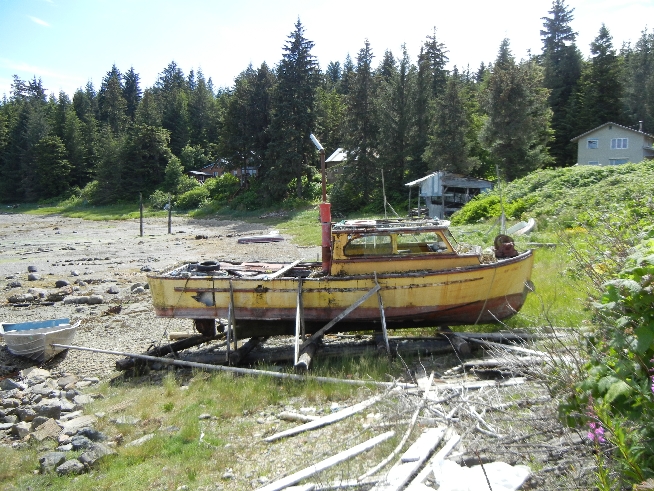


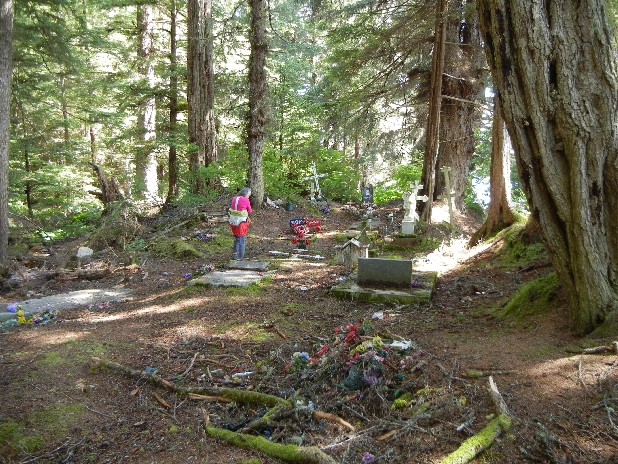


Sharon had smoked salmon, crackers and cheese waiting for us upon our return. She then transported us by minivan and skiff to Whaler’s Cove Lodge on Killsinoo Island for dinner. Sharon and Dick own both the B & B and fishing Lodge and they are Angoon’s main employer.
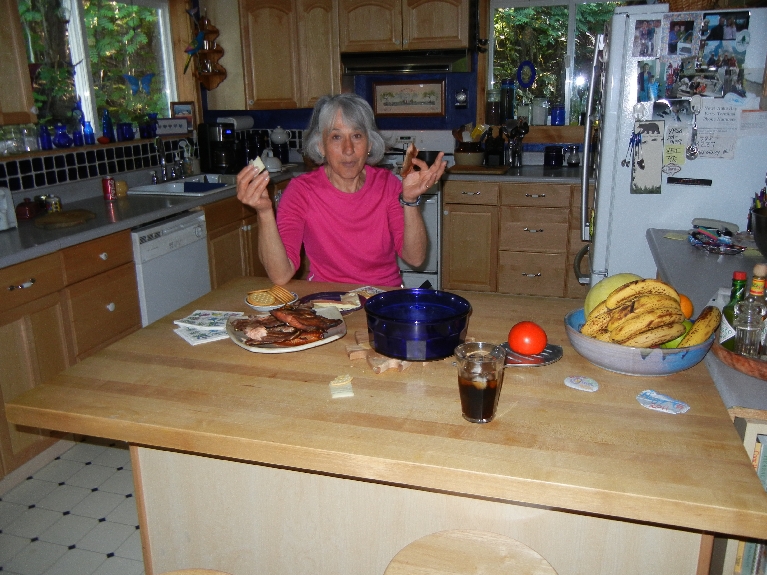

July 8 – After breakfast at the Lodge, we picked out rubber boots and heavy duty rain suits for our boating adventure into Admiralty Island National Monument. I was also issued water charts and a shotgun (for bears)! We loaded our rental skiff with our sack lunches and equipment and then followed Dick and his two tour boats to an anchorage at the end of Mitchell Bay. Dick tied off his two boats to a buoy and then secured our boat in the cove with a line attached to an anchor and a line attached to trees (adjustment for tide).
We then transported our supplies and canoes to Salt Lake (a five minute walk). Helen tried her luck at fishing and then our group split, with the tour/fishing folks traveling with Dick. Helen and I paddled to the end of Salt Lake. Our canoe was missing a seat, so Helen had to sit on a PFD on top of a plastic bucket. When we arrived at the end of Salt Lake, I wanted to explore on land. Helen did not want to get out of the canoe because of bears so we ate our sack lunch in the canoe. We decided to return to our boat early in order to leisurely cruise back and explore more coves.
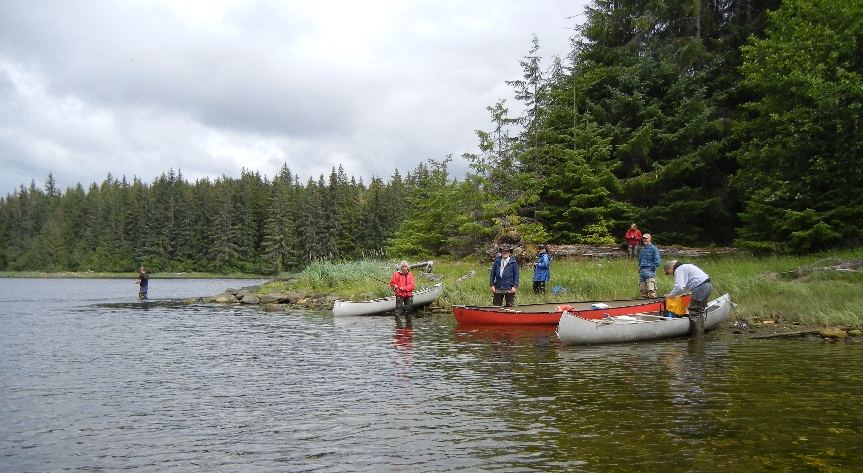

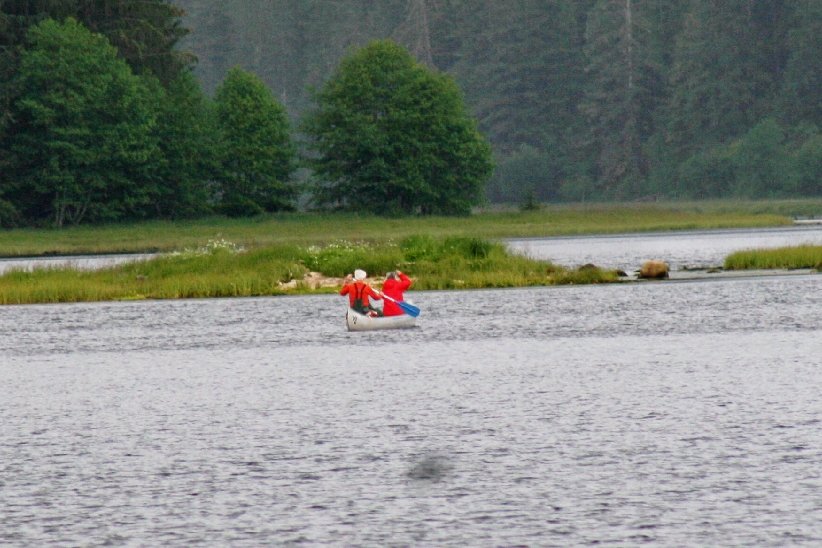

When we arrived at the anchorage we found our boat high and dry. It was low tide and the stern was sitting on a rock shelf about two feet above the bow. My first order of business was to go back and get our canoe and return it to our anchorage. I missed the easy passage around the island and ended up paddling the canoe down through the falls. I hit a number of rocks but was able to get through without capsizing.
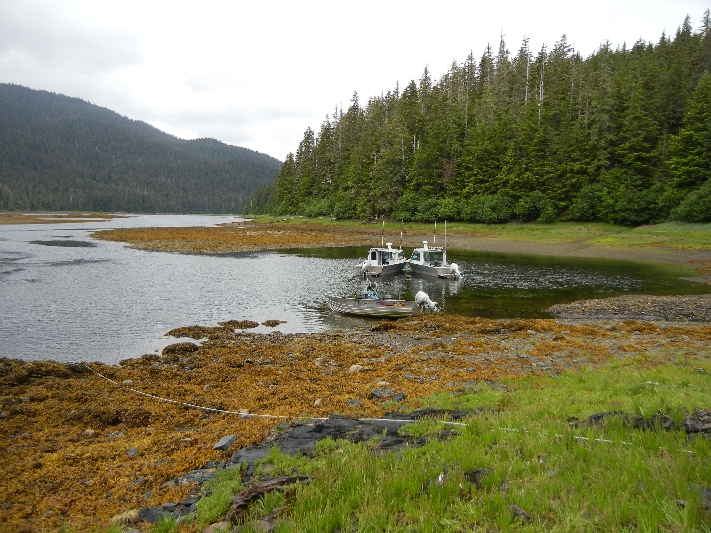
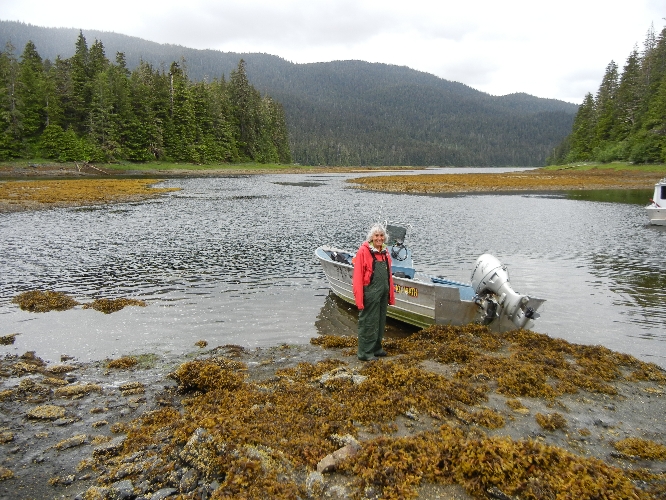

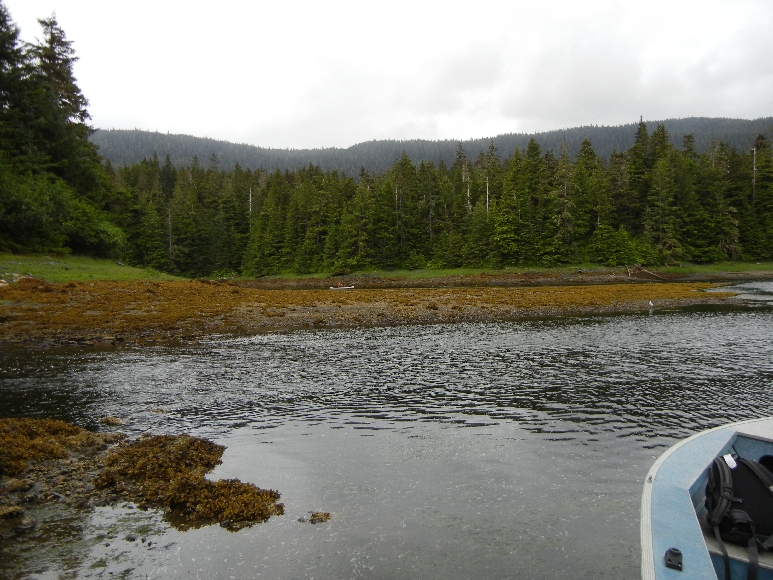

Our next task was to get the boat off the rocks. We tried to rock and push the boat off the rocks but were unable to get it to move. I retrieved some logs from the woods to serve as rollers under the boat and also obtained a log about four inches in diameter and ten feet long to use as a lever. Initially we were unable to move the boat; however, after the tide came in about six inches, we were able to launch and start our trip back.
The tide swing for the day was about 20 feet and the tide was coming through the narrow Kootznahoo Inlet like a river producing waves and whirlpools during our return. Fortunately, our motor was powerful enough to power our way through the current.


Helen – now do you have this pictured? We wake up on one island and then take a small boat to the other island for breakfast to eat with the fishing people; in fact we have dinner there too.
We are the only non fishing people there! We pack our lunch along with the others and go our separate ways. Now that day there were two boats which were combining fishing and canoeing, just for something other than the deep sea fishing that they usually do during their week stay. That trip was already filled, so we decided to rent a smaller boat, follow them (1 hour ride) to the canoe site, then canoe our separate ways. Plan set, it is now time to execute that plan.
We go to the boot house to get our gear…hip boots, rain bibs, rain coat (they help break the wind as we follow the closed boats racing in front of us). Then they give Tom a shotgun, just in case we come in contact with a bear (highest bear population here in Alaska) if we decide to get out of the canoe to do a little hiking (you can bet I am not going on a hike with hip boots in bear infested woods!!).
So now we begin the boat ride (later at dinner, several people mentioned that I got a little sun on my face, try wind burn instead!). We get to the canoes, have to anchor our boat and leave enough line so that it doesn’t get dry docked with the tides. Dick, the owner, sets the anchor for our boat while Tom watches. I walk to the other end of the small island and canoe to the first fishing spot to wait for them. I love casting but don’t catch a thing. But, as I was wading into the river, one foot began to feel a little cool, then wet; yep, got a hole in my boot and am wet up to the knee.
After Tom and Dick arrive, we begin our paddle and have a lovely time, even though it rained a little on us. When we got to the part where it was so shallow we couldn’t continue, we stopped and sat in the canoe to eat our lunch. Since I didn’t want to hike, we decided to go back and get our motor boat and slowly explore the surrounding area on the way back to camp. We paddle back, leave the canoe on one side of the small island and hike a trail with our things to the boat site. There we find that our boat is dry docked. The whole back end with the motor is caught on a big rock.
Tom walks back to the canoe and paddles it back to the boat (we couldn’t do it together because there are two sets of rapids and it was better to take an empty canoe through). Tom says wait here at the smaller rapids to take his picture as he comes through. I see him at the top of the rapids but he goes the other way over the bigger rapids by mistake.
Back to the dry docked boat, we can’t move it at all. We tried rocking it, pulling it, pushing it, finally Tom looks for a large, long tree branch and tries to lever it up…nothing doing. We sit there for a while, and then decide to walk around this small island. When we get back we notice that the tide is rising some and we try the lever thing again…it begins to budge. So we move everything to the front of the boat, including me, and Tom continues to use the lever. After awhile, we are free and head back having a great leisurely ride.
Now notice that I never mention my apprehension about Tom’s ability to navigate the strange water (he has lots of maps), or that this is out of our element (motor boat)…but as the saying goes “all’s well, that ends well!!”
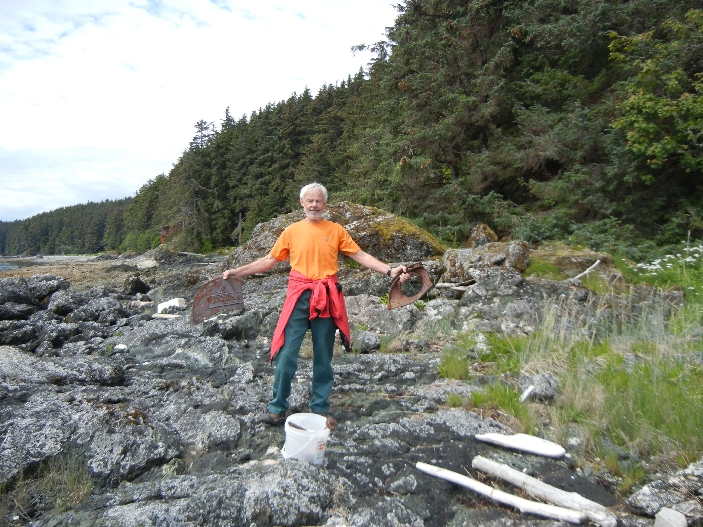
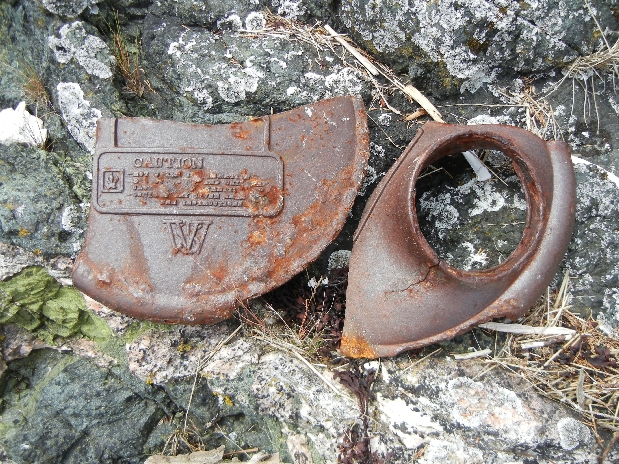
Tomorrow I will tell you about the hike around the 4-5 mile island at low tide, carrying a bucket of collectables and Tom carrying two heavy pieces of scrap iron with caution written on one. What was supposed to be a beach walk wound up being a scramble up and down rocks, carrying our treasures for 4.5 hours…hoping we would get back in time to catch our flight to Sitka.
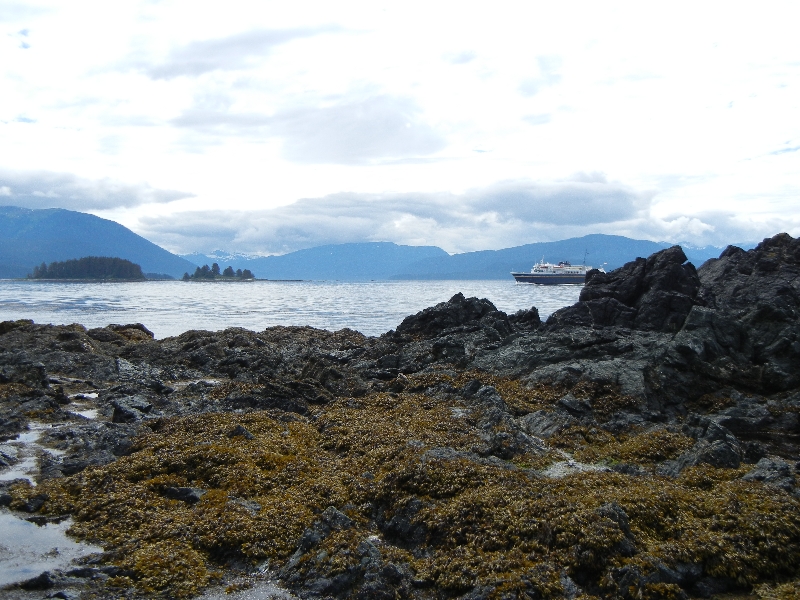
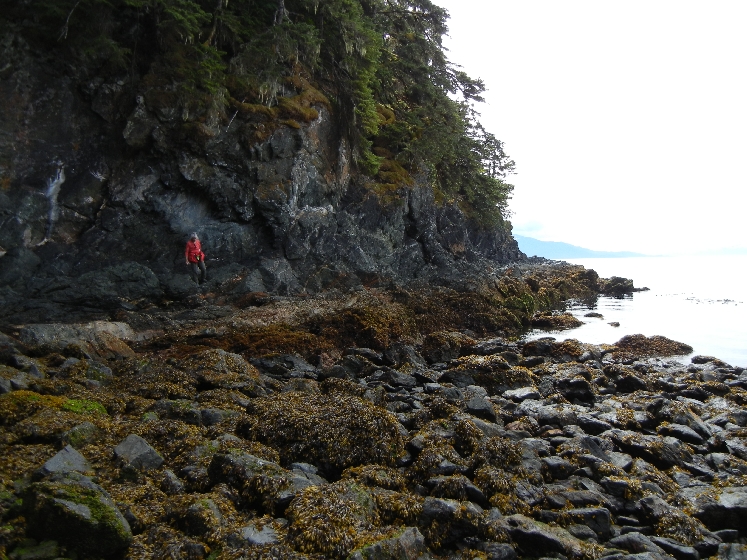
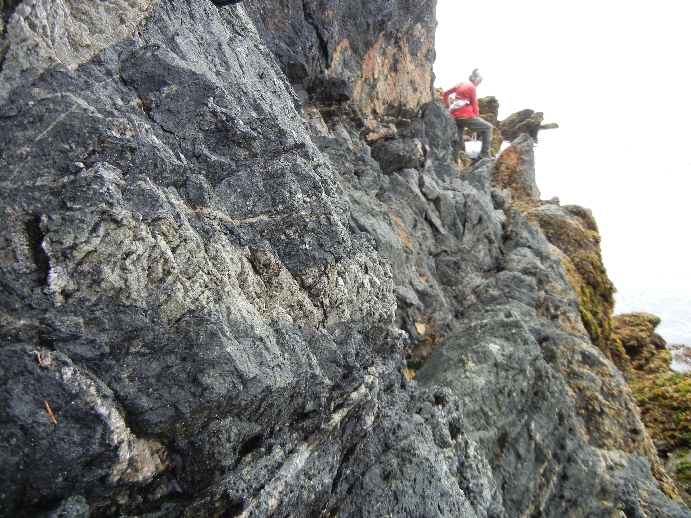
July 9 – After breakfast at the Lodge, we decided to hike around Killsinoo Island. The going was fairly easy at first but then the shore became very rocky with some headlands to go up and over. Helen had a bucket and was collecting rocks, shells, sea glass, and bones. About a mile from the Lodge, I found the top of an old iron hatch with printing on it and another piece of iron that I thought might be the remains of a port hole. Though quite heavy, I was determined to take them back to the Lodge to add to their iron collection. Whaler’s Cove Lodge is located on the site of a turn of the century Whalers station and they are constantly finding artifacts there. It took us about 4.5 hours to hike around the island – a lot longer than we thought it would.


Flight to Sitka
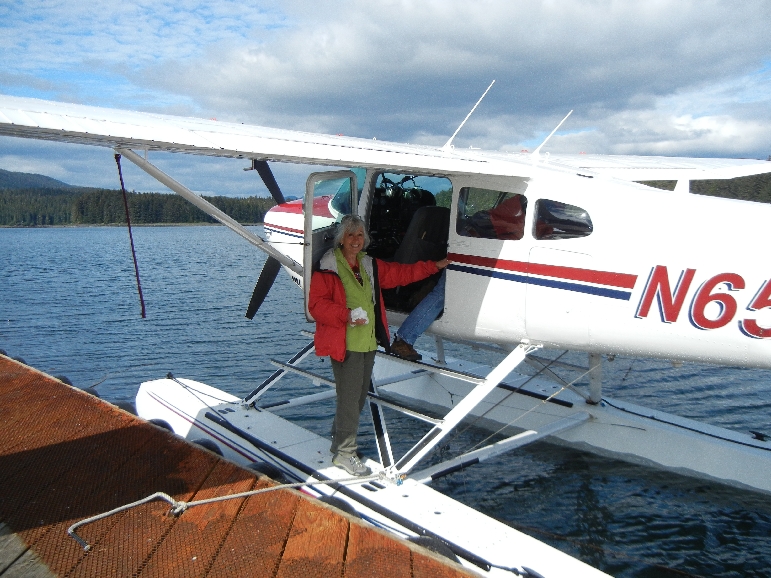
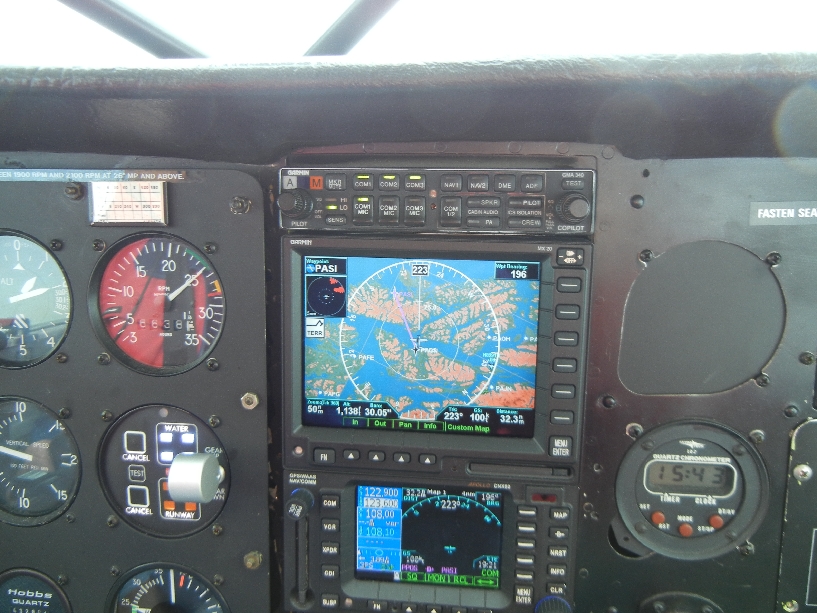
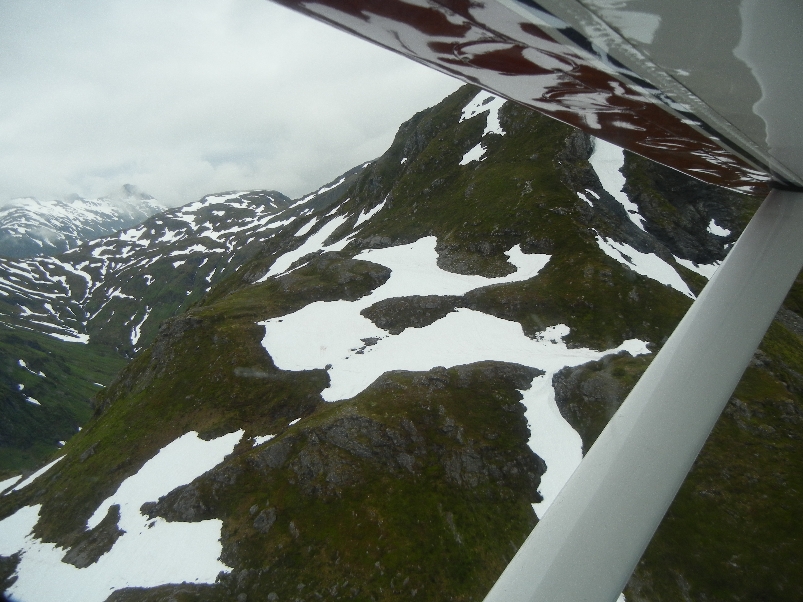
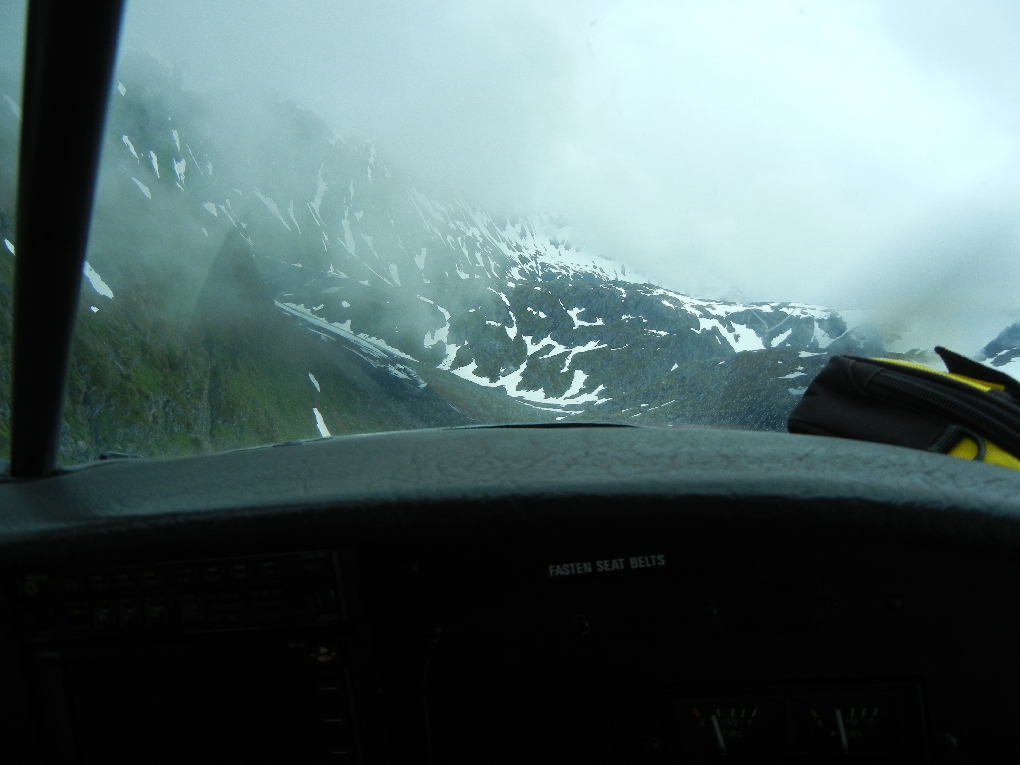
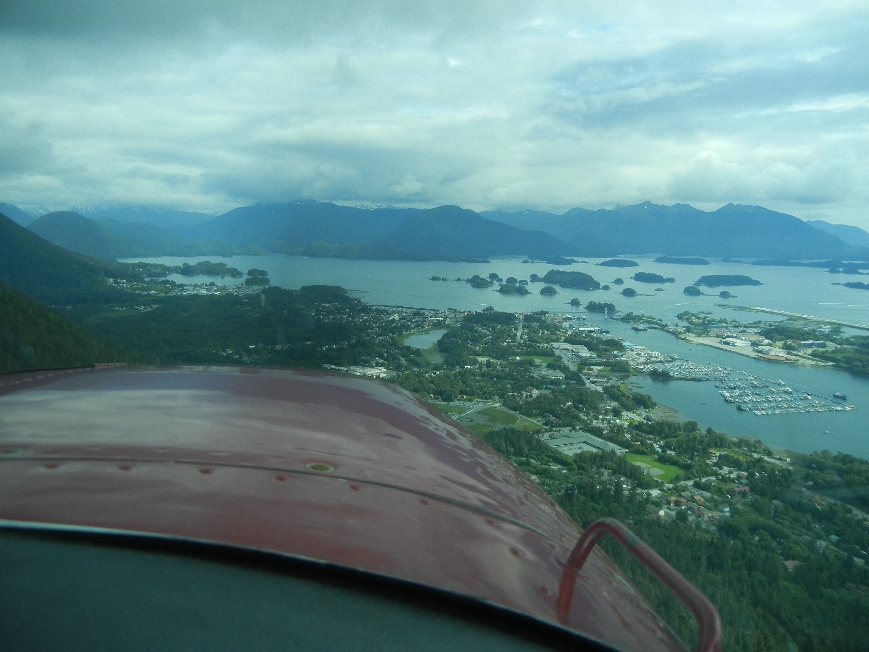
A chartered three passenger Harris Air float plane picked us up at 3:30 for our flight to Sitka. The flight over Baranof Island was spectacular. It was a pretty clear day but there were heavy clouds over the mountains. When starting to go over the highest pass it started to snow and we had to turn around and take a longer route.




Sitka
A young lady from Harris Air drove us to Ann’s Gavan Hill B & B. After settling in, Ann gave us a map with a recommended agenda for the next day. We then went to St Michaels Orthodox Cathedral for vespers. We met Bob and Betty Allen there who were the originators of Allen Marine and a boat building business. For dinner, we ate a bucket of crabs each at Victoria’s Restaurant.


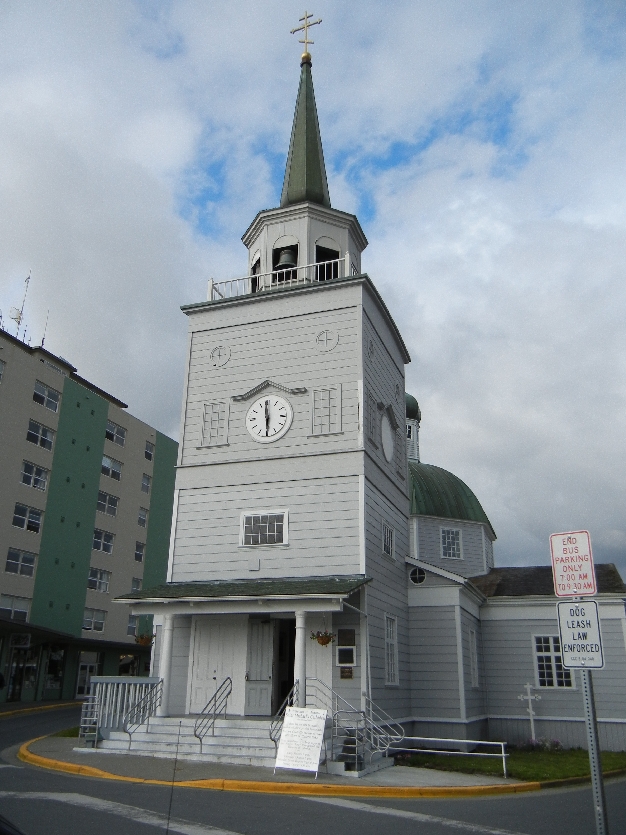
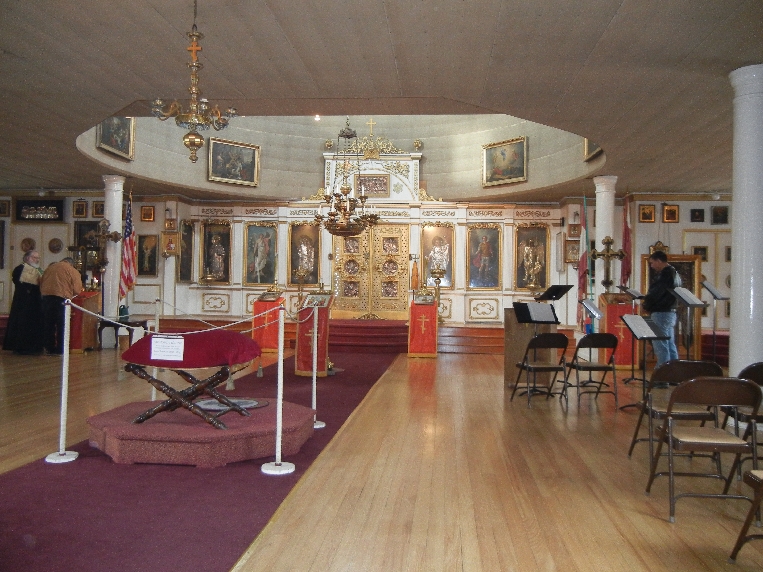
July 10 – we followed Ann’s suggestions for a walking route through Sitka. We visited the National Cemetery, the Orthodox cemetery, Sheldon Jackson’s Native Alaskan Museum, Sitka National Historic Park, did the Totem trail, toured the Russian Bishop’s residence, and went to the top of Castle Hill.
Sitka National Historic Park and Totem Trail
The original totems are inside and replicas are outside.


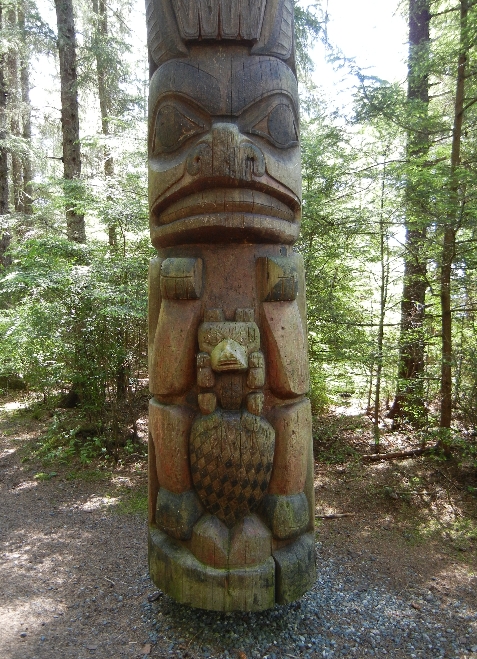
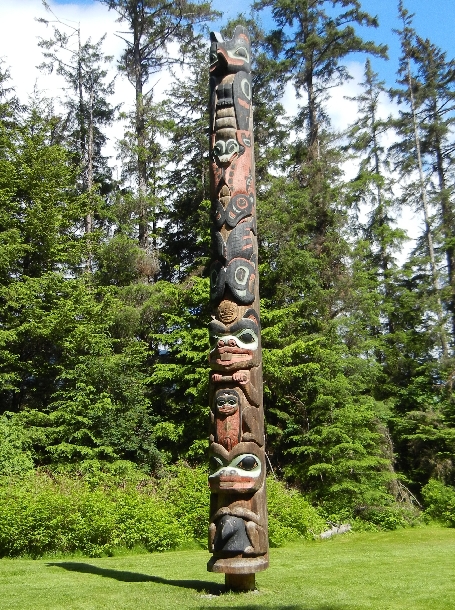
Russian Bishop’s House Museum

Mt. Edgecumbe and Sitka

Castle Hill
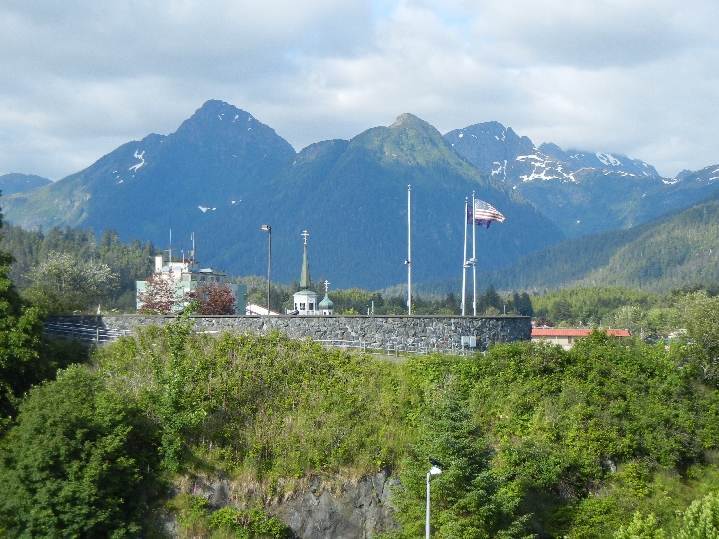
View from Castle Hill

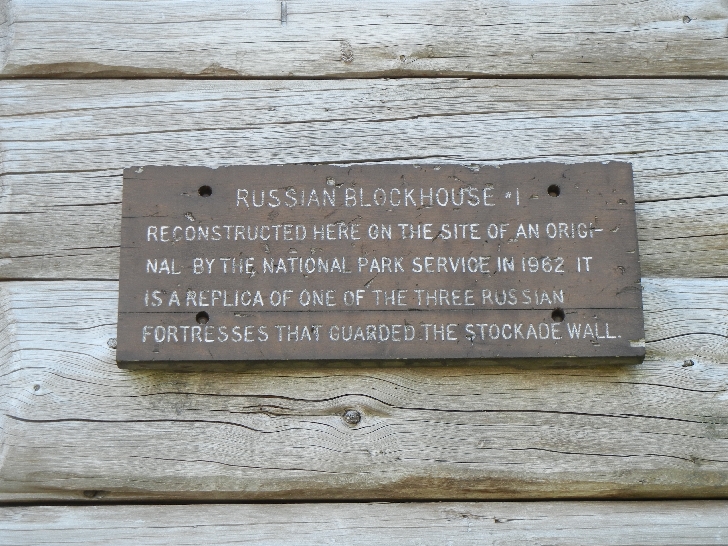
Russian Block House
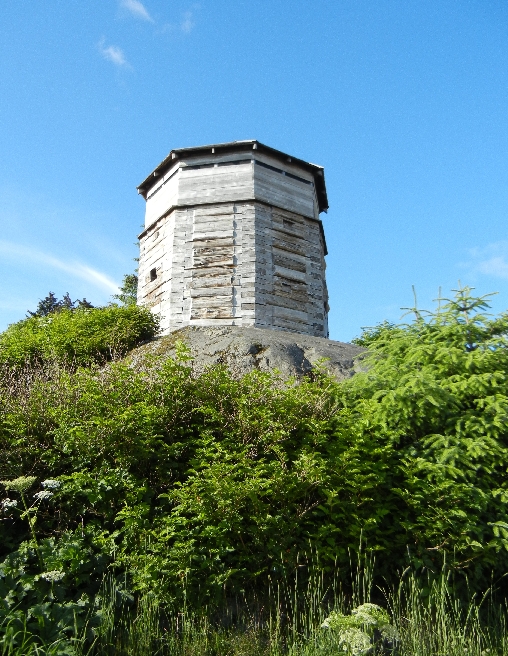
We weren’t ready for dinner, so we went to the Pioneer Bar for a beer and popcorn. This is a local fisherman’s bar with hundreds of pictures of boats hanging on the walls as well as a chalk board for writing help wanted or fishing services for sale notes. I struck up a conversation with some of the fisherman and they offered us some of the smoked salmon they had brought in to eat with their beer. I fit right in with my beard, ball cap, and bandages on my nose! Ring the bell and you have to buy drinks for everybody!
Helen – after tasting the smoked salmon, I comment to the guy how good it was. He says, “Thank the guy at the end, he smoked it.” So I say, “Hey, this smoked flounder is great (teasing)!” He asks, “Did she say flounder? That’s not an Alaskan fish!” I reply, “Only joking” and we all laugh.


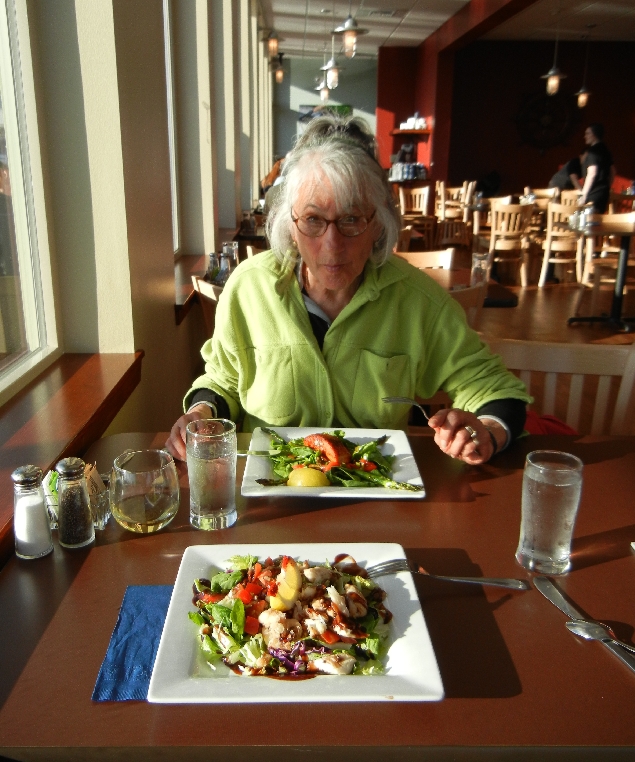
A small National Geographic tour boat was in town so we walked to the dock and talked to one of the crew about the tours that they did in Alaska as well as National Geographic tours in other parts of the world (e.g. Galapagos). Dinner was next on the agenda and we went to the Dock Shack for seafood salads. We have eaten some type of seafood once or twice a day – chowders, salads, filets of various fish (e.g. salmon, halibut, cod), king crab, Dungeness crab, etc. for the entire trip. We’ve consumed enough omega fatty acids to last the year!

July 11 – leaving Sitka

Fjords on south end of Baranof Island

Ketchikan
Inside Passage and landing in Ketchikan

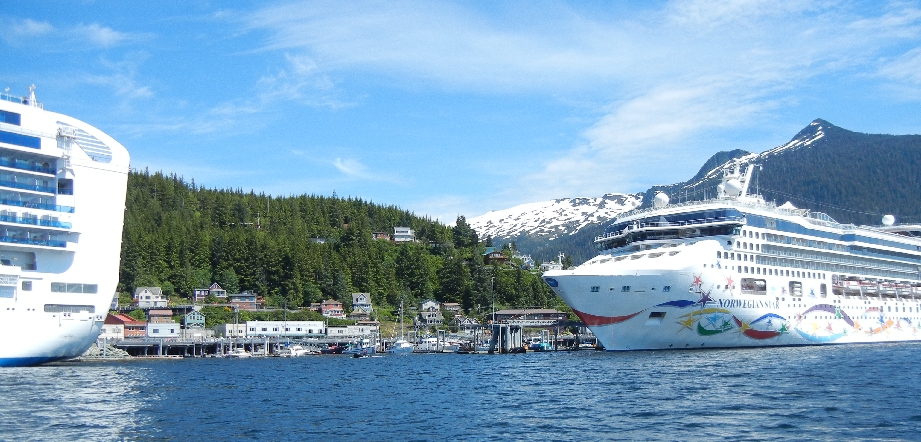
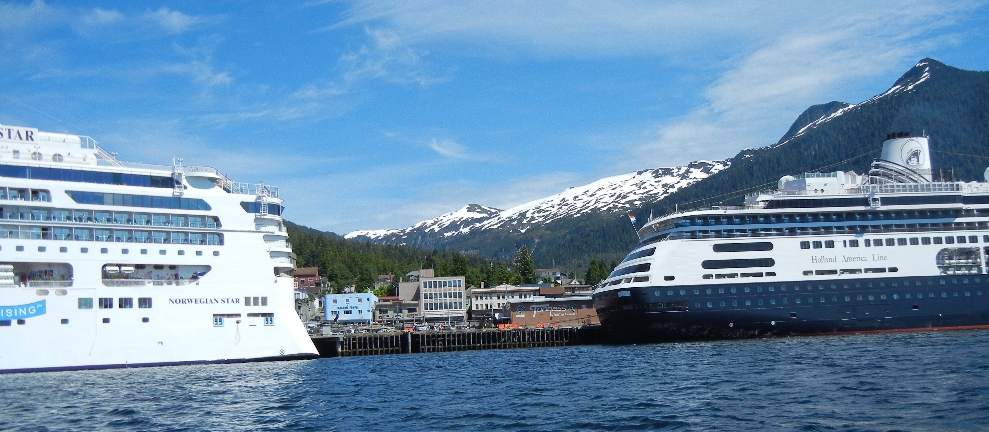
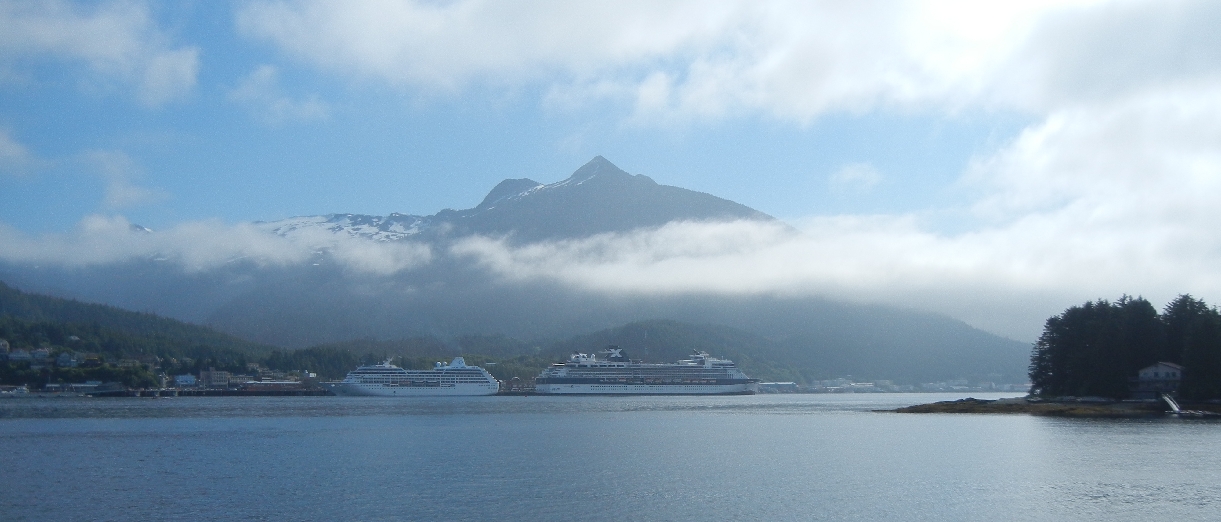
Our Alaska Airline flight arrived in Ketchikan at 12:30 and we took the Tongass Water Taxi from the airport to the New York Hotel to check in. The airport is on Gravina Island. The “Bridge to Nowhere” (2007) was to be built connecting the island to Ketchikan but in the end was not funded. Ketchikan is the “Cruise Ship Capital of the World” with up to 10 cruise ships docking in a day!
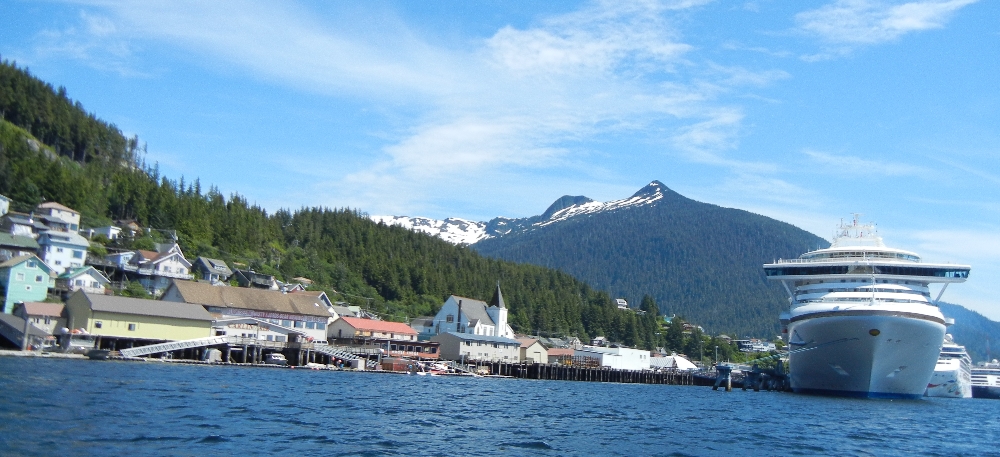


We got off the water taxi, walked across the street and picked up the keys for our suite from the New York Hotel. The Star suite was located above a bookstore on “Creek Street.” Our building and others along Creek Street were “cat houses” at the turn of the century.

Our room was above fish


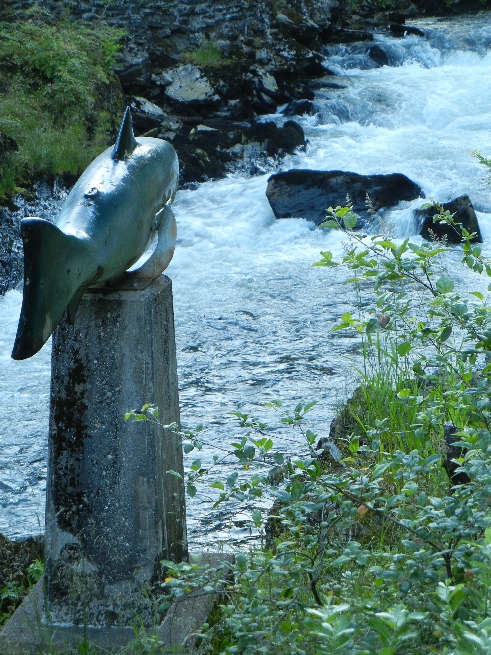
Bought a roast beef sandwich to split and some ice cream at an IGA and then ate at a picnic table overlooking the harbor. We also purchased muffins for breakfast as well as snacks and pop for in town and for our final ferry trip to WA. After lunch we did the walking tour of downtown Ketchikan including the Ketchikan Creek, salmon ladder, city park, totem museum and dock area. There were at least four cruise ships in port on each of our days in Ketchikan and the town was crowded with six to eight thousand tourists from morning until about 6pm, which is around the time the boats depart. After six was our favorite time of the day.
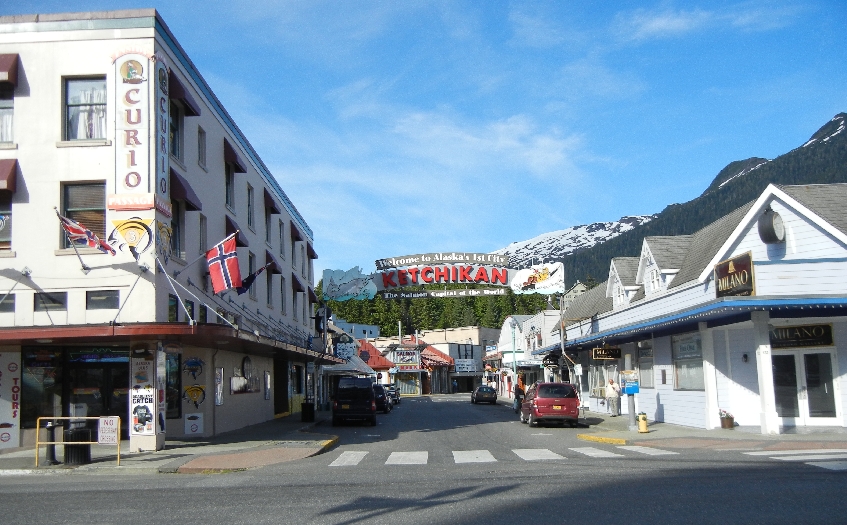


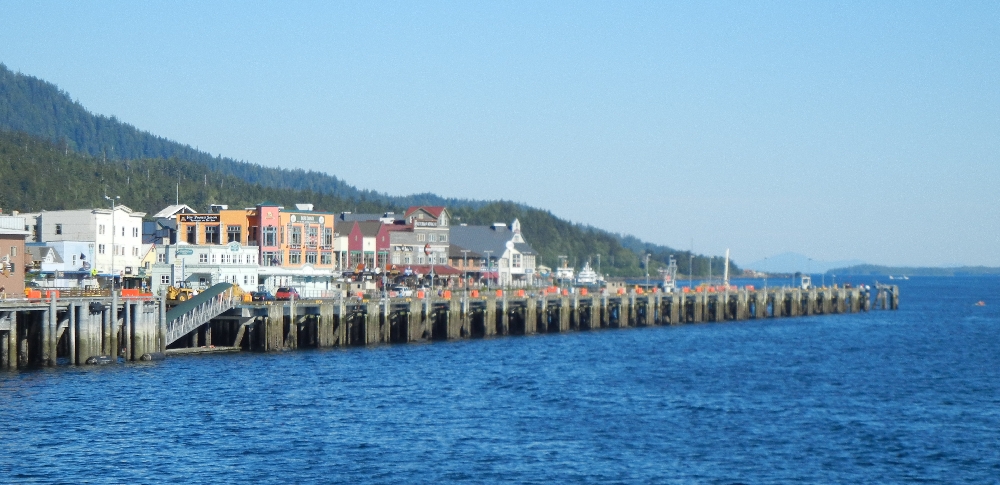
Modern Alaska Explorer

Misty Fjords National Monument
July 12 – We started the day taking an Allen Marine boat tour to Misty Fjords National Monument. We had met Bob Allen and his wife Betty at the Russian Orthodox Church in Sitka. Bob started the boat tour business that now has about 40 boats working in Juneau, Sitka and Ketchikan. It is a family business now run by his son and grandson with many other family members working in the business. They also own a shipyard in Sitka that builds catamaran boats that are used all over the world.
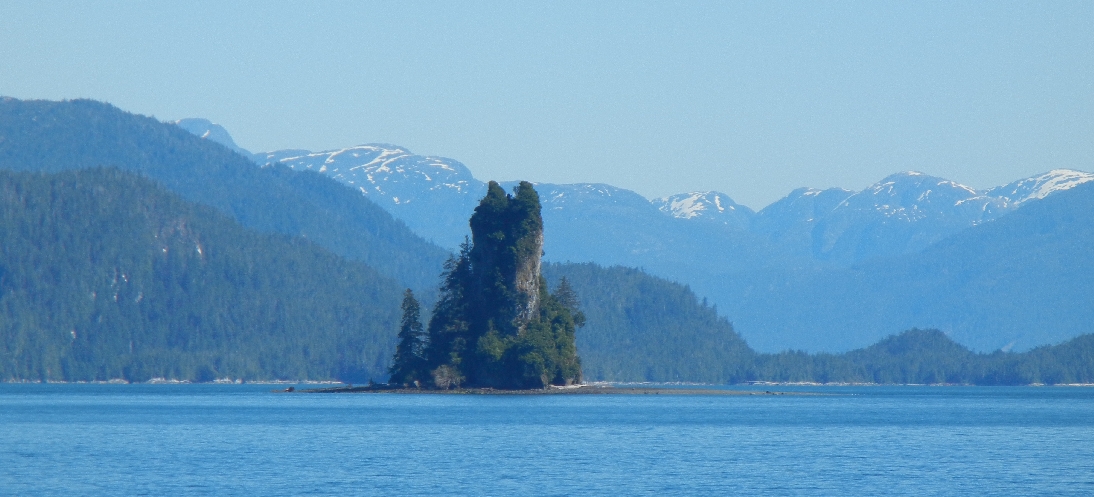
This was our third “good” day in a row; sun, blue skies and few clouds. The boat went around Point Alva into Behm Canal, cruised past New Eddystone Rock, (named by George Vancouver in 1793 when he was searching for the Northwest Passage) and then entered Rudyerd Bay – a beautiful fjord. Misty Fjords NM and Wilderness is the southern most part of Alaska.

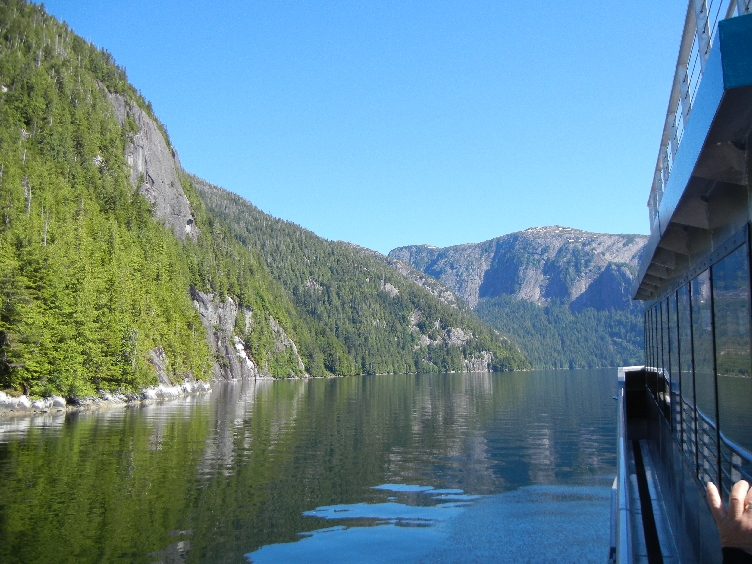
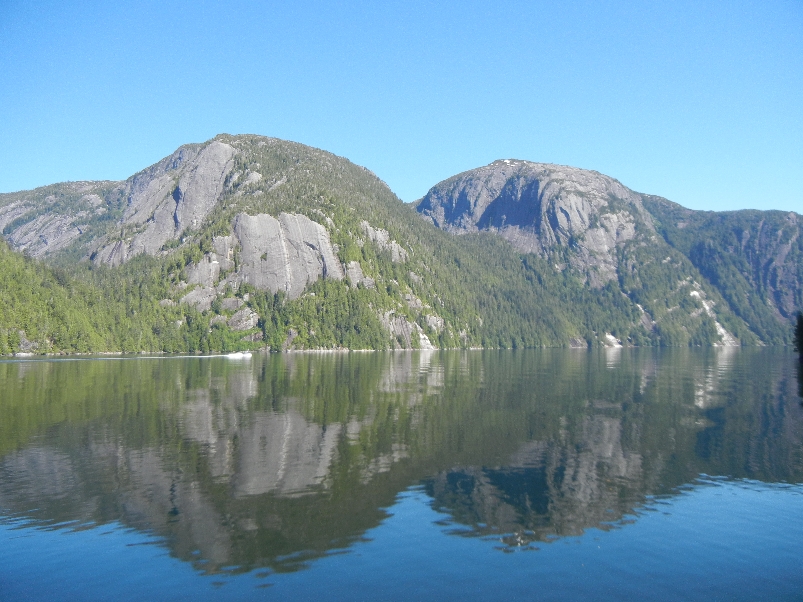
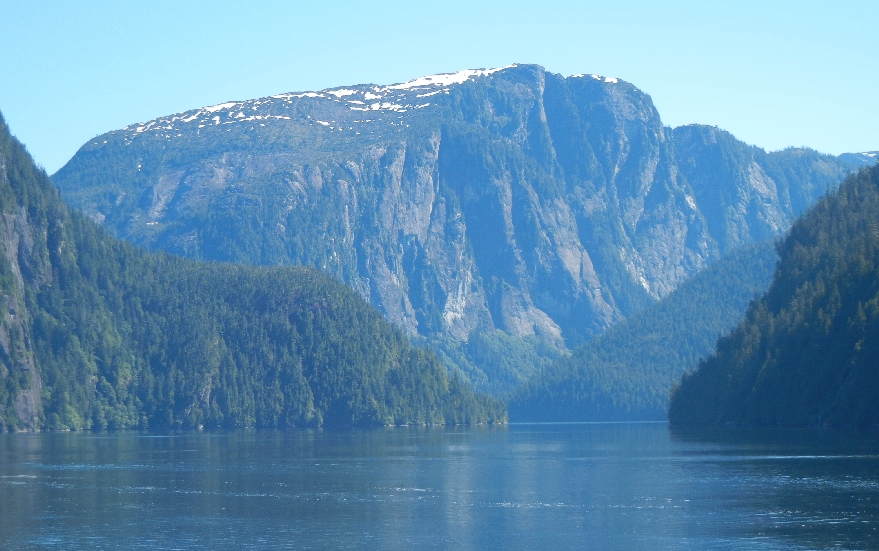


Returning to Ketchikan

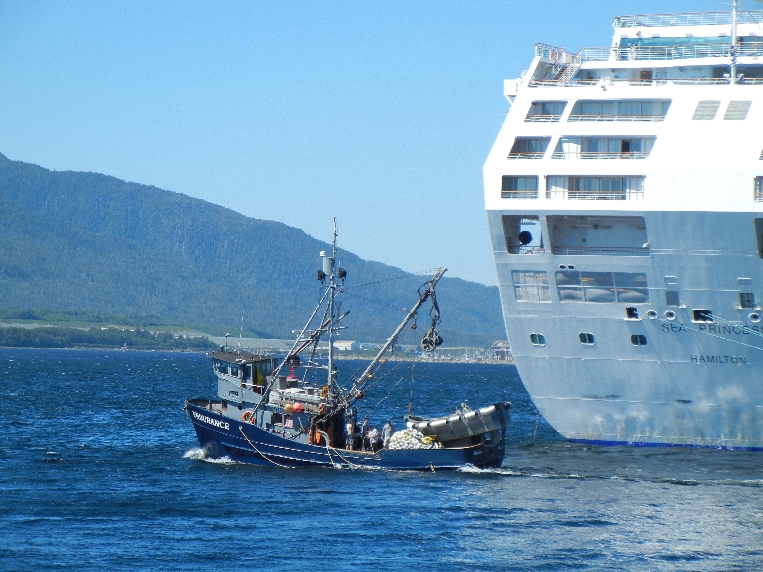
After leaving the boat, we went through the Southeast Alaska Discovery Center and spent the rest of the afternoon walking around Ketchikan. Helen also purchase a $10 box from the post office to ship back books purchased and rocks collected. We decided to do some fine dining for our last night in Alaska and took the funicular up to the Cape Fox Lodge for calamari, salmon salad, a fisherman’s platter and a glass of wine.
Helen – after mailing the package, I walked past a native shop called Crazy Wolf’s. So I go inside and ask the handsome white haired man painting a drum if he was Crazy Wolf. He said yes and I howled a greeting in response! We spent the next half hour talking. The next morning I introduced Tom to him on the way to our boat.
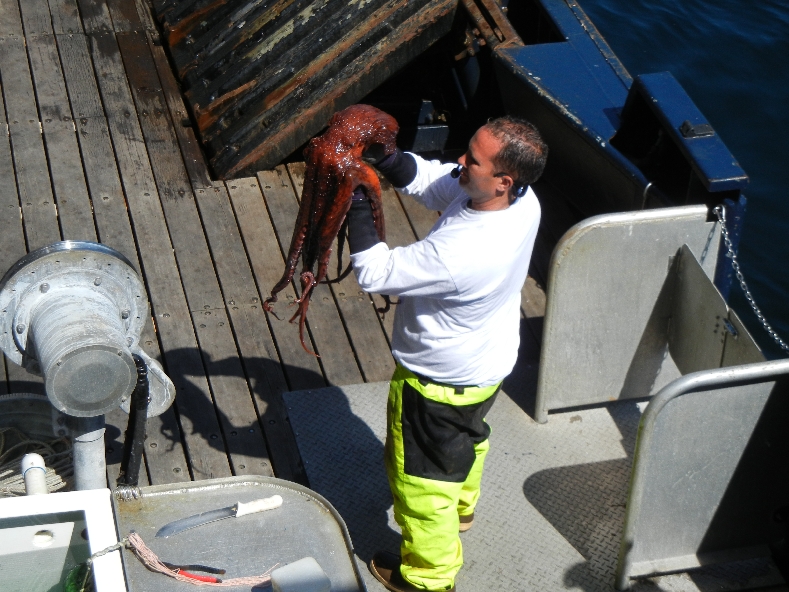
July 13 – We did the Bearing Sea Crab Fishermans tour this morning. Our boat was the Aleutian Ballad, which has been featured on the TV show the “Deadliest Catch.” We cruised to Native waters where the vessel has permission to catch and release.

Leaving Ketchikan
King Crabs, Dungeness Crabs, Octopus and Jellyfish
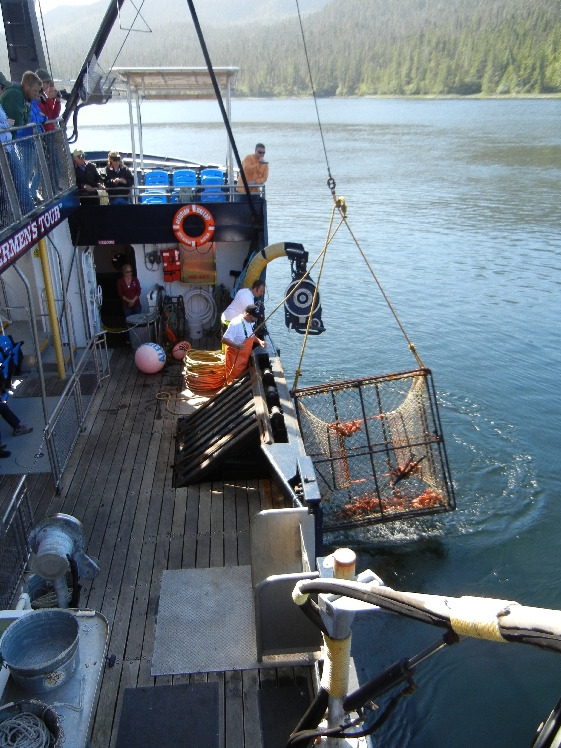

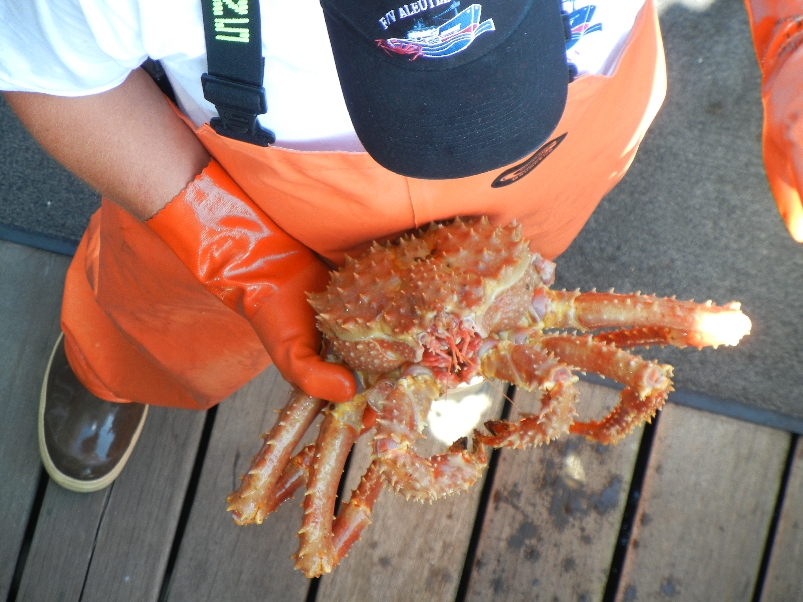

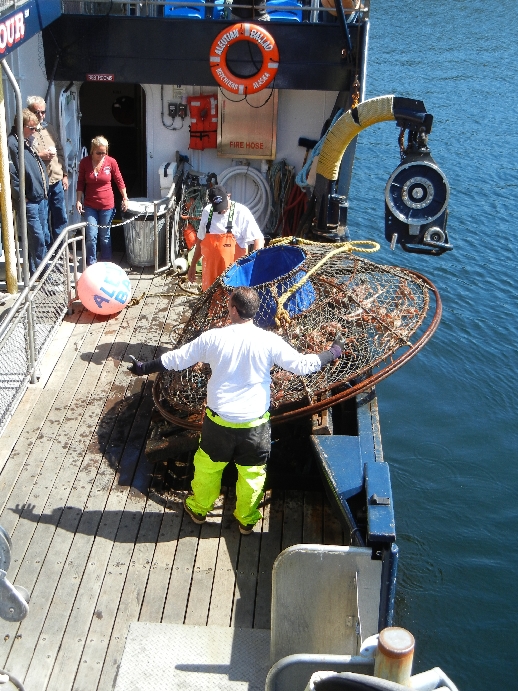


We had lunch on the wharf (giant prawns) and then hiked part way up (1,500 ft) the Deer Mountain trail (4 miles round-trip) before having to return to catch our ferry.
Ferry to Bellingham WA
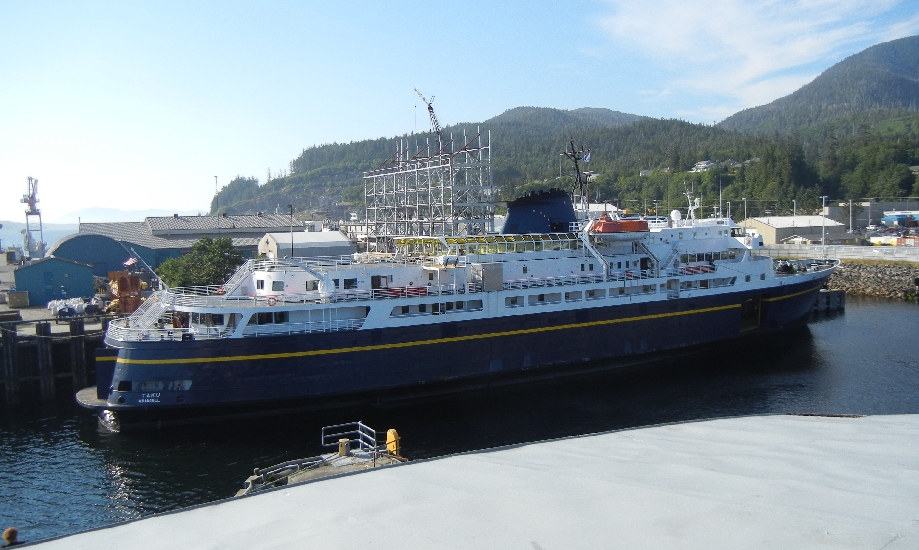
The Alaska Marine Highway Ferry Columbia departed for Bellingham, WA at 6pm. The AK ferry system is wonderful and inexpensive. Waterways are the major highways in AK and the ferries serve the average person. Not only do the boats carry vehicles and passengers, they also have places to set up your tent outside, you can bring most anything on board (food/drinks, games, etc.). They typically have a reasonably priced café and the larger boats have dining areas. There are lounges, movies and the bigger boats have a computer room, play room and bar. This is a picture of the Taku, a mid-size ferry.
Our ship was the Columbia, the largest in the fleet.


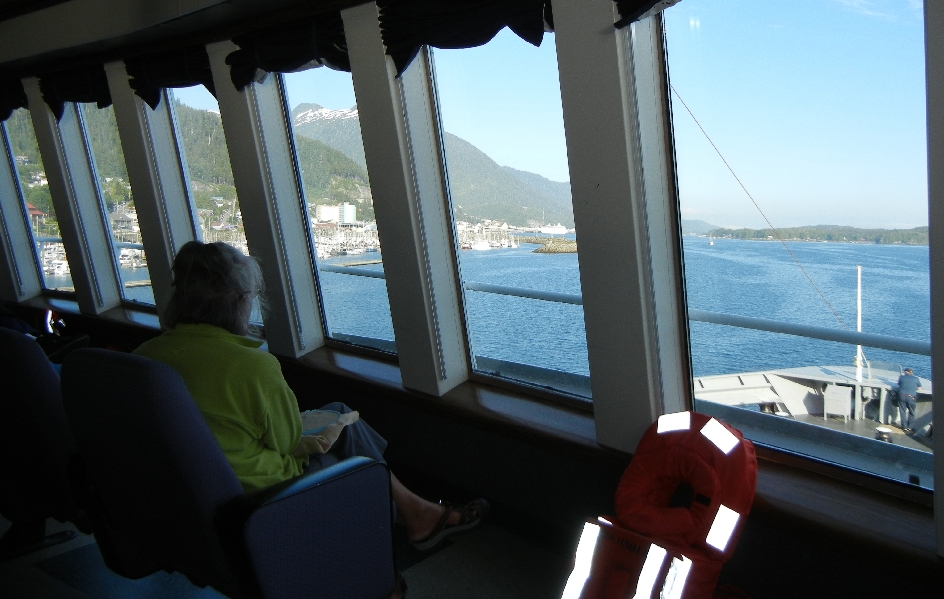
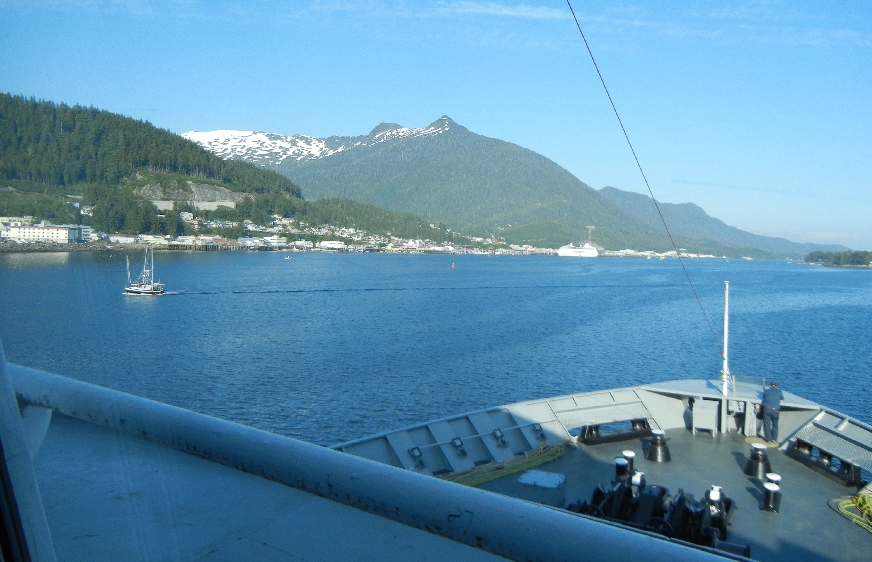
Leaving Ketchikan
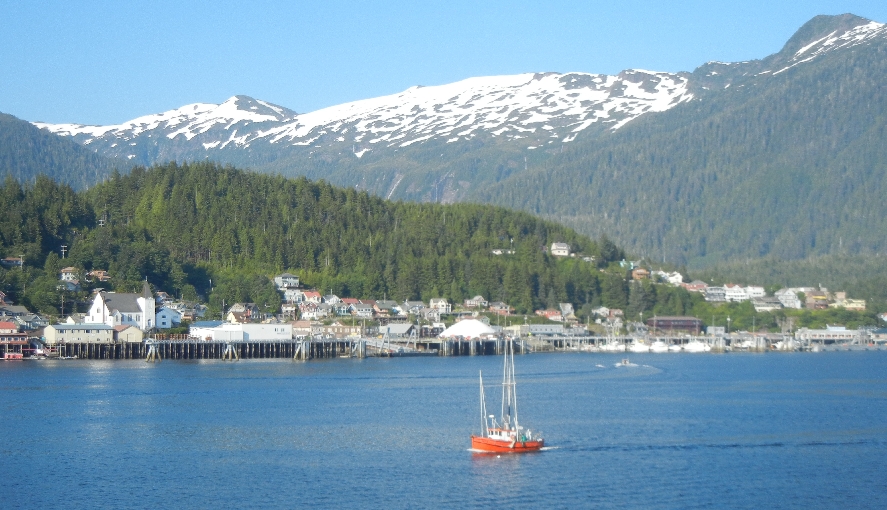


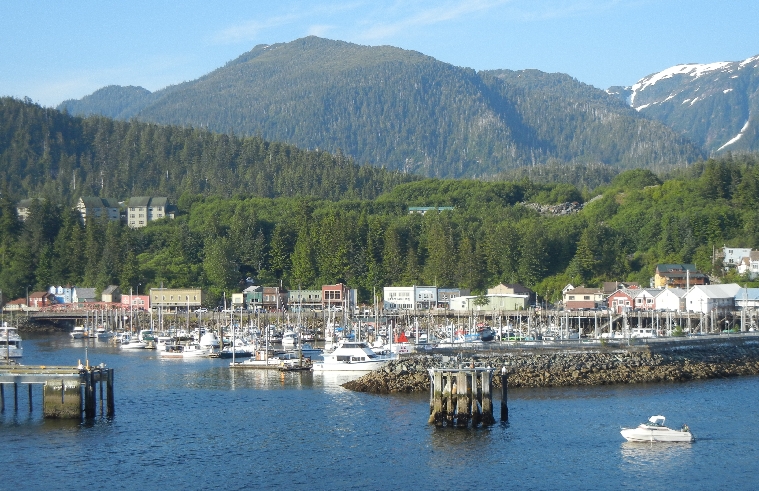
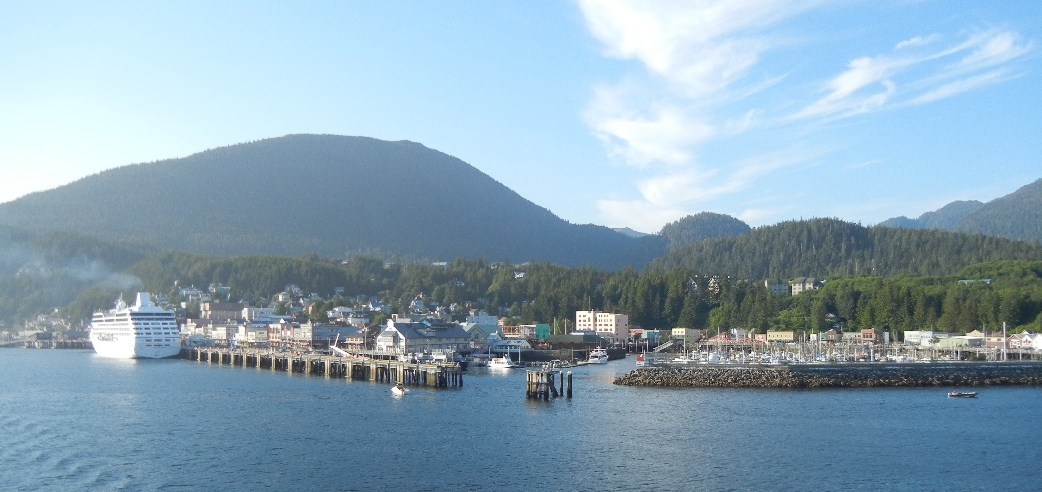

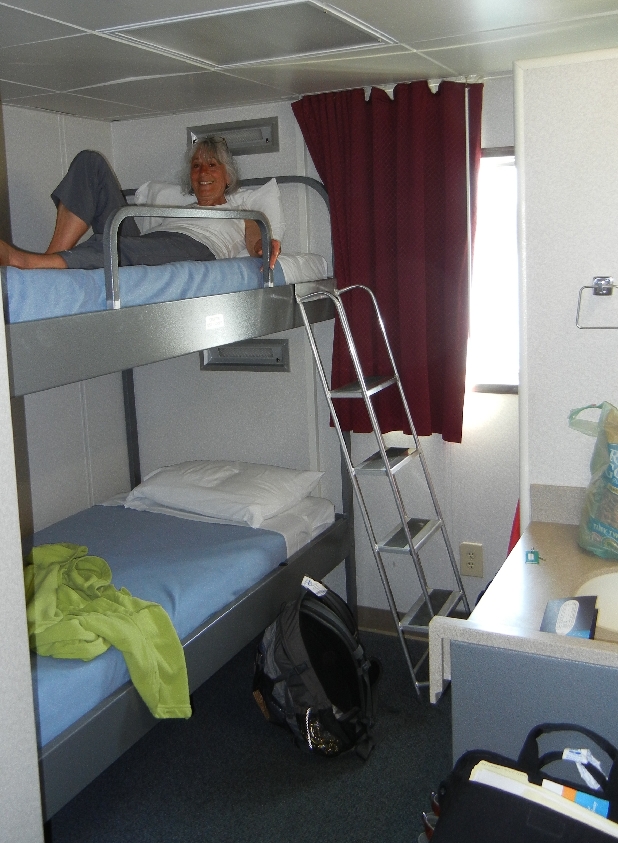
Our room was tiny but functional. When we left the weather was great but 3 hours later when the boat entered open water it changed dramatically. It was “Rockin & Rollin” and several people got sea sick. You had to hold on to railings, poles, walls as you moved around the ship.
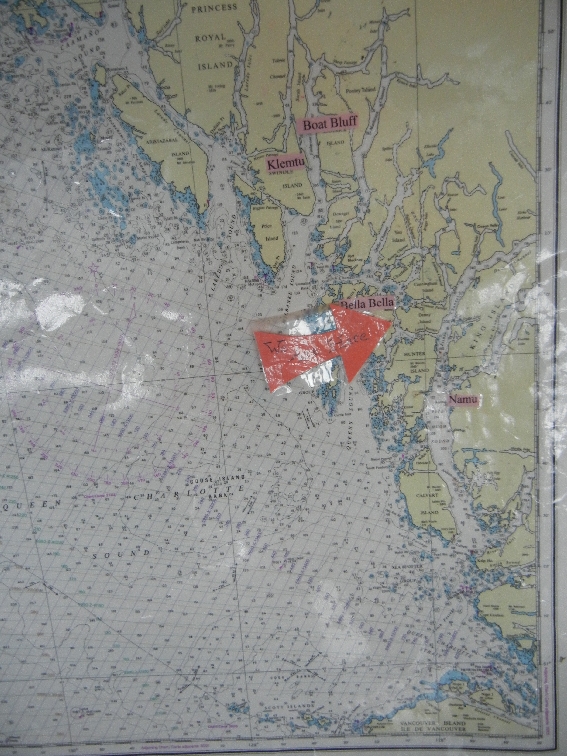
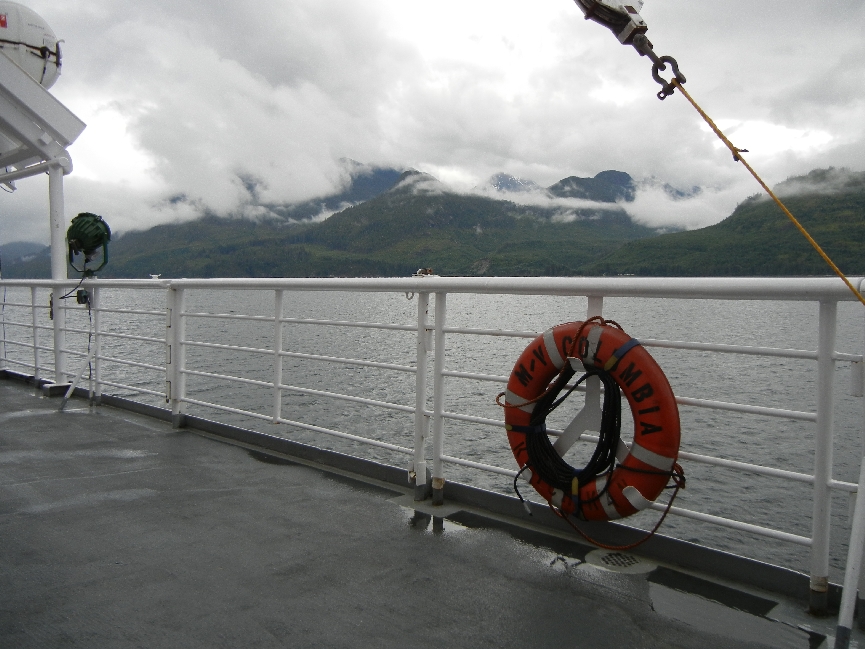

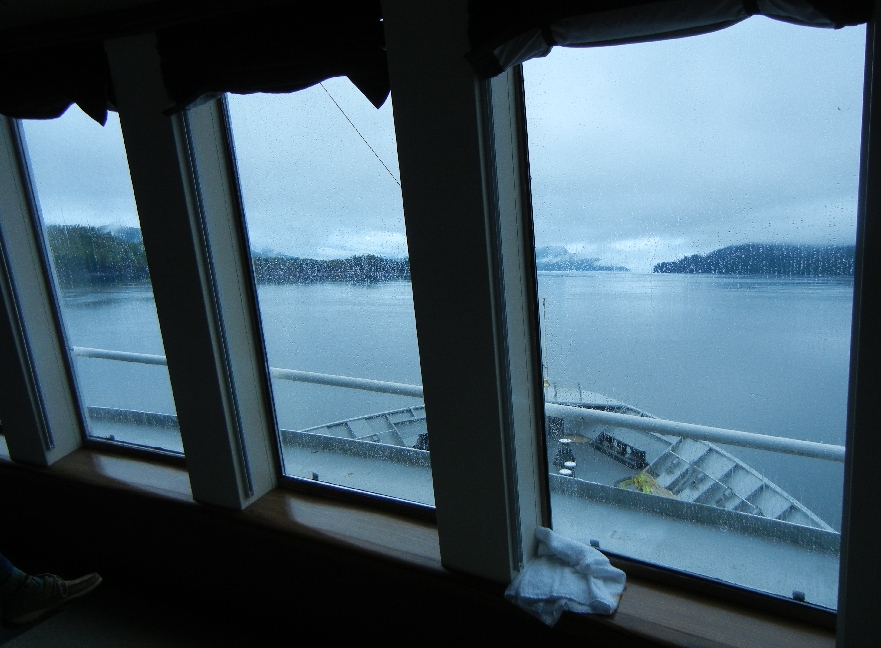
July 14 – The entire day was spent cruising south along the inside passage, couldn’t see much due to fog. Helen worked on her cross stitch and I worked on my computer.
Helen – I met Diane on the ferry. She is a basket weaver from Ketchikan and was working on a small bark basket in the café. She teaches courses and has shown her work in Sitka and Anchorage. She said this small one would sell for about $450. It takes her about 40 hours to weave a basket of this size not counting the time needed to collect and prepare the bark.
Seattle
July 15 – arrived in Bellingham, WA at 8am and took the Airporter bus to Sea-Tac airport. Ron picked us up and we drove into downtown Seattle. Our first stop was the Seattle unit of the Klondike Gold Rush National Historic Park. About five years ago it was moved into the renovated former Cadillac Hotel which was damaged in a 2001 earthquake.
After a lunch of gourmet hamburgers at Maggie Bluffs overlooking the harbor, Ron drove us to viewpoints on Queen Anne Hill and to REI so Helen could return the boots she had purchased in Anchorage, they were hurting her feet. The next stop was Pike Place Market where we bought a Coho salmon filet, some Bing cherries and raspberries for dinner.
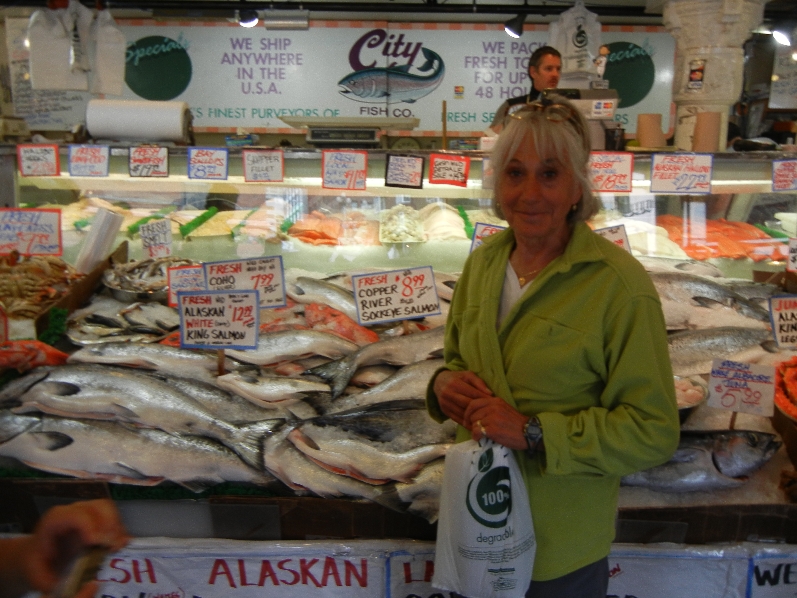
Ron picked up Pat at the Ferry terminal and when they returned to Mercer Island we had dinner and chatted until about 11pm.
July 16 – we spent the day eating, drinking, talking, and playing Farkle. In addition, we did take a walk over the hill into downtown for an iced coffee and for Helen and me to see the apartment (Mercer View) where we lived in 1968 after we were married. Check out the name of a street nearby –
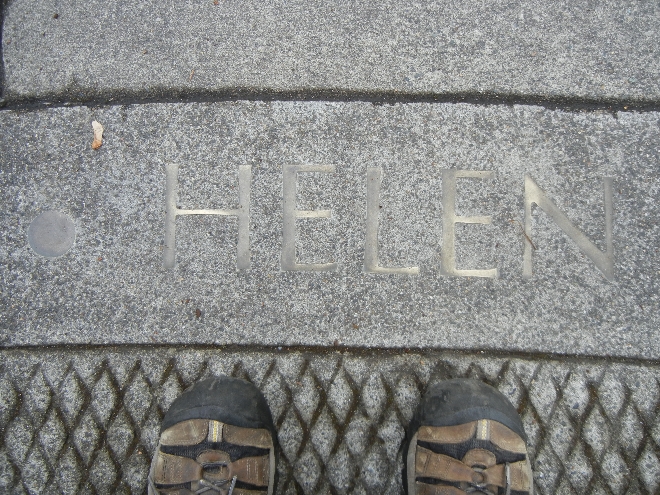
July 17 – Ron drove us to the airport for an 8am flight toPortland. We had another connection in Chicago and arrived in Dayton at 8pm. Pat and Diane picked us up and we were back in Springfield at 9pm. In addition to a four hour time change, we also have to adapt to temperatures in the 80’s and 90’s. Alaska temperatures (except for the last week) were in the 40’s, 50’s and 60’s.
July 18 – Helen – Beard before trimming – when you look at the bearded man below…he’s mine, with his Alaskan beard!!!
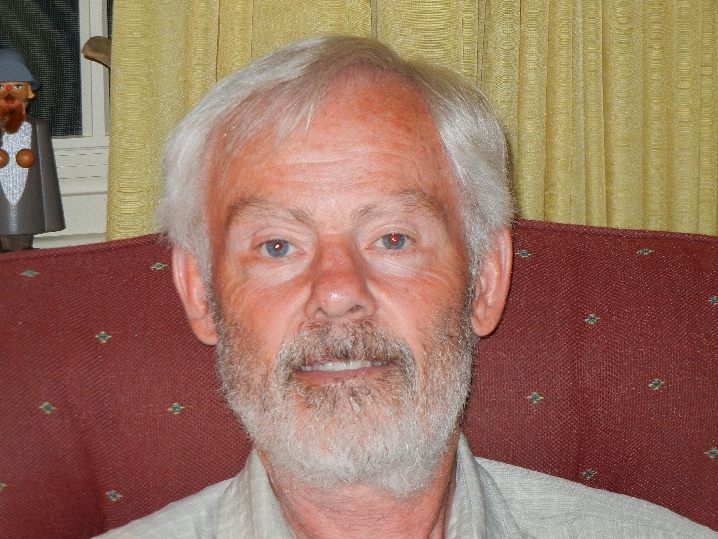
It is kind of bushy since he didn’t do anything to it, except let it grow! I find it quite scratchy, so have been staying away from it. So, last night he decides that he should trim it and keep it so he can have his picture taken with Peter and Chad (both bearded). I wait downstairs after I have taken the above picture, anxious about the end result. When he walks into the TV room, I’m thinking it looks pretty good (still not too anxious to feel it next to my cheek). I ask him to come closer so I can have a better look with the light and it looks a little strange. Using his new beard clippers, he trimmed the beard with # 3 (heavy), then took off that guide and removed all the hair under his chin. He returned to do the mustache without putting a guide on the clipper! Yep, clean as a whistle under his nose. I told him not to do it himself but would he listen…not on your life! So, hopefully by next week, that little patch will grow back and people will be kind and not mention it when they see him. (You think???)
Peter 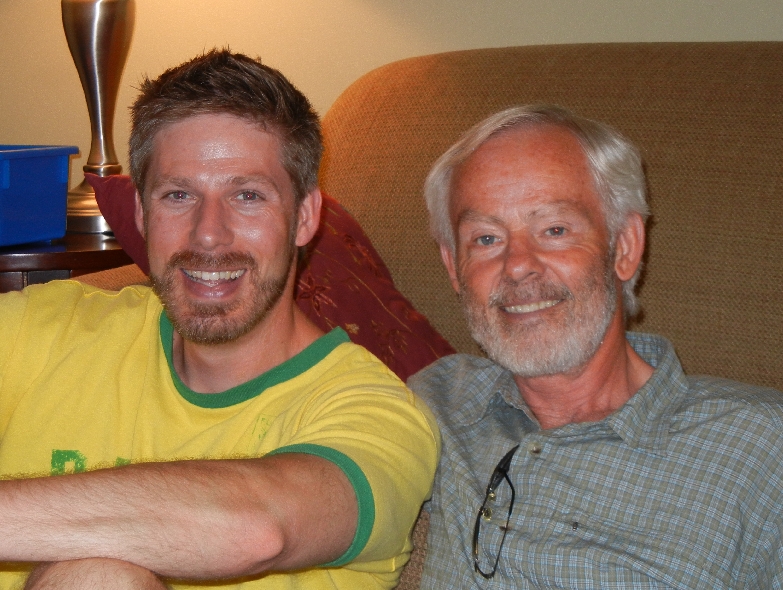
Chad 
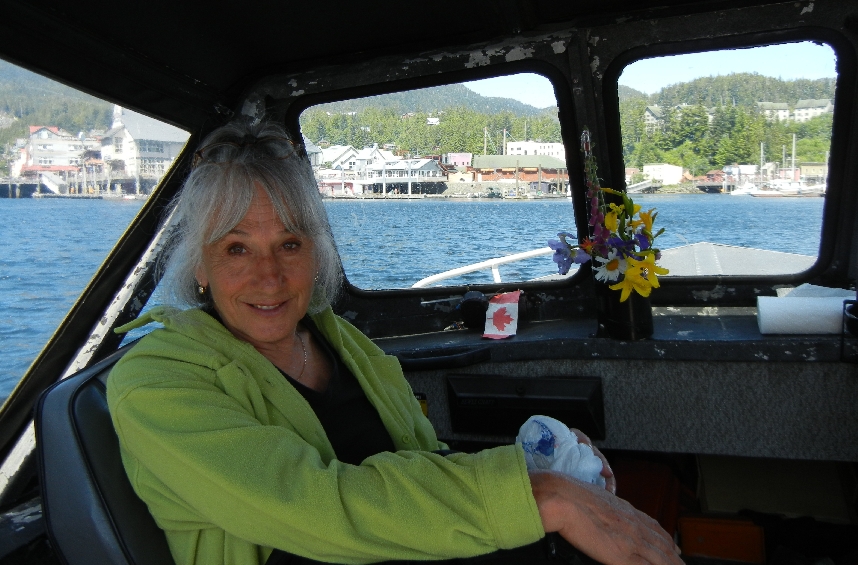
Postscript – Tom – I’m sure you noticed that many of my pictures were made immensely more attractive and interesting by my beautiful Serbian model and companion.































































 The Martin's Blog