Archive for the ‘Tom’ Category

h1

Postscript

May 14, 2008

Tom –

The past five months have provided incredible professional and personal experiences.  We were in Sri Lanka for four months working, touring and immersing ourselves in the culture.   In addition, we have been able to fulfill some lifetime goals, travel to Egypt (e.g. pyramids), India (e.g. Taj Mahal), China (e.g. Great Wall), and fly around the world!

h1

Homeward Bound!

May 13, 2008

Tom – Joe drove us to the Beijing airport dropping us off at Terminal 3.  Unfortunately, our flight left from Terminal 2.  Fortunately, we had time to take the shuttle bus and left on a Continental Boeing 777 at 5pm.  The plane took the polar route flying over Mongolia, Siberia, Arctic Ocean (near the North Pole – I thought I saw Santa Claus!), NE Canada (Hudson Bay, etc.) and into Newark arriving at 5pm the same day!  We crossed the international dateline, so, despite the 12 hour flight, we arrived the same time we left!  


The flight to Dayton arrived at 10pm.  Ann & Ron were there to meet us with the 4Runner so we could haul our 5 suitcases, two backpacks, computer bag and oversized box containing two pictures bought at a flea market in Beijing – home.  Yes HOME – it is good to be back in the US of A!


Helen – I can hardly believe that today has finally arrived and we are homeward bound!!!!  China has been great, gained several pounds from the food (will write about the menus when I get home), have seen wonderful sights, and really enjoyed being with family (Tom’s brother, Joe. and wife, Linda).  Even though we have had a fantastic time abroad, we are ready to come home to family and friends and Springfield!!!

h1

Ming Tombs and Earthquake

May 12, 2008

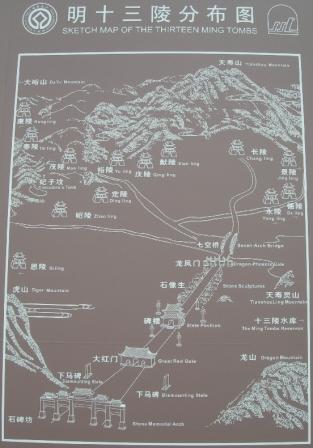
Tom – Today was a cool/cloudy day and it was spent at the Ming Dynasty Tombs an hour NW of Beijing.  It was a huge area (as usual) tucked in below the mountains.  The picture of the map will give you some idea of the size of the Ming Tomb area.    

Thirteen emperors are buried here, each with his own burial mound, wall, gates, towers, pavilions, etc.  Three of the tomb areas are open for visitors.  The turtle is a common feature at the base of columns.

We started at the tomb of Ding Ling. 

It was excavated in the 1050s and you are allowed to descend into the underground vault.  There is also an impressive museum with various burial artifacts. 

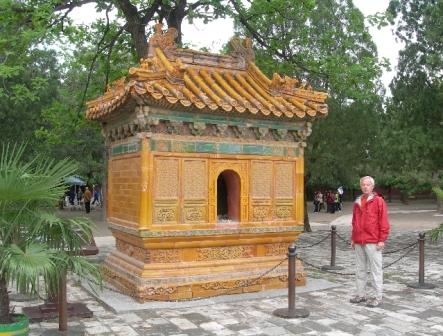
It took ten minutes to drive to the next burial complex, that of Emperor Chang Ling.  This Sacred Silk Burner (small yellow-tiled building) is in the courtyard. 

You enter an impressive yellow-tiled gate and then walk through a series of large halls (each a separate building).  There is a large statue of the emperor seated upon a three-tiered marble terrace in the Hall of Eminent Favors.  The roof is supported by at least 20 huge (3 ft diameter) solid cedar wood columns.


Earthquake:  I was reading a description of one of the golden crowns when the words started moving on me – I thought I might be getting dizzy and couldn’t figure out why.  When driving home Joe got a call from his office saying a 7.9 earthquake had hit in Sichuan Province outside of Chengdu and they had sent everyone home because their 24 story building in downtown Beijing was swaying.  The time of the quake was 2:30pm – when I had trouble reading the sign!  The current estimate (May 22nd) is that 75,000 people were killed.

View of the valley and other Ming Dynasty tombs below Da Yu and Tianshou mountains


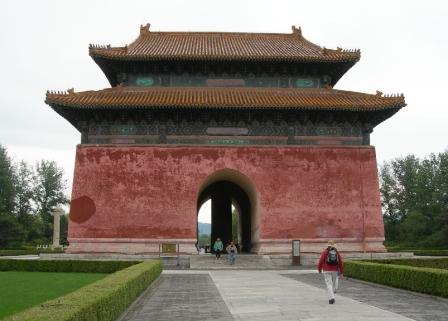
Our taxi driver, who was with us all day, then drove us to the entrance to the entire tomb complex.  It is called the Spirit Way and is about 4 miles long.  He dropped us off at the entry triumphal arch and later picked us up about a mile north.  We walked through the Great Palace Gate (Red Gate) and proceeded up the Sacred Way (God Street) along the route the burial processions would take. 

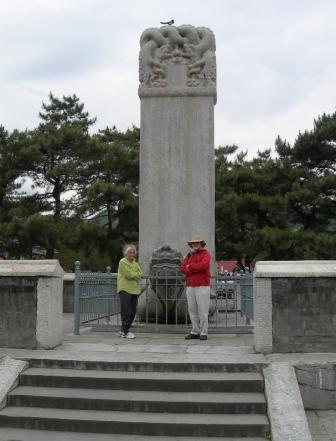
The largest stelae (inscribed tablet) in China is located here inside of a pavilion.  Like many in China, it is supported by a mythical tortoise-dragon-like animal. 

The “Sacred Way” has two large columns with a cloud design on all sides and then is guarded by a series of large stone animals and officials.


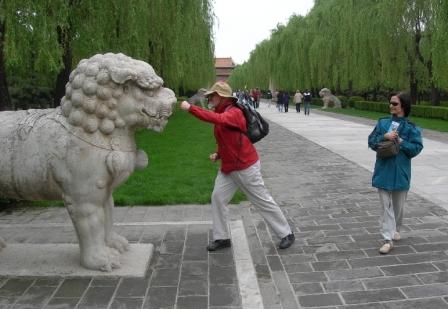
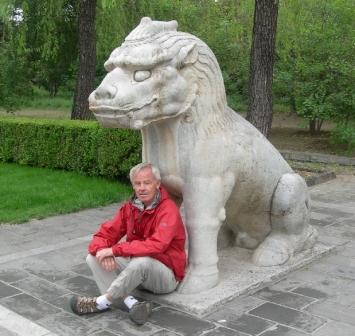
We had fun taking our pictures with some of them.  There were a couple of animals (mythical) you may not be familiar with

I am sitting in front of a Xiezhi

and Helen appears to be rubbing noses with a Qilin. 

These were followed by recognizable statues

After passing through the Longfengmeng Gate (Gate of Dragon and Phoenix) we were picked up and headed back to Beijing. 

h1

Mothers Day

May 11, 2008

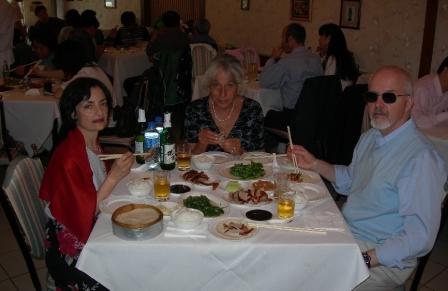
Mothers Day!  Tom – After attending non-denominational services with Joe and Linda, we walked to a restaurant called Beijing Duck for lunch. 

We ordered the national treat – Peking roast duck! 

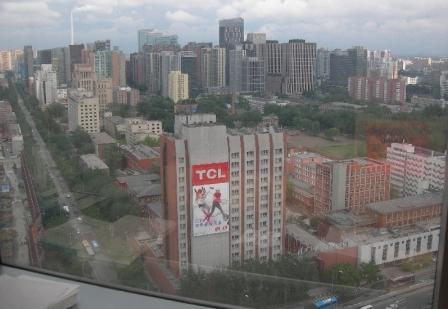
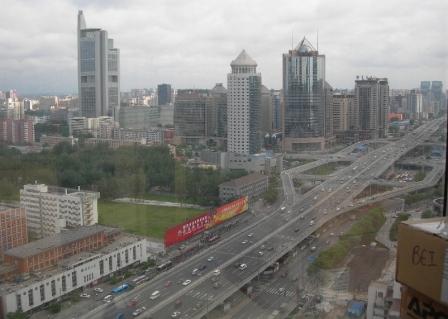
We then went to the Lufthansa Hotel for coffee and dessert.  On the way home we stopped by Joe’s office to pick up his mail and I took some pictures out of his 23rd story windows.

Note the new buildings

and the impressive elevated roads


Helen – I began repacking our things for the trip home this afternoon…yes, it is only a few days away and I have been dreaming of it nightly…waking up in my own bed, sitting  in my kitchen, and finally being able to cook up a storm…

h1

Forbidden City

May 9, 2008

Tom – We took the 7:15 shuttle from River Garden Villa to the US Embassy and then hopped a subway to the Forbidden City.  It was crowded today and on the platform there were several official subway pushers to cram as many people on the trains as possible.  We felt like sardines! 


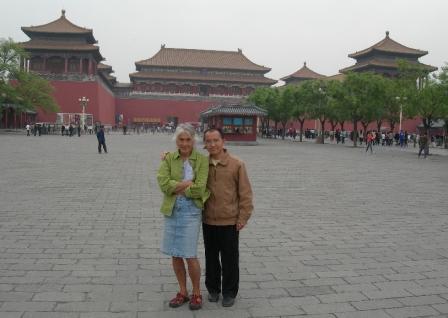
Just inside the Meridian (south) Gate of the Forbidden City (also known as the Imperial Palace) we hired a young man named Wong to serve as our guide. Helen and Wong are standing in front of the Gate of Supreme Harmony.

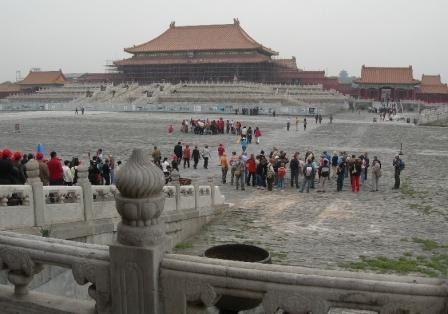
The Forbidden City was the ritual center of the last two dynasties, the Ming (1368-1644) and the Qing (1644-1911).  The size of the complex is mind boggling (1,000,000 square meters)! 

Imperial Throne

We spent two hours and just covered the structures along the north-south axis of the city. 

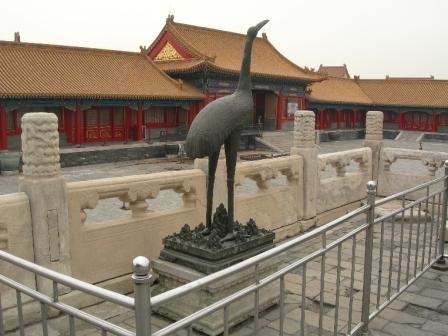
Impressive bronzes

Each symbolic

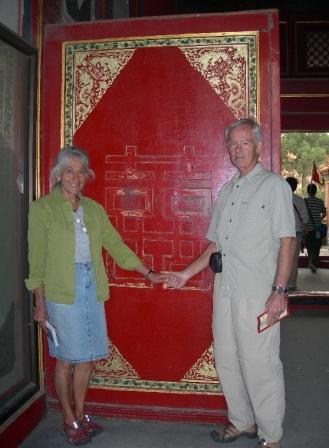
Our guide insisted that he take our picture in front of a symbol for the “Happy Family.” 

I also took a picture of a Chinese couple in a favorite spot of the Imperial Garden in front of the North Gate.


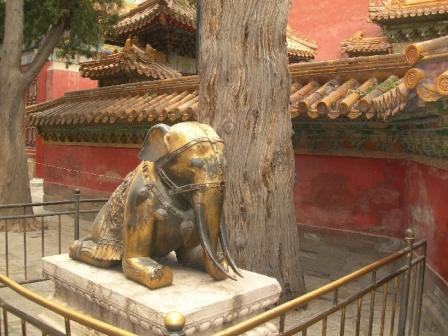
“Cool” elephant

After our tour we walked through the Hutongs on the east side of the Forbidden City and ate a lunch of beef and noodles and a delicious circular fry bed stuffed with greens for $2 at a local restaurant.  Before getting on the subway some students corralled us into seeing their art school exhibit, which was interesting until they hit us up to purchase something!  We continued to the Silk Market and bought three Peak light weight stretch jackets for the boys (Peter, Chad and Brad).


Because of all of the construction and closed streets, it took us an hour to walk back to the US Embassy to catch the last shuttle to Joe’s house.  When we finally got there two men from the political office were leaving and, as luck would have it, were driving back to River Garden Villa and volunteered to give us a ride.  Joe and Linda were waiting for us having just returned from the Philippines.             

h1

Olympic Warm-Up

May 8, 2008

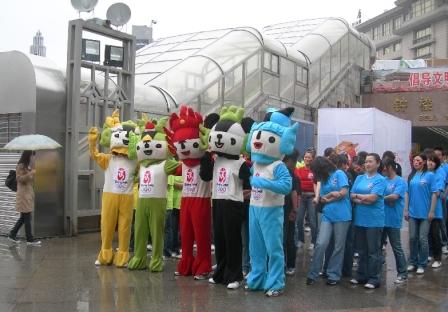
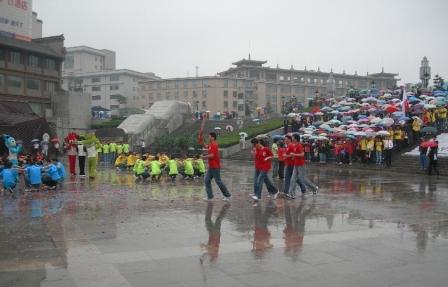
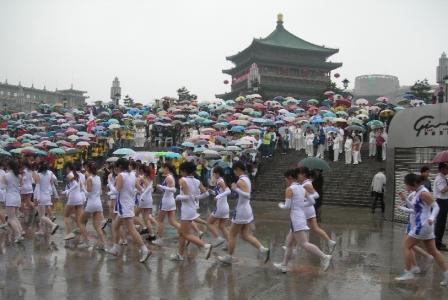
Tom –  As usual, we ate our breakfast at the hotel buffet and then again tried to go to the bazaar.  It was raining but in the square across from the Bell Tower there was a pre-Olympic rally taking place.  It began by introducing the “Five Friendlies” –  Beibei, Jingjing, Huanhuan, Yingying and Nini – the Olympic Mascots.

It was exactly three months before the opening of the games in Beijing.  The “Friendlies” were followed by an honor guard, dancers, the Olympic Torch,

children performing,

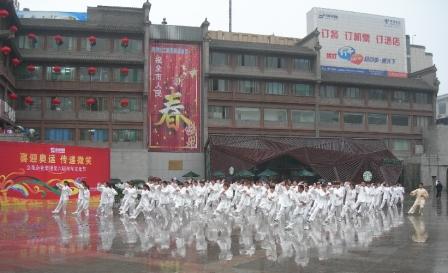
martial arts performers,

Chinese “cheer leaders”

recognition of local athletes and of course political speeches.

Summer, our guide, picked us up at 9:30 for a tour of the Shaanxi (Province) History Museum.  As mentioned earlier, Xian was the capital of many early Chinese Dynasties and these were covered in some detail. 

Afterward we were taken for lunch to a nice buffet restaurant; however, our schedule stated that we would be eating lunch in a private room of a farmer’s house.  We were then driven an hour outside the city to the home and studio of a family of Chinese folk artists. 

Another sales pitch followed and we were upset that our last half day was wasted in this way.  This trip was expensive!  After expressing our displeasure to our guide, we were driven to the airport early (3 hours) to wait for our flight back to Beijing.      


h1

Climb a Sacred Mountain

May 7, 2008

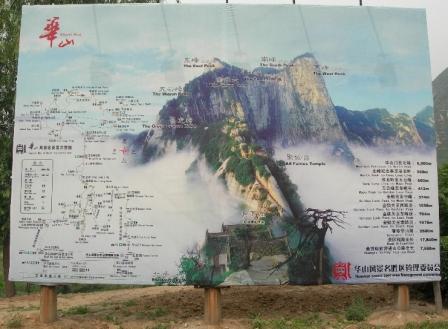
Tom – This was my most enjoyable day in China.  We were picked up at 7am for the two hour drive to Huashan, one of China’s/Taoism’s five sacred mountains.  Its five ridges are supposed to look like a lotus blossom in full bloom. 
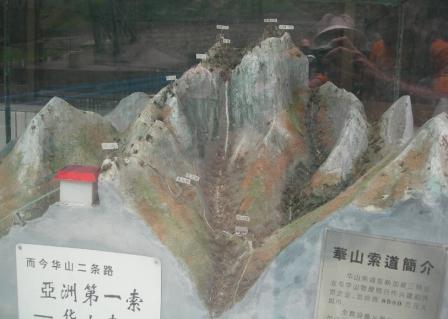
It is said to have 210 natural and human cultural sights. 

We only had five hours to spend on the mountain so decided to take a cable car to the saddle below North Peak (about 4800 ft elevation). 
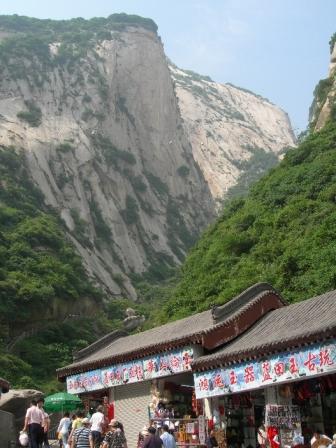
The sky was clear and the sun bright as we began. 
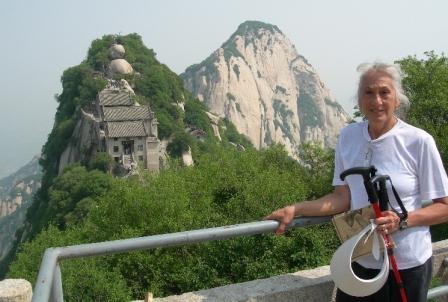
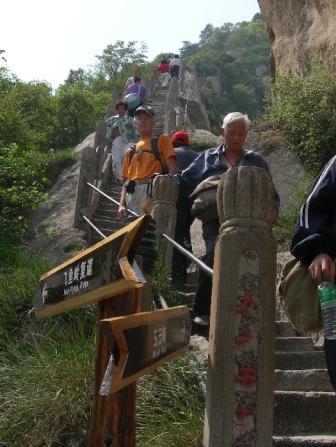
As soon as we got out of the cable car we started to ascend steps cut in the granite moving toward Gold Lock Pass (see photos of gold locks and ribbons) also called Jinsuo Pass. 

We passed by Dulong Temple, Sun and Moon Cliff and Wuyun Peak. 
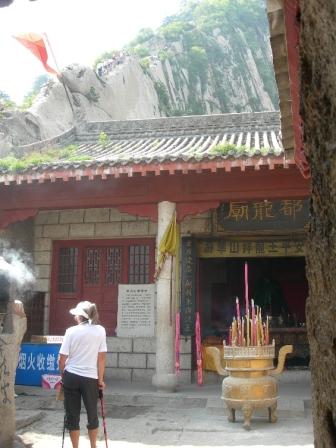
There are temples, restaurants, small/basic hotels and even a monastery on the mountain;
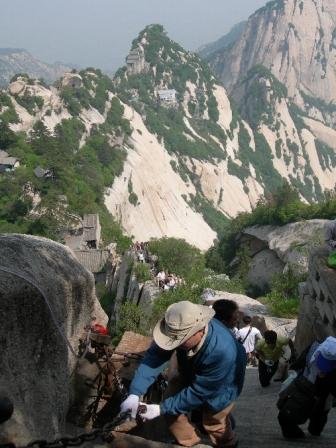
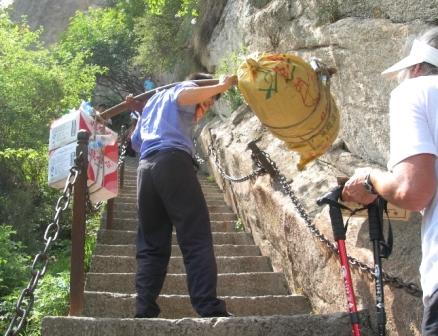
everything has to be carried up to these sites and trash removed. 
Golden Lock or Jinsuo Pass
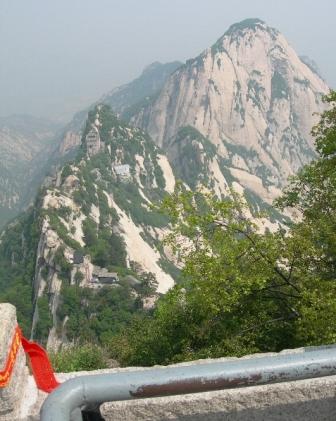
Several Chinese asked to have their pictures taken with us on the mountain.  I believe the man on the left was a former Chinese Olympic medalist.  I guess they don’t see too many westerners here.
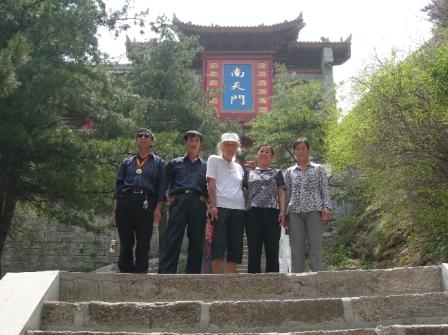
 

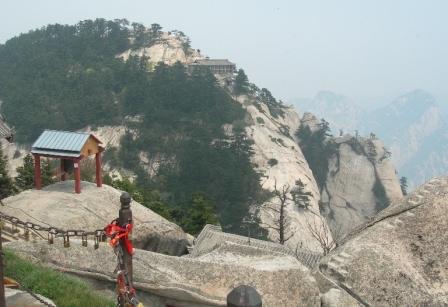
Our next goal was South Peak.  When we reached the summit ridge we came upon a temple and monastery that I have not been able to identify on my Chinese map but you will see pictures in this posting.  I incurred the wrath of a monk for taking a picture inside the Taoist Temple. 
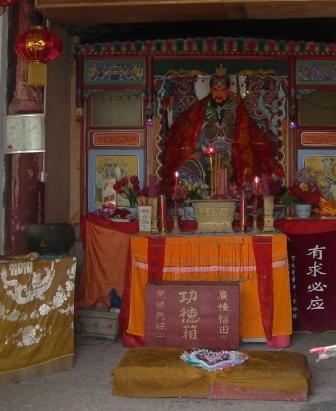
Part of the “Plank Trail” – notice the “golden locks”

Don’t look down!

DSCN2770

It was a surrealist scene as we soaked in the scenery with the monks chanting in the background. 

Temple Bell

The next stop was the South Peak of Mt Hua (about 7100 feet), the highpoint of the mountain.
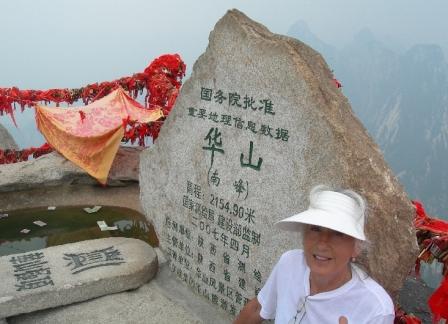


After leaving South Peak we had to hike down several hundred feet before going back up the ridge to West Peak (6700 ft elevation). 
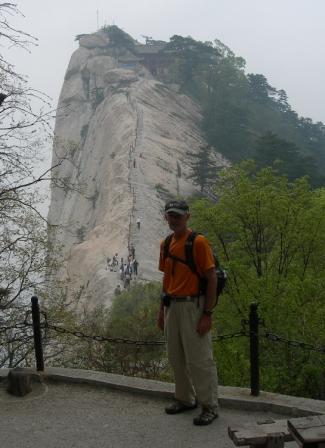
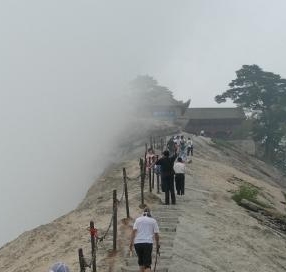
The clouds were now starting to roll over the ridge. 
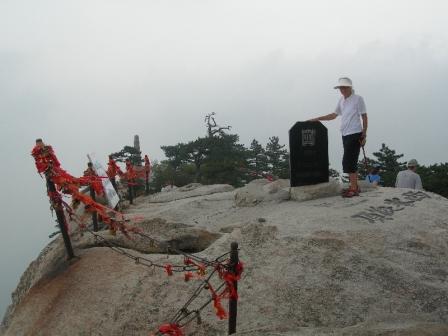
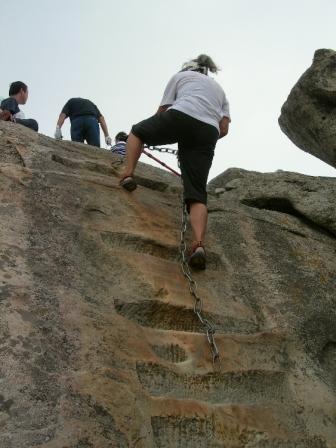
Helen pulling herself up the chain to the top. 
Helen on top

This picture includes a monk (trying to avoid my camera), dressed in black, with black hat, black backpack, black slippers but also using a metal hiking stick!


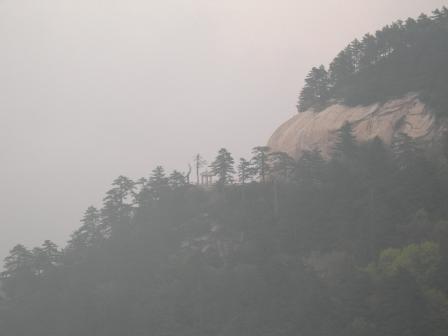
At around noon the clouds began to slowly descend creating a magical scene. 

We had to hustle to get back down in our allotted five hours
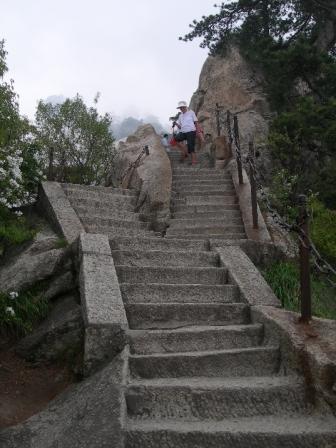
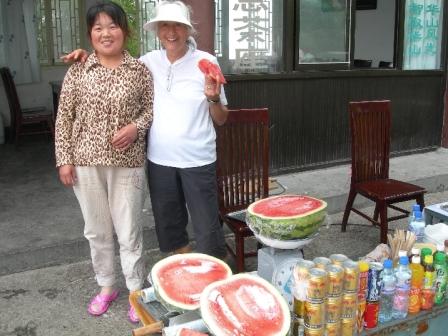
but did have enough time for Helen to stop for a piece of watermelon. 

At first I thought it was expensive but then considered the task of carrying it up the mountain! 

Descending the cable cars
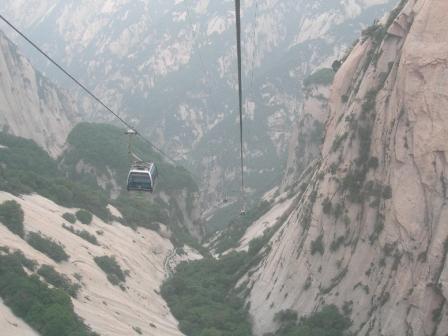
The “Soldier’s Trail” going up/down the mountain
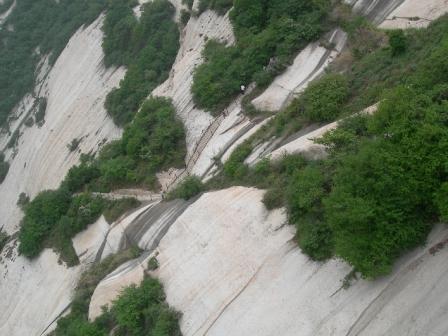
After getting off the cable car we took the minibus down the mountain and got off at the first stop.  Wrong, we were supposed to get off at the second stop (there was NO stop when we went up the mountain).  Anyway, we made contact with the guide who had waited with the driver and then took another bus to the second stop in Huashan were we had a reservation for lunch.  It was now 3:30 and we were the only diners in the restaurant.  We ordered Chinese (ha ha).


We arrived back in Xian at 6pm.  After getting cleaned up, Helen talked me into going to the multi-story mall across the street from the hotel (it was raining so we couldn’t go back to the bazaar). 
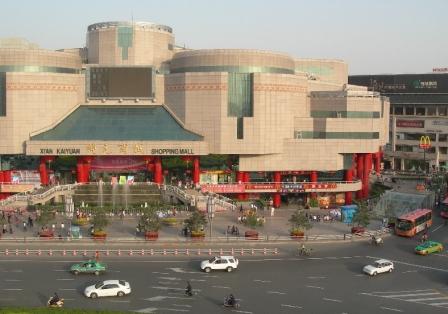
The prices were unbelievable – jeans $150, polo shirt $100, etc., etc.  These were “real” brand names, no bargaining here!  I couldn’t believe it when Helen suggested we leave after about 20 minutes! 


h1

Army of Terracotta Warriors

May 6, 2008

Tom – We were picked up at 8:30 and taken to a factory where they make terracotta products and shown the production process. 

This was accomplished quickly and we were then lead into a huge showroom with crafts from around China.  Of course we were expected to buy something – we didn’t bite and asked our guide to continue to the burial mound and tomb of Qin Shi Huang the man that united China and became the first Emperor in 221 BC.  This is the location of the famous Army of Terracotta Warriors.

There are three pits that have been excavated so far unearthing the remains of over 7000 life size terracotta figures.  Pit 1 is the largest and is covered by an airplane hanger sized building.  The soldiers, archers, horses, chariots, etc. are in battle formation and no two are alike!


Pit 2 (building 2) contains over 1300 figures and they have placed five in glass containers for close-up viewing – a kneeling archer, standing archer, officer, general and cavalryman with his horse. 

Appears to be something amiss here

The famous “Kneeling Archer”

Pit 3 (building 3) contains 72 figures and is believed to be the headquarters due to the high-ranking officers discovered there. 

There is also a small museum near the entrance where they have an extraordinary pair of half sized bronze chariots.

Chariot 2


We had lunch on site (did not try the “Three Snake Wine”)

and then asked to be taken to the Forest of Stelae Museum (our extra cost!).  It was not on our agenda, however, we told the guide that we did not want to go on the scheduled herb market tour and endure another sales pitch.  The museum (indoor and outdoor) has over 1000 stone stelae (inscribed tablets), maps and paintings. 

The tablets have been brought here from throughout China and have inscribed on them the historical events (battles, public records, architectural designs, Confucian classics, etc.) of the period. 

The Nestorian tablet (781) contains the earliest record of Christianity in China.

 Stelae Garden


In the late afternoon we asked to be dropped off at the City Wall to do our own bike tour. 

The walls were originally built during the Ming Dynasty (1370) and are about 55 feet thick at the base and 36 feet high. 

We rented bikes and covered the 9 mile rectangular route on top of the walls in an hour and a half. 

The first side of the rectangular

Corner

A center entrance

Carry Me

Another corner

Final leg – notice the kites

Afterwards we went to the De Fa Chang restaurant for their famous dumplings

Delicious

Shared a Chinese beer with our dumplings

We then took a city bus to the Big Wild Goose Pagoda for the light and music show.  Note the picture of Helen standing among the fountains.

It was a good day!            

h1

First Day Xian

May 5, 2008

Tom – We were picked up at 7am by a fellow who looked like Odd Job from a James Bond movie. 

He drove us to the airport for our two hour flight to Xian on Air China. 


We were met at the airport by our guide Summer who directed us to our car and driver and we were off for our first tour to the tomb of emperor Jingdi.  Jingdi was a Han dynasty emperor who ruled from 188-141 BC.  The burial mound, museum, exhibits, excavated pits, etc. were excellent. 

Museum display

The terracotta figurines (over 50,000) buried here are about half size (the famous Army of Terracotta Warriors are full size) and had moveable wooden arms and silk robes which are now disintegrated. 


In addition to the soldiers, they included eunuchs, servants, domesticated animals and even female cavalry on horseback. 

We paid to see an interesting holographic show depicting some of the history but unfortunately the English audio headphone system did not work.


The next stop was the Big Wild Goose (Dayan) Pagoda of Da Ci’en Temple.  It is located in the SE section of Xian, formerly Chang’an which was the capital for many early dynasties in China and the eastern end of the Silk Road. 

It was built in 652 to hold the Buddhist sutras brought back from India by Xuan Zang.  His travels inspired one of the most well known works of Chinese literature – “Journey to the West.”  The Pagoda is surrounded by the Da Ci’en Temple and there is also a Tang Dynasty Arts Museum where they stamp your ticket with your animal sign from the Chinese Zodiac; Helen’s is a rooster and mine is a goat!  This is an element of Chinese Fengshui which is supposed to determine your personality, destiny, marriage, career and lucky time!


The guide then took us to a Tea Tasting associated with another huge showroom of Chinese crafts.  The Tea Tasting was interesting but we were out of there quickly when the sales pitches started – not how we want to be spending our time!


On the way to the Bell Tower Hotel we stopped at and climbed up to the top of the City Wall. 

City view from wall to Bell Tower

After hotel check-in we visited the Bell Tower. 

From top of Bell Tower

Another view

There is also a Drum Tower.  They date from the 14th century – the large Bell was rung at dawn and the Drums would signal nightfall.  Helen was amazed at the number of flowers in the city and that they were in pots (not planted) so they could be easily replaced if any died.  We did a quick trip through the bazaar and visited the Great Mosque before having to run back and change for the Tang Dynasty dinner show. 

Orchestra

The food, service and performance were outstanding!


h1

Summer Palace

May 4, 2008

Tom – Pat left early today for Denver and then Linda and Joe left for the Philippines where Joe has a conference in Manila.  Helen and I took a taxi to the Summer Palace and spent the entire day there.  It is the biggest park in Beijing – and that’s saying something!  It should have been a half hour drive, however our taxi driver didn’t know where he was going.  After an hour and a half we were near the Palace and stopped in traffic.  So, Helen and I got out of the taxi, gave the driver one third of what was on the meter, and walked the rest of the way.


We entered through the East Palace Gate, examined the Hall of Benevolence and Longevity, the Hall of Jade Ripples, the Wenchang Tower and then went to the Garden of Virtue and Harmony to watch a performance on the Great Stage.  I love these names! 
Male performers

Female performers

We proceeded north on the east side of the park – Hall of Nourishing Pleasures, Hall of Celebrating Virtues, Purple Cloud Gate Tower, Hall of Utmost Blessing, Hall of Increasing Longevity, Hall of Magnanimity, Hall of Celebrating Spring, to the Garden of Harmonious Interests.  These are all separate buildings and compromise a fraction of the halls, towers, palaces, pavilions, gardens, gates, and bridges in the park.  From this point I will only give a short comment on each picture.  Here is one example of the of the fabulous art forms

 Garden of Harmonious Interests


We shared a noodle dish and beer for lunch on Suzhou Street near the North Gate, then crossed a bridge

and proceeded up the north side of Longevity Hill to the Four Great Regions complex.

  Roof ornamentation

DSCN2629

 The Tower of Dawn Light,

 The Glazed Tile Pagoda of Many Treasures

DSCN2633


We reached the Temple Realm of Multitudinous Fragrance at the top of the hill and then came down the opposite side of the hill and hiked back up the south side of the hill through the Second Palace Gate, Hall of Dispelling Clouds,

up one of the painted stairways

to the Temple of Revolving Archives.

This is the original statue from the center roof of the Temple of Revolving Archives

We then proceeded to the Tower of the Fragrance of the Buddha which is the most prominent structure on the hill.  This is a picture looking south across Kunming Lake to South Lake Island (with some of the Beijing skyline in the background) taken from this point.

Returning to the lake, we walked through the Long Corridor – they are not kidding!  It is just under a half mile long and has 14,000 pictures painted on the ceiling.  It is the longest painted gallery in the world.  We liked the Pavilion of Autumn Water, the Pavilion of the Mountain Scene and Water Brilliance, the Pavilion of Clear and Carefree and the Hall for Listening to Orioles on our way to the Marble Boat.  It was built in 1755, is over 100 feet long, and was supposed to imply that the Qing Dynasty was solid as a rock and would never fall (it did in 1911 – the movie “The Last Emperor”).


We took a Dragon Boat across part of the lake to South Lake Island

DSCN2649

Here is a picture of the Tower of the Fragrance of the Buddha with the Realm of Multitudinous Fragrance at the top of the hill taken from our dragon boat.

On the South Lake Island we saw the Hall of Embracing the Universe, the Dragon King’s Temple and then walked across the Seventeen Arch Bridge to the Spacious Pavilion and the Bronze Ox –

DSCN2654.1

Whew – a long day!!!

The “Friendlies” advertising this summer’s Beijing Olympics