Archive for the ‘Tom’ Category

h1

Dayton Aviation Heritage

July 14, 2013

7/14 – Sunday was always family day.  Even though we no longer have children at home we thought – “Why not have a Family Day!”

DSCN1590

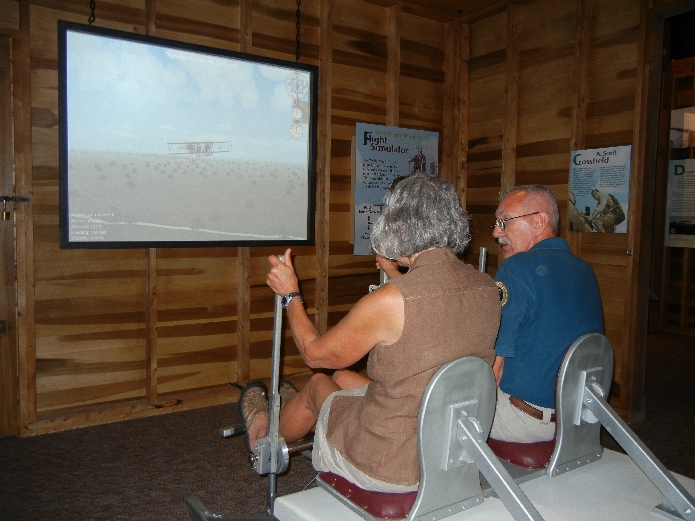
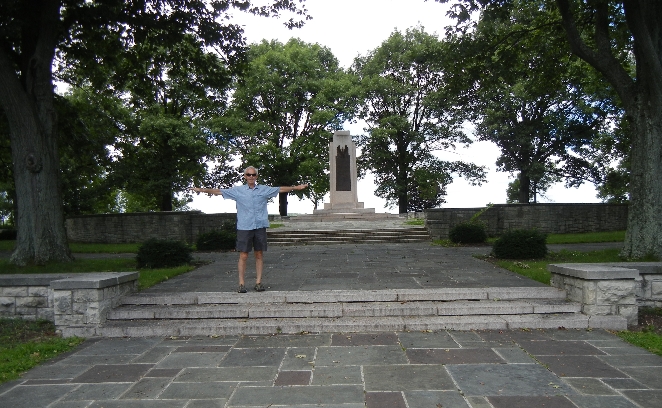
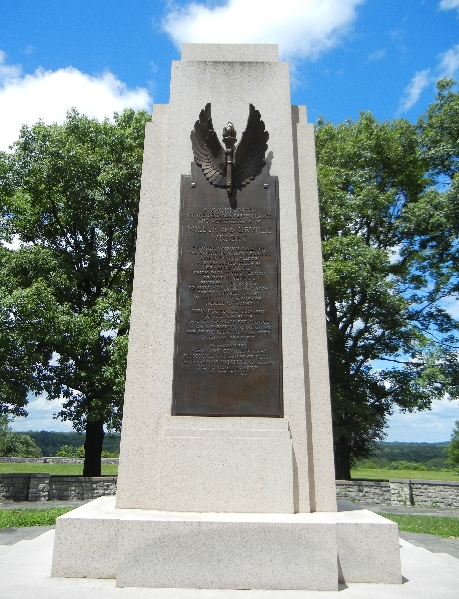
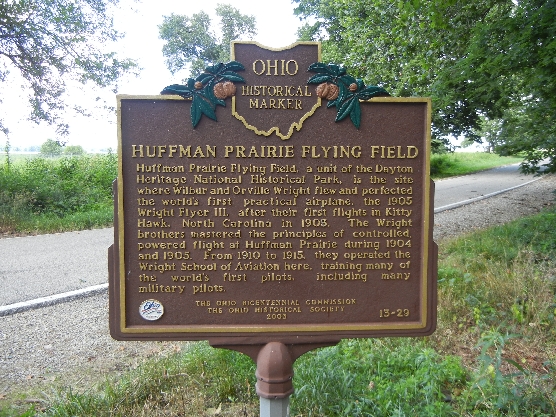
Our first stop was Huffman Prairie Flying Field Interpretive Center and the Wright Brothers Memorial at Wright Patterson Air Force Base (WPAFB).  It is part of the Dayton Aviation Heritage National Historical Park.  We watched an award winning video about the Wright brother’s plane designs and trials, toured the museum, and after a little instruction, got to try and fly a 1905 Wright Flyer III.

DSCN1587

You were given three attempts to keep the plane (video simulation) in the air for three minutes without crashing.  It was harder than it looks but we both earned our certificates!

DSCN1591

I have always loved airplanes and am considering donating my 1950’s airplane card collection to the National Museum of the U.S. Air Force.

DSCN1592

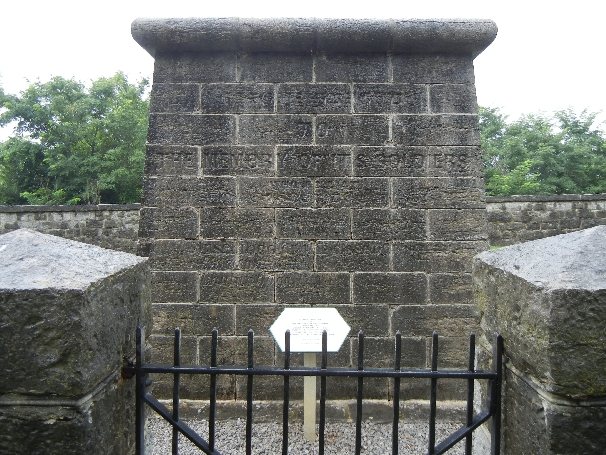
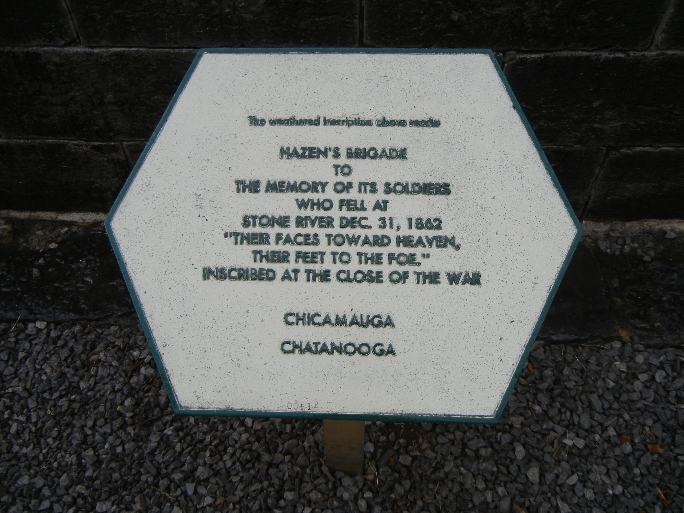
Wright Memorial erected by Daytonians in 1940
DSCN1593

DSCN1594

DSCN1595

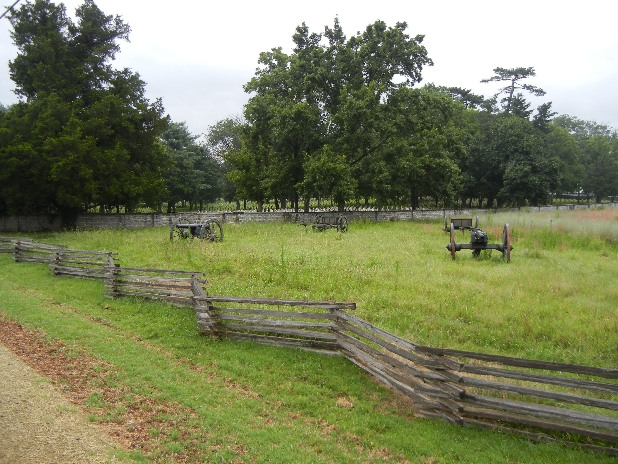
The world’s first airport, replica of 1905 hangar and launching catapult at Huffman Prairie Flying Field


h1

Cali Colombia

July 1, 2013

6/13 – We arrived home from the Virgin Islands at 11pm on 6/11 and had to be at the Dayton airport at 8am for our flight to Newark and then Bogota Colombia.  Sooo, we had 33 hours for sleeping (2 nights), laundry, paying bills, doing yard work, etc. before leaving.  There was nasty weather all day and both of our flights were delayed.  We finally arrived in Bogota at 1:30am on 6/14 and had to make our way from the airport to the Marriott.  We hooked up with another American, took a taxi and got there at 2am.  We and our bags had to be scanned and sniffed (dog) before entering the hotel.  That was standard procedure wherever we traveled.   Slept 3 hours and left for the airport at 6:30am for our flight to Cali.

6/14 – Our Avianca flight arrived in Cali at 9am.  Manuel and Silvana were there to meet us at the airport and drive us into Cali.  Manuel is from the Canary Islands.  His sister Carmen lived with us during the summer of 1987 and he came to the U.S. in 1992 and did an extensive tour with us to the Southwestern US.   We were in the Canary Islands in 2003 and he visited us again for Thanksgiving in 2008.  We told him way back when, that when he got married, we would be there!

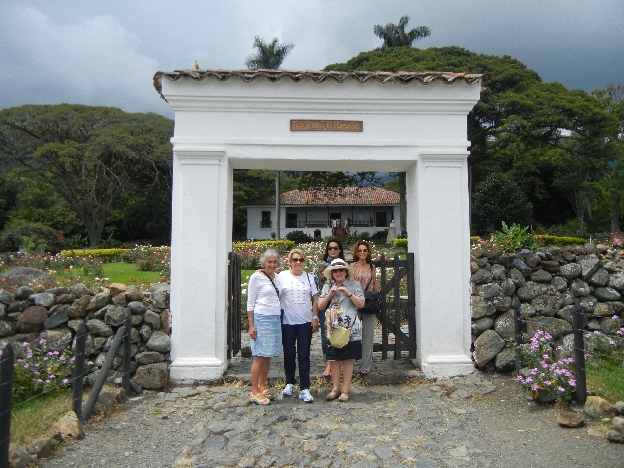
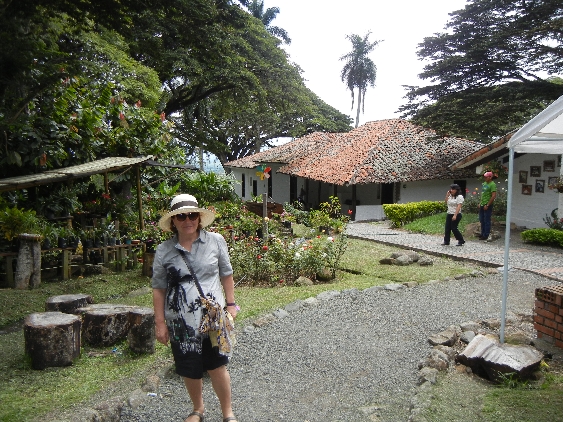
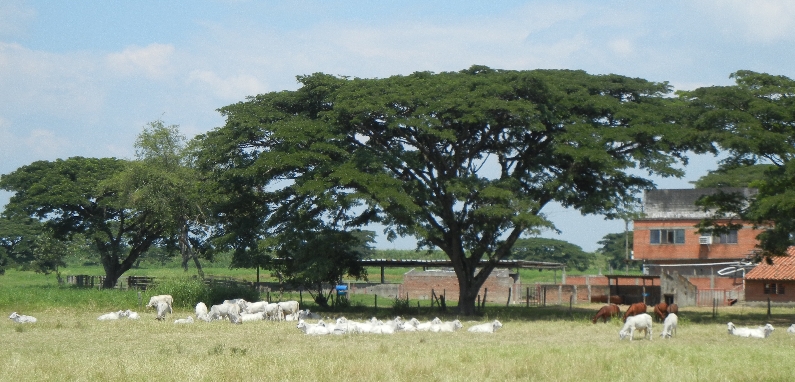
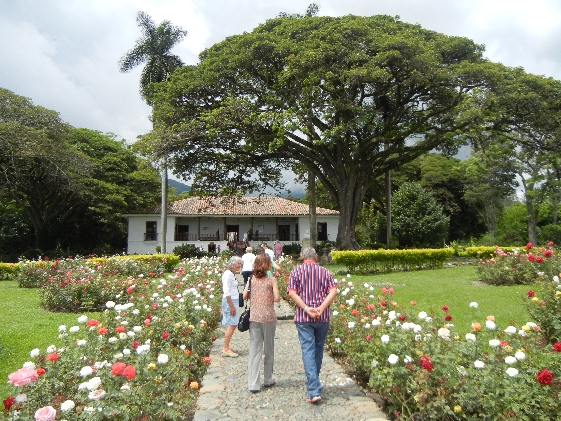
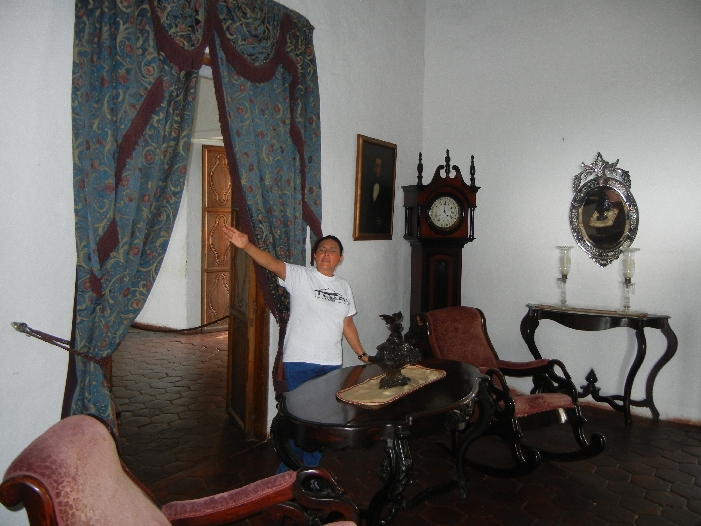
We checked into the Dann Carlton Hotel and immediately left for a pre-arranged tour of Hacienda El Paraiso about an hour outside of Cali.  This is a historical/fictitious location that is used for a Colombian TV series.

DSCN1437

DSCN1438

DSCN1444

The tour was in Spanish and we were told a bit boring but the Hacienda and countryside were beautiful.

DSCN1456

DSCN1464

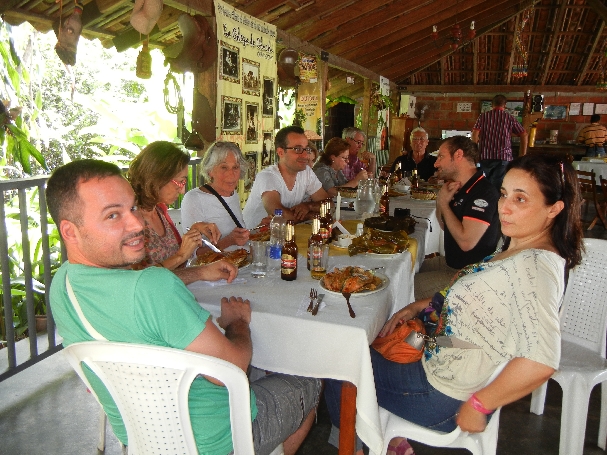
Afterward we had lunch at a local restaurant.  Helen had fresh trout.  I had a chicken tamale and we both shared – delicious!

DSCN1465

6/15 – We found an English speaking taxi driver (Jorge) and took a tour of Cali in the morning

DSCN1473

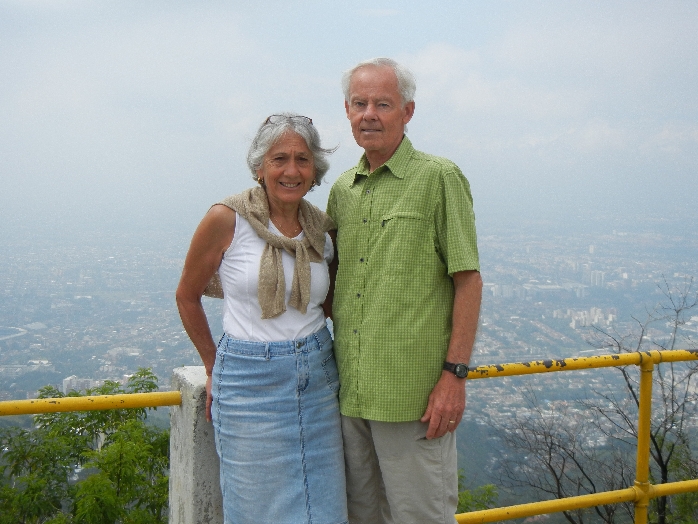
Cali from Cerro de los Cristales (The Hill of Crystals) –

DSCN1475

There is a large statue of Christ on top.  We could see it from our hotel.

DSCN1476

Carmen accompanied us on a taxi tour of Cali

DSCN1480

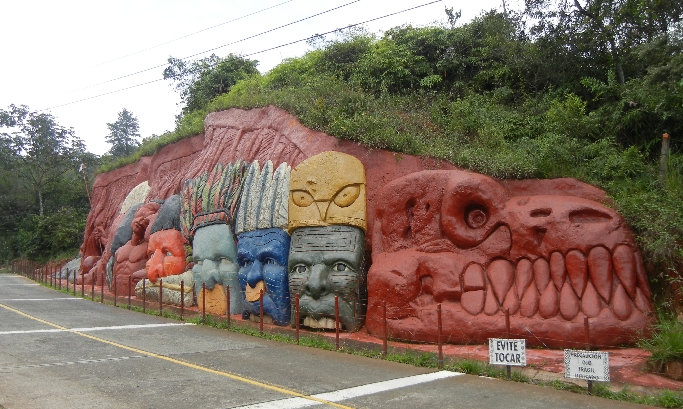
Sculpture depicting the history of Colombia

DSCN1484

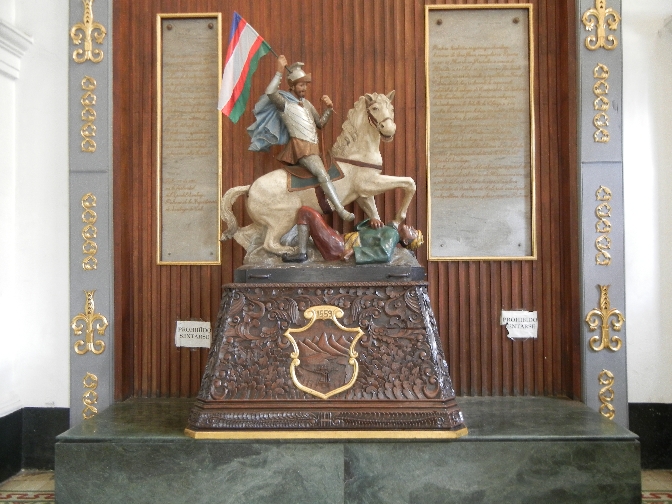
Spanish explorer overlooking Cali

DSCN1486

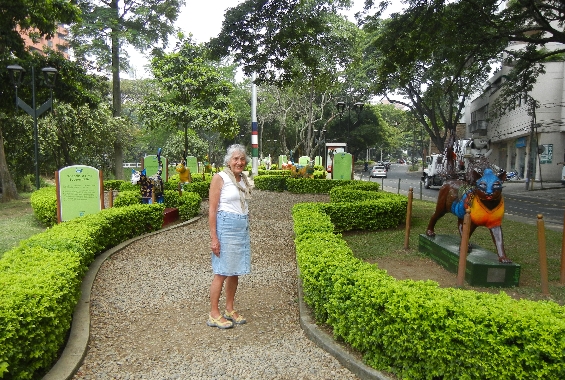
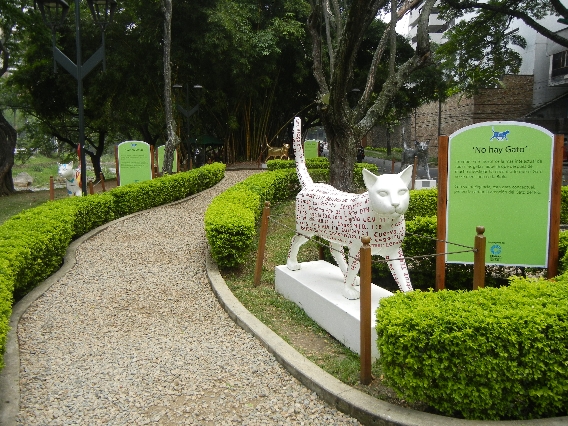
Chicago has cows, Cincinnati has pigs and Cali has cats!

DSCN1487

DSCN1488

DSCN1495

Metropolitan Cathedral (1841)

DSCN1493

DSCN1494

DSCN1496

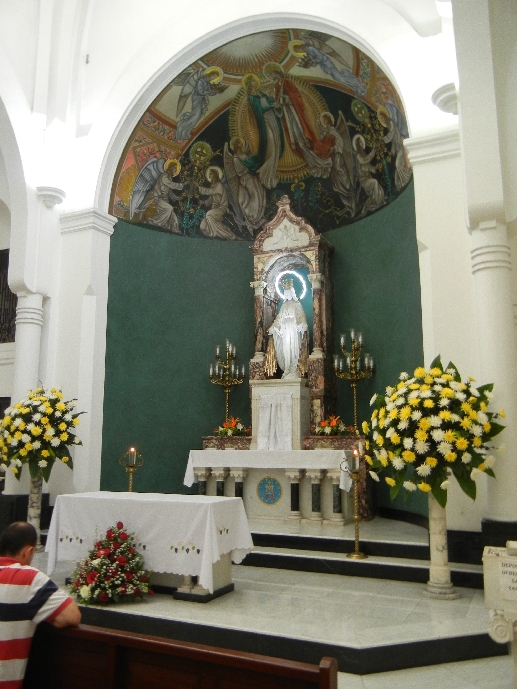
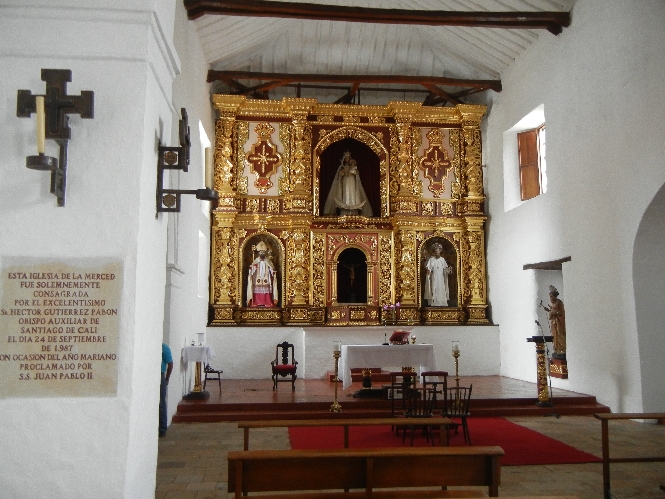
Iglesia de la Merced (The Church of Grace), Cali’s oldest church, 1680.  It is on the site where Cali’s founders celebrated their first religious service in 1536.

DSCN1497

It is common for statues in churches to be dressed

DSCN1502

Leaving the hotel for wedding

DSCN1518

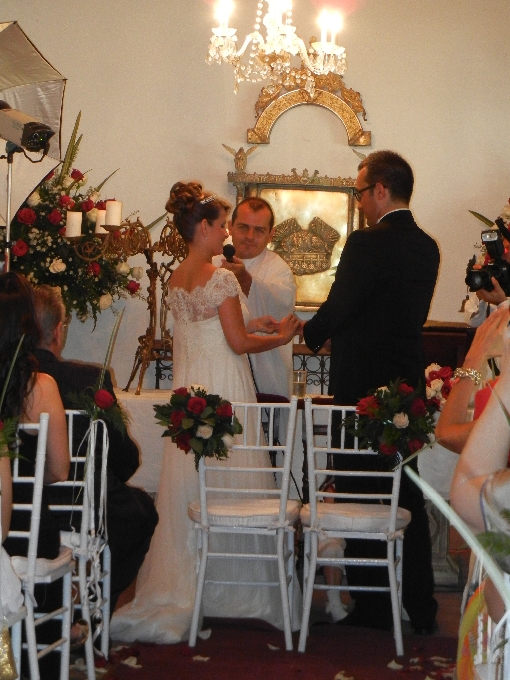
Wedding chapel at Hacienda Las Manaitas

DSCN1517

The ring

DSCN1523

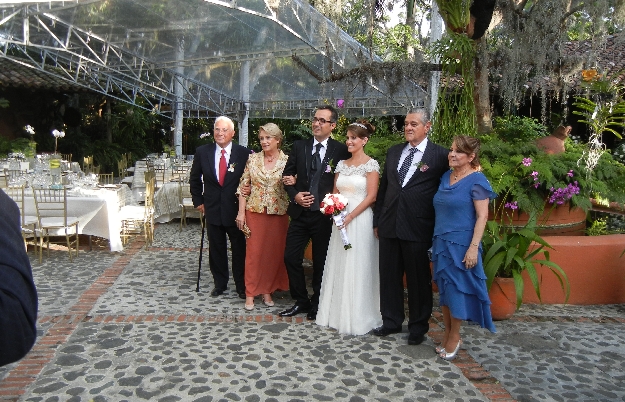
Manuel, Silvana and parents

DSCN1512

Carmen

DSCN1528

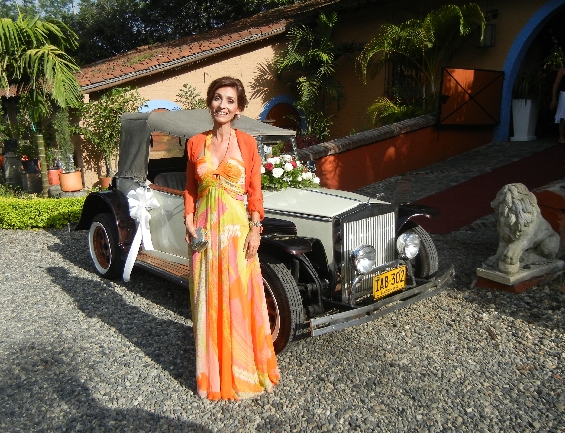
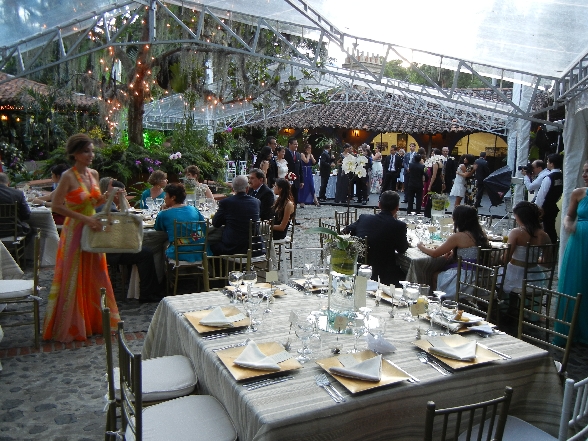
Elegant setting

DSCN1524

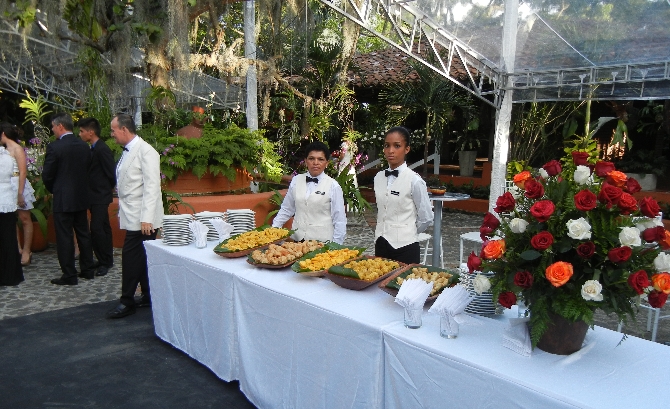
Appetizers, three course dinner and desserts

DSCN1529

First course – shrimp with sauce and fried banana

DSCN1532

First dance – salsa!

DSCN1538

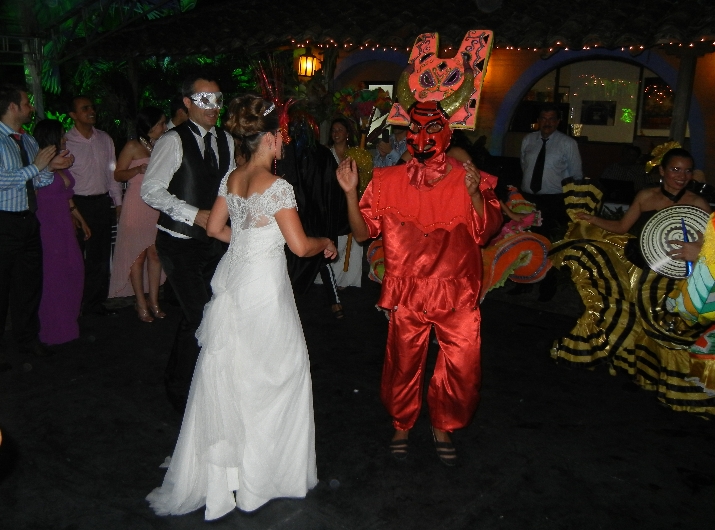
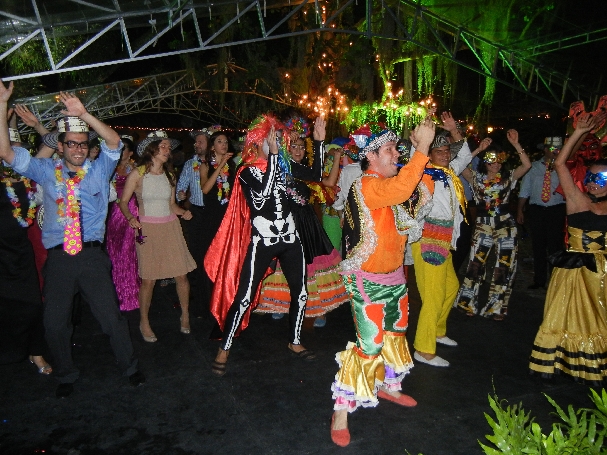
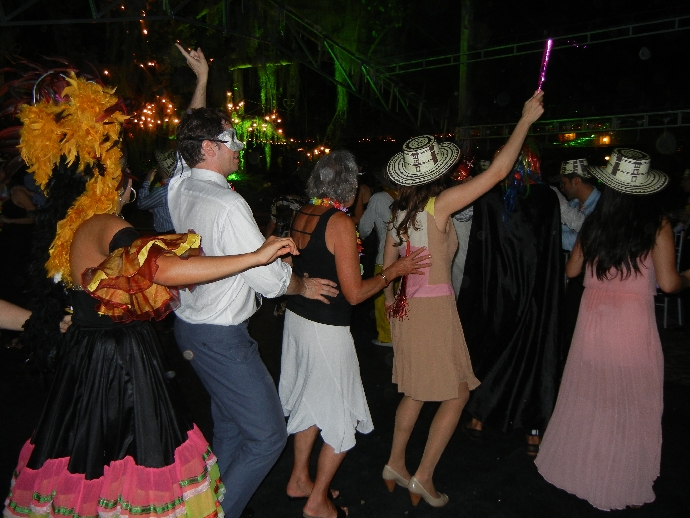
At 11pm a carnival group arrived and really revved up the party!

DSCN1539

DSCN1544

DSCN1545

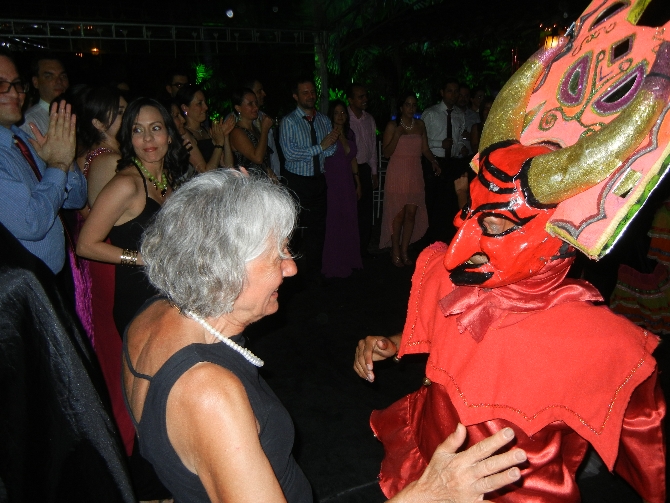
Helen dancing with the devil!

DSCN1547

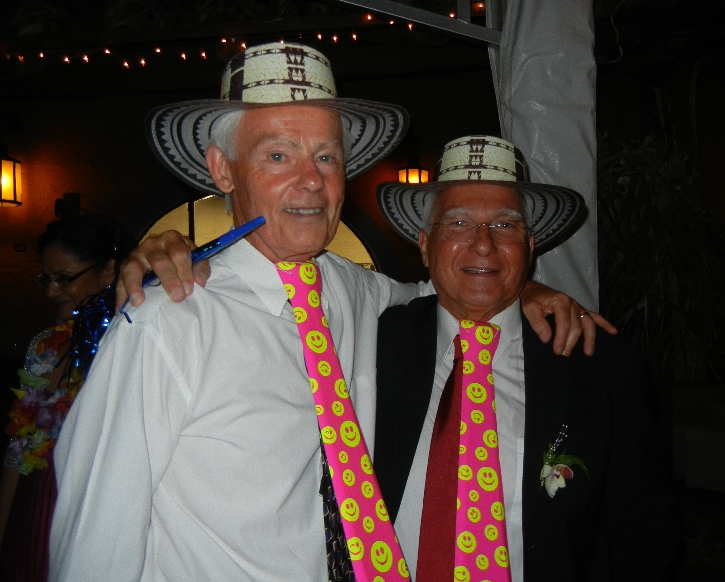
Dads

DSCN1548

DSCN1549

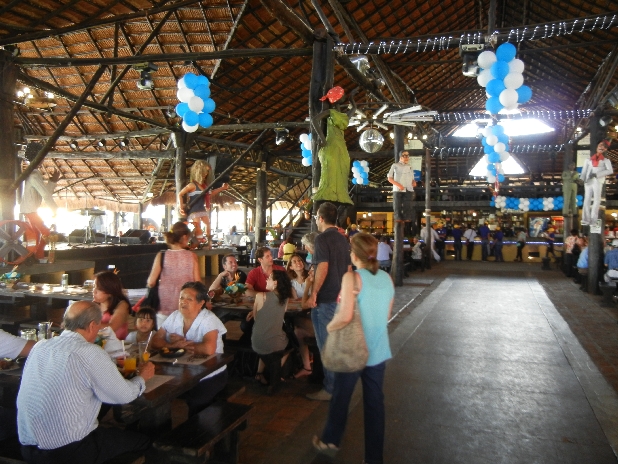
6/16 – We had a late breakfast and about noon traveled outside the city to Tinajeros and the La Tinaja Restaurante Bar.  This is a cattle ranch where they have a huge under roof open area with picnic tables, stage, dance floor and bar.  In the center is a runway where they parade horses on the hour.

DSCN1552

DSCN1553

DSCN1559

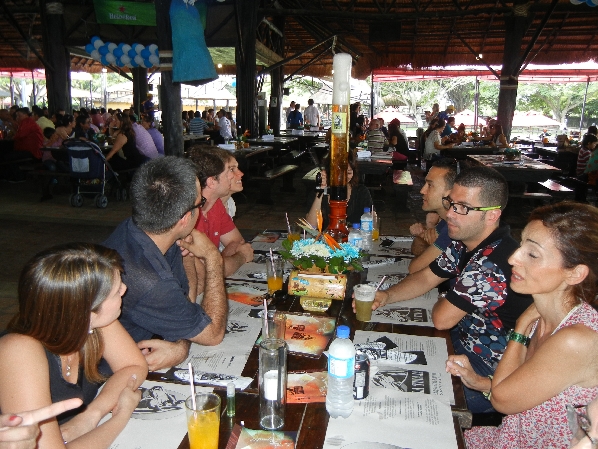
I thought the column of beer was interesting

DSCN1560

This was called “Baby Beef” – nothing small about it!
DSCN1558

They even had Happy Meals!
DSCN1561

Horse show –

DSCN1563

Singer and mariachi band from Acapulco Mexico – he rode in on a horse!

DSCN1564

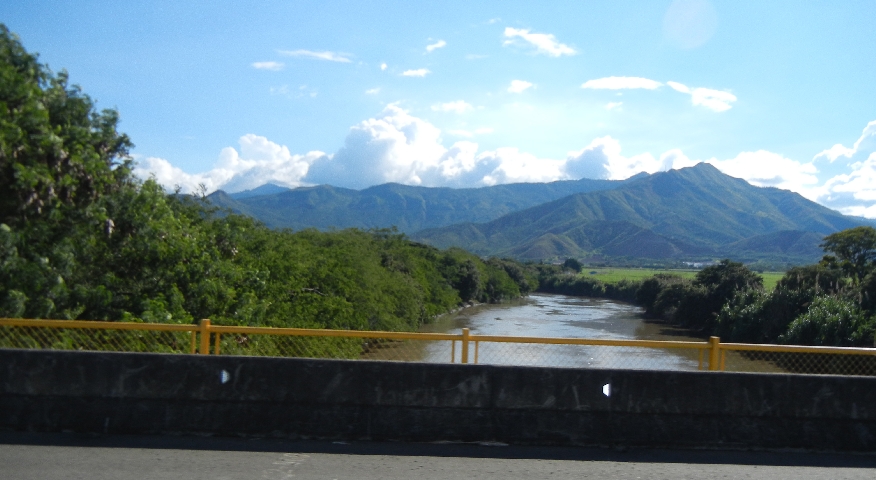
Valle de Cauca between coast and middle mountain ranges

We had an evening flight to Bogota and again stayed overnight at the Marriott

DSCN1570

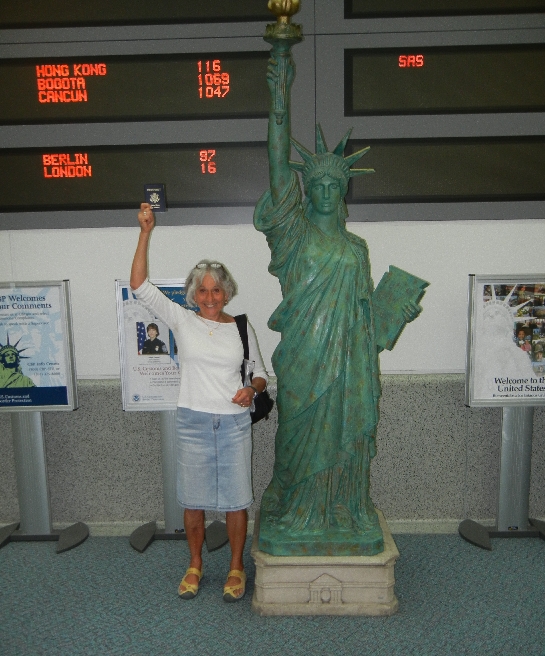
6/17 – We took the shuttle to the airport at 6:30am and arrived in Newark about at 3:30pm.  Glad to be back in the USA, note passport torch!  However, we had plane problems and did not get home until 2am the next day!

h1

Virgin Islands

June 26, 2013

6/4 – We were supposed to leave Dayton at 9:30am.  When printing boarding passes I discovered that American Airlines had canceled our flight from San Juan to St Croix and did not inform us.  After four hours on the phone we had to totally redo our schedule and had to leave Dayton at 5:30am – that meant we had to get up at 3am!

After arriving in St Croix, we picked up our rental car (you drive on the left side of the road).  Our first stop was the Cruzan Rum Distillery near the airport.  We took the $5 tour and were rewarded with two drinks each at the end.

DSCN1292

DSCN1294

Molasses from the sugar cane fields of Guatemala

DSCN1293

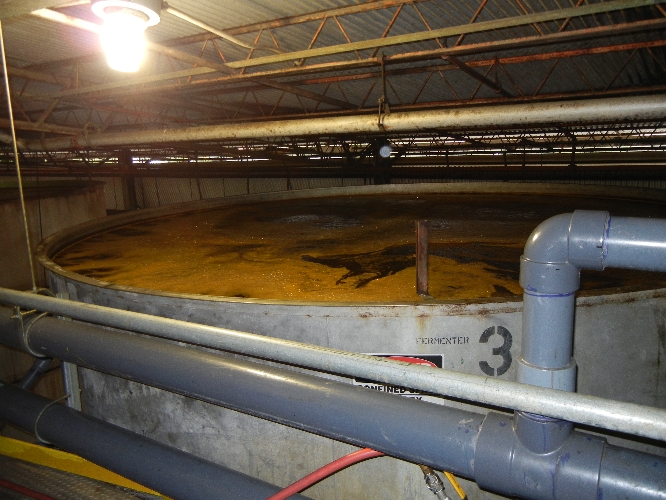
Fermenting Tank

DSCN1295

The longer it is aged, the darker the color, the higher the quality and the less alcohol content

DSCN1297

Enjoying the product

DSCN1301

DSCN1302

Frederiksted fort on West side of island where cruise ships dock, where slaves were emancipated in 1848

DSCN1304

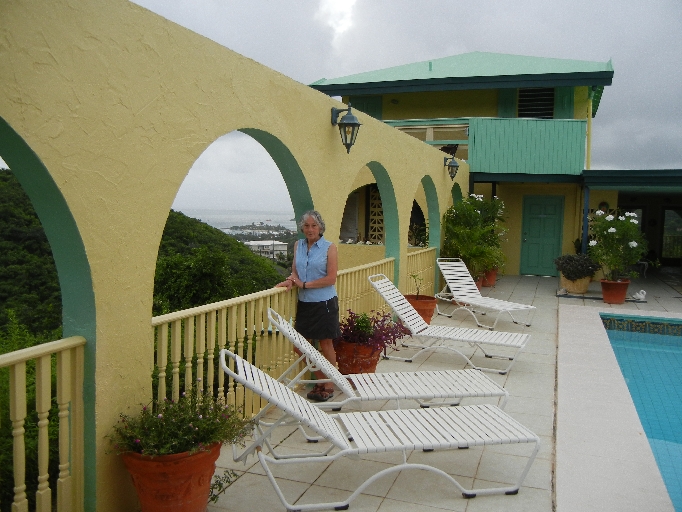
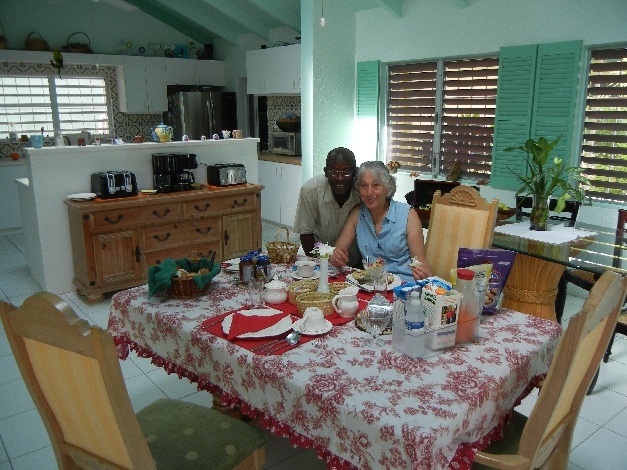
We had an outstanding room, view of Christiansted, pool, etc. at Carringtons Inn B & B

DSCN1307

There were five rooms but we had it all to ourselves

DSCN1355

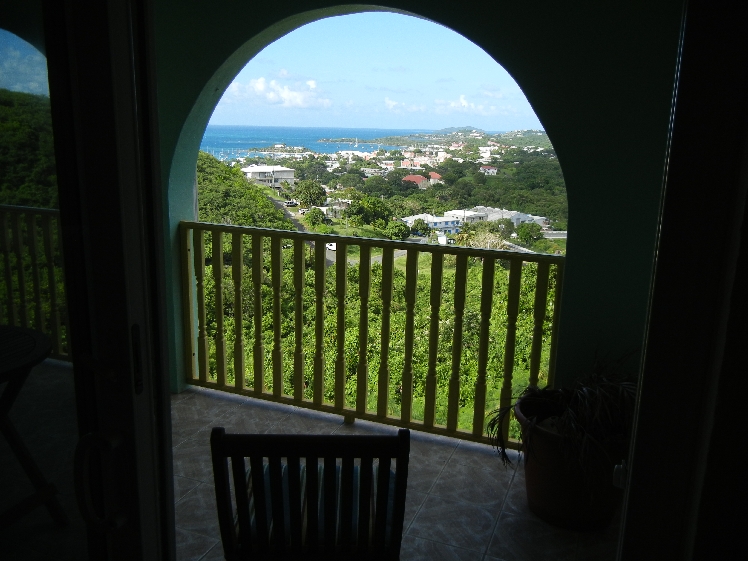
View from our balcony

DSCN1332

DSCN1309

Great breakfasts!

DSCN1312

6/5 – Drove to Point Udall, named for Stewart Udall (Secretary of the Interior).  This is the eastern-most point of U.S. territory.  It is where the sun first shines on our territory.  This is the Millennium Monument (2000) – a sundial.  The western-most point of the U.S. is on Guam and is also named Point Udall – after Stewart’s brother “Mo” Udall (AZ Congressman)

DSCN1314

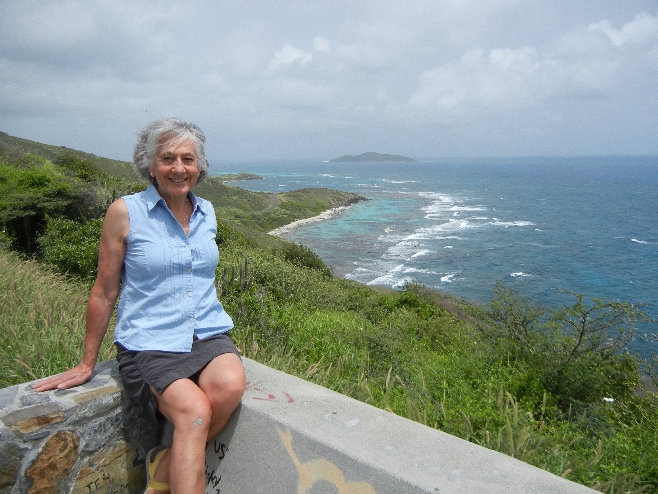
View toward Buck Island Reef National Monument (island in distance).  Note small bandage on knee from arthroscopy three weeks earlier.

DSCN1317

Christiansted – Capital of Danish West Indies when Sugar Was King

DSCN1319

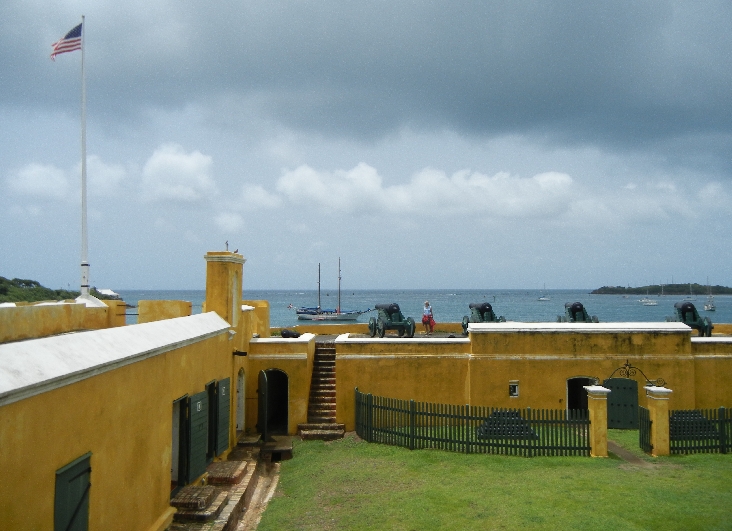
Fort Christiansvaern – built by Danish in 1749

DSCN1320

DSCN1321

Hotel on the Cay – you get there by launch

DSCN1353

View from the Sea

DSCN1318

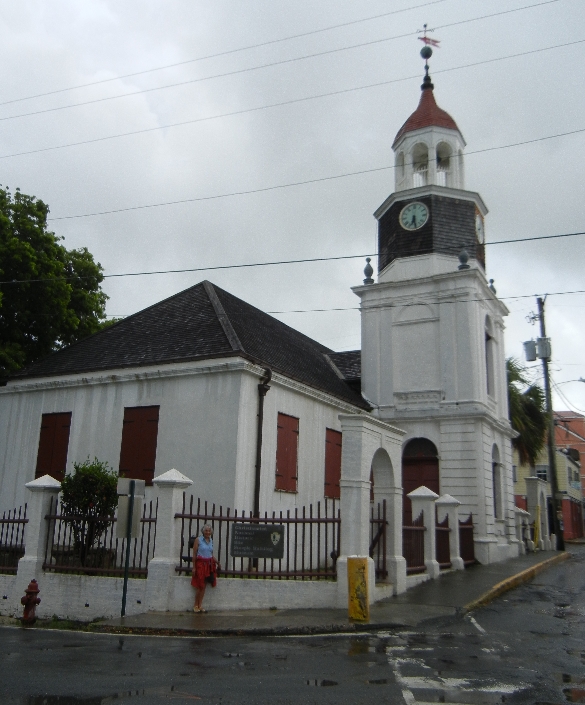
Steeple building (1753) was St Croix’s first Lutheran church.  It is now part of the historic site.

DSCN1327

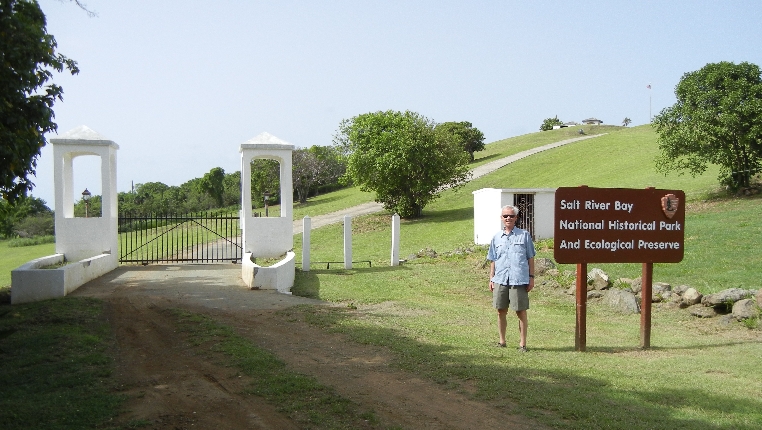
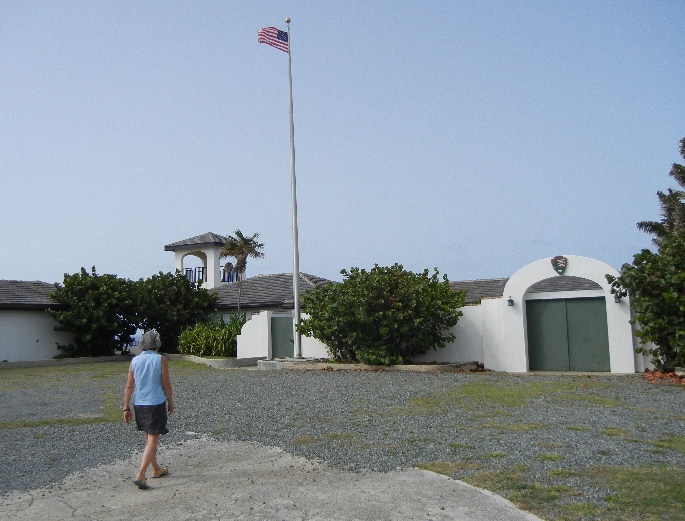
Salt River Bay National Historical Park and Ecological Preserve.  Visitor Center on top of hill

DSCN1328

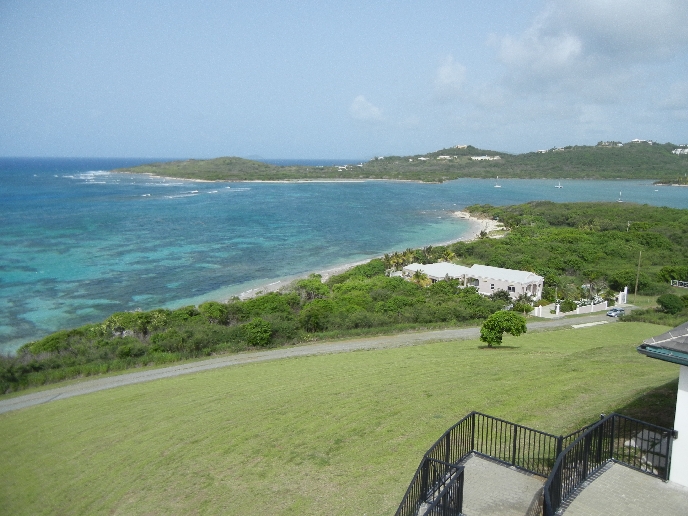
We climbed the tower to view Salt River Bay

DSCN1329

View of Bay – on his second voyage (1493) Columbus sent a boat ashore to meet with the natives.  The Spaniards met a canoe of Caribs (natives) and a fight took place.  One Carib was killed and the rest were captured.  Two Spaniards were wounded, one fatally.  It was the first documented skirmish between Europeans and New World natives.

DSCN1322

DSCN1323

DSCN1335

Crab cake and Calamari appetizers at Angry Nate’s on the boardwalk of Christiansted

DSCN1336

6/6 – Buck Island Reef National Monument full-day sailboat excursion

DSCN1338

DSCN1340

DSCN1341

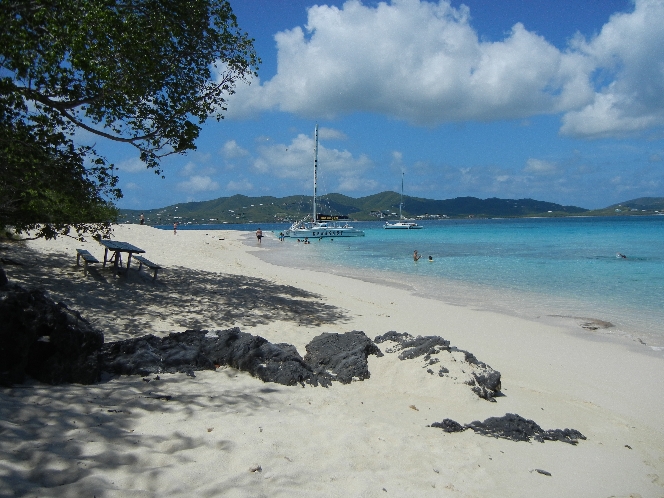
Headed to Buck Island – it is one mile long

DSCN1343

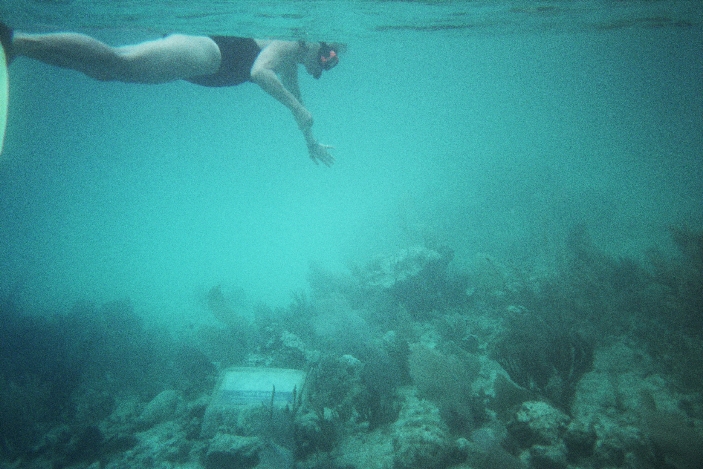
Snorkeling off beach –

DSCN1344

DSCN1345

Great day and colors –

DSCN1346

23A_0014

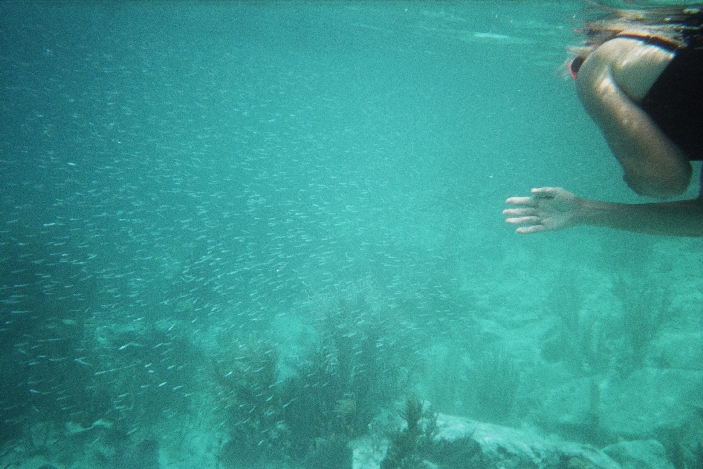
Snorkeling off sailboat at underwater trail –

22A_0015

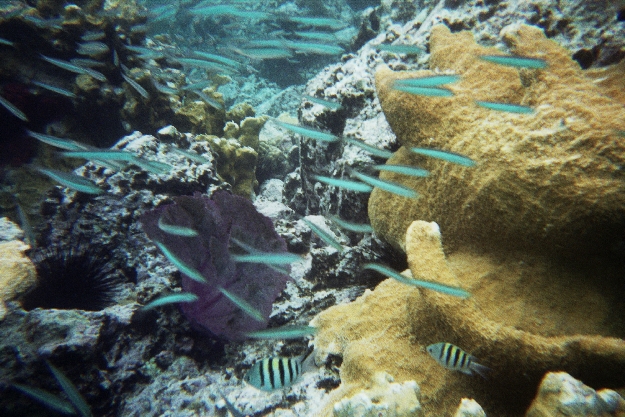
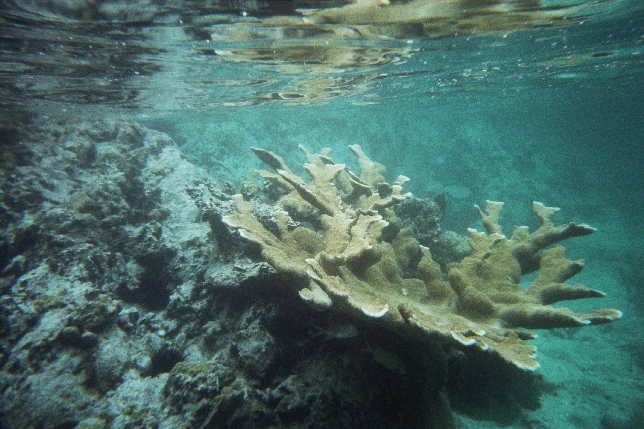
Buck Island was declared a National Monument by President Kennedy in 1961.  At that time, the reef was in pristine condition.  It currently shows the effects of both humans and nature (hurricanes).

21A_0016

20A_0017

17A_0020

15A_0022

DSCN1350

DSCN1351

Rum punch on return trip

6/7 – Flew Cape Airlines to St Thomas, walked a mile to the main road pulling our suit cases and carrying our back packs to catch an open air truck (bus) into Charlotte Amalie.  The Charlotte Amalie ferry to St John wasn’t running, so we took another open air truck to Red Hook to catch a ferry.

DSCN1356

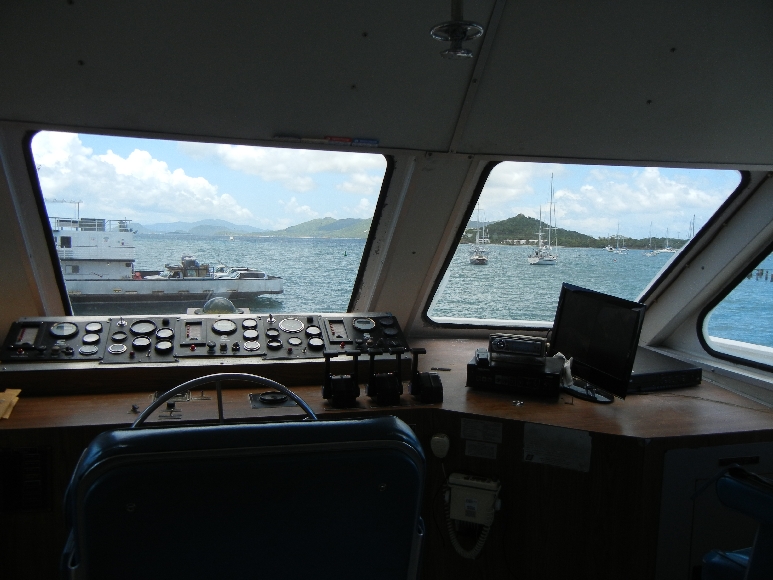
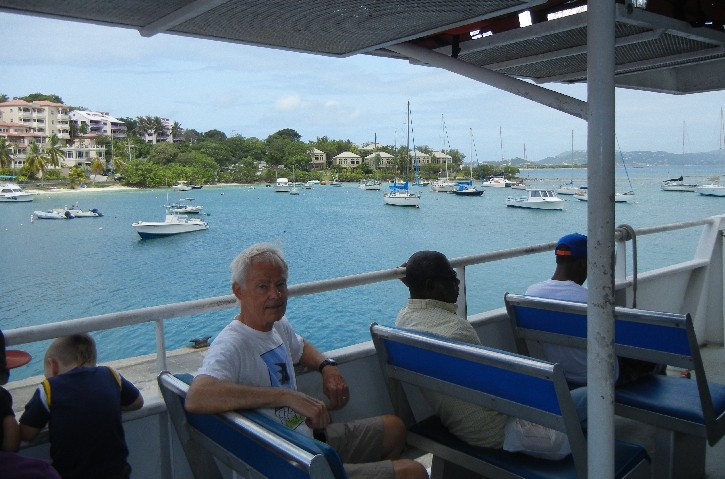
Ferry Captain’s chair, car ferry can be seen out window

DSCN1357

DSCN1361

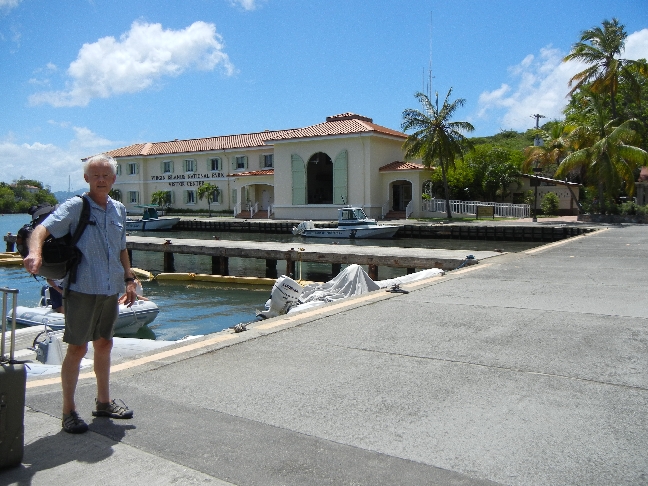
Our first stop was the Virgin Islands National Park Visitor Center

DSCN1363

Over half St John is national park land, with the bulk of it donated by Rockefeller interests in 1956.  We rented a jeep and started driving to Cinnamon Bay.

DSCN1364

View of Cruz Bay with the Gallows Point Resort out on the distant peninsula

DSCN1366

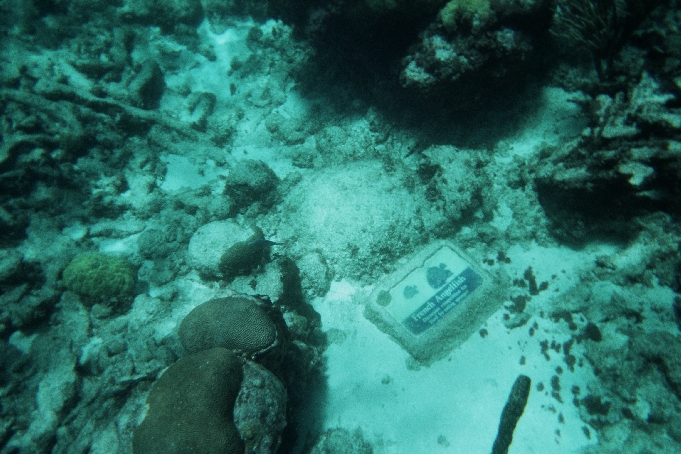
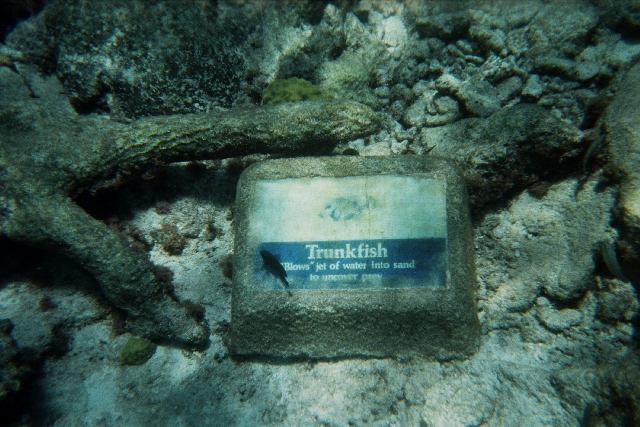
Trunk Bay (underwater trail)

DSCN1409

Arrived at Cinnamon Bay and checked into our campground beach cottage.  We had come here 45 years ago for our honeymoon but I had not made a reservation and no cottage or tent accommodations were available.  As a result we ended up sleeping on the beach until it rained and finished the night on a picnic table under a metal roof with the birds and hermit crabs.  This time I made the reservation one year in advance.  So, you could say this was a second honeymoon!

DSCN1367

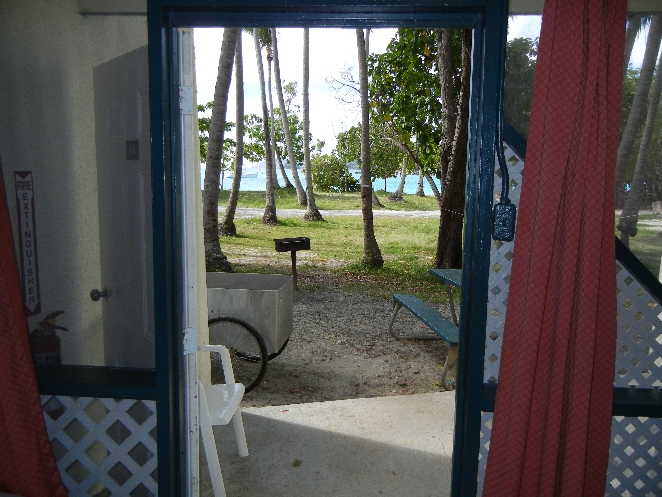
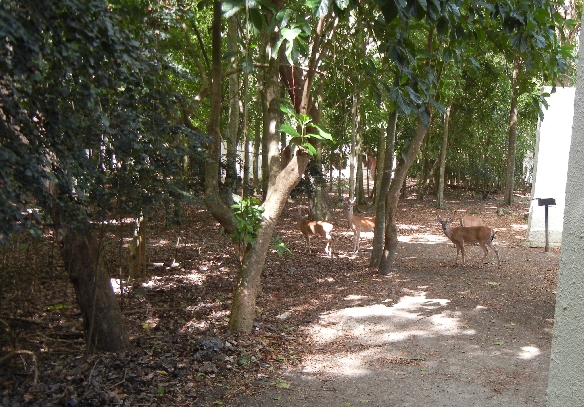
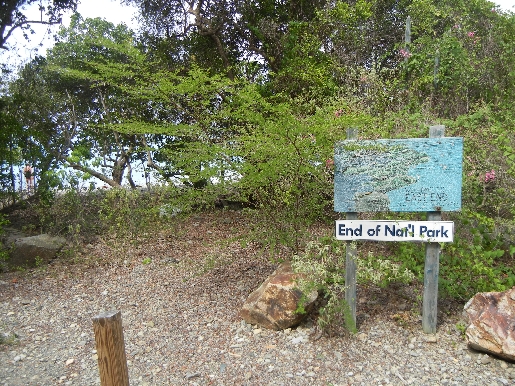
No AC and restroom 100 yards away BUT we were right up from the beach!  Note deer in upper right of pic

DSCN1408

DSCN1378

DSCN1370

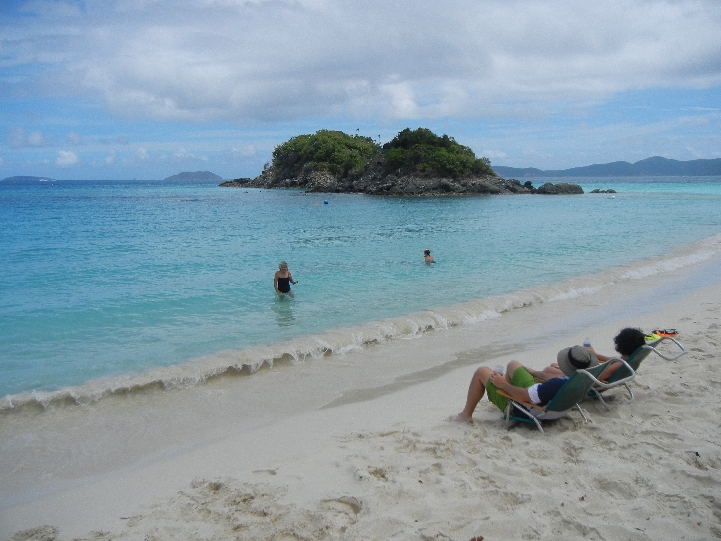
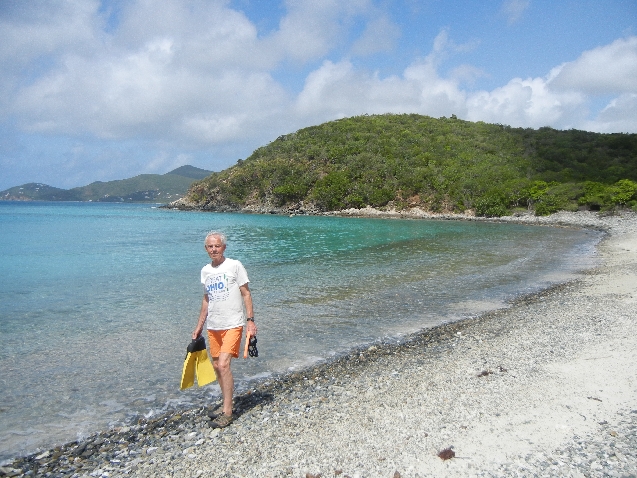
Our beach at Cinnamon Bay

DSCN1373

Local sand shark

6/8 – Our 45th wedding anniversary.  Each year I surprise Helen and only give her information on how to dress or pack if we are doing a trip.  She did not know we were going to the Virgin Islands or that we would be staying in a cottage at Cinnamon Bay.

DSCN1380

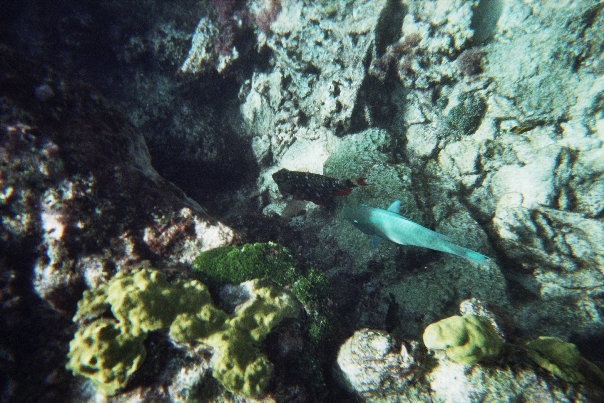
After breakfast, we rented beach chairs and snorkeling equipment and headed for Trunk Bay and the underwater trail

DSCN1381

_4A_0033

_7A_0030

00A_0038

_2A_0035

_0A_0037

15A_0022

DSCN1383

Hawksnest Beach – our Cialis pic

DSCN1384

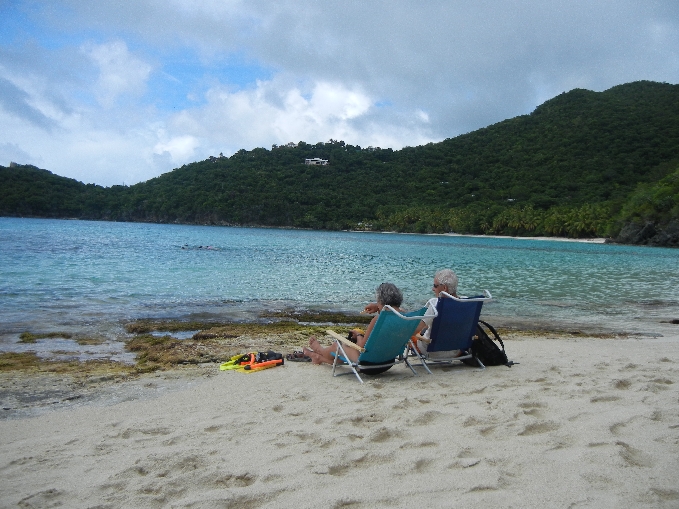
This is the beach we slept on 45 years ago!

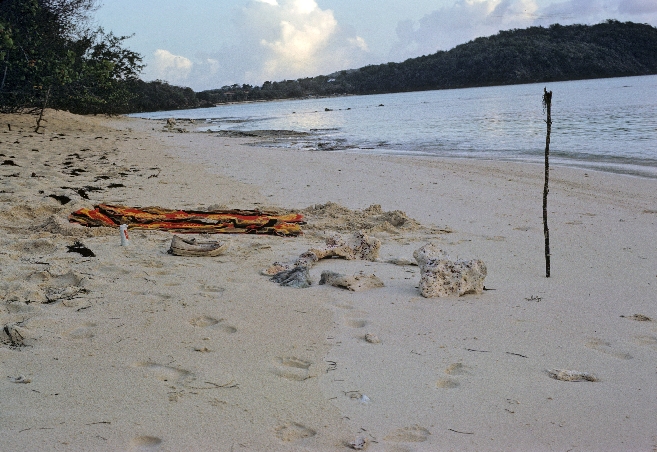
The next six photos are from our 1968 honeymoon

1271KN

This was our beach towel bed until it started to rain!

1282KN

This is our picnic table bed with the birds and hermit crabs

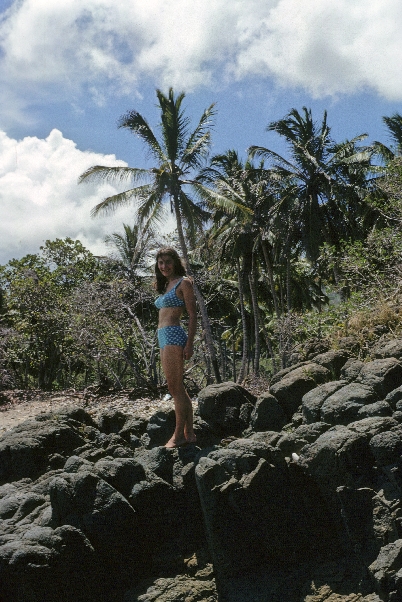
The next four photos show that we really haven’t changed much – must be our healthy lifestyle!

1257KN

1266KN

1281KN

1283KN


DSCN1386

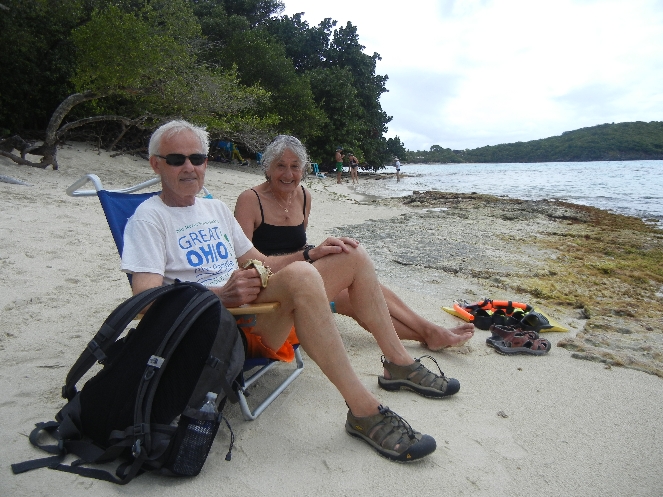
Ready for a night out on the town in Cruz Bay – 2013

DSCN1387

Drinks and Grouper dinner at Zozo’s restaurant in Gallows Point Resort

DSCN1389

DSCN1391

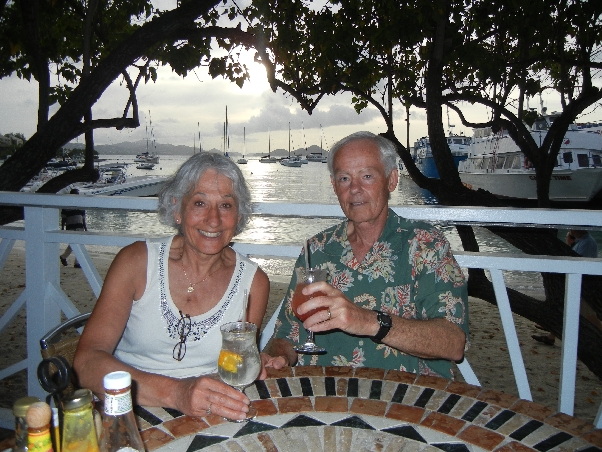
Sunset chat

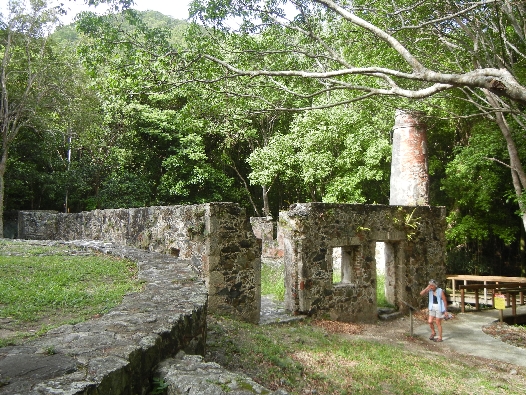
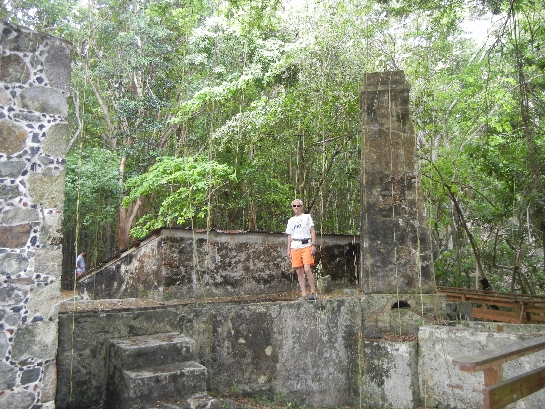
6/9 – We started the day by touring the ruins of a sugar plantation at Cinnamon Bay

DSCN1392

DSCN1394

DSCN1396

We then drove to the east side of the island.  This is a view of Coral Bay

DSCN1397

DSCN1398

Iguana eating mango by road

DSCN1399

Round Bay

DSCN1401

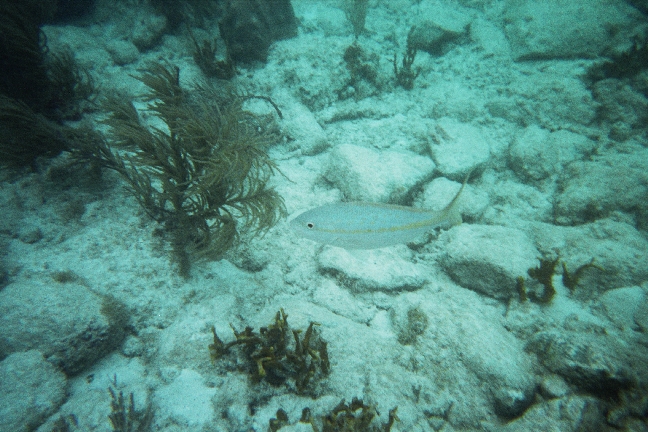
This bay and beach gave us access to Virgin Islands Coral Reef National Monument (entirely underwater).  We snorkeled around point into Elk Bay.  This was the best snorkeling on our trip.

DSCN1405

Sunset dinner at the Parrot Club in Cruz Bay

6/10 – Caneel Bay and rental jeep

DSCN1410

DSCN1413

Ferry back to St Thomas

DSCN1414

DSCN1428

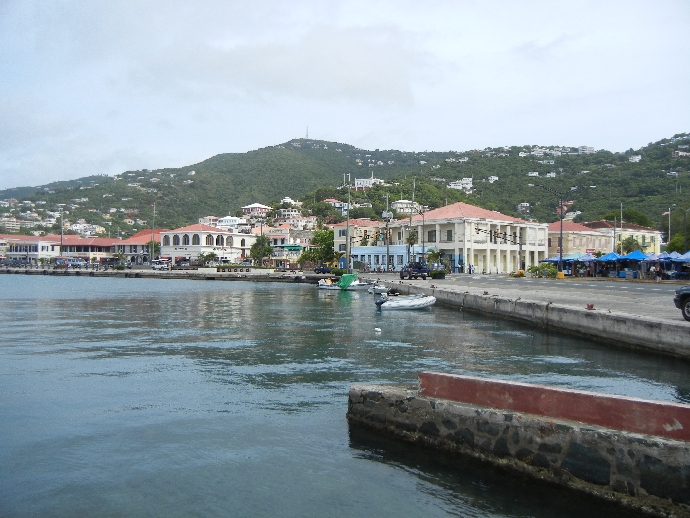
We took a taxi to Charlotte Amalie.  This is a view from the harbor with the Vendor’s Plaza on the right, the Governor’s Mansion in the middle on the hill and Villa Santana, where we had a two story efficiency apartment, just below and to the left of the mansion.

DSCN1417

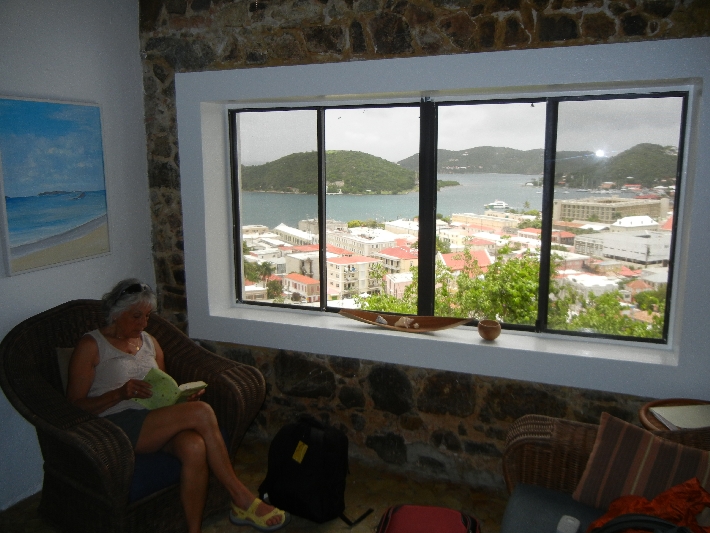
This is the first floor of our apartment at Villa Santana, with a view of downtown.  Our apartment was in one of the out-buildings of Exiled General Antonio Lopez Santa Anna’s Villa – the Mexican hero of the infamous slaughter at the Alamo!

DSCN1426

View from our second floor balcony.  Hassel Island, which has much historical significance, is at the entrance to the harbor and is an undeveloped part of Virgin Islands National Park.

DSCN1431

Nice little hike down to the city and back up to the Villa –

DSCN1423

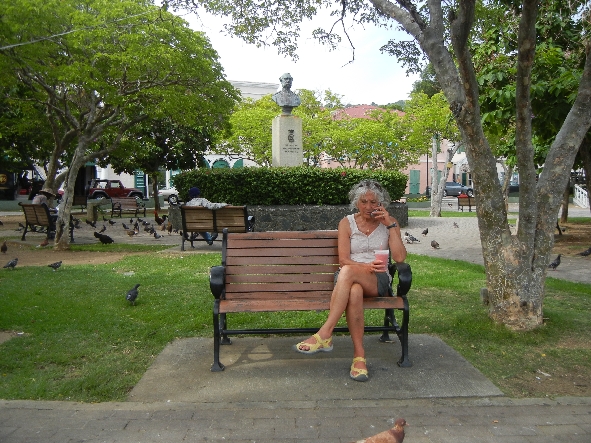
Emancipation Gardens – smoothie from market on hot day

DSCN1427

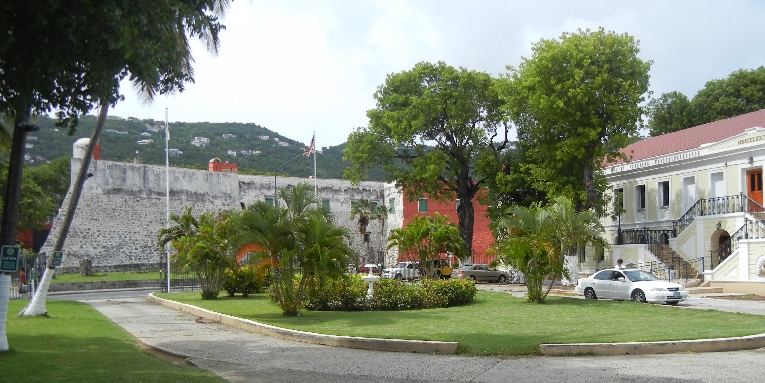
Fort Christian – Charlotte Amalie was the islands capital under Denmark until 1917

DSCN1421

Harbor side of Fort and Legislature Building on right

DSCN1422

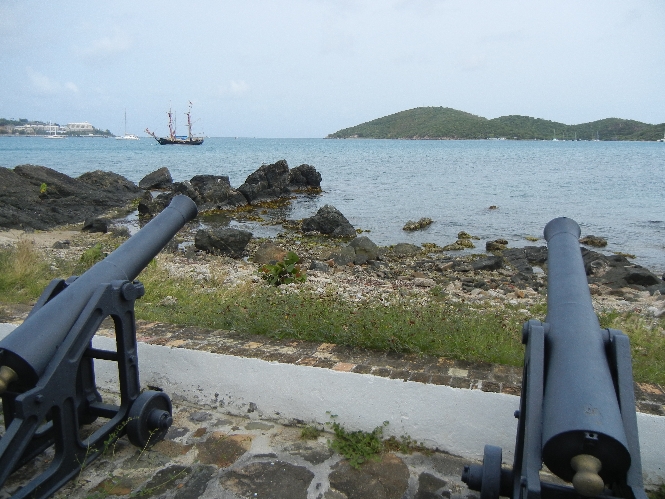
Waterfront cannon and Hassel Island

DSCN1425

Mojito special (also called Cuba Libre) at the Greenhouse Bar & Restaurant – light rum, carbonated water, lime juice, lime, mint and sugar syrup.  These were followed by fish tacos – yum!

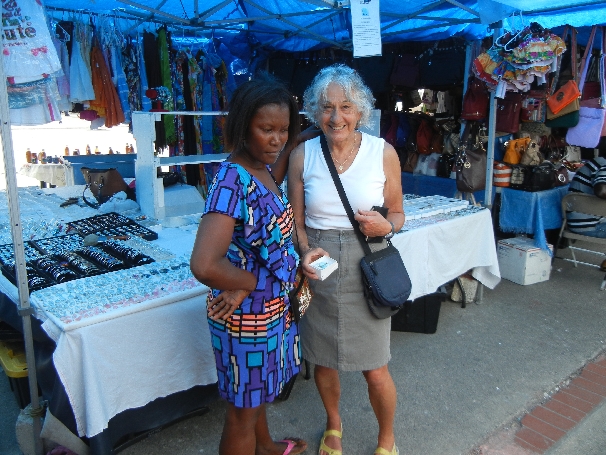
6/11 – Had breakfast at Jen’s Gourmet Café’ and Deli and then Helen spent the morning shopping for her 45th wedding anniversary presents!

DSCN1420

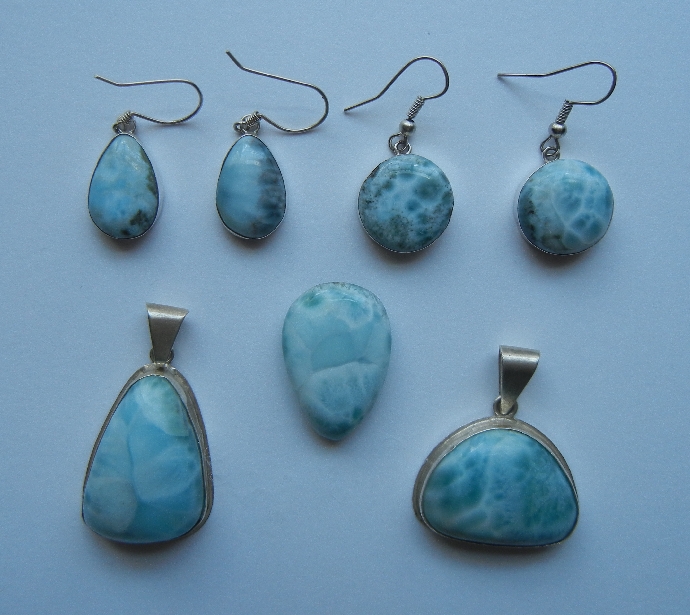
First stop was the Vendor’s Plaza where a bluish stone called a Larimar, from the Dominican Republic, was a popular item.  Colorations vary from white, light-blue, green-blue to deep blue.

DSCN1429

Earrings, pendants, and stone were purchased at this stall

DSCN1572

DSCN1430

Shopping alley catering to cruise ship passengers – this is a duty free port

DSCN1418

We also hit several stores on the main street called Dronningens Gade and Helen bought a gold bracelet with diamond solitaire and double hoop gold and white gold earrings.

Now broke, we headed for the airport where our plane departed for Atlanta at 2:35; we were home at 11pm

h1

CA Big Sur and San Fran Vicinity

March 17, 2013

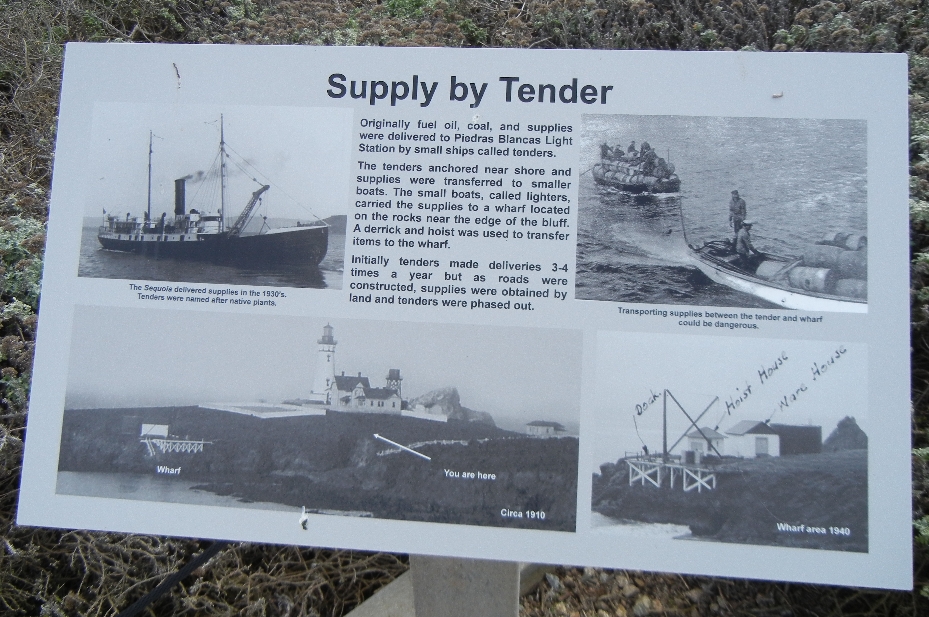
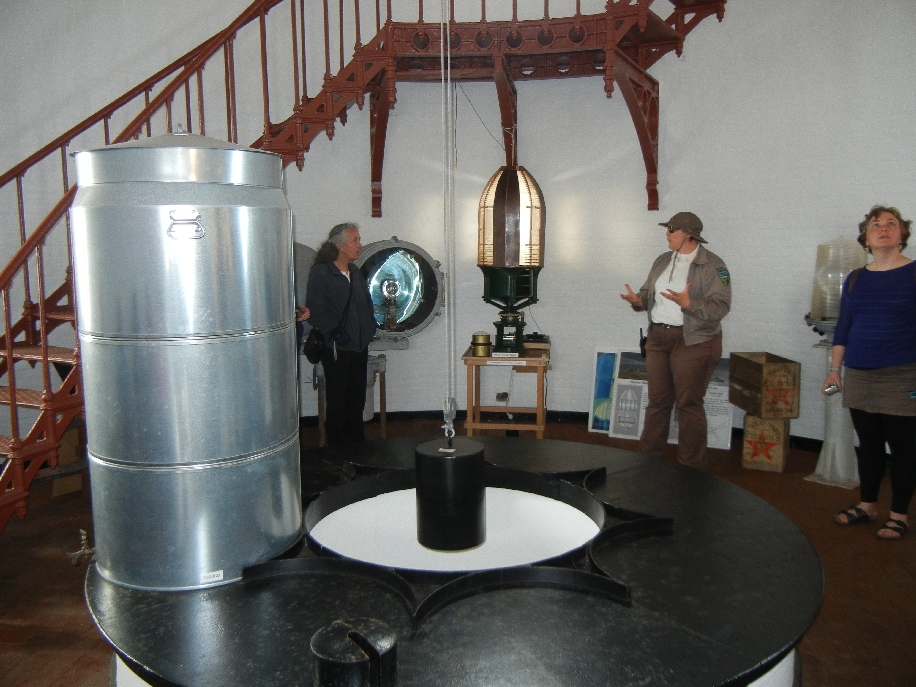
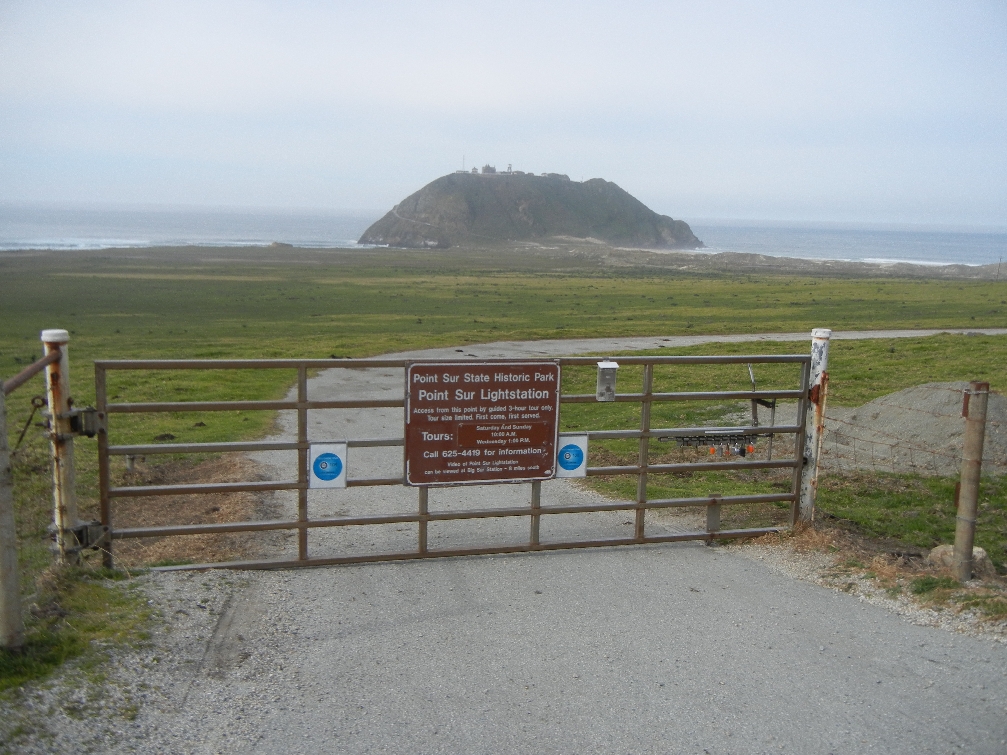
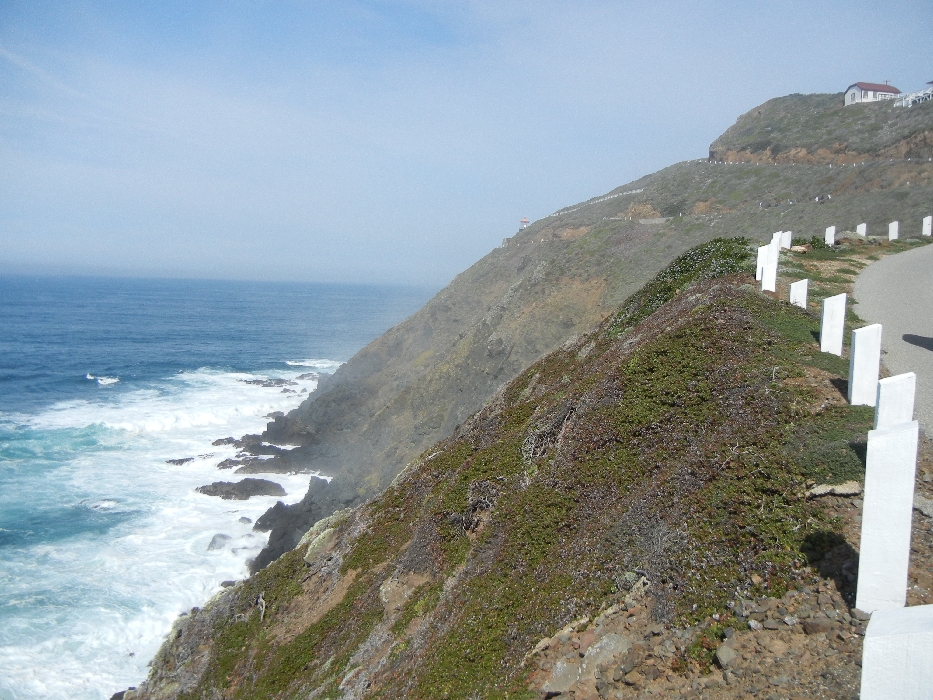
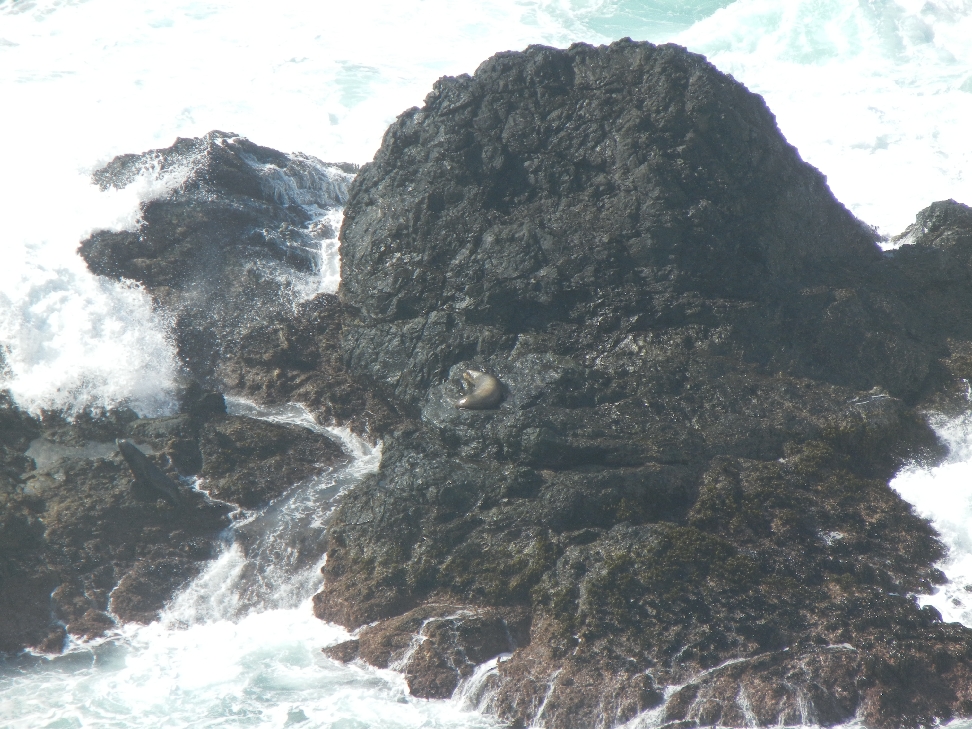
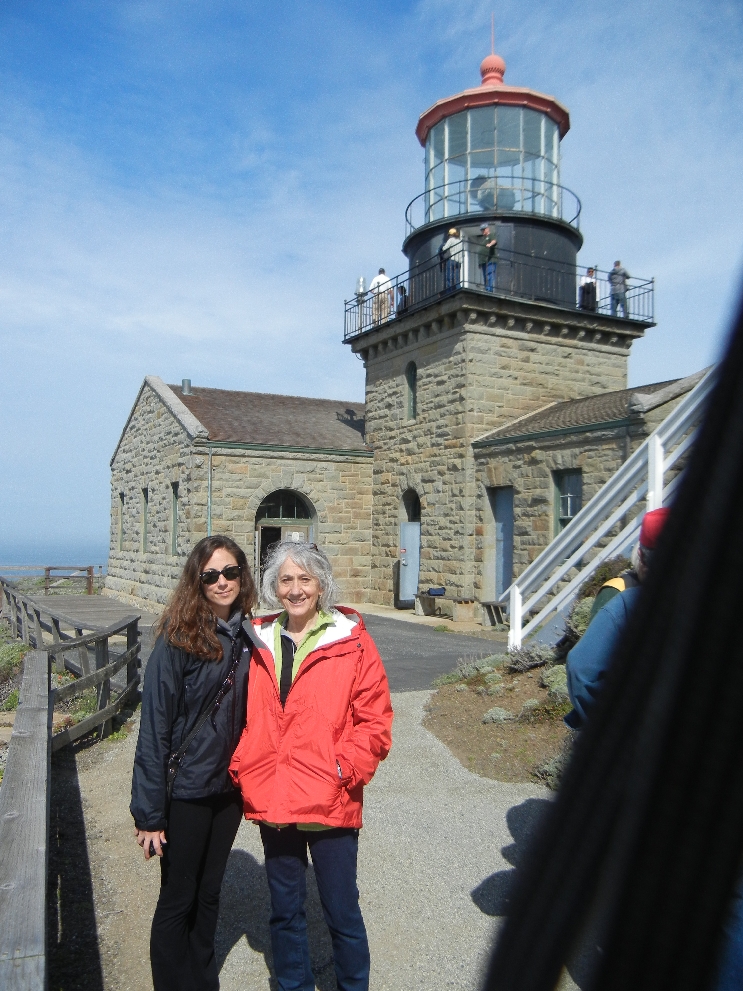
March 2 – We left SF at 7am and arrived at the gate for the Point Sur Lightstation at 9:45.  The lightstation is part of the Point Sur State Historic Park.  A volunteer guide opened the gate at 10am and we drove to the base of the moro rock formation for our guided tour.  The lightstation (1889) is one of only two active turn-of-the-century lightstations in the country that are open to the public.  The three hour tour involved walking up the road to the top of the rock while the docent described history and structures.

DSCN0921

DSCN0923

DSCN0931

Sea Lion

DSCN0932

DSCN0933

DSCN0939

A nice lunch at the Nepenthe Restaurant overlooking the Pacific

DSCN0944

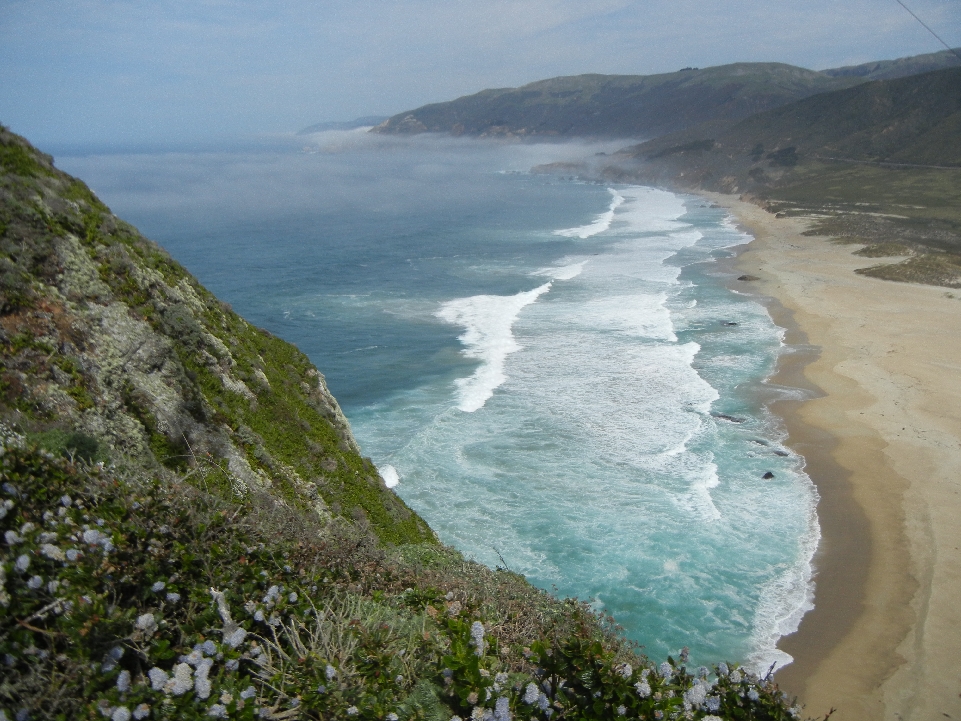
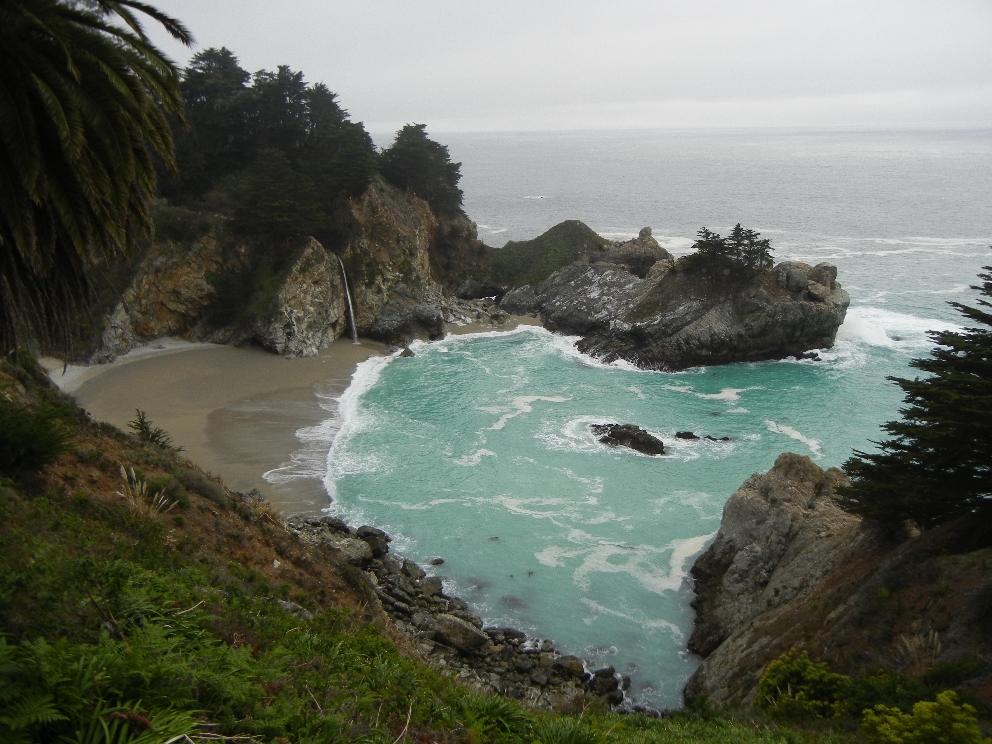
Our next stop was McWay Falls in Julia Pfeiffer Burns SP.  It is only a quarter mile hike to lookouts from which you can see the Falls spilling onto the sand as the waves crash in from the ocean.

DSCN0945

DSCN0951

DSCN0957

DSCN0953

Shocked at the fantastic view!

DSCN0955

Sandollar Beach (USFS) – rock piles, sand and crane

DSCN0960

DSCN0961

We had a light dinner and spent the night in the Fernwood Resort – an old 50’s era motel.

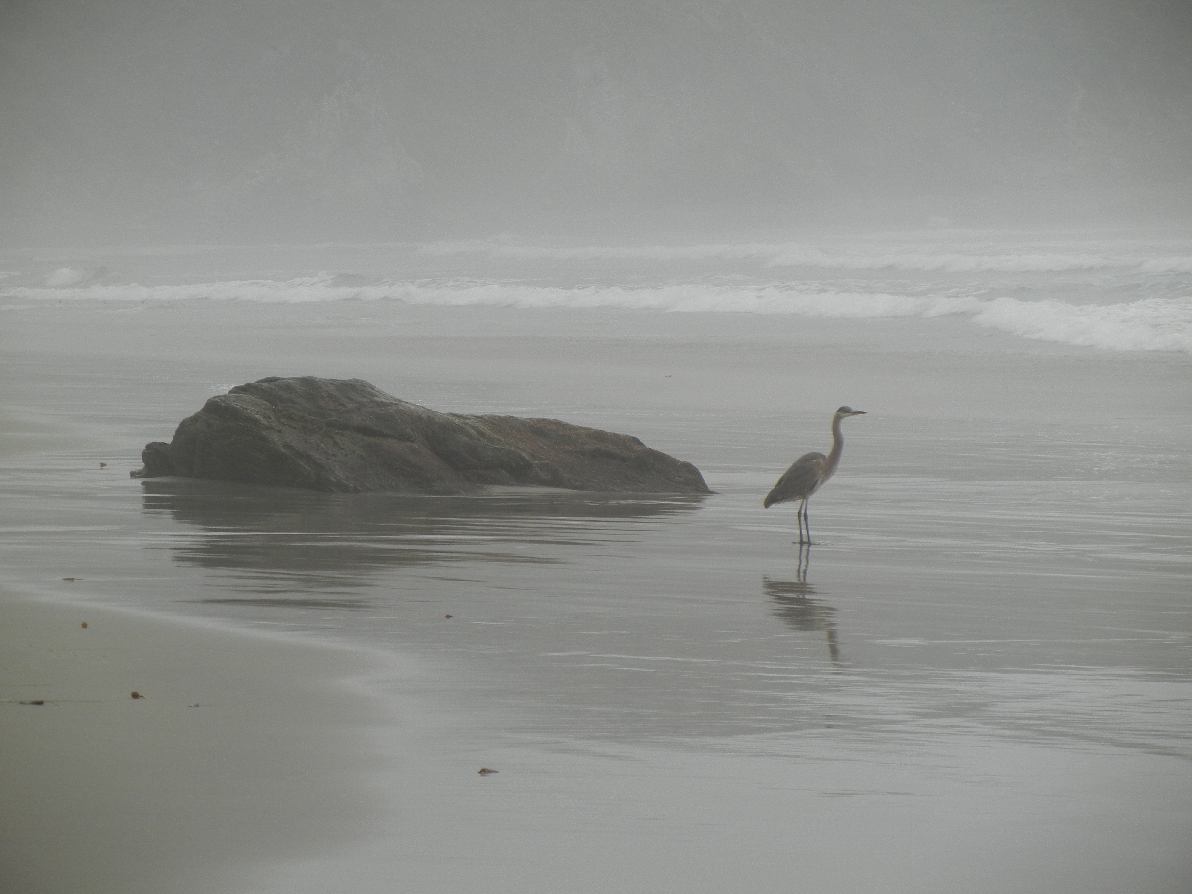
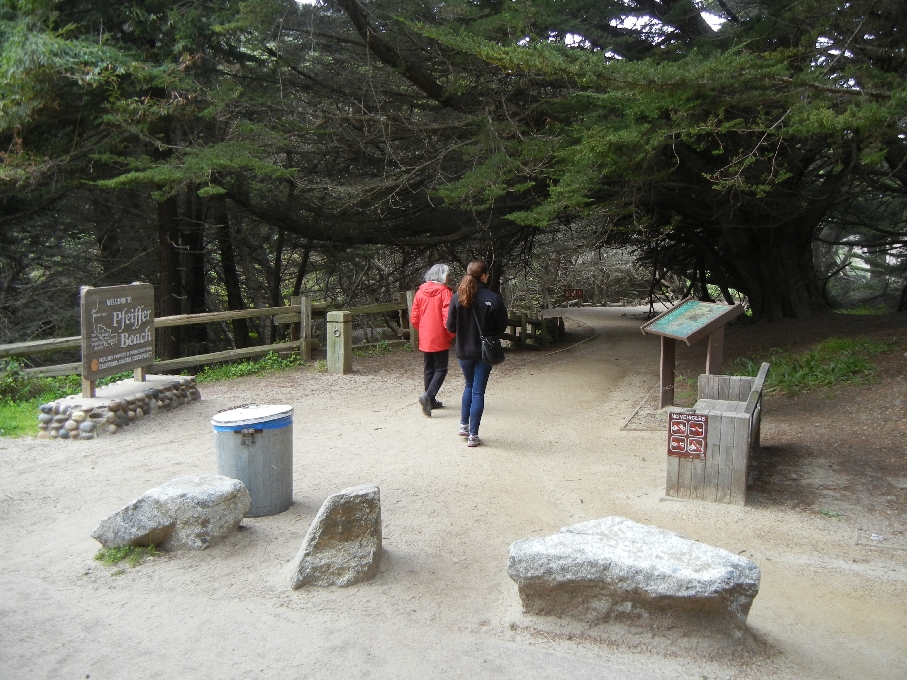
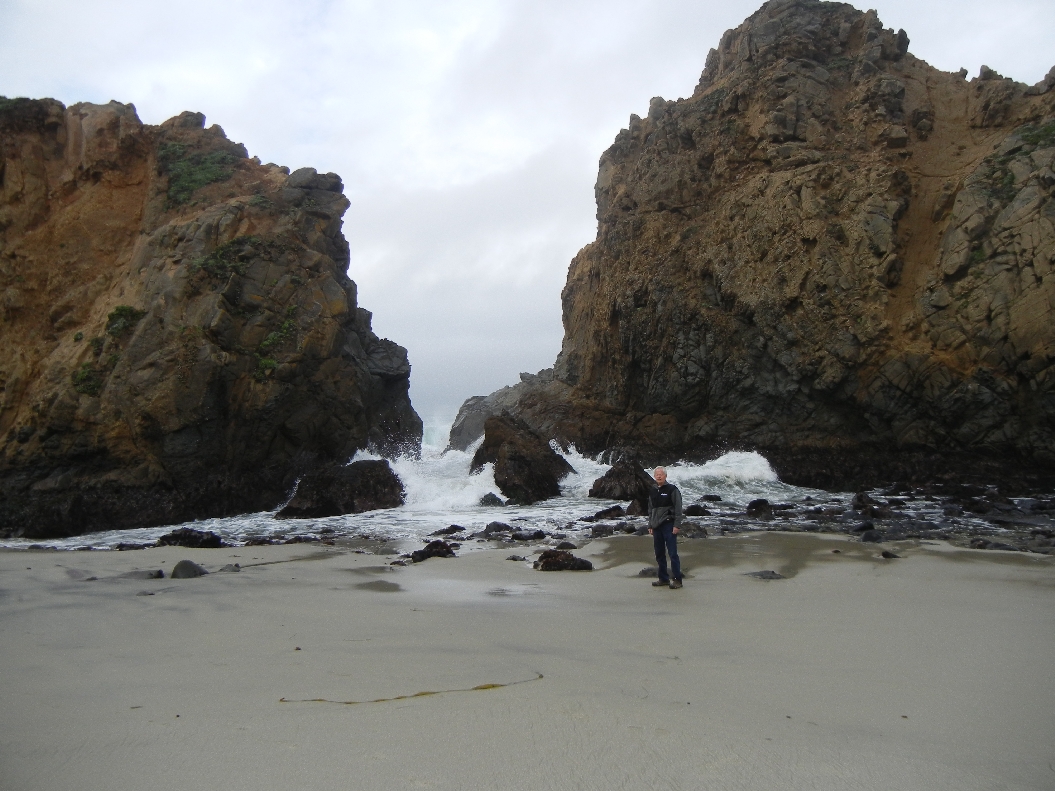
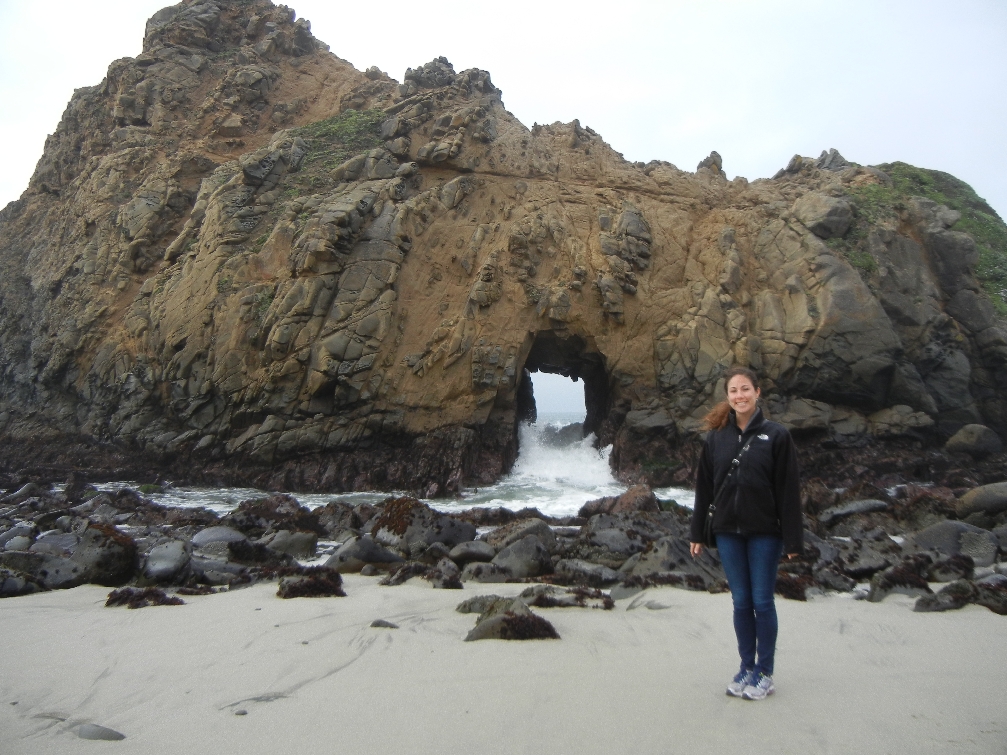
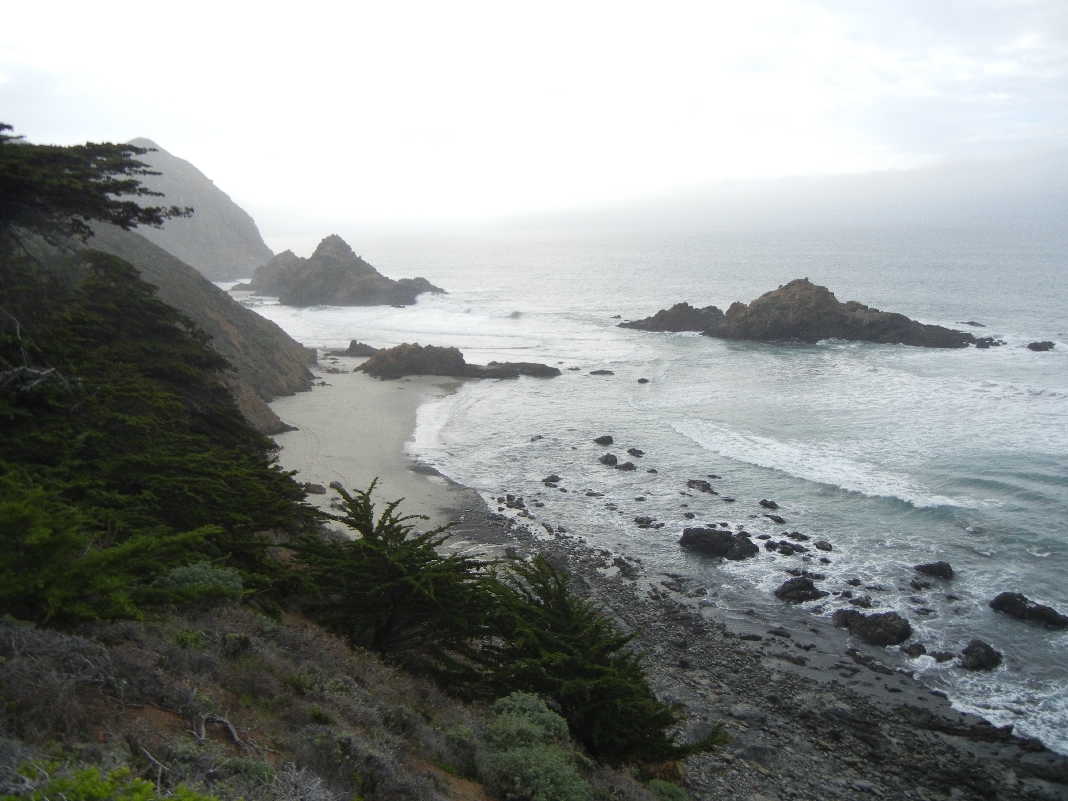
March 3 – We were up early and off to find Pfeiffer Beach (USFS).  This was the best beach we visited on our entire trip – cypress tree riparian zone, rocks, arches, surf, birds and even purple sand!

DSCN0966

DSCN0967DSCN0970

DSCN0969

DSCN0985

DSCN0982

DSCN0975

See Pfeiffer Beach Video at http://youtu.be/Q2erjJ7zYIw

DSCN0979

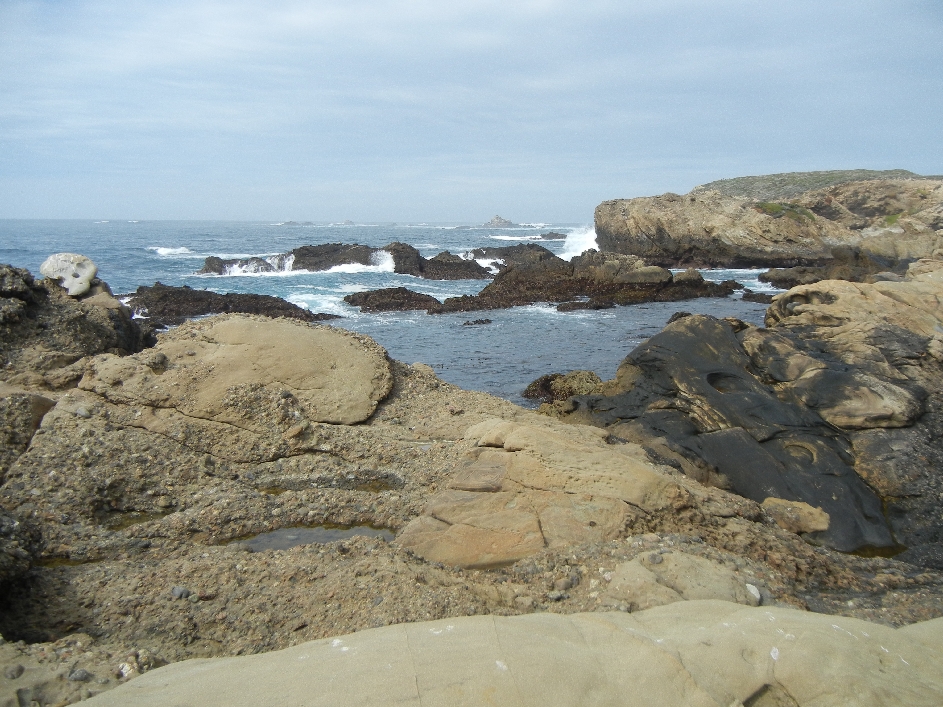
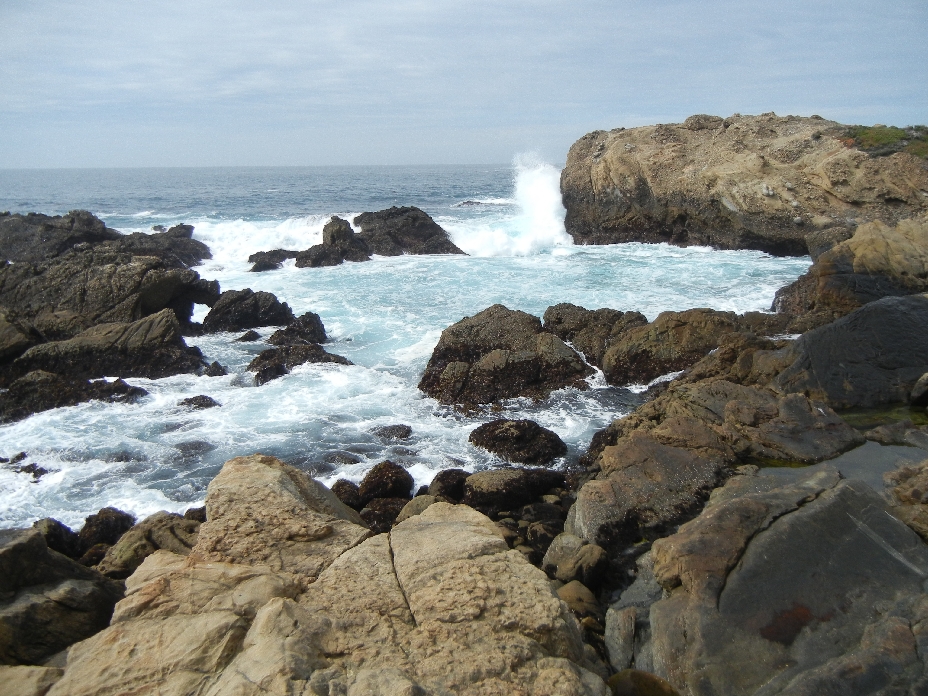
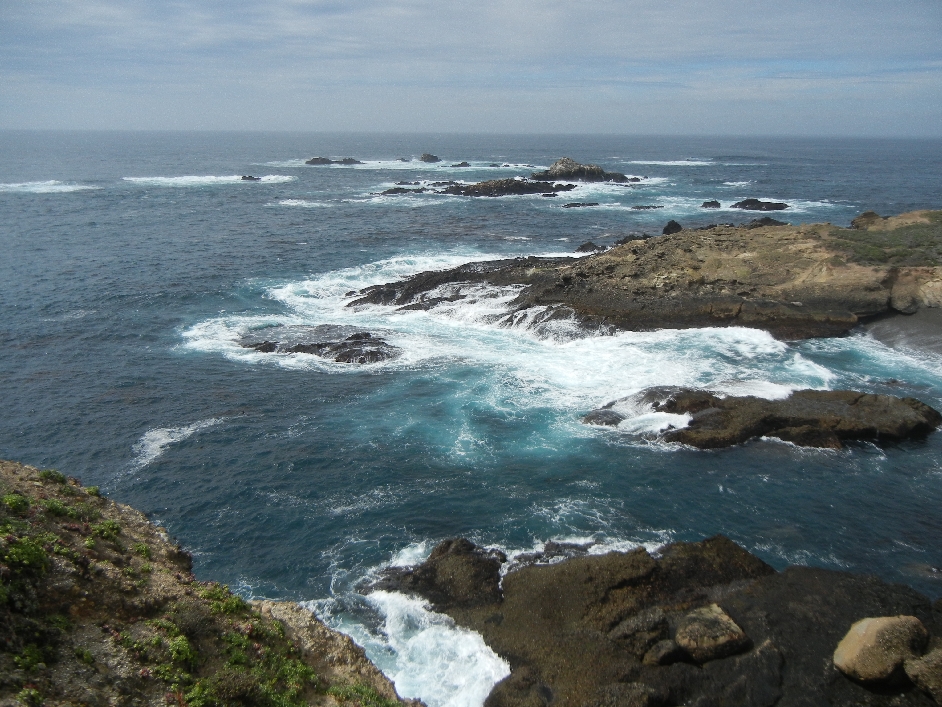
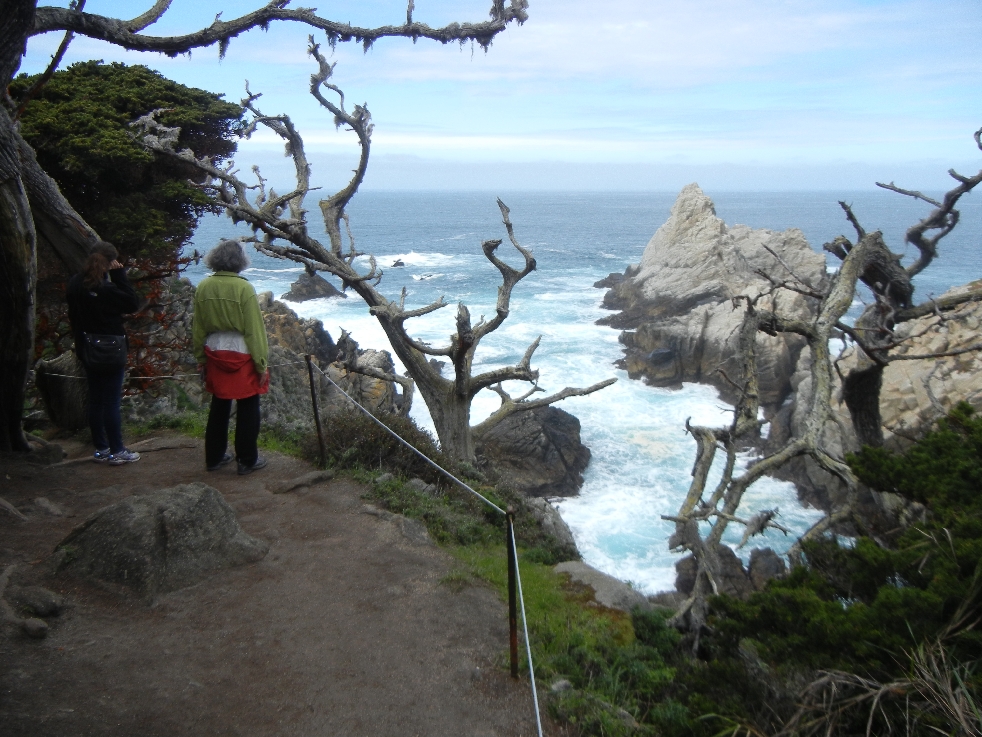
Proceeding north, Pt Lobos State Reserve was our next stop.  We hiked the South Shore Trail and then the Sea Lion Loop Trail

DSCN1004

DSCN1007

DSCN1008

Sea Otter

DSCN0997

DSCN1014

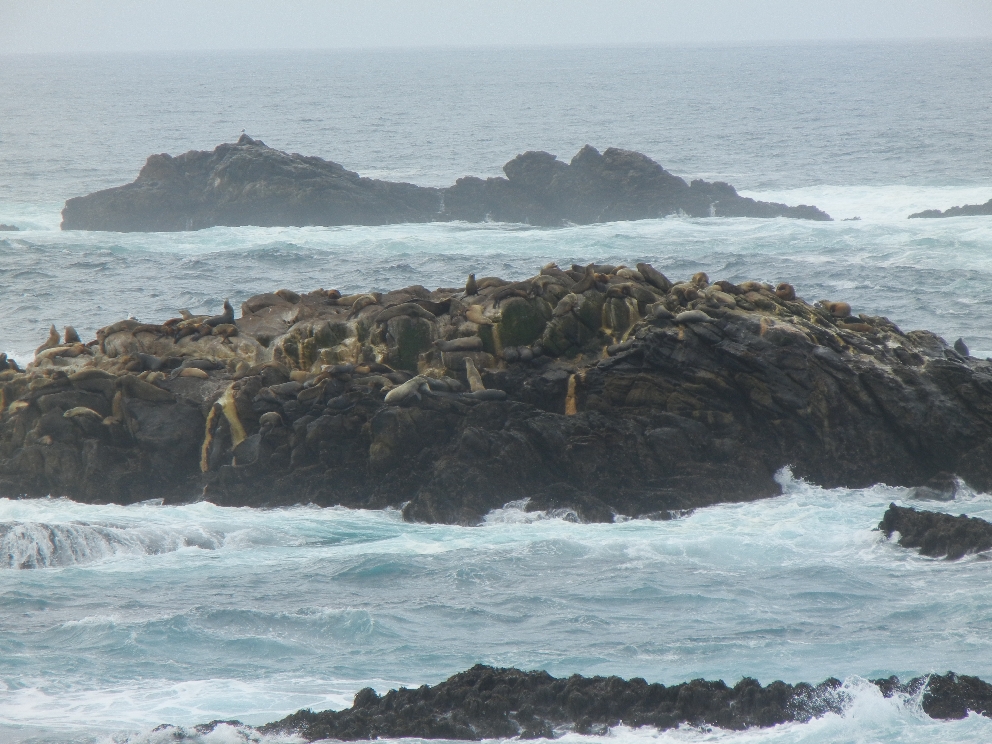
Sea Lions

DSCN1015

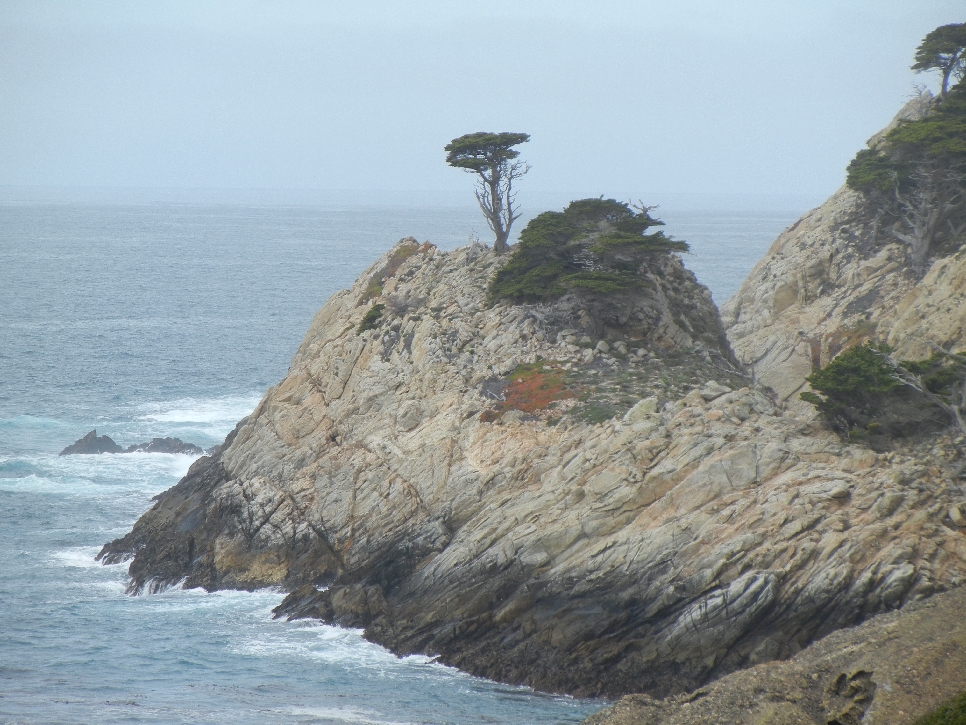
Cypress Grove Loop Trail

DSCN1019

DSCN1023

DSCN1024

View from Cannery Point

DSCN1026

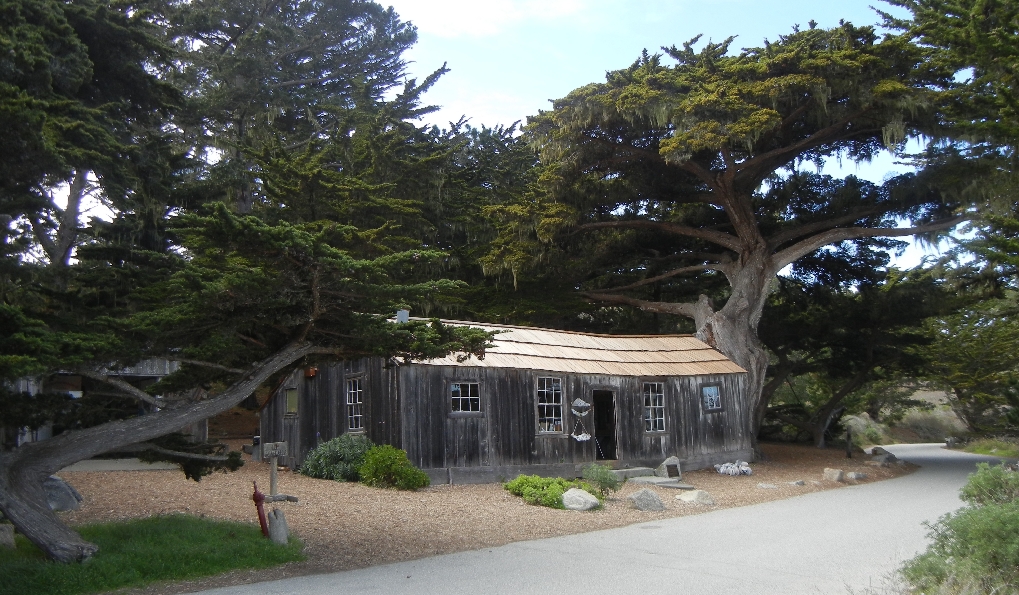
Whalers Cabin and Museum at Whalers Cove

DSCN1028

Monterey Bay Aquarium in Carmel

DSCN1029

DSCN1038

DSCN1030

DSCN1031

Sea Cucumbers

DSCN1036

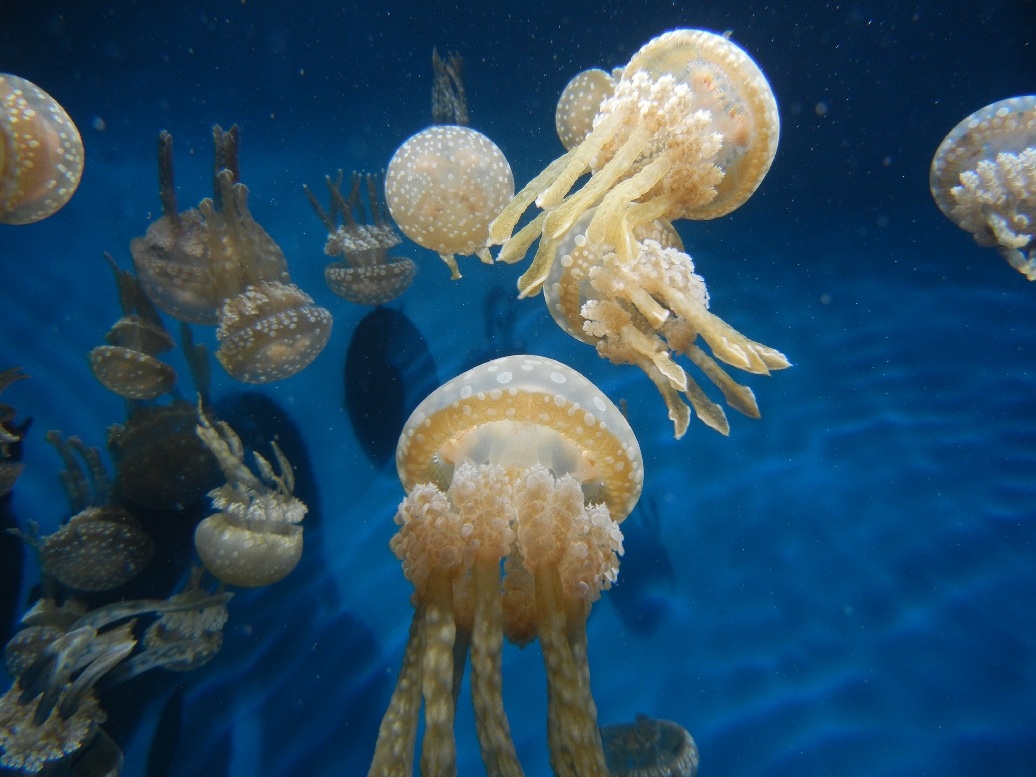
Jelly Fish

DSCN1042

On the way back to SF we stopped at the Negeen Persian restaurant outside of San Jose to have dinner with Amir and Afsaneh.

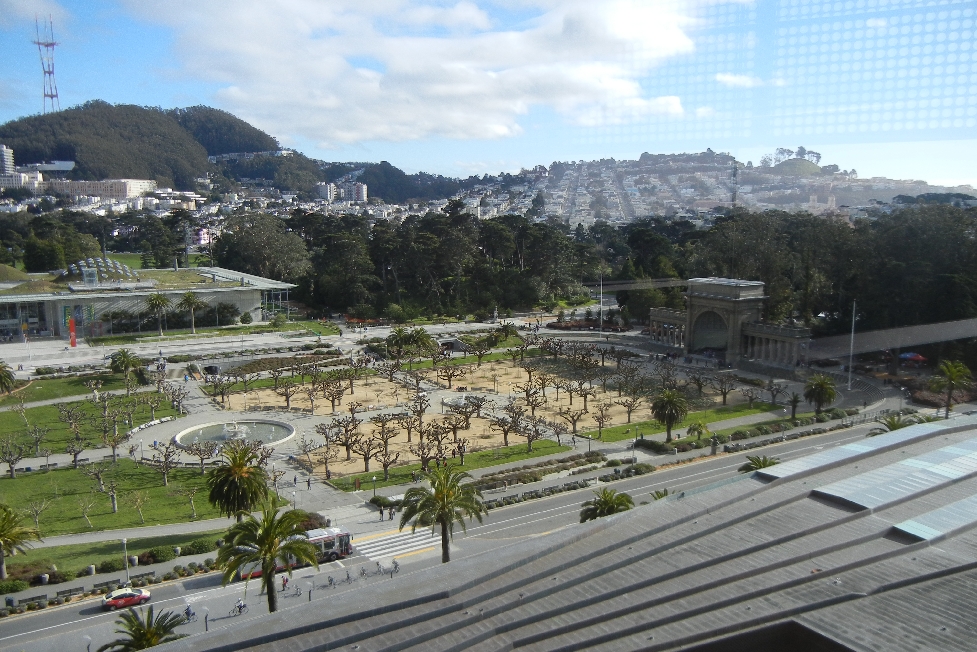
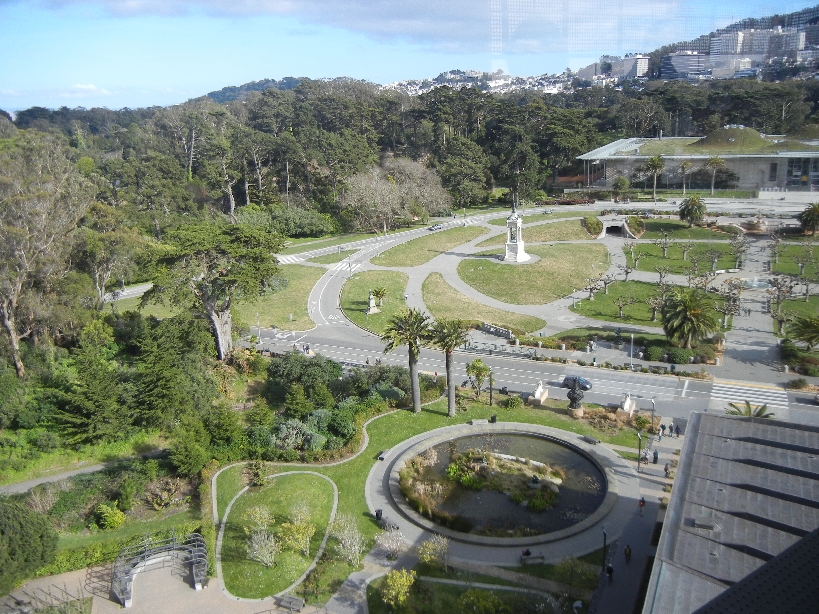
 March 4 – Golden Gate Park from the top (9th floor) of the de Young Museum

DSCN1094

Tai Chi

DSCN1057

DSCN1095

We were able to see the special Dutch Painters exhibit at the de Young Museum including the “Girl with a Pearl Earing” by Vermeer.  There were 35 paintings representing the Dutch Golden Age on loan from The Hague.  Here is a picture of a glass sculpture from the museum that really impressed us –

DSCN1090

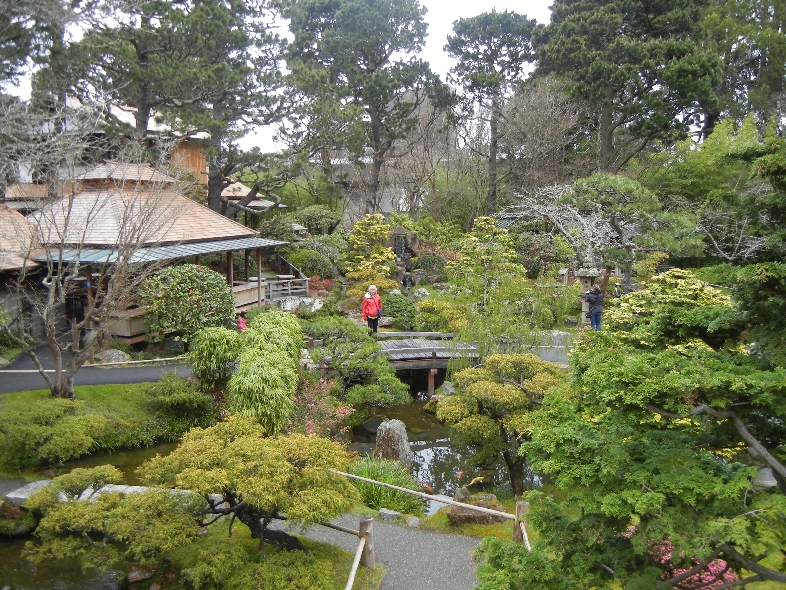
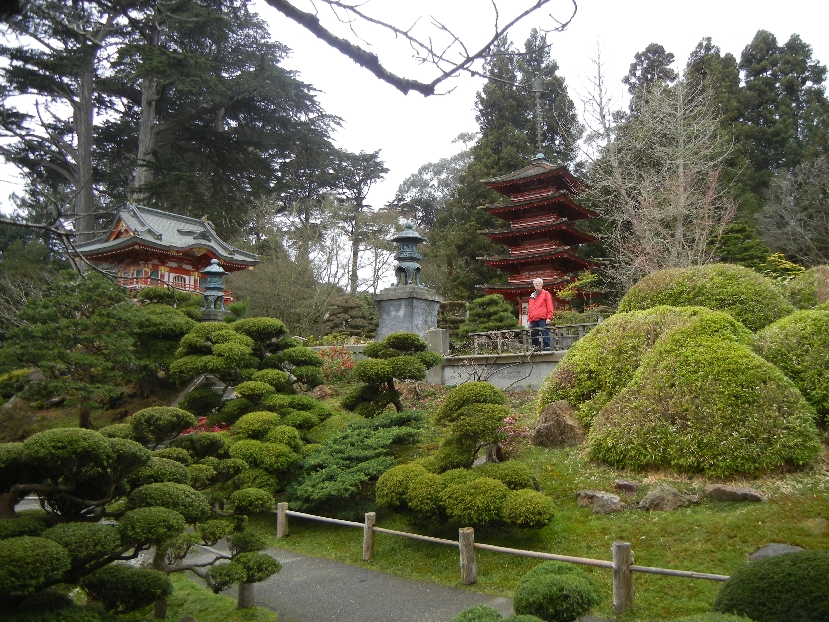
Japanese Tea Garden in Golden Gate Park

DSCN1062

DSCN1061

DSCN1063

DSCN1064

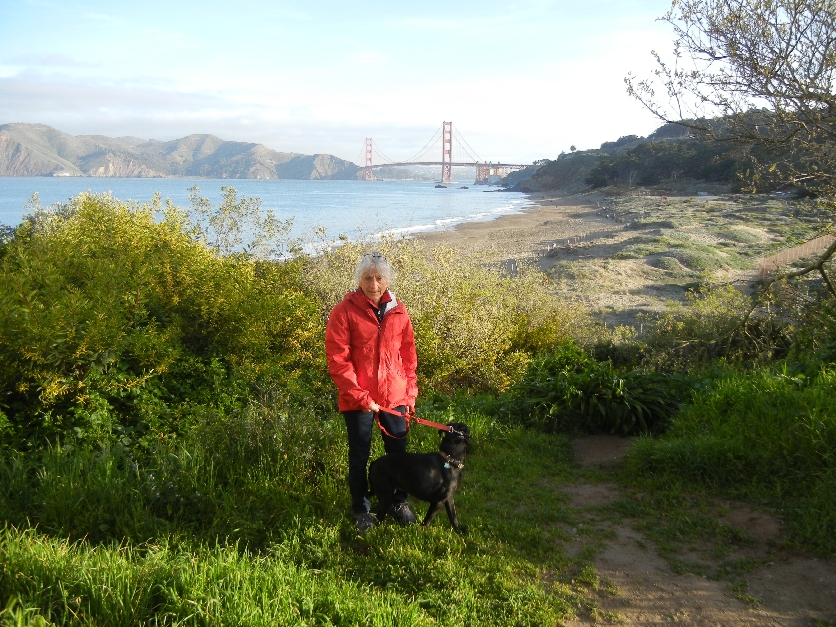
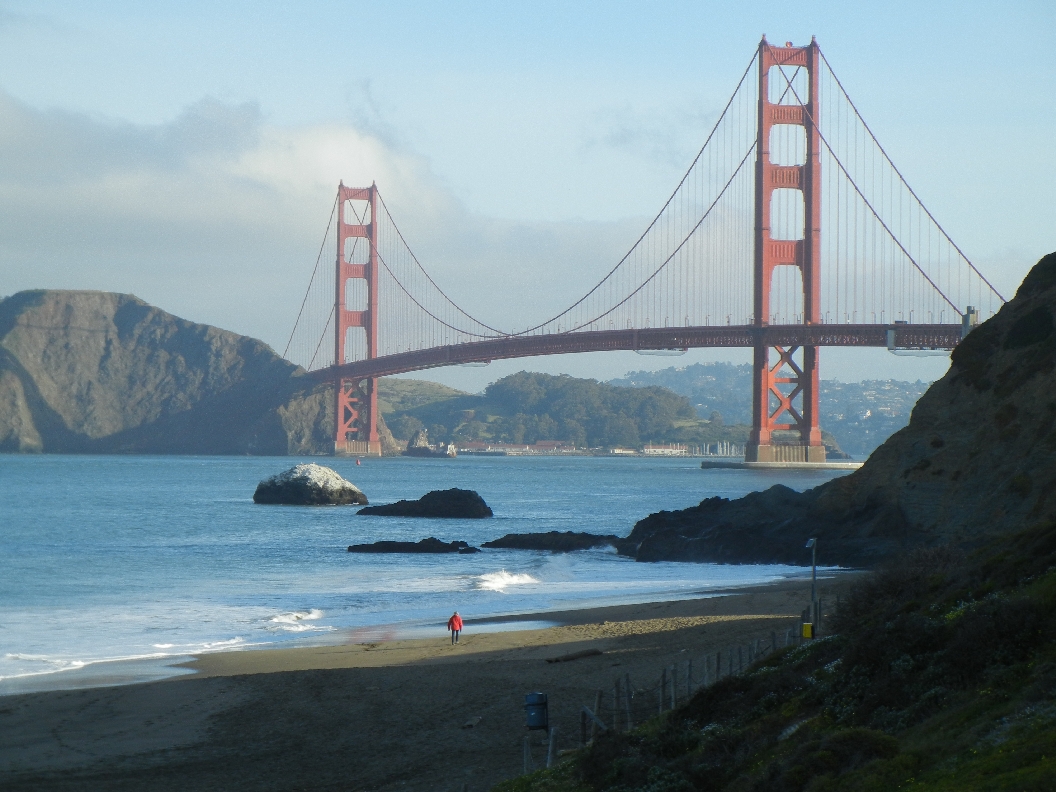
March 5 – We first walked Casey on Baker Beach (Battery Chamberlin).

DSCN1082

DSCN1084

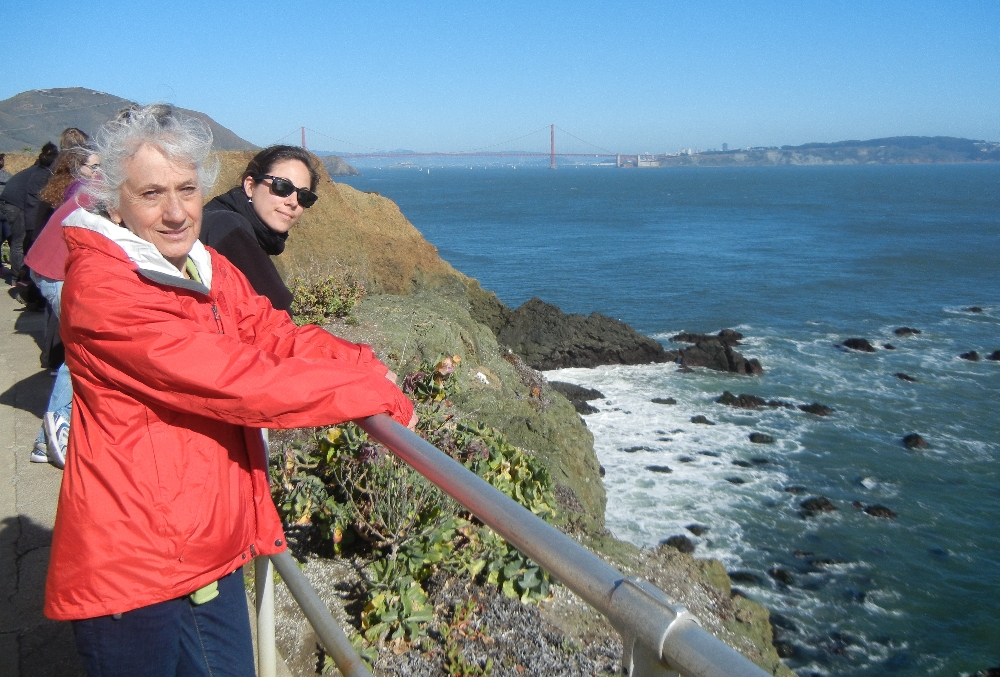
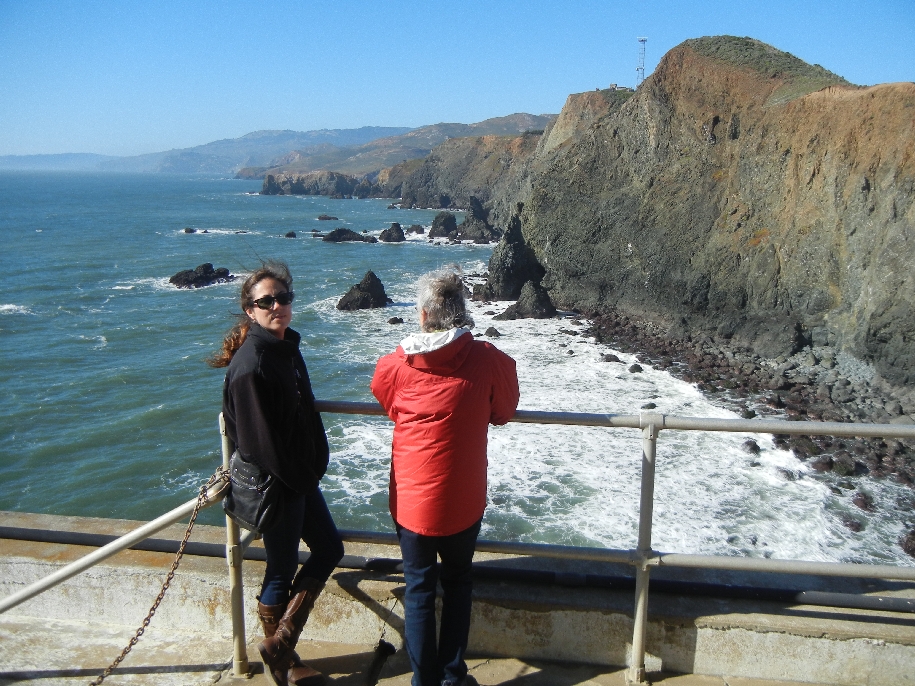
We then drove across the Golden Gate Bridge to the vista point at Horseshoe Bay and Battery Cavallo.  The Sailor’s Statue overlooks SF Bay, the GG Bridge, and San Francisco.

DSCN1067

DSCN1068

Impressive U.S. Coast Guard plaque

DSCN1069

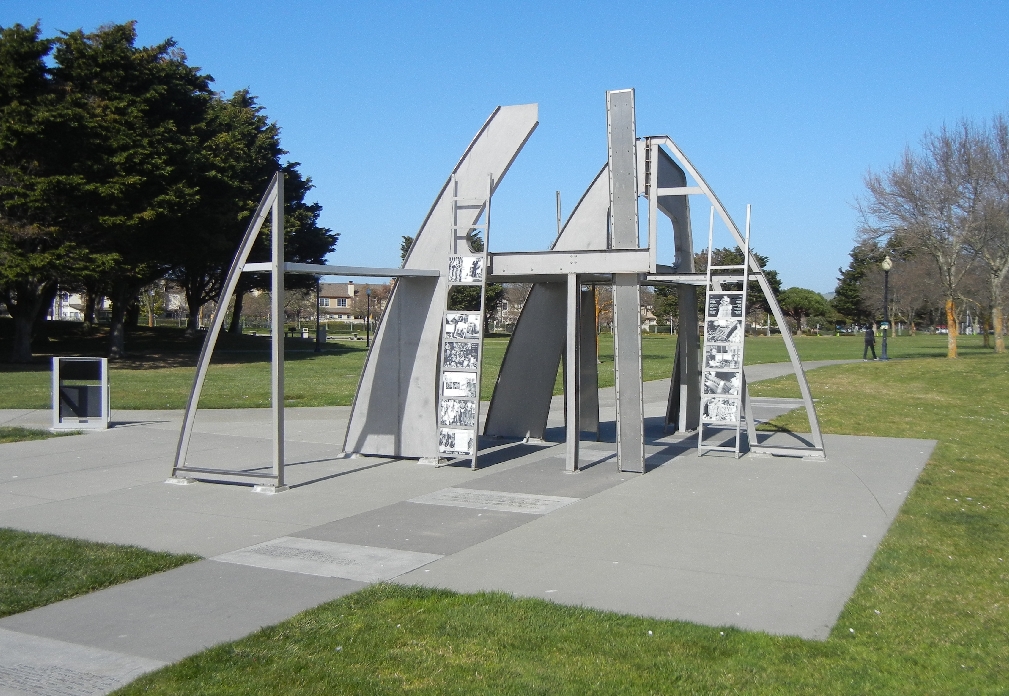
Rosie the Riveter – World War II Home Front National Historical Park in Richmond (north bay).  World War II was an important stimulus for moving women into the work force and toward gender equality.  Seven hundred and forty-seven ships, mainly Liberty and Victory cargo ships, were launched from the Richmond Naval Yards.

DSCN1073

DSCN1074

Rosie the Riveter Monument

DSCN1071

Check out those guns!

DSCN1141-cropped

Refurbished Red Oak Victory Ship

DSCN1075

In the evening, we had a hardy dinner (including potato pancakes!) at the Suppenkuche restaurant

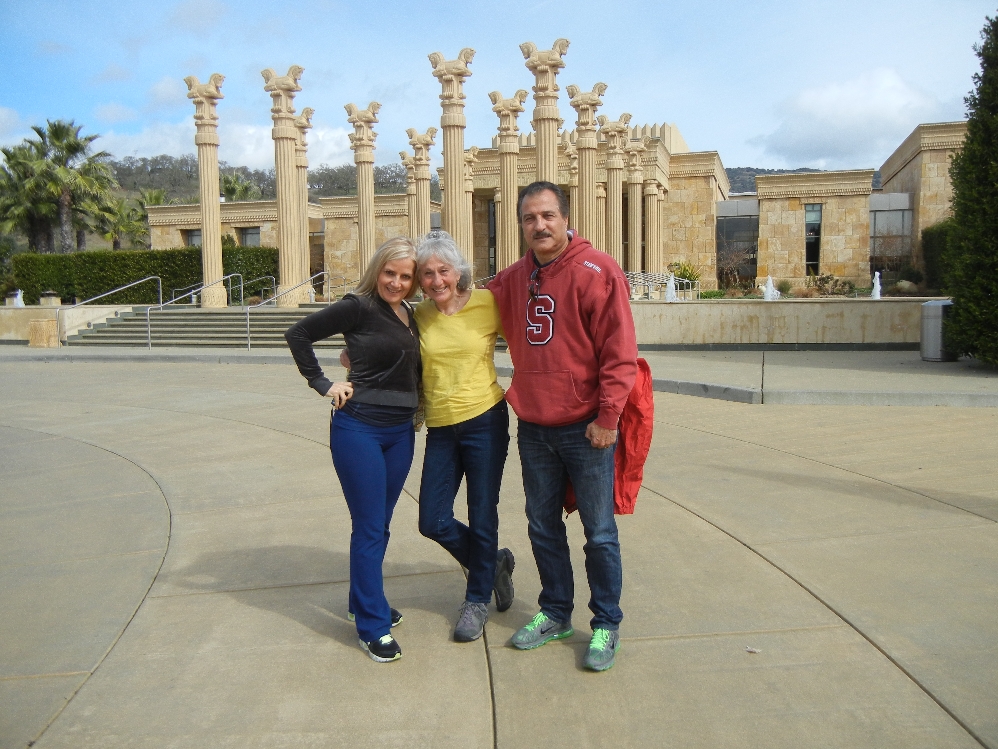
March 6 – Napa Valley tour with Amir and Afsaneh, our first stop was the Darioush winery.  It was started by an Iranian and has Persian motifs from Persepolis – the ancient ceremonial capital of Persia.

DSCN1097

DSCN1098

DSCN1100

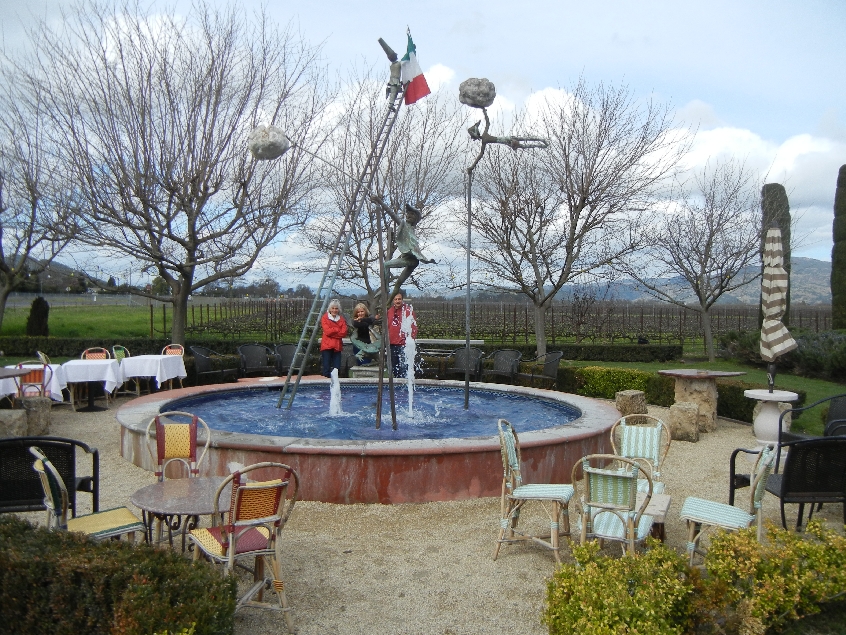
We had lunch at Boskos Trattoria Italian Restaurant in Calistoga

DSCN1104

DSCN1105

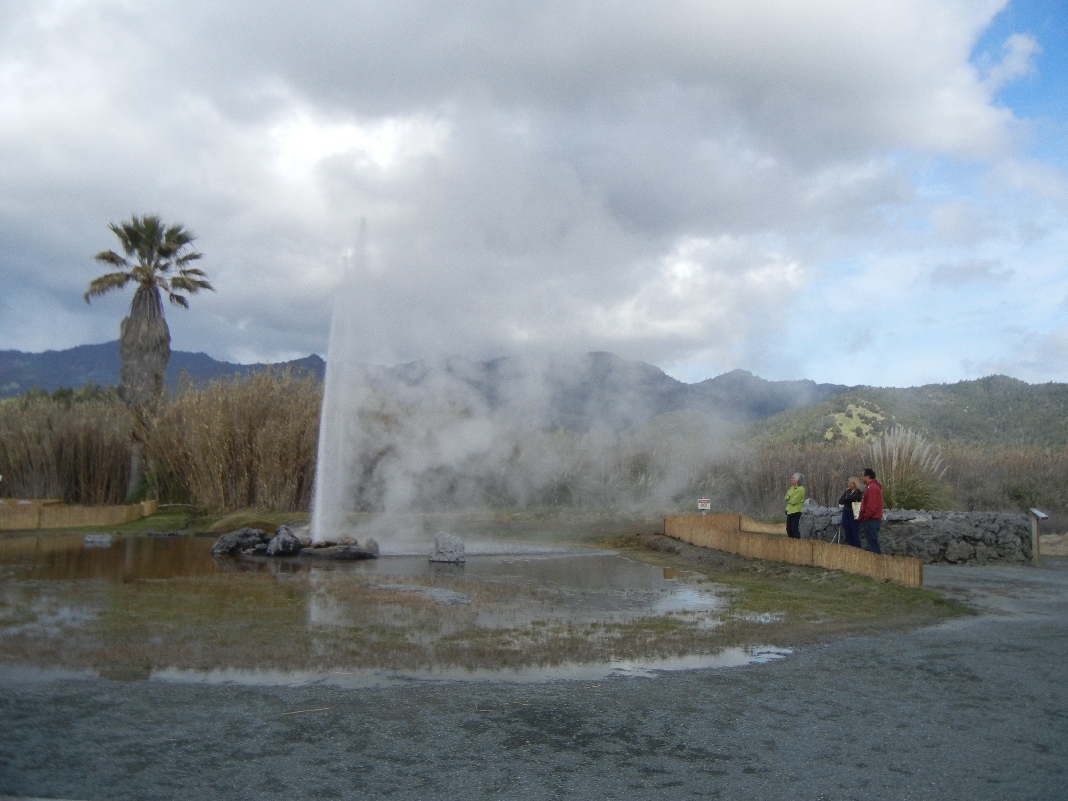
We then took a short drive to Old Faithful Geyser of CA – one of only 3 “Old Faithful” geysers in the world.  Who knew?

DSCN1107

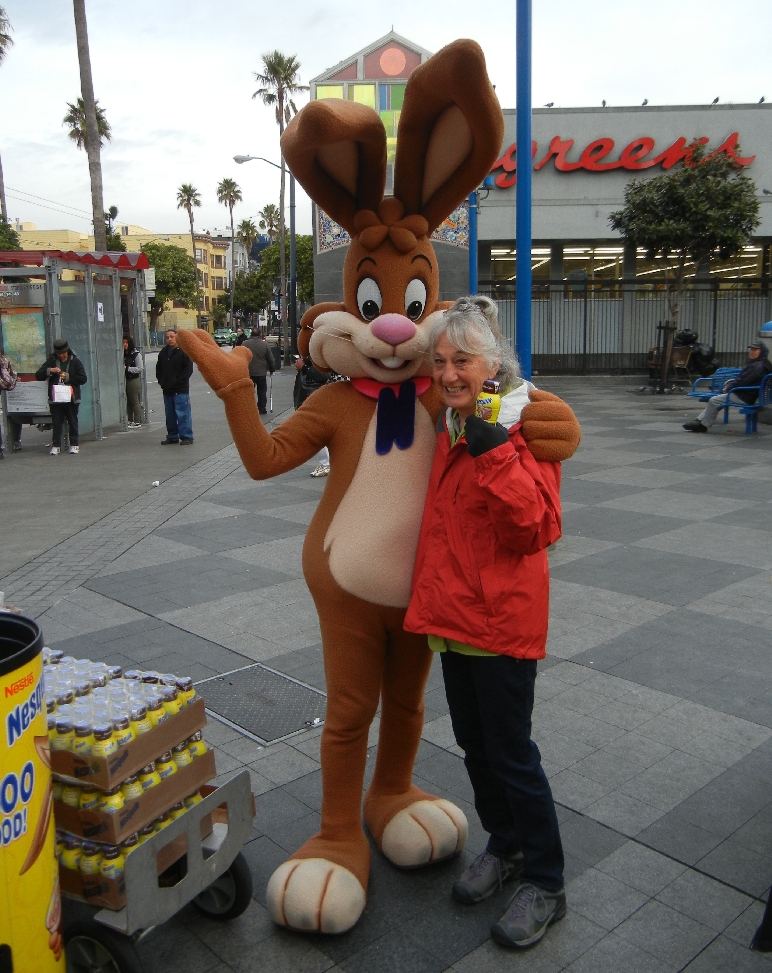
March 7 – the Nestle rabbit caught us just as we were ready to go down into the BART station at 16th and Mission – one free Nestle Chocolate drink for later in the day.

DSCN1109

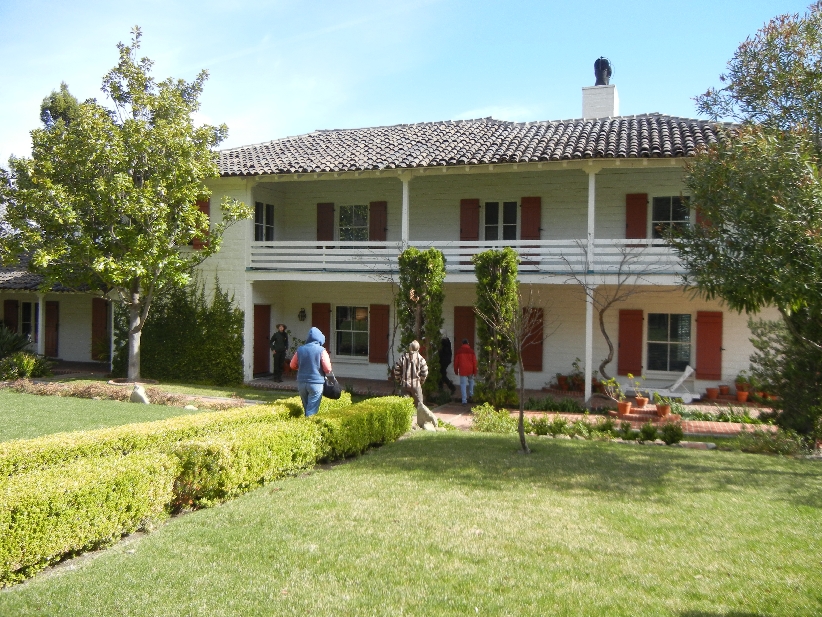
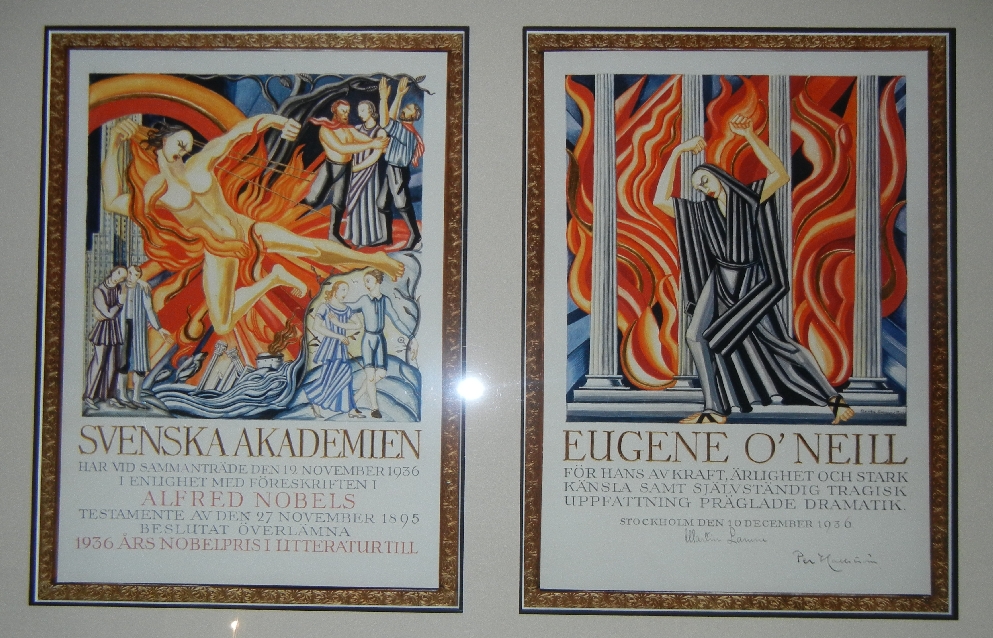
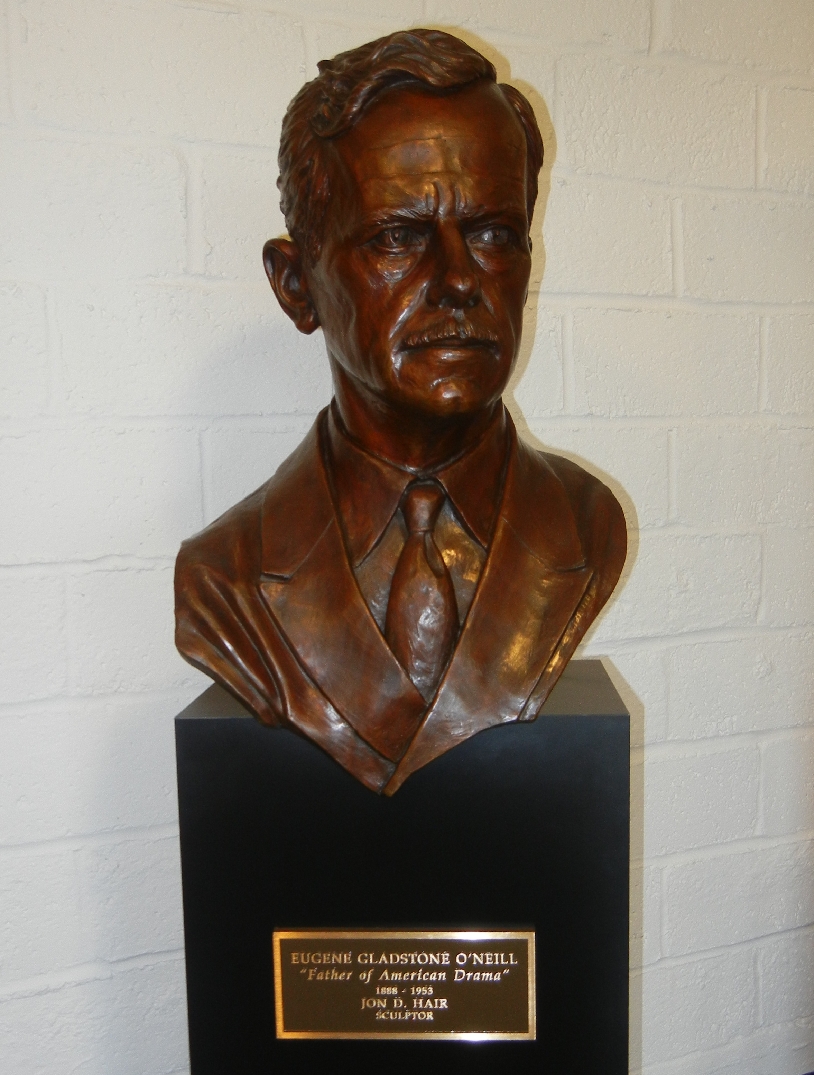
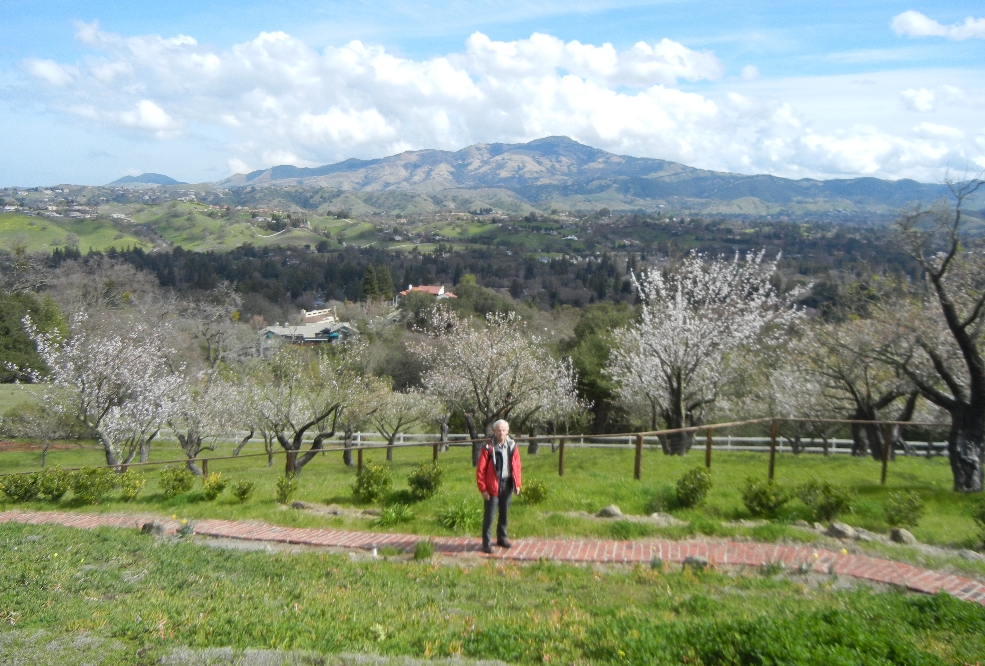
We took the BART to the end of the line in Dublin/Pleasonton in the east  bay and were picked up by Dave and his wife Carla.  I had met Dave on our Arctic trip in AK last summer.  We drove to Danville where we were picked up by a National Park Service van to be driven to Eugene O’Neil National Historic Site.  O’Neil was a famous playwright who won the Noble Prize for literature in 1936.  He took his prize money and built the Tao House outside of Danville to “get away from the world.”

DSCN1124

DSCN1123

DSCN1113

Office

DSCN1115

DSCN1116

DSCN1121

Beautiful view from the house –

DSCN1122

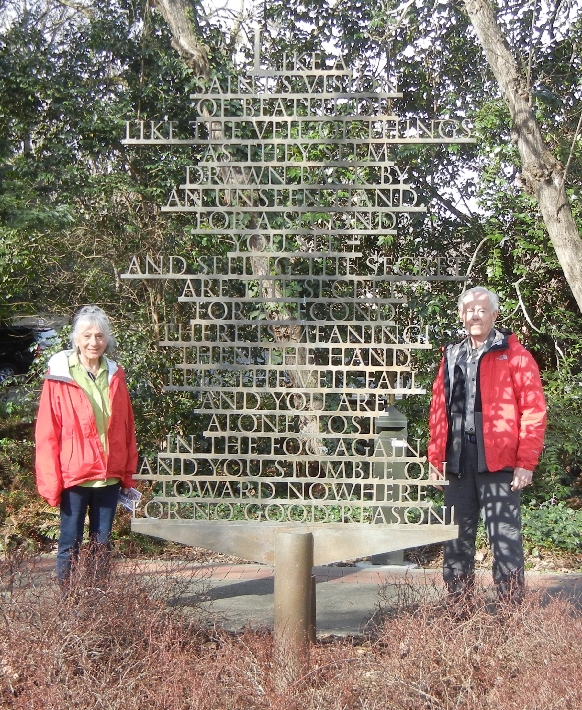
O’Neil produced many American dramas, e.g. – “The Emperor Jones,” Anna Christie,” The Hairy Ape,” “Desire Under the Elms,” “Mourning Becomes Electra,” “The Iceman Cometh,” and “Long Day’s Journey Into Night.”  This sculpture is in Danville across from the library and is a quote from “Long Day’s Journey Into Night.”

DSCN1111

After lunch at La Boulange in Danville we drove to Port Chicago Naval Magazine National Memorial on the Military Ocean Terminal Concord Army base on Suisun Bay.  This is an active Army base and we needed pre-approval with name, ID, etc. to get a reservation on the National Park Service tour, which is limited to 15 because of the size of the van.  We were first checked in and photographed at the entrance to the base and then permitted to continue the tour.

Port Chicago was the sight of the worst homeland disaster during World War II.  It was a Naval site for loading munitions for the Pacific theater and on July 17, 1944 when two munitions ships were being loaded they exploded killing 320 men.  It was a huge explosion with a debris-filled cloud rising 12,000 feet and a shock wave felt 40 miles away.  Two hundred and two of the men were African American enlisted personnel who were relegated to the menial loading tasks.  About three week later when 258 African Americans survivors were being marched back to continue loading munition ships – they refused because of unsafe conditions.  This was called a “Mutiny” and all were jailed.  Two hundred and eight later yielded, completed their terms, and were given bad conduct discharges.  Fifty refused and faced the largest mass mutiny trial in naval history.

Despite being represented by Thurgood Marshall, these men were found guilty and sentenced to 8 to 15 years imprisonment and dishonorable discharges.  A black mark in naval history.  Their acts of civil disobedience brought to light the injustices of racial segregation in the military and was an important catalyst for the American Civil Rights movement.  Following this tragedy the Navy began addressing the issue of both safety and segregation.

DSCN1127

DSCN1131

DSCN1129

March 8 – Helen and I began the day by taking Casey to the Fort Funston beach, which is dog friendly.  It was a good hike and a bit of a climb back to the parking lot.

DSCN1135

We then took the trolly to the waterfront and finished our tour of the San Francisco Maritime National Historical Park that we had started last year.  Kate and I had our second annual mani-pedicure that evening and we then heated frozen pizzas and watched the James Bond movie Skyfall.

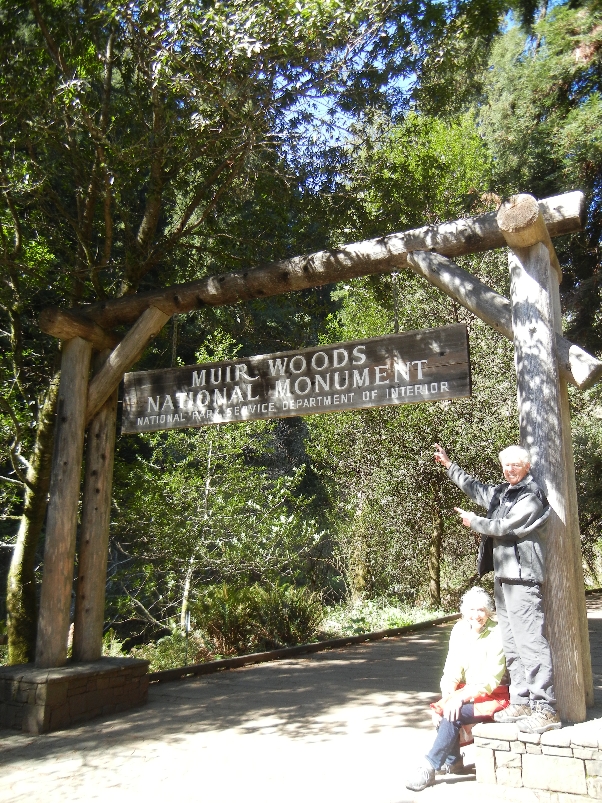
March 9 – Our first stop was Muir Woods National Monument.

DSCN1159

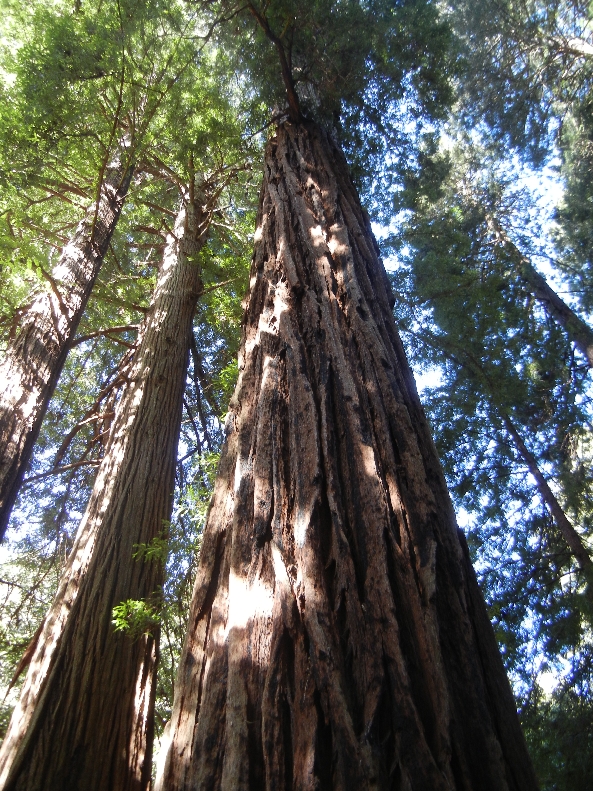
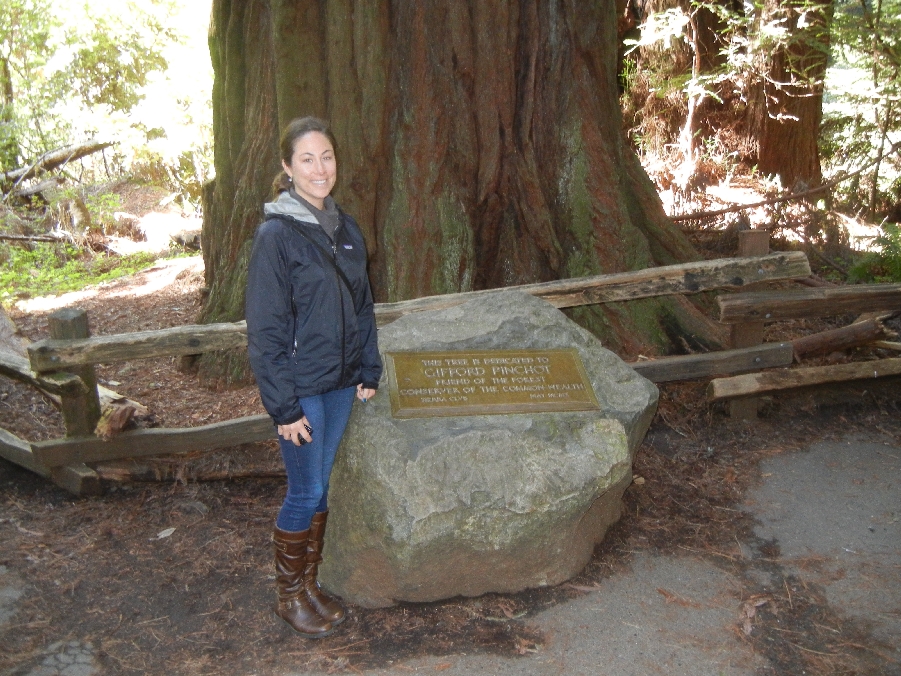
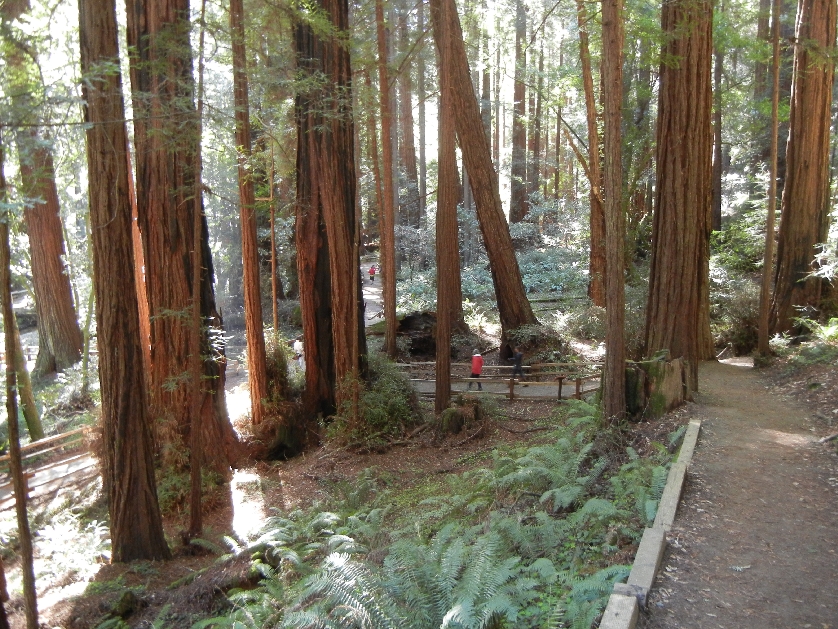
Our two mile morning walk through the redwood forest was delightful as can be seen from these photos.

DSCN1158

DSCN1147

DSCN1146

DSCN1144

DSCN1149

DSCN1156

DSCN1157

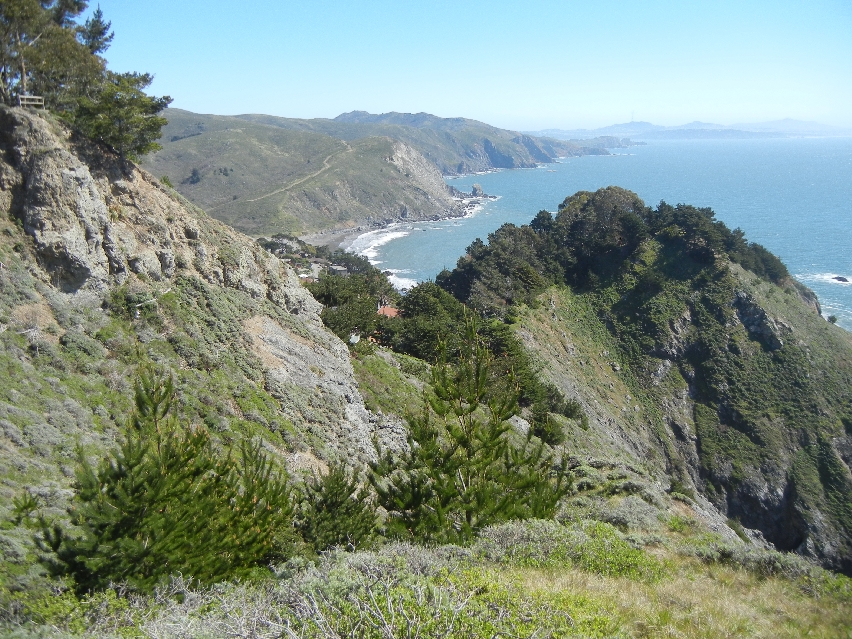
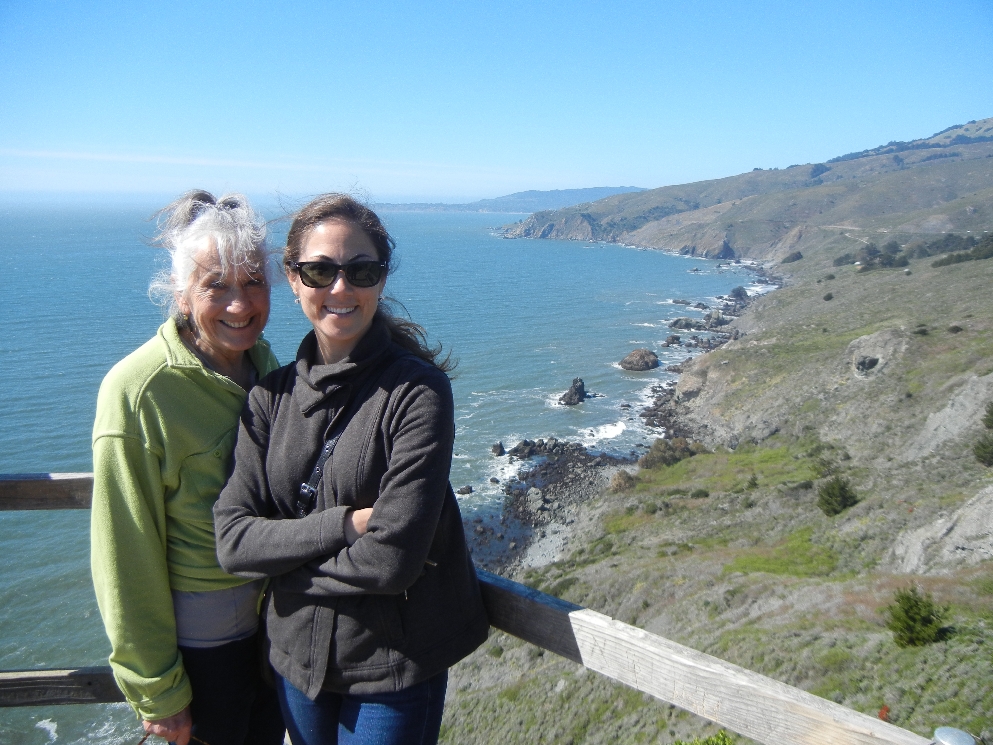
We then drove to Stinson Beach, walked the beach, and had lunch at the Breakers Cafe.  We then drove south along the ocean and stopped at a headland where we could see Muir Beach.

DSCN1160

View north from overlook

DSCN1161

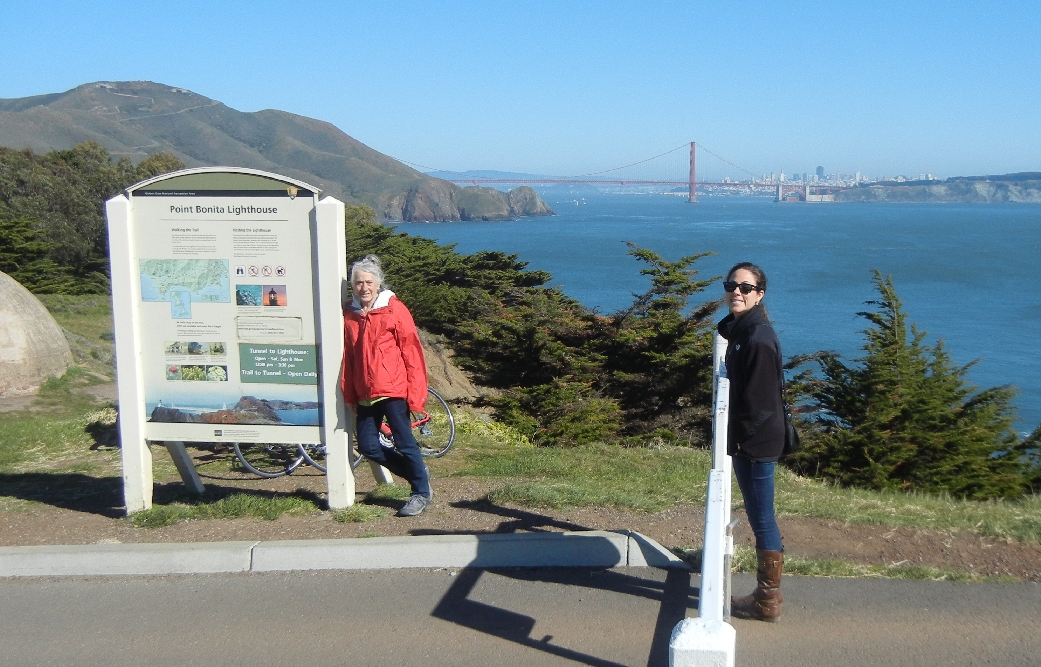
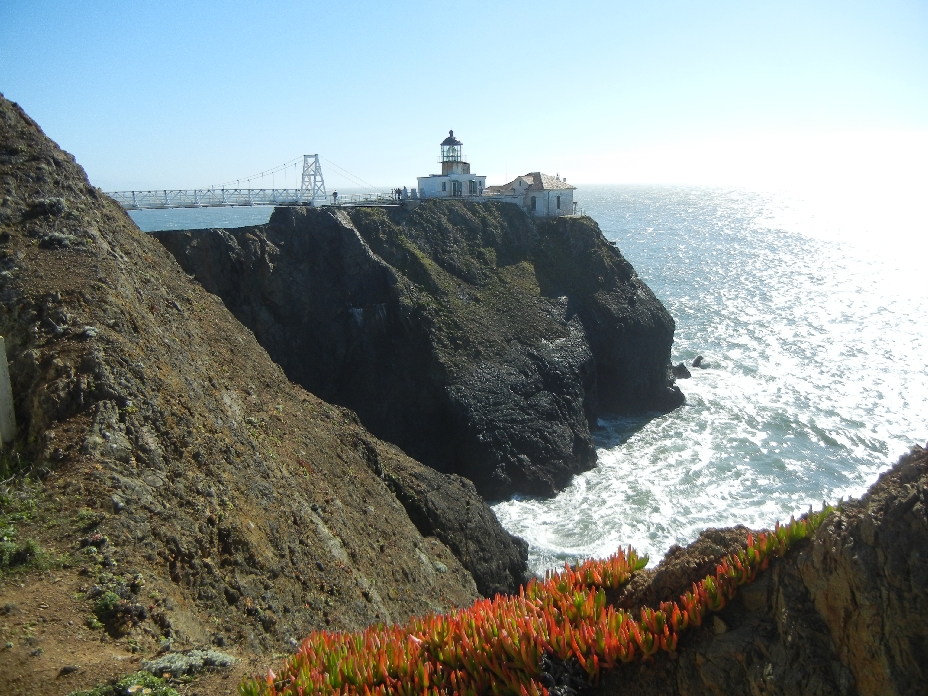
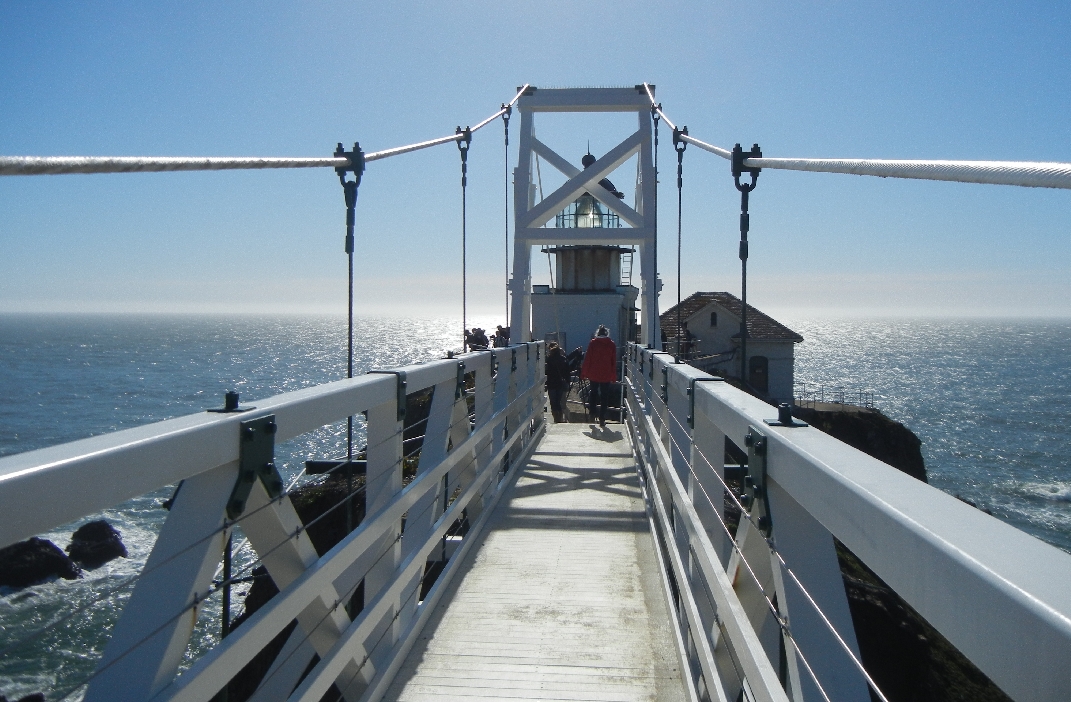
We did a quick walk on Muir Beach and then headed for the Marin Headlands Visitor Center.  We then had to hustle to make it to the trail to the Point Bonito Lighthouse as it closed at 3:30.

DSCN1163

DSCN1164

DSCN1167

DSCN1169

DSCN1171

DSCN1172

DSCN1173

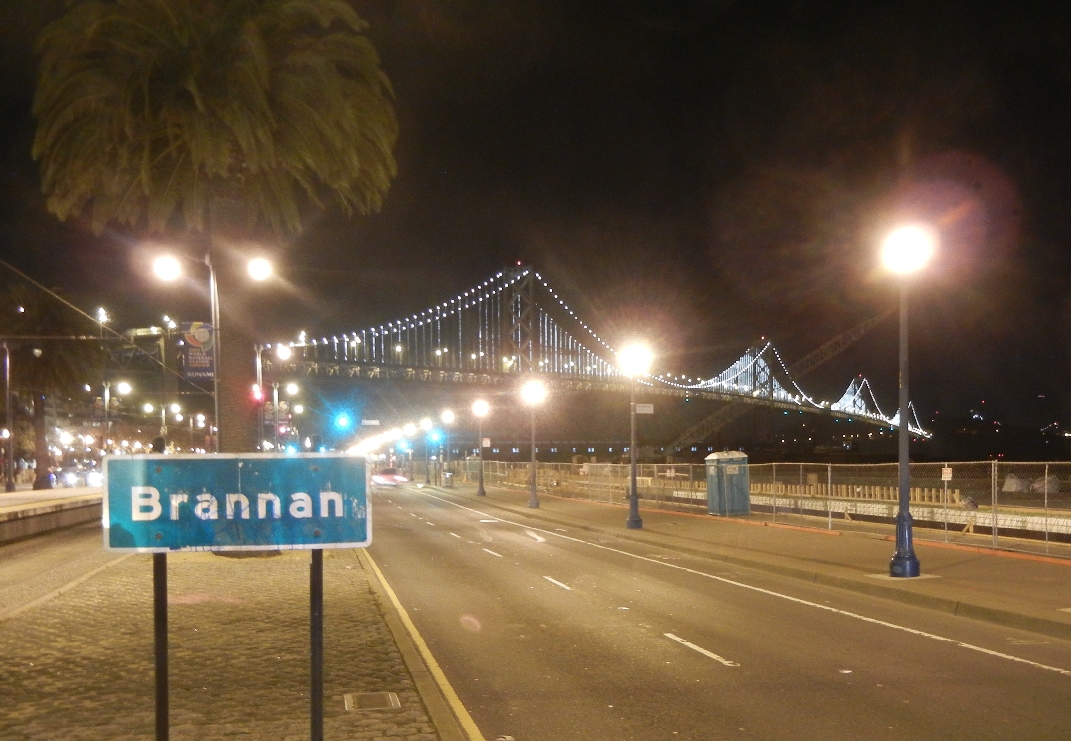
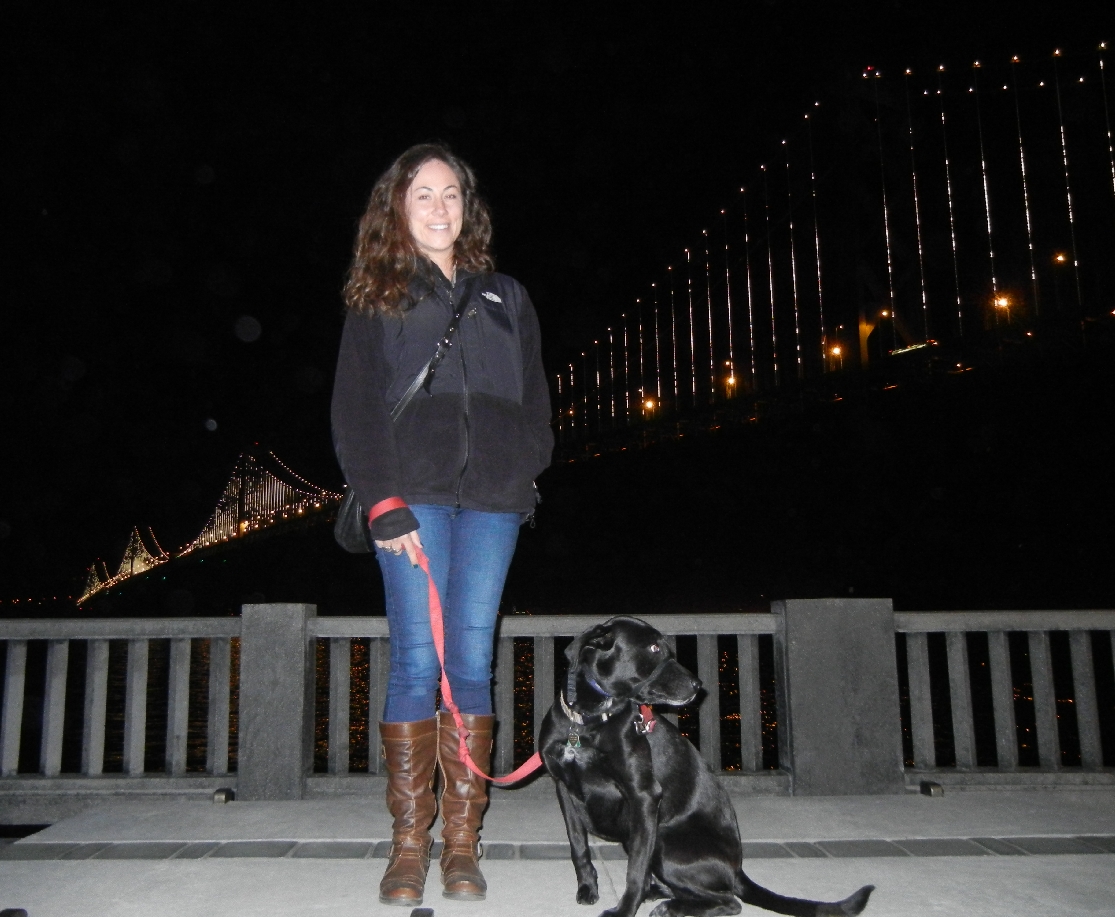
After a nice dinner at the Indian Oven restaurant, we drove to the Oakland Bay Bridge where they had just started a two year LED light display a few days before.

DSCN1177

DSCN1179

Check out a video of the bridge lights at – http://youtu.be/sgQXyxRSYaA

DSCN1184

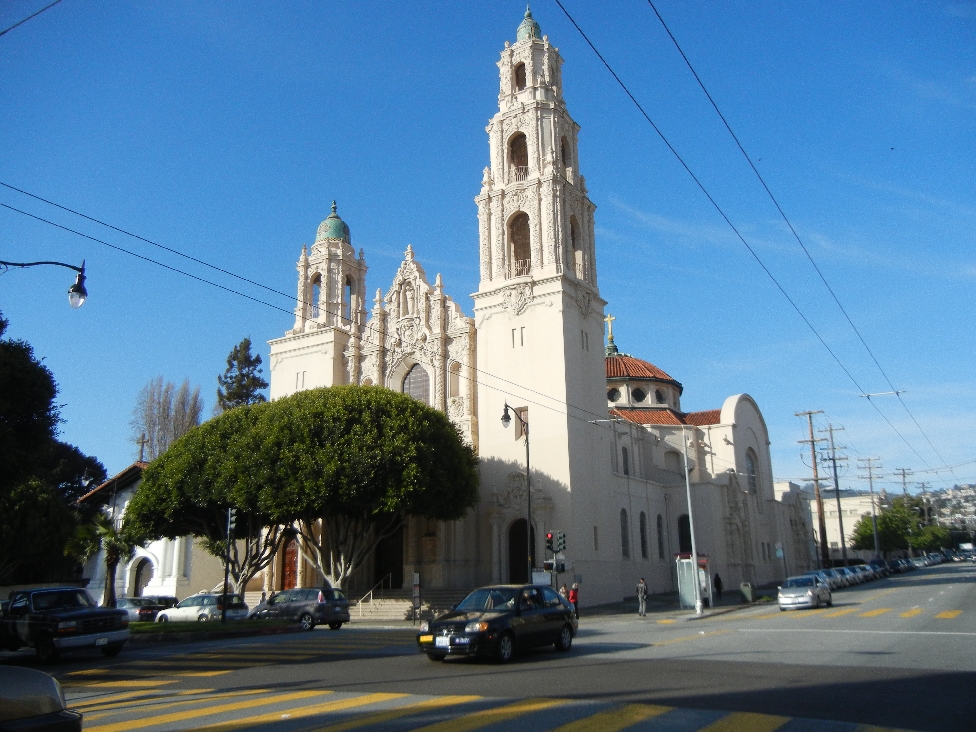
March 10 – We went to mass at the Spanish Mission Dolores (1776 but rebuilt after the earthquake) and then had brunch at the Crepevine.  Our flight left SF at 2:30 and we switched planes in Denver.  We didn’t get home until 1am due to the three hour time change and the one hour lost switching to daylight saving time!

DSCN1186

h1

Mohican State Park, OH

November 22, 2012

Three of four children were going to be out-of-state for Thanksgiving so we decided to do a short road trip with Peter, Heather, Muy and Bunni (their dogs) to Mohican State Park in central Ohio.  We drove up the day before Thanksgiving and arrived in time to do a six mile (round trip) hike on the lower North Rim and Hemlock Gorge trails.  The weather was unseasonably warm as we hiked along the Clearfork of the Mohican River.

We had a nice dinner in the Mohican Lodge and stayed in “dog friendly” room with two double beds.  Peter & Heather brought drinks and snacks for our evening Farkle games!

November 22, 2012  “Thanksgiving” – Peter made coffee in the room and got out the orange juice he had brought as well as the blueberry buckle, pumpkin bread and banana bread that Heather had baked the day before.  We served the ladies breakfast in bed!

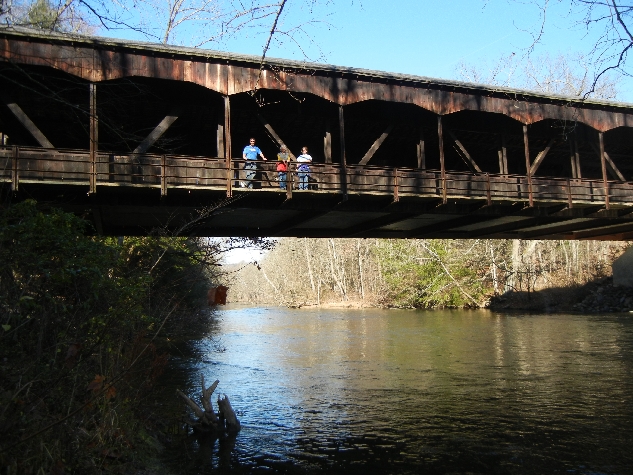
We then drove to the dam to start our three mile hike to Little and Big Lyons Falls, the Covered Bridge and back to the dam along the Pleasant Hill trail.

h1

Early Thanksgiving

November 11, 2012

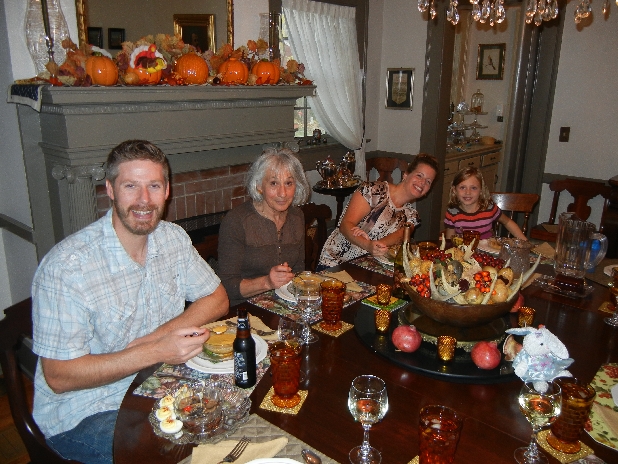
We celebrated Thanksgiving early because the Fischers were going to be in Kansas City.

h1

Drago’s First Birthday

October 12, 2012

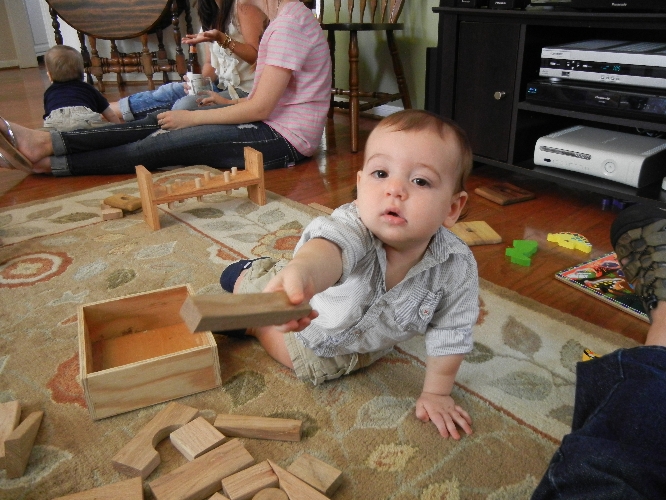
Drago’s birthday is 10/10, but Chad and Liz organized a party for him on saturday so we could be there.  Six near one year olds and parents made for an interesting afternoon!

My morning walk –

October 13, 2012

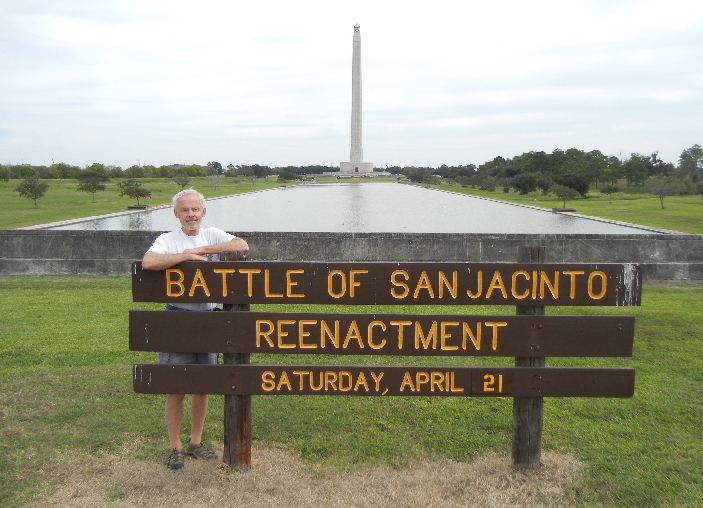
San Jacinto Battleground – April 21, 1836 – Texas State Historic Park

Chad and I drove to the east side of Houston to tour this important historic site.  Santa Anna had already taken the Alamo and also executed over 300 Texans who had surrendered at Goliad.  However, he made the mistake of splitting his forces leaving him with about 1300 at San Jacinto.  The Texans had about 900 men and Sam Houston attacked in the afternoon when the Mexicans were not ready.  Santa Anna was so confident he had not even posted sentries!  It was a slaughter, with cries of “Remember the Alamo” and “Remember Goliad” over 600 Mexicans were killed  with the loss of only a handfull of Texans.  The next day Santa Anna surrendered and Texas had won its independence.

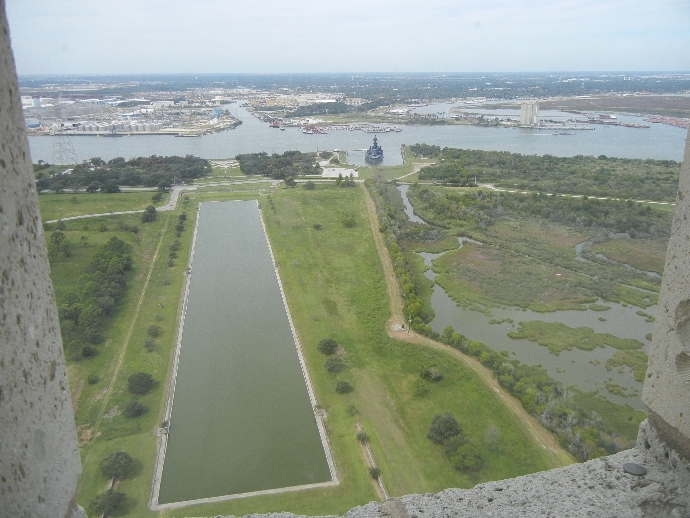
At 567 feet, this is the world’s tallest memorial stone column.  It is 12 feet taller than the Washington Monument, plus it has a 35 foot Texas star on top.

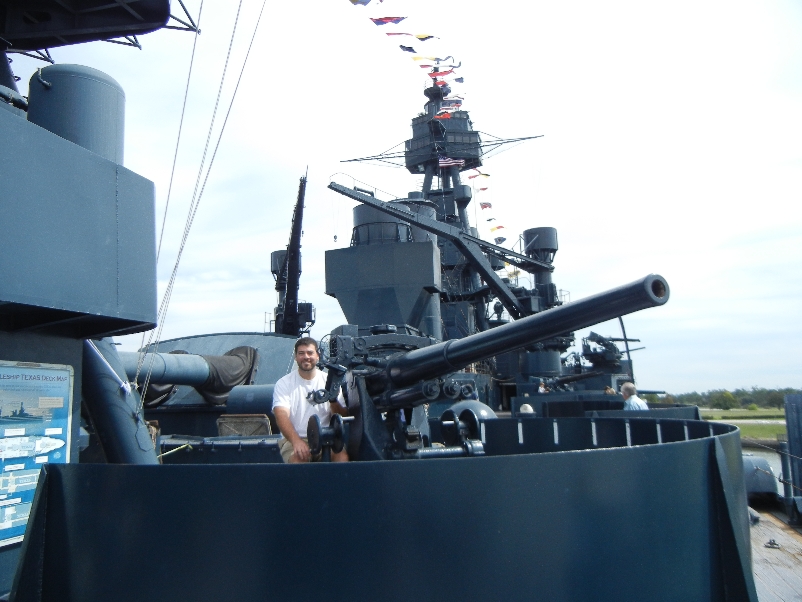
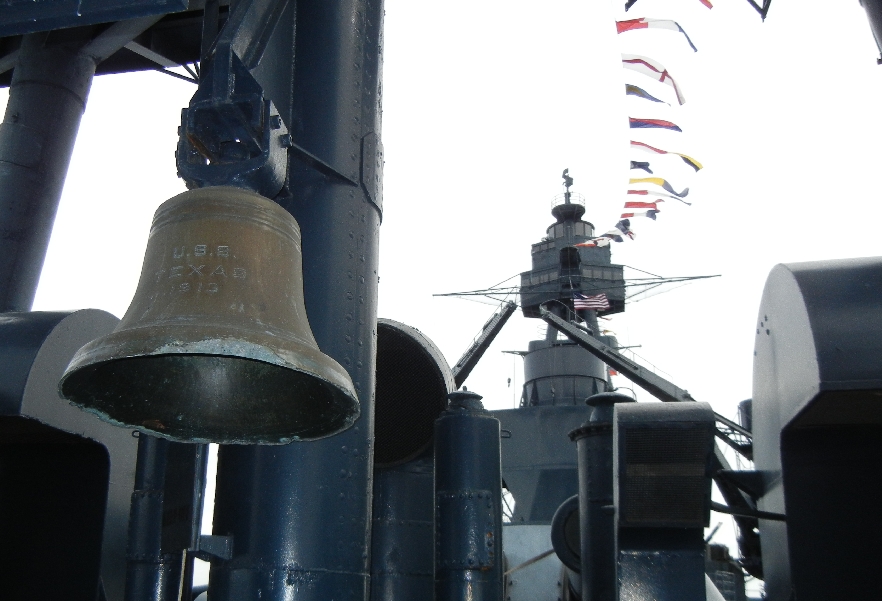
USS Battleship Texas – commissioned in 1914, is the only surviving battleship to have served in both world wars.  It is about the same length (573 feet) as the memorial is high!

Peace!!!

It was great fun, we were able to go three levels above and below the main deck.

h1

Alaska 2012

August 31, 2012

8/16  Helen dropped me off at the Dayton airport at 4pm with my 43 pound dry bag pack and my 14 pound day pack.  I have to have my total weight down to less than 40 pounds for the Noatak Wild River trip and less than 30 pounds for the Yukon-Charley Rivers trek.

When I arrived in Minneapolis/St Paul I had to change to the F concourse and gate F10 for a 3.5 hour layover before my 9:39pm flight to Anchorage.  When I arrived at the gate I noticed that the next flight out at this gate was to Columbus, OH.

I knew Kate was traveling from San Francisco to Columbus today to attend a wedding and thought that it would really be cool if she happened to be taking this connection.  I had no idea what her cities or connections might be.  I sat there reading my book and eating the sandwich Helen had prepared for me keeping a lookout for new passengers that were arriving at the gate.  About 20 minutes before the plane was to depart – there she was going up to the counter!

I snuck up behind her and gave her a big hug.  She looked around and said “Dad?!”  We both laughed and hugged each other.  She said, “Well, now I will be seeing the whole family except for Chad.”  Kate, Helen, Stacy, Brad, Leva, Geert, Hattie, Peter and Heather will be getting together for pizza at Dewey’s on Sunday.  We enjoyed each other’s company until she had to board her plane.

My flight left on time and arrived in Anchorage at 1am.  That’s 5am OH time!  It took me an hour to get settled in the Microtel Airport hotel and I call Helen as she was waking up at 6am.

Kodiak Alaska

8/17   I had the Continental breakfast and prepared for my 1:45pm flight on Era Airlines to Kodiak on Kodiak Island.  The weather was good for our flight but I discovered that we were the first Era plane to land in 3 days due to storms and high winds.   Bronwyn of “Bev’s B & B and Make Your Own Darn Breakfast” picked me up at the airport and gave me a quick tour of Kodiak as we drove to the B & B.

I walked approximately a mile back into town taking the “low” route along the water.  I stopped at the Kodiak Visitors Center at the Alaska Ferry Terminal and at the Kodiak National Wildlife Refuge Visitors Center to pick up information.

I had an Ahi Tuna Steak, fries and a beer at Henry’s Great Alaskan Restaurant and then walked back to the B & B passing Holy Resurrection Russian Orthodox Cathedral.  I hit the sack and tried to get caught up on my 4 hour time change.

8/18  Helen called at 6:15am!  This was the day I was supposed to fly to Aniakchak National Monument but the weather did not cooperate.  I walked back into Kodiak passing the “Star of Kodiak,” which is a Liberty Ship from WWII that has been converted into a cannery.

I rented a car (Rent a Heap) and drove to Near Island across from the city for views of sea lions and to see the Kodiak Fisheries Research Center and its outstanding Public Aquarium & Touch Tank with all sort of tidal zone aquatic life.

I next drove out to White Sands Beach and spent a few minutes walking the beach.  They obviously have bear problems here.

On the way back to town I stopped at Fort Abercrombie State Historical Park, which was a WWII military installation including two 8” guns at Miller Point.  There were some ocean/coast views and an interesting Military History Museum in the old ammunition bunker.  The guns were to protect the new Naval Base outside of Kodiak.  In 1942 the Japanese had captured the first two Aleutian Islands of Attu and Kiska.

My objective was to drive ALL the major roads on the island.  I drove back through Kodiak, past the airport and Coast Guard Base, around Womens Bay, Middle Bay and Kalsin Bay to a fork in the road.  I first took the Chiniak Lake road which shortly turned into a pot holed, slippery, mud/gravel road to Chiniak Lake on the ocean.  I took a couple of interesting pictures but would not recommend this road.

It was 12 miles back to the fork in the road and the route to Pasagshak State Recreation Area, Surfers Beach and the Kodiak Missile Launch Complex.  I was surprised to see the large buildings with what appeared to be minimal security.  It was now raining with strong winds as I took a short walk on Fossil Beach.

I then returned to Kodiak passing the docks.  Where is this Panamanian registered ship taking our Alaska lumber?

I stopped in town for some beer tasting at the Kodiak Island Brewing Company and then had a Calamari Steak sandwich at Henry’s – biggest piece of Calamari I have ever had!

8/19  Again, the weather did not permit a flight to Aniakchak.  I was out at 6:30 to do the road to Anton Larsen Bay and the trail from the end of the road to Sharatin Bay.  It was another gravel pot-holed road but did have some good views.  Note the crosses, what a great place to be buried; this is where a small plane crashed.

I started my hike thinking it was a little over a mile one-way.  The U.S. Fish and Wildlife Service that maintains the trail had placed connected 18” x 36” plastic grids about an inch thick on three quarters of the trail.  It made walking easy and prevented the ATVs from digging up the trail.

I hiked for what I thought was over an hour and still seemed to be a good distance from the bay.  So, I turned around and headed back so I could turn in the rental car and not be charged for another day.  I had forgotten my watch but discovered when I returned to the car that I had been gone 2.5 hours.  I put my “bear bell” away, placed my hiking pole on the trunk, and took off my sweaty undershirt and jacket and spread them out on the back seat to dry.  I then threw in my day pack and started driving.

I got back just in time to turn in the car but when I went to remove my things discovered the hiking pole was missing!  Rent a Heap was understanding and allowed me to use the car for another hour to return to the trail head but I was unable to find the hiking pole.  I spent about an hour downtown and then returned to the B & B to pray for good weather and prepare for my last opportunity to fly into Aniackchak NM the next day.

Aniakchak National Preserve and Monument

8/20  A Sea Hawk Aviation van picked me up at 9:30am.  I was provided wader boots, the de Havilland Beaver float plane was prepared and we were airborne at 11am.  We flew South over Kodiak Island with Rolan Ruoss and his wife Jo pointing out various features.  By allowing Jo to come along on the flight, it was agreed that they would give me at least two hours of “ground time” at no charge in the Aniakchak Volcano caldera.  I sat in the copilot seat and though cold and windy was able to open the window to take pictures.  I had to hold the camera tight so as not to lose it.  This is an inlet on Kodiak Island –

Fish Counting Station

Departure point from Kodiak Island heading west across Shelikof Strait

We were blessed with a good day for flight seeing and some of the bays along the way were spectacular.  I believe this is Portage Bay.

We continued southwest along the east side of the Aleutian Peninsula.

Aniakchak National Preserve

We considered landing on Meshik Lake in Aniakchak NP but upon circling it Rolan decided it was too shallow.  So, we headed for “The Gates,” which is a notch cut about 2,500 feet in the caldera wall where the Aniakchak River flows out of the crater and to the ocean.  It was a bumpy ride through The Gates and entering the caldera.  We circled Surprise Lake twice before landing.

This is perhaps the least visited of the national park units and I had read that only about 7 to 10 parties per year enter the caldera.  Aniakchak is difficult to get to and has severe weather most of the year.  Our first stop was at some mineral springs (orange)feeding the lake.  I would guess the water was about 60o F.  The volcano is active and last erupted in May 1931.

Landing on Surprise Lake

Parking place by mineral springs

Caldera floor, Rolan and Jo – we climbed cinder cone in background

Our footprints joined those of bear, elk, caribou and wolves in the pumice of the crater.  There were no other human footprints.

We hiked to the top of one of the cinder cones in the crater for a good view.  Half way up we came across a bear pit where that bear could easily spy the game in that part of the crater.  Note the bear scat and the plane parked in the lake.  In addition to the pumice floor of the caldera, we could see other cinder cones, lava flows and explosion pits.  The caldera is about 6 miles across, 2,500 feet deep and Surprise Lake is 2.5 miles long.

High winds on top of the cinder cone

Beauty and Desolation

We spotted some caribou along a stream running into the Lake and carefully descended the cinder cone to see if we could get closer.  Following the stream we discovered the skeleton of a young bear.  Bears are known to eat their young!

Our two hours of ground time passed quickly and a rain squall was rolling over the west side of the caldera rim so we returned to the plane, pushed off the beach and drifted while Rolan filled the gas tanks in the pontoons from gas containers stored in the plane.  Right before take-off we saw a grizzly bear on the east side of the lake and caribou on the west side.

On the way back to Kodiak, we flew on the west side of the Alaska Range of the Aleutian Peninsula.  This is the location of the Alaska Peninsula National Wildlife Refuge and the Becharof National Wildlife Refuge.  We were able to see several bear and a moose from the plane.  This is Ukinrek Maars and Becharof Lake –

I was startled when the engine stopped but it quickly started again – Rolan had switched to the other gas tank!  We passed over a hunting/fishing lodge as we crossed the west coast of Kodiak Island.

As we approached Kodiak, we saw a pod of Orcas or “Killer Whales” breaching in Monoshka Bay.  Landing in Kodiak –

We landed at 6pm and I had to be quickly transported to the airport for my 7pm Era flight back to Anchorage.  I took a taxi to the Oscar Gill B & B, showered and was in bed at 10pm – what a terrific day!

Alaskan Railroad

8/21  I boarded the Denali Star Alaska Railroad train in Anchorage at 8am.  I selected Gold Star service so I would have a reserved seat on the second level of an observation car.  However, when on the train I discovered that I could have selected the lower fare “Adventure Class” and still had access to an observation car.  That is what I would recommend.

Peregrine falcons?

The day started out dreary as the train went north to Wasilla and proceeded to Talkeetna moving through birch and spruce forests and crossing many rivers and streams.

From Talkeetna to Denali the vistas opened as the route followed the Susitna River.  This is a native “fish wheel” for catching fish.

We could see the mountains; however, the top of Denali was in the clouds.

The train then went through the Indian River Canyon where we saw many beaver lodges and ponds.  The track then climbed toward the tree line and crossed Hurricane Gulch on a 914 feet bridge, which is the longest on the railroad.  A bit later the train reached its highest elevation of 2,363 feet at Broad Pass.

Most people exited the train (e.g. the cruise ships unloaded their private cars) at the Denali stop as the weather improved to partly cloudy.  The Denali stop was dominated by tourism facilities and businesses.

On the way to Fairbanks the weather improved further as we passed through the northern boreal forest of birch, aspen and willows.  The train went through the mining town of Healy and the river town of Nenana where there is one of the original Alaska Railroad Depots.

The terrain opened and was dominated by relatively small spruce trees and hills as we approached Fairbanks.  We arrived in the “Golden Heart City” at 8pm.  I called Al from the Downtown Log Cabin B & B and he picked me up at the train station.

Yukon-Charley Rivers National Preserve

The following map was provided by Dave from the Noatak trip and shows five of the six parks I visited on this trip to Alaska.

8/22  I am writing this by kerosene lantern light at a table on the second floor of Slaven’s Roadhouse, which sits on the bank of the Yukon River in Yukon-Charley Rivers National Preserve.

Looking out the window I can still see the silhouette of the mountains, streaks of red clouds and the river flowing.

I left Fairbanks this morning on an Everts Air Caravan about 2 hours late because we had to wait for the fog to lift at the flight destination of Eagle on the Yukon River.  Flight to and arriving in Eagle –

Here is a picture of the Eagle Airport terminal building to the left of the plane.

The flight normally returns to Fairbanks but I paid an extra fee to be dropped off at the historic Coal Creek gold mining camp 4 miles from the Yukon River in Yukon-Charley Rivers National Preserve.  Flight to Coal Creek along Yukon –

Airstrip and looking down Coal Creek to Yukon

Looking up Coal Creek

Mouth of Coal Creek

Looking up Coal Creek

Good view of tailings and airstrip

After landing at the small/rough gravel air strip I was met by Glenn who works for the National Park Service and cares for the camp and airstrip.  I was told by the ranger in Eagle that Glenn would meet me with a mule to carry my packs the half mile to the mining camp where I was going to stay in a public use cabin.  Well, I had to laugh because the “Mule” was an ATV!

Glenn had completed his chores and volunteered to give me a personal tour.  We started by going two miles further up the creek to where the gold mining dredge had started its work in 1936.  The remains of a blacksmith shop and work shed are now located there.

We then returned to the mining camp where some of the cabins have been preserved and others stabilized.

Stabilized buildings that are still used

Dredge from air and trail

The “Dredge” was made in 1935 in San Francisco for $146,425.  The parts were brought in via the Yukon River and skidded on the frozen ground about 6 miles up Coal Creek to where a pond had been excavated.  Buckets to lift ore –

The Dredge did three things; (1) a chain of buckets brought the gold bearing gravel into the Dredge, (2) gold was separated from the gravel as it moved through a rotating screen while it was sprayed with water.  Sluices removed additional gold and (3) the rocks and gravel remaining were dumped behind the Dredge as tailings piles.  As the Dredge moved forward it dug its own pond.  The Dredge is now located about one mile from the river.

My plan coming in was to stay at the mining camp and do the 8 mile (round trip) trail to the river but Glenn agreed to take me to the river in the “Mule” so I could stay the night in the historic Slaven’s Roadhouse.

Frank Slaven started his first claim on Coal Creek in 1905 and mined for 30 years.  He built the Roadhouse in 1932 to serve the travelers on the Yukon River and miners in the area.  Roadhouses were located about a day’s journey apart and were islands of comfort in a harsh land – bed, hot meal, mail, social center and an escape from isolation.

Upstairs

Downstairs

Glenn and I chatted for about an hour over a cup of Gatorade and then he returned to the mining camp leaving me as the sole resident of the Roadhouse.

About an hour later I heard someone calling from downstairs.  It was Rick, a fellow who was paddling his home made kayak from British Columbia to the Bearing Sea.  This was his third time doing this trip!  We talked for about an hour as he told stories of his 50 years of boating adventures around the world.

Rick took up residence in a public use cabin nearby and I again had the Roadhouse to myself.  I walked the shore of the Yukon and enjoyed a beautiful sunset.

8/23  I was up at 5:30 as light entered the Roadhouse and went outside for a few pictures.

I had a breakfast of oatmeal/raisin cookies and Ensure and then swept out the Roadhouse and wrote in my diary.  Rick stopped by at 7:30 to say goodbye.  It is so peaceful sitting here looking out the window at the leaves changing color on the trees, the blue sky with puffs and streaks of white clouds, the rolling tree covered mountains and the river flowing.

Glenn picked me up at 9:30 and we bounced over the tailings ATV road to the mining camp.  We had a cup of coffee and chatted until the plane arrived at noon.  I was the only passenger on the 9 seat Caravan for the hour flight to Fairbanks.  Leaving Coal Creek –

I again got to sit in the copilot’s seat and took several pictures.  I especially like the second one  –

As we approached Fairbanks, a large scar on the land appeared on the horizon.  It turned out to be an open pit gold mine.  I was told that 40% of the gold produced in the U.S. is from this mine.

Fairbanks

Verna from the B & B picked me up at the airport and even made me a sandwich for lunch.  Al let me use an old 15 speed bike, with only 3 useable speeds, and I spent the afternoon searching Fairbanks for a camera battery charger for my Nikon and then fully charging my two camera batteries in preparation for my 11 days in the wilderness.  That evening I relaxed with Al and Verna, which included a glass of Bailey’s on the rocks!

8/24  I enjoyed a French toast breakfast with another guest from Holland and then rode the bike downtown.  There are two monuments along the Chena River, the first is to Native and born Alaskans.  The second is the Lend – Lease Monument.  During WWII U.S. women pilots flew 8,000 fighter planes to Fairbanks.  They were then flown by Russian pilots to Siberia and into the war in Europe.

I next visited the Morris Thompson Cultural and Visitors Center, which included a museum, theater and information from national, state and local public/private sources.  I picked up NP pamphlets for the parks I would be visiting and checked out the topo maps of those areas as well.

I then rode about 11 miles to a Trans Alaska Pipeline System (TAPS) viewpoint.  It was very interesting to read about the building and operation of the pipeline from the Prudhoe oil fields to the port of Valdez.

After peddling back to Fairbanks, I rode to Creamers Field Migratory Waterfowl Refuge.  The Sandhill Crane Festival was to begin that night and the fields were full of Sandhill Cranes, geese and other birds who were preparing to fly south – some all the way to South America!  The Sandhill Cranes were about 3 feet tall with a wing span of 6 feet and made bugle like calls.  About 175,000 make a 4,000 mile migration annually.

Our Equinox Wilderness Expedition group lead by Karen (former NP ranger), assisted by Barbara (former NP seasonal ranger), and clients Carla, Kevin, and Steve from Denver, Dave from outside San Francisco, Andy from Schenectady NY, Rick and Matt from the Baltimore area and me met at the Bahn Thai Restaurant to have dinner, get acquainted and get pre-trip instructions.

Noatak River – Gates of the Arctic National Park

I have used selected pictures from Carla, Kevin, Dave, Steve, Andy and Karen for the Noatak River and Kobuk Sand Dunes.

8/25  It was raining when we drove to the airport for our Wright Aviation flight to Beetles, population 27 during winter.  We received two back country orientations one for Gates of the Arctic NP and one for Kobuk Valley NP at the small but modern NP Visitors Center.  As gear was sorted and packed it became windy and quite cold.

Two Brooks Aviation float planes were used to fly us into the Noatak River Valley with the first making a second trip.  Steve, Carla, Kevin and I were on the second and I again got to sit in the copilot’s seat.  The flight was about 1.5 hours as we flew over the tundra and mountains into Gates of the Arctic NP.

Arrigetch Peaks –

It was a rough ride as we had to fly through rain, wind and snow.  Our plane had to turn around at one point and fly through a different pass.

Our group was supposed to land at Twelve Mile Lake but poor conditions forced it to land on Nelson Walker Lake, a small lake further down the valley next to the Noatak River.

I was the last one jumping from the pontoon of the float plane to shore and ended up with a wet foot and hand – not good in this rainy, windy weather with the temperature in the 30’s.  My plane leaving –

Learning to put canoe together – need more parts!

While waiting for the last plane, I took a hike around the lake.  Campsite middle right –

Third flight landing –

Our gear was randomly shipped in on three flights so it took a long time to set up camp on the tundra and put our five Norwegian Ally folding canoes together.  We ate dinner about 10pm in the green conical cook tent.  I was shivering during our dinner of quesadillas, beans and rice.

It took me a while to get settled in my rented MSR tent but in the end I found it to be very roomy for one person.  Still, I was shivering in my sleeping bag with pants, shirt and socks on and it took a while to fall asleep.

8/26  First task, how to poop in the tundra.  Dig a 6” diameter 3” deep piece of moss out of the tundra – fill the hole and cover it.  Because of sketchy weather it was decided to maintain our camp for the day and do a hike.  But first check the canoes and breakfast –

My group climbed to a bench on the south side of the valley.  The colors of the changing vegetation were spectacular as we hiked around the lake, through a bog and up the south slope.  We had made sandwiches after breakfast and ate them as we looked down on the river and our camp.

Our camp is in middle of photo on other side of lake –

Carla found an arrowhead –

We returned to camp about 2:30 and I spent a couple of hours updating my diary.

Dave, Karen and Andy hiked up the opposite ridge for the next four shots showing the Noatak River Valley from upriver to downriver, note the glacial erratic –

We ate an early dinner and I was in the tent at 7:30 – it’s cold and raining.

8/27  We awoke to temperatures in the 30’s and it had snowed at the elevation we had hiked to yesterday.  It took a long time to pack up camp, carry gear to the river, load and secure the canoes for the first time.  We didn’t launch the boats until 12:30.

Here are Dave’s GPS points on a Google map showing the landing, camping, and some hiking and eating locations on the Noatak River –

Bear prints –

Our first stop was about 1.7 miles and 4 river miles away.  Our canoe is the one on the left.

We took a short hike to a Pingo, which is an up welling of the tundra where the ice pushes up the surface.  We ate our packed lunch at the base out of the wind and then climbed to the top.

Ground squirrels have pot marked the side of the Pingo with their burrows.

Canoes in center on near bank of Noatak River –

Mountain goats –

We continued paddling and stopped about 1.5 hours later when the sun came out for the first time.  The panorama was beautiful.

Wolf track –

Paddling the Noatak –

Paddling in Gates of the Arctic National Park –

We made it to the bank opposite the outflows of the Kugrak River as we were hit by a rain squall. There were a large number of bears in the area because of the Chum Salmon run up the river.  We set up camp on a gravel bar of a Noatak tributary across from the outflows.  That way the bears could see us and pass by on both sides of the camp.  Tents were set up in a light rain and I also collected wood for a fire.  Later we congregated in the cook tent for dinner.  Carla made a crumb cheesecake and we had that for dessert as we started the fire.

Filtering Water

Fire in the sky –

I finally got into the tent at 11:30.

8/28  I awoke at 5am to sounds that I thought were made by a bear walking by my tent.  I kept very still and when I got out of the tent an hour later discovered caribou tracks by my tent.  I also noticed ice covering my tent!

Though the day started out cold, it wasn’t raining!  View of downstream gravel bar and across river –

Camp on washout stream –

Bear on opposite bank –

Steve caught a Chum Salmon – that’s what the bears were after!

It took a while to decide on what to do today.  In the end we decided to ferry across the river in the canoes, hike and look for wildlife, especially bears.  The first area we examined revealed high bear activity – foot prints, scat, and partially eaten salmon.  We were carrying bear spray and a gun but decided to change location because we did not want a close encounter with a bear.  We had seen a bear in this location before breakfast.

Bear scat – note whole berries!

We paddled downstream and landed again at a high activity area.  We then headed up the tundra and the side of a mountain for better visibility.  It was a good hike with some stream crossings and from our vantage point we were able to see several bears in the distance.

View from bench –

The WHOLE group, left to right – Tom, Dave,  Carla, Steve, Barbara, Rick, Kevin, Karen, Andy and Matt –

Returning from bench –

When we returned to our canoes there was a bear just up river.

We ferried the canoes back to our camp side of the river and then “lined” them along the shore back to our camp.  The clouds and a misty rain descended so we moved around quickly to get the camp in order.  I also re-started the fire at the opposite end of our campsite because the wind had shifted 180o.

8/29  Another cloudy day, we broke camp, breakfast in the cook tent all ten of us sitting on canisters and buckets around the central pole.

We saw two bears across the river as we loaded the canoes.  Dave and I took additional group gear in our canoe.  Dave paddles in the bow and I’m in the stern.  I have become the “go to” person for canoeing tips.

The Noatak “Wild” River is wide and there are few places where you can get in trouble other than hitting a gravel bar or getting too close to shore.  By definition, a Wild River is one that is free of impoundments and generally inaccessible except by trail, with a watershed and shorelines essentially primitive and waters unpolluted. These represent vestiges of primitive America.

There are no trees on the upper Noatak, so there are no tree “strainer” problems.  At the same time there was a 3-4 mph current and the water is cold.  We had a lunch break standing in the willows out of the wind and then stopped at the mouth of the Ingling River where we took a short hike up-river.

Beauty at every step –

We paddled back across the river and set up camp on the opposite bank.  Dave went in search of a Muskox he had seen on a ridge with his binoculars and I hiked up the opposite ridge.  It was an honor and indeed a pleasure to be walking through the varied and beautiful vegetation of the tundra adorned in its magnificent colors.  I sang each of my special songs for Helen, Stacy, Peter, Kate and Chad as I reveled in the moment.  Ingling River emptying into Noatak, camp a bit right of middle of picture –

Dave was able to find and get some pictures of the Muskox and followed it down the ridge to the river.  Our group hiked back to where Dave had last seen it but was unable to find it.  Following our short hike we had another creative dinner.  The food has been good and healthy, if you make the right choices!  Karen put together a variety of dehydrated, fresh and packaged food.  There have been only a couple of things out of cans (e.g. chicken and tuna).  She pre-mixed many meals before the trip and put them in zip lock bags.  We also have treats like mixed nuts, dried fruit, cookies and chocolate.  For example, I especially liked the lunch sandwiches we made with turkey-pastrami loaf on 12 grain bread with brie as a spread and Fig Newton’s for dessert!

Sunset –

8/30  It rained all night and at 7am was still raining.  So, I rolled over and actually slept until 8:30.  When I went to the cook tent for the expected cup of coffee I was surprised that I was the first one there, usually I’m one of the last.  It took most of the morning to eat and pack up.  It was windy and I tried to dry the rain fly tied to bushes.  I discovered the plastic ground cloth that I was given did not cover the entire bottom of the tent and there were some small areas that were wet.

We launched about 11:30 and soon after it started to rain.  We paddled a couple of hours and then did a snack/potty stop.  The wind was strong and was generally behind us but because of the serpentine turns in the river we had a cross wind about 35% of the time and a head wind about 15% of the time.

We stopped on a leeward shore of the river for a lunch of crackers, tuna fish, cheese, a few carrots and a piece if chocolate.

A common activity is examining tracks in the sand and having our guides help us identify them – bear, moose, caribou, wolf, snowshoe rabbit, etc.  Wolf tracks –

During the next couple of hours we had four short stretches of Class I+ white water with rocks/stones that needed to be avoided.  Dave and I were leading when we saw a young female moose on a bench at the shore of the river.

It was raining when we landed and we had to set up camp in an off and on again rain.  Of course all of our outer clothes and the outside of the gear in the canoes were drenched.

I dried off a bit once we ate in the cook tent but got wet again doing my duty and getting into my tent.  I am writing this sitting in my partially wet inner clothes with my wet Gore-Tex and boots outside the tent.  I’m going to have to get into my dry long johns before I get in my sleeping bag.  Canoes at the end of the day –

8/31 – Where the canoes had been – the other side of the little ridge of willows!

“The Flood” – It rained all night.  At about 4:30am I heard “Help, we have to get the boats!  We may have lost one!”  I was one of the last ones out because my head lamp would not stay on and I had to pee.  The river had risen about three feet and the canoes were partially submerged and at risk of being swept away.  We had to wade out and get them to high ground.  Everyone was in the cold water 1-2 feet.  We were able to recover all the canoes and paddles.  I’m not sure but I think we lost two gallons of fuel, a PFD, a couple of empty bags and Karen’s shotgun was not sealed and got soaked.  Luckily, Rick had gotten up to relieve himself, saw the predicament and alerted Karen – we could have lost all the canoes!

When the rain stopped we had some hot cereal and drinks in the cook tent.  Several of us walked around and discovered we were now on an island about three-quarters of a mile long and a quarter mile wide at its widest point.  The newly formed “inland” channel was 20-30 feet wide, moving swiftly and too deep to walk across.  The water was still rising slowly and coming close to the bottoms of some tents.

Several ideas/actions were considered as it started to rain again.  If the water were to rise 1-2 feet all of the tents would be in the water.  In the end, we decided to use the canoes to get across the channel and onto high ground.  Dave and I showed the group how to ferry across the channel and did an extra trip with group gear.

We had to carry our gear about 200 feet up a steep slope.  I found my two trips up the slope carrying gear difficult in my loose rubber boots and it also strained my back.  I was in a good deal of pain until I took a pain pill at lunch.

There were some cheers when the sun came out as we put up our tents on the bench between the river and Lake Matcharak.  Everyone had gear and clothes that were soaked and it gave us an opportunity to dry out.

The rainbow after the flood!

I am writing this at 5pm and we are in a predicament.  We have discovered that Karen’s satellite phone does not work.  It appears the battery is dead and she did not bring a replacement.   This is a major error on her part.  We are isolated in a harsh wilderness area with no communication to the outside world.  Should we just write this off as Adventure Travel?  I think not, if we have an accident or a serious medical condition we will be in deep trouble.

Camp from highpoint of bench –

Most people hiked to the Lake where Steve and Kevin fished.  Steve caught a trout and released it.

Hard walking through the tufts and bogs of the tundra –

Ptarmigan in middle of pic –

The day ended with good weather, a nice sunset, and since the river level had dropped two feet, a decision to paddle down the river to the take-out point where we are to be picked up by the bush pilots.

That wasn’t an island yesterday!

1am

9/1  This was our second nice day in a row.  As the sun was rising the moon was setting on the opposite side of the horizon –

The river was down another foot.

We lugged all the gear down the slope and loaded the canoes.  Dave and I paddled over to the old camp on the gravel bar but were unable to find any of the lost gear.

We paddled about 3-4 river miles downstream passing through some Class I+ – II rapids.  We met the rest of our group at the gravel bar where we are to be picked up by the bush pilot about 12:30.

Taking the canoes apart and packing them up –

The gravel bar was cleared of sticks and large stones and gear bags were used to indicate the landing strip.  A cloth on a stick was placed at the water end to indicate wind direction.  We had a lunch of salmon on crackers + . . . and waited for the first plane.

This is the first time I have seen a rainbow around the sun!  Rainbows are 360o but we can usually only see part of them.  Carla took this incredible shot –

We continued to be blessed with good weather but the plane did not arrive.  It was suggested that our guide try to contact a pilot with her land to air phone (which we were told was working) should a plane fly by. However, two planes passed and she did not attempt to call and relay a message to our pilot in Kotzebue.  Dave and I did a walk about for an hour and a half and returned to much speculation as to why we were not being picked-up.  We have no communication with the outside world.  So, we don’t know if the pilot has a problem, nor can we tell him our location and that we are ready to be picked up.  This situation was preventable and should not have occurred.

Waiting for plane –

Built a fire to pass the time –

About 6:30 we were told to set up camp.  People were upset but were trying to work through the situation in a civil way.  We really do have a great group and are fast becoming friends.  At the same time, I can’t help but think that this would have been a good weather day at the Kobuk Sand Dunes.

After eating we went outside and were treated to alpine glow on the mountains and a beautiful sunset.


9/2  It rained most of the night but had stopped by the time we gathered for breakfast at 8:30.  The morning was spent under a cloud of concern for our situation – would we be able to get to the Sand Dunes before the end of our trip?

A bear approached and ran from our camp this morning.  People busied themselves with personal tasks, exploring nearby and collecting wood for a fire.  Andy took the following pictures of caribou.

Back at camp, Dave spoke to Karen one on one and then I also spoke to her expressing my displeasure with our situation and the fact that it could have been prevented.  She admitted her error but did not seem to be taking full responsibility.  Rather, she stated that we were in a good location; we had several days of food; we were not in danger; we had a good group; and that sooner or later we would be picked up.  We agreed that it was not productive to dwell on what had happened and that we should try to move forward with a positive attitude.  I suggested that food usually cheered folks up.  Shortly afterward, Karen made hash brown potatoes on the fire for lunch and I taught Karen, Kevin, Carla, and Andy how to play Farkle.  We set up a large food container near the fire, put small containers around it to sit on and rolled the dice on a metal tray placed on top of the large food container.  We had a good time.

Andy has been sketching the scenery along our route, he is quite good.

It is now 3pm and I am writing this in my tent but I can hear some group members speaking with Karen.  They are presenting some creative ideas on what we might do – Karen’s strategy has been to just sit and wait for the plane.  It is a beautiful day and I am disappointed I am not hiking in the Kobuk Sand Dunes.  It is now 4:30 and we have heard only one high flying jet and no other planes.   The weather is starting to deteriorate.

Hallelujah, a plane arrived about 6:30 as we were eating.  It circled, flew low over the gravel bar checking it out, and then landed using only about 200 feet of the gravel bar.  It was one of those small fat tire planes flown by Jared of Golden Eagle Outfitters.  We learned that they had come looking for us yesterday after the expected call from Karen was not received but did not find us.

Rick, Matt and Andy packed quickly and left on the first plane and a second plane landed immediately.  We asked the pilot about getting all ten of us to the dunes that evening.  He stated they were told they were only picking up seven passengers!  The second plane could only take Dave, Barbara and gear.  The first plane returned at about 8:30 after picking up fuel at a cache.  Kevin, Carla and I were boarded and Karen and Steve remained behind on the gravel bar.

The flight to the Kobuk Sand Dunes was awesome.   Again, I got to sit in the copilot’s seat.  The fall tundra colors, variety of rock formations, streams, rivers, valleys and mountains were amazing.  I indeed have been blessed to experience so may of God’s creations here on earth.

Approaching Kobuk Valley National Park and the Kobuk Sand Dunes

Camp was on the other side of plane, down the dunes, across Ahnewetut Creek and in the spruce forest.

Matt helping carry gear and packing some gear for flight to Kotzebue.

We set up our tents among the others of our group.  After a short hike on the dunes, I helped set up the cook tent, snacked and was in my tent at 10:30.  Sunset over the dunes –

9/3  It rained all night and has continued through the morning and early afternoon, I am writing this at 2pm.  Karen and Steve were not able to be picked up last night or this morning so we are sure they are waiting for a break in the weather.  Meanwhile, Rick, Matt and Andy are ready to be picked up for their flight to Kotzebue and further connections.

The rain stopped and at 3pm Dave and I left for a hike on the sand dunes.  The Kobuk Sand Dunes comprise about 25 square miles of the National Park.  We hiked the dunes for about three hours.  The sand is very fine and hard packed for the most part except on the downwind slopes.

Camp on other side of Ahnewetut Creek –

Camp in distance –

Caribou tracks crossing the dunes –

Note “waves” of sand –

It was windy and you could watch the sand being blown to form the dunes –

Sand “waterfall” –

The dunes are up to 150 feet high –

By the time we got back we had sand everywhere, e.g. outside/inside clothes, boots, hair, nose, and teeth!

As we approached camp, we saw one of our planes landing.  The wind was blowing 25-30 mph and the pilot touched down on one wheel.  He said he tried three times to pick up Karen and Steve but was unable to get to them because of the weather (icing up at higher altitude).  Rick, Matt and Andy packed up and flew out about 5:45pm for Kotzebue.  I hope they make it in time to take their 7:39 flight to Anchorage.  The pilot had to drive his plane up a sand dune turn around and take off downhill with the wind to get airborne.

What the !!!

They were off safe and “sand” –

Walking back across creek after helping load plane –

One of my favorite shots –

Barbara made dinner and then Dave, Steve, Carla and I meandered around the camp and dunes until bed time.

9/4   My home away from home – Pic after exiting my tent in the morning, note my pee container.  It was one of my most important accessories – I didn’t have to get out of my tent at night and when it was raining!

This was our day to fly to Kotzebue so we did not want to go far from camp in case a plane arrived.  Again, not having any communication with the pilot hampered what we could do.  Dave and I explored the dunes behind our camp for about an hour.

Kevin and Carla across creek on top of dune –

Marker was at airstrip, one of three (C2) for triangulation.

About noon we all decided to pack up camp and wait by the airstrip.

That lasted about an hour until it started to rain.  So, we set up the cook tent right at the airstrip for protection.  Wind velocity increased, so we placed our packs on the tent stakes.  The wind increased further and started to blow the tent down.  So we decided to take it down, return across the creek and set it up in the trees for protection since we didn’t know when and if a plane would arrive.

We heard a plane come in about 6pm and quickly tore down the wet tent and rushed to the airstrip.  Another plane arrived shortly after.  Kevin, Carla and gear were on the first flight out and Barbara, Dave and I were on the second plane that lifted off about 6:20.  Leaving the dunes behind –

It rained all the way to Kotzebue – see plane 1 in left center of pic –

Kotzebue

When we arrived, we were taken directly to Alaska Airlines for our 7:39 flight.   We got there about 7:20.  Karen and Steve were there already having been picked up from the gravel bar about an hour before we were picked up at the sand dunes.

As it turned out, Alaska Airlines would not let us board the flight because they said we had to have our bags go through security an hour before the flight!  Everyone in our group made reservations for the early morning flight to Anchorage except me.  I made a reservation for the following evening at 7:39 so I would have a chance of visiting two more parks the next day.

The five clients went to the Bayside Inn where I shared a room with Dave and Kevin, Carla and Steve shared a room.  Karen and Barbara shared a room at Sue’s B & B, which worked out well because it allowed the five of us to openly discuss our Equinox Expeditions experience!  We all chose big burgers and fries for dinner!

9/5  Dave was up and out early to catch his flight.  It was overcast with a good deal of fog.  I called Jim of Northwest Aviation at 7am and explained why we missed our connections with him the previous day.  I also asked if he thought the weather would improve and if so, could I charter him to fly me to the two parks.  He said there might be a possibility and to show up at his office at 1:30.

I had a big breakfast at the Inn and then carried all my gear to the Northwest Arctic Heritage Center, which is the home office for Cape Krusenstern National Monument, Noatak National Preserve and Kobuk Valley National Park.  It is a modern building with an interesting museum and I spent a couple of hours there.  I watched two films, one on the Bering Land Bridge and another on Yukon-Charley Rivers National Preserve.  I also had an interesting chat with the ranger whose last assignment was in American Samoa, the only national park that I have not yet visited.

Bering Land Bridge National Preserve

About 2:30 our float plane was aloft flying over Kotzebue Sound to Bering Land Bridge National Preserve on the Seward Peninsula, which is only 55 miles from Siberia.  We flew over Cape Espenberg and tundra as we flew west.

The large lake in the foreground and the smaller lake upper left are the Devil Mountain Lakes.  These lakes are ash/steam explosion craters that have filled with water and are called maars.  They are right next to each other and have a common rim.

Pilot Jim and plane –

The water was high, so some of the common rim was under water.  I walked part of the rim past fresh bear tracks and scat and had the pilot take my picture while standing on the rim with my boots partially in the water.

Do you see the float plane?

As we flew back across the tundra of the Land Bridge I saw a couple of lone reindeer and then a group of Muskox on Cape Espenberg.

Cape Krusenstern National Monument

We then flew across the Kotzebue Sound to Cape Krusenstern and then along the coast.  There are several “subsistence cabins” there which are owned by local natives as well as many Muskox.

We spotted a large group of Muskox and landed on Krusenstern Lagoon to explore.  As I approached the Muskox, the large male corralled all the oxen (primarily females) together for protection.  They circled up with their heads out in their collective defensive posture against predators (me?).  I got within twenty yards and took lots of pictures.

Need a lift?

We then took off for the third leg of our trip flying back along the coast to Kotzebue.

Landing in Kotzebue –

As I stepped off the pontoon of the float plane into the water at the end of my three week Alaska odyssey, my right leg sunk in the mud until my knee was in the water.  I had successfully prevented water from entering my 15” rubber boots for the entire trip until now!  It took me a half hour to empty and dry the boot as best I could, change pants and pack for my flight home.

I checked in at the Kotzebue airport and then took a walk around town –

My Alaska Airlines flight stopped in Nome and arrived in Anchorage about 10:30pm.

Dave called me as I was going through security and we were able to meet for about a half hour before he headed home on his flight to San Francisco.  My plane departed at 1am and arrived in Salt Lake City at 7:30am.  The seat was not comfortable.  I had back pain for the entire flight and got little rest.  My next flight was to Minneapolis/St Paul and arrived there at 1:30pm.

I discovered that there was a flight earlier than the one I had scheduled to Dayton, however, Delta would not let me change flights without an additional $50 fee – despite the fact that there were vacant seats on both planes!  Of course I refused to pay the fee.  Then, as I was waiting for my 3:15 flight, the computers crashed!  There was a three hour delay and I did not reach Dayton until 9pm.  It was 28.5 hours since I took off from Kotzebue!

During the delay, I met Carol from Yakima WA who was going to Yellow Springs for a Yoga Workshop.  She said she was renting a car and would be staying at the Simon Kenton Inn in Springfield and asked if I knew how to get there.  She said she would be happy to drop me off at home if I accompanied her to Springfield.  She pulled into our drive way at 10pm – it’s good to be home!

h1

Baba’s Boot Camp

July 26, 2012

July 23 – picked up Leva and G for their first overnight at Baba’s Boot Camp

July 24 – Schuler’s Donuts to provide energy for the demanding activities to come!

Rain, so we went to the Wittenberg pool –

July 25 – playground in the morning

Brad and Hattie arrived for lunch and we all went to the Springfield Splash Zone

h1

Hocking Hills, OH

July 23, 2012

July 22nd – Canoed 7 miles on the Hocking River from the town of Rockbridge to Logan Ohio

After about a mile, we stopped to take a short hike to Ohio’s largest natural rock bridge in Rockbridge State Nature Preserve.

Stayed the night in a large cabin (Ironweed) rented from Cedar Falls Inn.  We received a gift card from Peter & Heather last Christmas which covered the cost of the cabin, an excellent dinner at the Inn and breakfast.

July 23rd – Drove a short distance to the Cedar Falls trail head and hiked down a half mile to the falls before breakfast.  There have been near drought conditions, so very little water was coming over the cliff.

This was the healthy part of our breakfast!

Hocking Hills State Park has six units.  We had visited Old Man’s Cave, Ash Cave and Cedar Falls previously so we decided to hike in the other three park units.  We started with an enjoyable two mile (round trip) leisurely hike to the falls (dry) at the end of Conkles Hollow.

We next drove to the Rock House unit which has the only true cave in Hocking Hills State Park.  The loop trail was about a mile with several sections of stone stairs.  The cave itself was quite impressive with seven window-like openings that allowed light inside.

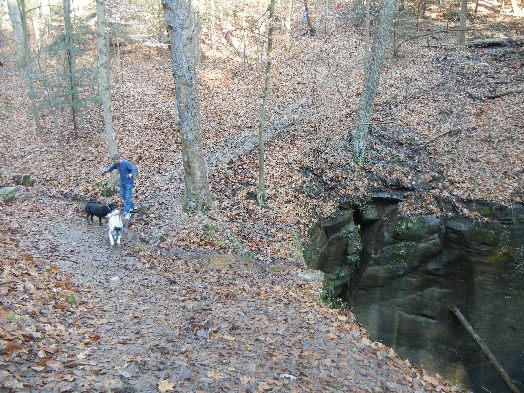
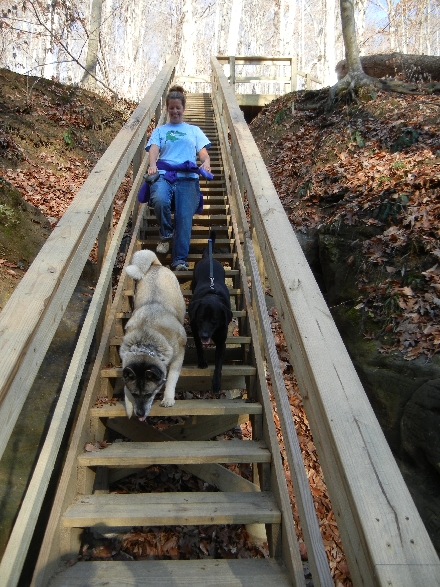
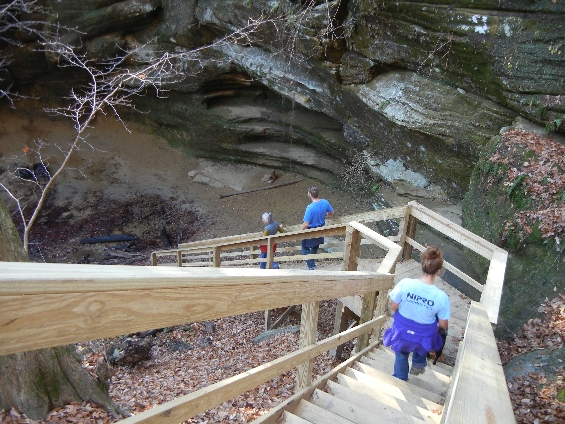
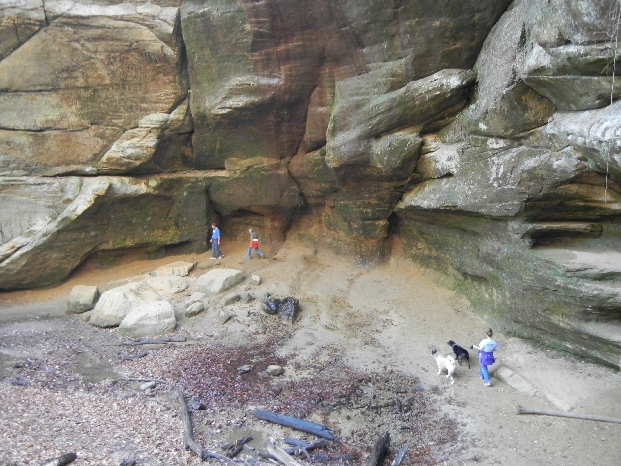
Our last unit was the Cantwell Cliffs.  They are said to be the least visited but perhaps the most beautiful of the parks attractions.  They are about 150 feet high and made up of three different types of limestone.  We did both the Cliffs Trail and the Gorge Trail covering about 2.5 miles.  The Cliffs Trail had many vistas with lots of ups and downs whereas the Gorge Trail was, for the most part, flat along a creek.

This is called the “Fat Woman’s Squeeze,” obviously, Helen did not have a problem!